Vista previa
 Compartir
 Compartir
 Ver detalles
 Guía
Guía

 Descargar
 Ver artículos similares
 Radiografía
 Presentación de diapositivas
 Estadísticas
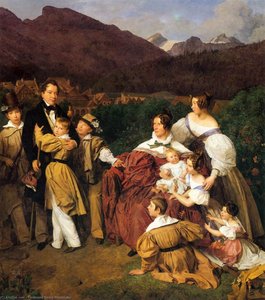
The Soup Kitchen
 Oil On Canvas
- WallArt
- Biedermeier Realism
 1859
1859 94.0 x 122.0 cm
 Galería Austriaca Belvedere
 Leer más
Giclée / Impresión de arte
Impresiones giclée o en lienzo de calidad de museo con producción rápida y opciones de acabado flexibles. ( Encargar reproducción pintada a mano Ver versión en imagen digital)




P118B €10

P118H €10

P118W €10

P438Z €10

P508JH €12

P508YH €12

P805H €10

P805Z €10

P919BZ €10

P919G €10

P919XJ €10

P959ZH €10

P968JZ €12

W106C €8

W218G €10

W218JH €8

W218Y €10

W307PJ €10

W316G €10

W316PJ €8

W316Y €10

W398PJ €8

W4111J €10

W500HY €15

W500JH €15

W692G €12

W849H €8

W940BG €15

W953PJ €8




Elija entre nuestros tamaños predefinidos que respetan las proporciones originales de la obra.

Introduzca el ancho y el alto que necesite para adaptarse a su marco o pared. Una impresión solo puede recortarse, nunca hacerse más grande que la imagen original, por lo que un tamaño con una forma distinta perderá parte de la obra. Le enviaremos una maqueta digital para su aprobación antes de realizar cualquier impresión. La imagen que se muestra en esta página no refleja el recorte real; solo la maqueta lo hace.
Envío a todo el mundo () en 2 semanas en lugar de las 4/5 semanas estándar. (23 octubre)

Envío exprés gratuito a todo el mundo

Lienzo de lino de alta calidad

Seguro de envío completo

Garantía de reembolso de impuestos aduaneros

Garantía de fidelidad cromática exacta

Política de devolución de 100 días (solo por defectos)

Garantía de devolución del 100% del dinero

Oferta por volumen
 La opción de vidrio solo está disponible en tamaños inferiores a 110 cm.

The Soup Kitchen
Giclée / Impresión de arte
Tamaño de la reproducción
-


Precio total
€ 70
A Window into Victorian Charity: Ferdinand Georg Waldmüller’s “The Soup Kitchen”
Ferdinand Georg Waldmüller's "The Soup Kitchen," painted in 1859, isn’t merely a depiction of a charitable institution; it’s a poignant snapshot of Victorian society grappling with poverty and the burgeoning role of public assistance. This oil on canvas, now residing within the Österreichische Galerie Belvedere in Vienna, offers a remarkably intimate glimpse into a world often obscured by grand narratives of progress – a world where simple sustenance was a profound act of compassion.
The scene unfolds within a long, echoing hallway, leading the eye towards an arched doorway that hints at a larger, unseen space. The composition is meticulously structured, drawing us immediately to a central group of women and children patiently awaiting their turn for a meal. Waldmüller’s skill lies not just in his realistic portrayal of these figures – their worn clothing, weathered faces, and expressions ranging from quiet hope to weary resignation – but also in the subtle orchestration of light and shadow. The muted palette, dominated by earthy browns, greys, and ochres, creates a somber yet strangely comforting atmosphere, mirroring the hardships faced by those seeking aid.
The Biedermeier Aesthetic: Intimacy and Everyday Life
“The Soup Kitchen” is firmly rooted in the Biedermeier art movement, a reaction against the grandiosity of Neoclassicism. Biedermeier artists prioritized depicting scenes from everyday life – domestic interiors, landscapes, and portraits of ordinary people – with an emphasis on realism and emotional honesty. Waldmüller masterfully embodies this aesthetic, eschewing dramatic poses or heroic narratives in favor of capturing a quiet moment of shared humanity. The painting’s focus isn't on the act of giving, but rather on the receiving—the dignity and resilience displayed by those who rely on charity.
Notice the details: the worn fabric of the women’s dresses, the small hands clutching bowls, the attentive gazes exchanged between neighbors. These seemingly insignificant elements collectively build a powerful narrative of community and mutual support. The artist's careful attention to texture – the rough wool of the clothing, the smooth surface of the tables – further grounds the scene in tangible reality.
Technique and Composition: A Masterclass in Realism
Waldmüller’s technical prowess is evident throughout the painting. He employs a meticulous approach to rendering form and light, utilizing subtle gradations of color to create a sense of depth and volume. The long hallway, with its receding perspective, draws the viewer into the scene, while the arched doorway offers a tantalizing glimpse beyond – perhaps symbolizing hope or the promise of a brighter future.
The composition is carefully balanced, with the central group of figures anchoring the scene and the background elements providing context. The use of horizontal lines—the hallway floor, the tables—creates a sense of stability, while the verticality of the doorway suggests aspiration. Waldmüller’s ability to capture both the physical details and the emotional nuances of his subjects is truly remarkable.
Symbolism and Historical Context: A Reflection of Victorian Society
“The Soup Kitchen” isn't simply a record of poverty; it’s a commentary on the social conditions of 19th-century Vienna. The rise of industrialization and urbanization had led to widespread unemployment and poverty, creating a significant need for charitable institutions like soup kitchens. These spaces offered not just food but also a sense of community and dignity to those who were marginalized by society.
Interestingly, Waldmüller’s work resonates with the style of Hans Makart, another prominent Austrian painter known for his dramatic landscapes and portraits. However, while Makart often depicted heroic figures and grand scenes, Waldmüller focuses on the quiet dignity of everyday life—a subtle yet powerful shift in artistic perspective. The painting serves as a poignant reminder of the social challenges faced by Victorian society and the importance of compassion and empathy.
High-quality reproductions of “The Soup Kitchen” are available through OriginalUniqueArt.com, allowing art enthusiasts to bring this evocative masterpiece into their homes and connect with its powerful message. The original resides at the Österreichische Galerie Belvedere in Vienna, a testament to Waldmüller’s enduring legacy.
Preguntas y respuestas
¿Qué edad tenía Ferdinand Georg Waldmüller cuando creó "The Soup Kitchen" en 1859?
Ferdinand Georg Waldmüller realizó "The Soup Kitchen" a la edad de 66. El artista nació en 1793 y la obra data de 1859.
¿Qué dimensiones tiene la obra original "The Soup Kitchen"?
Las dimensiones registradas de "The Soup Kitchen" de Ferdinand Georg Waldmüller son 94 x 122 cm. Se pueden solicitar reproducciones en otros tamaños manteniendo las mismas proporciones.
¿Qué artista y qué estilo están detrás de "The Soup Kitchen"?
"The Soup Kitchen" fue creada por Ferdinand Georg Waldmüller con el estilo Biedermeier Realism. El artista y el movimiento identifican la tradición de la obra.
Biografía del artista
Vida Temprana y Educación
- Nacimiento: 15 de enero de 1793, en Viena, Austria
- Fallecimiento: 23 de agosto de 1865, en Hinterbrühl, Austria (a los 72 años)
- Nacionalidad: Austríaco
- La vida temprana se vio marcada por dificultades financieras tras la muerte de su padre.
- Asistió a la Academia de Bellas Artes de Viena desde 1807, aunque la asistencia fue irregular.
- Inicialmente se dedicó a la pintura de retratos pero luego desarrolló un fuerte interés en los paisajes y las escenas de género.
Carrera y Desarrollo Artístico
- Su carrera temprana implicó trabajar como diseñador de escenografía y pintor de retratos mientras realizaba giras con su esposa, la cantante Katharina Weidner.
- Desarrolló un estilo distintivo caracterizado por representaciones realistas de la vida cotidiana, particularmente escenas rurales.
- Se convirtió en profesor de la Academia de Bellas Artes de Viena en 1819, pero enfrentó disputas debido a que abogaba por la observación natural y criticaba el sistema de la academia.
- Viajes frecuentes a Italia (a partir de 1825) y a la región de Salzkammergut influyeron significativamente en su estilo de pintura paisajística.
- Conocido por sus descripciones detalladas y refinadas de texturas y luz, a menudo representando la vida cotidiana rural con una perspectiva socialmente crítica.
- Sus obras fueron inicialmente criticadas por los contemporáneos por su realismo pero luego obtuvieron reconocimiento por su mérito artístico.
Obras Principales y Temas
- Vendedor de frutas veneciano (1826): Un ejemplo temprano de su estilo de pintura de género.
- Autorretrato (1828): Demuestra su habilidad en el retrato.
- Louise Mayer (1836) Una notable obra de retrato.
- Vista de Ischl (1838): Muestra sus habilidades para la pintura paisajística.
- En Todos los Santos (1839): Captura una escena de la vida rural.
- La Carta de Amor (1849): Una escena de género que representa la intimidad doméstica.
- Mujeres bañándose (c. 1848–1849): Un ejemplo de su exploración de temas sociales.
- Temas recurrentes incluyen: vida rural, dinámicas familiares, el impacto de la pobreza y la desgracia, y la belleza de la naturaleza.
Significado Histórico y Legado
- Considerado uno de los pintores austriacos más importantes del período Biedermeier.
- Defendió la observación natural y la pintura "a plein air", anticipando movimientos artísticos posteriores como el Impresionismo.
- Sus pinturas de género socialmente críticas desafiaron las representaciones convencionales de la vida rural durante su tiempo.
- Influyó en una generación de artistas con su realismo detallado y su enfoque en los temas cotidianos.
- A pesar de enfrentar críticas y contratiempos a lo largo de su carrera, la obra de Waldmüller obtuvo reconocimiento internacional más tarde en la vida.
- Su legado radica en su contribución al arte austriaco y su enfoque pionero de la pintura paisajística y de género.
Vida Posterior y Reconocimiento
- Se casó con Anna Bayer en 1851.
- Experimentó dificultades financieras a pesar de algunos éxitos.
- Participó en la Exposición Mundial de París (1855) y expuso en el Palacio de Buckingham (1856), obteniendo reconocimiento del emperador Napoleón III y la reina Victoria, respectivamente.
- Fue forzado a retirarse de la Academia de Bellas Artes de Viena en 1857 debido a su continua crítica.
- Recibió una pensión y fue nombrado caballero poco antes de su muerte el 23 de agosto de 1865, en Hinterbrühl.

Ferdinand Georg Waldmüller
1793 - 1865 , Austria
Datos clave
- Fecha De Fallecimiento: 23 de agosto de 1865
- Fecha De Nacimiento: 15 de enero de 1793
- Lugar De Nacimiento: Viena, Austria
- Movimiento Artístico: Biedermeier
- Nacionalidad: Austriaco
- Nombre Completo: Ferdinand Georg Waldmüller
- Obras Notables:
- Vendedor de frutas veneciano
- Autorretrato
- Louise Mayer
- Vista de Ischl
- Día de Todos los Santos
- La carta de amor
- Mujeres bañándose
Artículos relacionados

The Enduring Legacy of Oil on Canvas: Technique, History & Aesthetic Impact
Explore the rich history & techniques of oil painting – from Renaissance masters to Impressionism. Discover pigments, layering methods, and why this timeless medium endures. Expert insights for artists & art enthusiasts.

El Óleo sobre Lienzo: Historia, Técnica y la Persistencia de un Medio Artístico Atemporal
Descubre la historia y técnica del óleo sobre lienzo. Explora reproducciones fieles hechas a mano, personalización artística y consejos de expertos con OriginalUniqueArt. ¡Colecciona arte con confianza!

The Enduring Power of Painting: A Historical & Contemporary Exploration of Form and Emotion
Explore the rich history & enduring techniques of oil painting with OriginalUniqueArt. Discover masterpieces, learn about art collecting, and find authentic handmade reproductions crafted by skilled artists.
The Soul of Impressionism: Why Oil on Canvas Captures Eternal Light and Timeless Emotion
Discover the enchanting alchemy of Impressionism. Explore how the mastery of oil on canvas, through glazing and impasto, captures eternal light and emotion. Perfect for lovers of Monet and Van Gogh seeking the profound depth of hand-painted fine art.

El Legado Duradero del Óleo sobre Lienzo: Técnica, Historia y Práctica Contemporánea
Descubre la historia y técnica del óleo sobre lienzo. Explora reproducciones fieles hechas a mano, personalización artística y consejos de expertos con .