Vista previa
 Compartir
 Compartir
 Ver detalles
 Guía
Guía

 Descargar
 Ver artículos similares
 Radiografía
 Presentación de diapositivas
 Estadísticas
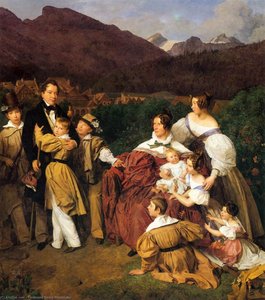
The Birthday Table
 Acrylic On Canvas
- WallArt
- Academic Realism
 1840
1840 63.0 x 50.0 cm
 Museo Wallraf-Richartz
 Leer más
Reproducción al óleo hecha a mano
Óleo sobre lienzo pintado a mano en el tamaño y marco de su elección, realizado por encargo por nuestros artistas. ( Cambiar a formato impreso Ver versión en imagen digital)




P118B €10

P118H €10

P118W €10

P438Z €10

P508JH €12

P508YH €12

P805H €10

P805Z €10

P919BZ €10

P919G €10

P919XJ €10

P959ZH €10

P968JZ €12

W106C €8

W218G €10

W218JH €8

W218Y €10

W307PJ €10

W316G €10

W316PJ €8

W316Y €10

W398PJ €8

W4111J €10

W500HY €15

W500JH €15

W692G €12

W849H €8

W940BG €15

W953PJ €8




Elija entre nuestros tamaños predefinidos que respetan las proporciones originales de la obra.

Puede ingresar sus propias dimensiones para adaptarse a un marco o espacio específico. Si el tamaño seleccionado no coincide con las proporciones de la imagen original, recortaremos la obra o extenderemos la pintura con elementos adicionales pintados a mano. Se le enviará una maqueta digital para su aprobación antes de comenzar la producción.
Tenga en cuenta que la vista previa en pantalla no refleja el recorte o la extensión reales. Solo la maqueta mostrará con precisión la composición final.
Si bien existen tamaños personalizados, recomendamos seleccionar una dimensión de la lista predefinida para preservar las proporciones originales.
Tras realizar el pedido, el equipo de OriginalUniqueArt.com enviará un correo electrónico al cliente para solicitar instrucciones y proporcionarle una vista previa del boceto.
Envío a todo el mundo () en 3-4 semanas en lugar de las 5 semanas estándar. (11 octubre). Sin comprometer la calidad.

Envío exprés gratuito a todo el mundo

Lienzo de lino de alta calidad

Seguro de envío completo

Garantía de reembolso de impuestos aduaneros

Garantía de fidelidad cromática exacta

Política de devolución de 100 días (solo por defectos)

Garantía de devolución del 100% del dinero

Oferta por volumen
 La opción de vidrio solo está disponible en tamaños inferiores a 110 cm.

The Birthday Table
Técnica de reproducción
Tamaño de la reproducción
-


Precio total
€ 259
The Birthday Table – A Portrait of Quiet Reflection
Ferdinand Georg Waldmüller’s “The Birthday Table” stands as a quintessential example of Biedermeier art, capturing a moment of serene domesticity that speaks volumes about the artistic sensibilities of its era. Painted in 1840, this oil on oak masterpiece transcends mere representation; it delves into the subtle nuances of human emotion and embodies the values championed by Waldmüller’s generation – simplicity, sincerity, and an unwavering devotion to observing the natural world.- Subject Matter: The painting depicts a woman seated at a table adorned with vases overflowing with flowers. This deliberate choice of subject matter reflects Biedermeier's fascination with portraying everyday life—a reaction against the grand narratives and theatrical displays favored by earlier Romantic artists.
- Style: Waldmüller’s style is characterized by meticulous realism combined with an understated elegance. He eschewed flamboyant ornamentation, prioritizing clarity of form and tonal harmony to convey a sense of calm and tranquility. The composition is carefully balanced, guiding the viewer's eye across the canvas in a deliberate manner.
- Technique: Waldmüller employed a glazing technique—applying thin layers of translucent paint over underlying colors—to achieve remarkable luminosity and depth. This painstaking process allowed him to capture the delicate textures of fabric, flowers, and skin with astonishing accuracy. The artist’s masterful handling of light contributes significantly to the painting's emotional impact.
- Symbolism: Beyond its aesthetic qualities, “The Birthday Table” carries symbolic weight. The woman’s posture conveys composure and grace—a reflection of Biedermeier ideals of feminine virtue. The flowers represent hope and joy amidst adversity, mirroring the broader cultural preoccupation with finding solace in nature and domesticity during a time of social unrest.
- Emotional Impact: Waldmüller skillfully evokes a feeling of intimacy and tranquility. The muted palette—dominated by earthy tones—creates an atmosphere of understated warmth. The woman’s gaze directs the viewer inward, prompting reflection on themes of solitude, contemplation, and inner harmony.
Additional Information
This artwork is housed at Wallraf–Richartz Museum, acquired in 1937 from S. Kende.
Waldmüller’s artistic influence extended beyond portraiture; he was also a prolific landscape painter and genre artist, demonstrating a remarkable versatility that cemented his place as one of Austria's most celebrated painters.
References
- WikiArt: The Birthday Table – Ferdinand Georg Waldmüller
- Gallerix: The Birthday Table — Ferdinand Georg Waldmüller
- Wikimedia Commons: File:Ferdinand Georg Waldmüller - The Birthday Table - WGA25417
Preguntas y respuestas
¿A qué edad creó Ferdinand Georg Waldmüller "The Birthday Table"?
Ferdinand Georg Waldmüller realizó "The Birthday Table" a la edad de 47. El artista nació en 1793 y la obra data de 1840.
¿Cuál es la fecha de creación de "The Birthday Table" de Ferdinand Georg Waldmüller?
"The Birthday Table" data de 1840. La fecha sitúa la obra dentro de la trayectoria de Ferdinand Georg Waldmüller y de su época.
¿Quién creó "The Birthday Table"?
El artista detrás de "The Birthday Table" es Ferdinand Georg Waldmüller. La obra está catalogada bajo el nombre de Ferdinand Georg Waldmüller.
¿Dónde puedo encontrar una guía de "The Birthday Table"?
La página Guía de "The Birthday Table" de Ferdinand Georg Waldmüller ofrece una ficha informativa imprimible de dos hojas: la obra con su tabla de identidad, una línea de tiempo por décadas que la sitúa en la vida del artista, otras obras del mismo autor, la paleta de colores medida y citas listas para copiar en cuatro estilos diferentes.
¿Cómo se encuentran el movimiento y la época en "The Birthday Table" de Ferdinand Georg Waldmüller?
"The Birthday Table" pertenece al movimiento Academic Realism, y su creador trabajó en la época Siglo XIX.
¿Qué tamaño de reproducción se sugiere para "The Birthday Table" de Ferdinand Georg Waldmüller?
Se sugiere una reproducción de Large para "The Birthday Table" de Ferdinand Georg Waldmüller. El tamaño puede ajustarse manteniendo las proporciones.
¿Cómo se relaciona el tema de "The Birthday Table" con los temas habituales de Ferdinand Georg Waldmüller?
"The Birthday Table" representa portrait, floral arrangement, birthday, victorian era, elegant woman, still life, classical art, decorative painting, mientras que los temas recurrentes de Ferdinand Georg Waldmüller son academic realism influence, victorian era portraiture, floral still life tradition, domestic tranquility theme, social class representation, waldmuller's classical style, portraiture as status symbol, reflecting bourgeois values. Al comparar ambos, se observa cómo la obra se relaciona con los temas habituales del artista.
Biografía del artista
Vida Temprana y Educación
- Nacimiento: 15 de enero de 1793, en Viena, Austria
- Fallecimiento: 23 de agosto de 1865, en Hinterbrühl, Austria (a los 72 años)
- Nacionalidad: Austríaco
- La vida temprana se vio marcada por dificultades financieras tras la muerte de su padre.
- Asistió a la Academia de Bellas Artes de Viena desde 1807, aunque la asistencia fue irregular.
- Inicialmente se dedicó a la pintura de retratos pero luego desarrolló un fuerte interés en los paisajes y las escenas de género.
Carrera y Desarrollo Artístico
- Su carrera temprana implicó trabajar como diseñador de escenografía y pintor de retratos mientras realizaba giras con su esposa, la cantante Katharina Weidner.
- Desarrolló un estilo distintivo caracterizado por representaciones realistas de la vida cotidiana, particularmente escenas rurales.
- Se convirtió en profesor de la Academia de Bellas Artes de Viena en 1819, pero enfrentó disputas debido a que abogaba por la observación natural y criticaba el sistema de la academia.
- Viajes frecuentes a Italia (a partir de 1825) y a la región de Salzkammergut influyeron significativamente en su estilo de pintura paisajística.
- Conocido por sus descripciones detalladas y refinadas de texturas y luz, a menudo representando la vida cotidiana rural con una perspectiva socialmente crítica.
- Sus obras fueron inicialmente criticadas por los contemporáneos por su realismo pero luego obtuvieron reconocimiento por su mérito artístico.
Obras Principales y Temas
- Vendedor de frutas veneciano (1826): Un ejemplo temprano de su estilo de pintura de género.
- Autorretrato (1828): Demuestra su habilidad en el retrato.
- Louise Mayer (1836) Una notable obra de retrato.
- Vista de Ischl (1838): Muestra sus habilidades para la pintura paisajística.
- En Todos los Santos (1839): Captura una escena de la vida rural.
- La Carta de Amor (1849): Una escena de género que representa la intimidad doméstica.
- Mujeres bañándose (c. 1848–1849): Un ejemplo de su exploración de temas sociales.
- Temas recurrentes incluyen: vida rural, dinámicas familiares, el impacto de la pobreza y la desgracia, y la belleza de la naturaleza.
Significado Histórico y Legado
- Considerado uno de los pintores austriacos más importantes del período Biedermeier.
- Defendió la observación natural y la pintura "a plein air", anticipando movimientos artísticos posteriores como el Impresionismo.
- Sus pinturas de género socialmente críticas desafiaron las representaciones convencionales de la vida rural durante su tiempo.
- Influyó en una generación de artistas con su realismo detallado y su enfoque en los temas cotidianos.
- A pesar de enfrentar críticas y contratiempos a lo largo de su carrera, la obra de Waldmüller obtuvo reconocimiento internacional más tarde en la vida.
- Su legado radica en su contribución al arte austriaco y su enfoque pionero de la pintura paisajística y de género.
Vida Posterior y Reconocimiento
- Se casó con Anna Bayer en 1851.
- Experimentó dificultades financieras a pesar de algunos éxitos.
- Participó en la Exposición Mundial de París (1855) y expuso en el Palacio de Buckingham (1856), obteniendo reconocimiento del emperador Napoleón III y la reina Victoria, respectivamente.
- Fue forzado a retirarse de la Academia de Bellas Artes de Viena en 1857 debido a su continua crítica.
- Recibió una pensión y fue nombrado caballero poco antes de su muerte el 23 de agosto de 1865, en Hinterbrühl.

Ferdinand Georg Waldmüller
1793 - 1865 , Austria
Datos clave
- Fecha De Fallecimiento: 23 de agosto de 1865
- Fecha De Nacimiento: 15 de enero de 1793
- Lugar De Nacimiento: Viena, Austria
- Movimiento Artístico: Biedermeier
- Nacionalidad: Austriaco
- Nombre Completo: Ferdinand Georg Waldmüller
- Obras Notables:
- Vendedor de frutas veneciano
- Autorretrato
- Louise Mayer
- Vista de Ischl
- Día de Todos los Santos
- La carta de amor
- Mujeres bañándose
Artículos relacionados

El Óleo sobre Lienzo: Historia, Técnica y la Persistencia de un Medio Artístico Atemporal
Descubre la historia y técnica del óleo sobre lienzo. Explora reproducciones fieles hechas a mano, personalización artística y consejos de expertos con OriginalUniqueArt. ¡Colecciona arte con confianza!

Silent Narratives: Exploring the Enduring Appeal of Still Life Painting Across Centuries
Explore the rich history of still life painting with OriginalUniqueArt. Discover Dutch Masters, decode vanitas symbolism & learn about collecting timeless art. Expert insights and museum-quality reproductions.
The Enduring Appeal of Still Life: A Historical & Contemporary Exploration
Explore the rich history & symbolism of still life painting with OriginalUniqueArt. Discover masterpieces from the Dutch Golden Age, learn about vanitas art, and find expert guidance for collecting timeless artworks.

The Enduring Legacy of Oil on Canvas: Technique, History & Aesthetic Impact
Explore the rich history & techniques of oil painting – from Renaissance masters to Impressionism. Discover pigments, layering methods, and why this timeless medium endures. Expert insights for artists & art enthusiasts.

The Enduring Power of Painting: A Historical & Contemporary Exploration of Form and Emotion
Explore the rich history & enduring techniques of oil painting with OriginalUniqueArt. Discover masterpieces, learn about art collecting, and find authentic handmade reproductions crafted by skilled artists.