

 Ver en contexto
 Enviar
 Compartir
 Detalles

 Descargar
 Similares
 Radiografía
 Presentación de diapositivas
 Estadísticas
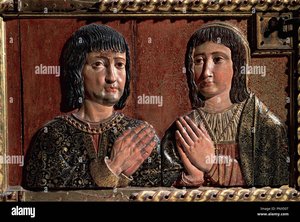
Main Altar


 Ver más
Adquiera una imagen digital de alta resolución y optimizada, muy superior a la vista previa en línea.
Cada archivo es preparado meticulosamente por nuestros especialistas internos mediante el uso de herramientas avanzadas y un experto retoque manual. Nos aseguramos de que cada imagen posea una claridad excepcional, una precisión cromática impecable y un detalle minucioso.
El archivo final se entrega por correo electrónico en un plazo de 72 horas, optimizado para su uso inmediato en entornos profesionales, editoriales y de impresión. Esta es la misma calidad en la que confían los estudios de diseño, las editoriales y las galerías de primer nivel.
Imagen Digital
Descarga un archivo de alta resolución para exhibición personal, impresión y proyectos creativos. ( Cambiar a Impresión Comprar pintura hecha a mano)
Incluido en cada pedido de imágenes digitales
Entrega digital experta, garantizada.
Al elegir OriginalUniqueArt.com, no solo está adquiriendo una imagen; está recibiendo una obra de arte digital mejorada profesionalmente, elaborada con precisión y respaldada por una garantía de satisfacción. Esto es todo lo que incluye su pedido, automáticamente:

Entrega rápida por email
Recibirá su archivo de imagen digital en alta resolución por correo electrónico en un plazo de 72 horas tras realizar su pedido, listo para su uso inmediato.

Archivo digital optimizado por IA
Su obra de arte se optimiza profesionalmente mediante herramientas avanzadas de IA y edición manual, garantizando el máximo detalle, claridad y precisión cromática.

Reenvío gratuito de por vida
¿Has borrado o perdido tu archivo por error? No te preocupes: te lo volveremos a enviar en cualquier momento, sin coste adicional.

Sin gastos de importación, siempre
Disfrute de su obra de arte al instante sin aduanas, aranceles ni gastos de envío; las descargas digitales siempre están libres de impuestos.

Garantía de fidelidad de color
Garantizamos que su imagen digital refleje los colores originales con la mayor fidelidad posible, mediante el uso de herramientas profesionales y gestión del color.

Garantía de satisfacción de 100 días
Si no está satisfecho con su imagen digital, la revisaremos o le reembolsaremos el 100% en un plazo de 100 días, sin preguntas.

100% Garantía de devolución de dinero
¿No está satisfecho? Obtenga un reembolso completo dentro de los 100 días posteriores a la recepción de su archivo digital, sin preguntas.

Descuentos por pedidos grandes
Compra 3 imágenes, ahorra 10% - Compra 5, ahorra 15% - Compra 10+, ahorra 20%. Ideal para proyectos creativos, galerías y agencias.
Biografía del artista
Felipe Bigarny (c. 1475-1542): Master Sculptor of the Spanish Renaissance
felipe bigarny but who made his career in spain and was one of the leading sculptors of the spanish renaissance. he was also an architect.his work shows flemish, burgundian, and italian renaissance influences. he gained great prestige working in various parts of spain which led to his becoming the master sculptor and carver of the burgos cathedral. he also played a role in creating many important works for the crown of castile, simultaneously operating several studios, and thus became quite wealthy.
Born in Langres (Burgundy), around 1475, Bigarny’s early life remains somewhat shrouded in mystery. However, evidence suggests he embarked on a formative journey to Italy as a young man, immersing himself in the artistic fervor of Rome—a city that profoundly shaped his aesthetic sensibilities.
As a result, Italian renaissance influences can be found even in his initial gothic sculptural endeavors. This exposure to humanist ideals and classical forms would become a cornerstone of his artistic vision throughout his prolific career.
In 1498, at approximately twenty-three years old, Bigarny undertook the pilgrimage route to Santiago de Compostela, establishing himself temporarily in Burgos. It was here that he commenced his monumental undertaking: the creation of three panel reliefs for Briviesca stone within the retrochoir of the cathedral—a project considered a pivotal moment in Spanish Renaissance art due to its incorporation of Florentine stylistic elements.
The collaboration with Andrés de Nájera on the choir stalls of Burgos Cathedral solidified Bigarny’s position as a leading figure in the artistic landscape of his time, furthering his reputation and securing commissions that would define his lifelong vocation.
His renown reached Toledo, where Cardinal Francisco Jiménez de Cisneros recognized his exceptional talent and entrusted him with overseeing the ambitious construction of the main altarpiece—a project undertaken alongside Enrique Egas and Pedro Gumiel. This undertaking absorbed the Spanish tendency towards realism and complex Gothic draperies, mirroring the stylistic trends prevalent in Italy during that era.
Between 1503 and 1504, Bigarny sculpted magnificent figures for the altar of Salamanca University—a testament to his versatility and mastery across diverse sculptural genres.
He then initiated plans for the chapel of the Sanctuary of Palencia Cathedral, acknowledging that while much of the work would be executed by assistants in his studio, he personally would sculpt the faces and hands—a deliberate choice reflecting his unwavering commitment to artistic excellence.
On December 12th, 1506, Bigarny delivered seventeen sculptures—among them a polychromed Saint Antoninus of Pamiers, the titular saint of Burgos Cathedral—marking a significant milestone in his career.
And on October 19th, 1509 he completed the remaining nine figures for the cathedral’s altar.
These sculptures were brought together on the main altarpiece of Palencia Cathedral, demonstrating Bigarny's ability to synthesize influences from Flemish and Italian Renaissance styles.
In 1513 he undertook the monumental task of designing the baldachin of Don Dominic de la Calzada’s tomb in Santo Domingo de la Calzada—a project entrusted to Juan de Rasines.
Furthermore, Bigarny collaborated with Alonso Berruguete on the tomb of Cardinal Juan Selvagio in Zaragoza—a partnership that exemplifies the dynamism of artistic circles during the Renaissance.
He continued his collaboration with Berruguete on the Royal Chapel of Granada, where he contributed to its design in 1521.
Aware of his growing fame and prestige, Bigarny established himself permanently in Burgos, initially residing in a modest building in San Juan neighborhood and subsequently relocating to a grand house adjacent to the Casa de la Moneda—a symbol of his success and artistic influence.
In 1524 he undertook the commission for Saint Peter’s altarpiece in Burgos Cathedral, alongside Diego de Siloé—a collaboration that produced one of the most celebrated achievements of Spanish Renaissance sculpture.
His meticulous attention to detail and expressive artistry ensured that his sculptures would endure as emblems of artistic brilliance.
Bigarny's legacy extends beyond individual masterpieces; he fostered a vibrant artistic environment in Burgos, nurturing talent and shaping the stylistic trajectory of subsequent generations.
- Major Works: Main Altar of Toledo Cathedral, Choir Stalls of Burgos Cathedral, Baldachin of Don Dominic de la Calzada’s Tomb
- Influences: Flemish Renaissance, Burgundian Renaissance, Italian Renaissance
- Notable Collaborations: Andrés de Nájera, Alonso Berruguete
Burgos Cathedral: A Crucible of Artistic Innovation
The Burgos Cathedral stands as a testament to Bigarny’s enduring influence—a monumental edifice adorned with sculptures that embody the highest standards of Renaissance craftsmanship.His involvement in the construction of this cathedral, alongside Andrés de Nájera and other prominent artists, cemented his reputation as a visionary leader and innovator.
The sculptural program of the cathedral—particularly the choir stalls and the Saint Peter’s altarpiece—represents a pinnacle of artistic achievement, reflecting Bigarny's mastery of technique and his profound understanding of humanist ideals.
Legacy and Artistic Influence
Bigarny’s meticulous attention to detail and expressive artistry ensured that his sculptures would endure as emblems of artistic brilliance.He fostered a vibrant artistic environment in Burgos, nurturing talent and shaping the stylistic trajectory of subsequent generations.
His work continues to inspire artists today, serving as an enduring reminder of the transformative power of Renaissance art—a legacy enshrined within the walls of Burgos Cathedral and celebrated throughout Spain.
Felipe Bigarny
1475 - 1542 , España
Breves datos
- Artistic Movement Or Style: Renaissance
- Artists Or Movements Influenced By This Artist:
- Flemish Renaissance
- Burgundian Renaissance
- Artists Who Influenced This Artist: ['Lodovico Mazzolino']
- Date Of Birth: ca. 1475
- Date Of Death: 1542
- Full Name: felipe bigarny
- Nationality: Spanish
- Notable Artworks:
- Main Altar
- Circumcision
- Place Of Birth: Toledo, Spain