

 Ver en contexto
 Enviar
 Compartir
 Detalles
 Guía
Guía

 Descargar
 Similares
 Radiografía
 Presentación de diapositivas
 Estadísticas
Meditation
 Oil On Canvas
- WallArt
- Symbolism
 1893
1893- 19th Century
 48.0 x 65.0 cm
 Ohara Museum of Art
 Ver más
Reproducción al óleo hecha a mano
Óleo sobre lienzo pintado a mano en el tamaño y marco de su elección, realizado por encargo por nuestros artistas. ( Cambiar a impresiones Cambiar a imagen digital)




P118B €10

P118H €10

P118W €10

P438Z €10

P508JH €12

P508YH €12

P805H €10

P805Z €10

P919BZ €10

P919G €10

P919XJ €10

P959ZH €10

P968JZ €12

W106C €8

W218G €10

W218JH €8

W218Y €10

W307PJ €10

W316G €10

W316PJ €8

W316Y €10

W398PJ €8

W4111J €10

W500HY €15

W500JH €15

W692G €12

W849H €8

W940BG €15

W953PJ €8




Elija entre nuestros tamaños predefinidos que respetan las proporciones originales de la obra.

Indique el ancho y el alto que necesite para adaptarse a su marco o pared. Al tratarse de una obra pintada a mano, si requiere un tamaño con una proporción distinta, el artista puede pintar un poco más alrededor de la imagen o recortarla ligeramente; usted elige. Le enviaremos una maqueta digital para su aprobación antes de comenzar la pintura. La imagen que se muestra en esta página no refleja el resultado real; solo la maqueta lo hace.
Tras realizar el pedido, el equipo de OriginalUniqueArt.com enviará un correo electrónico al cliente para solicitar instrucciones y proporcionarle una vista previa del boceto.
Envío a todo el mundo () en 3-4 semanas en lugar de las 5 semanas estándar. (26 octubre). Sin comprometer la calidad.

Envío exprés gratuito a todo el mundo

Lienzo de lino de alta calidad

Seguro de envío total

Garantía de reembolso de aranceles aduaneros

Garantía de fidelidad cromática exacta

Política de devolución de 100 días (solo por defectos)

Garantía de devolución del 100% del dinero

Descuento por cantidad
 La opción de vidrio solo está disponible en tamaños inferiores a 110 cm.

Meditation
Técnica de reproducción
Dimensiones de la reproducción
-


Precio total final
€ 263
The Soul in Stillness: A Journey into Carrière’s Meditation
In the quiet corners of art history, few works possess the haunting, introspective power of Eugène Anatole Carrière’s 1893 masterpiece, Meditation. This oil on canvas is far more than a mere portrait; it is an invitation into the private sanctuary of the human psyche. At first glance, the viewer is met with the profound stillness of a young woman lost in thought, her presence commanding the space through a deliberate lack of movement. Carrière, a titan of the French Symbolist movement, eschews the fleeting light and vibrant energy of his Impressionist contemporaries to instead cultivate an atmosphere of eternal, somber reflection. The subject does not interact with the world outside the frame; rather, she exists in a state of profound interiority, making the painting a poignant testament to the beauty found within solitude and the weight of unspoken thoughts.
The technical brilliance of Meditation lies in Carrière’s masterful command over a restricted, almost monochromatic palette. Eschewing bright colors, the artist utilizes a sophisticated range of deep browns, velvety blacks, and subtle, earthy undertones of muted red and orange. This choice is not merely aesthetic but deeply psychological, serving to shroud the subject in a sense of mystery and melancholy. Through an ambitious layering process and the meticulous application of glazing techniques, Carrière achieves a luminous depth that seems to glow from within the canvas itself. The texture of the paint is remarkably tactile, creating a soft, skin-like quality in the figure’s face and a heavy, luxurious feel to her garments. His brushwork, while controlled, retains an organic fluidity that mirrors the natural contours of the human form, lending the piece a dreamlike, ethereal quality that borders on the supernatural.
Symbolism and the Echoes of the Subconscious
To understand Meditation is to understand the heart of Symbolism. During the fin-de-sięcle period, artists sought to represent ideas and emotions rather than the literal external world. In this work, every element serves a symbolic purpose. The woman’s downward gaze and slumped, vulnerable posture act as visual metaphors for grief, introspection, or perhaps an existential longing. The flattened composition—where the background dissolves into a hazy, indistinct void—strips away all worldly distractions, forcing the viewer to confront the subject's emotional state directly. There is no landscape to provide context, only the raw, unadulterated presence of feeling.
For the discerning collector or interior designer, this painting offers a profound sense of gravitas and emotional depth. It is a piece that does not merely decorate a wall but transforms the atmosphere of a room, bringing a sense of quiet sophistication and intellectual weight. Whether placed in a contemporary gallery setting or a classic study, Meditation acts as an anchor of tranquility. Its somber tones and rich textures provide a perfect counterpoint to modern minimalism or complement the ornate grandeur of traditional decor. Owning a high-quality reproduction of this work allows one to possess a fragment of the Symbolist soul, a permanent window into the profound beauty of the human spirit in repose.
Preguntas y respuestas
¿Permaneció "Meditation" en el país de origen de su artista?
No; la obra se encuentra en el extranjero. "Meditation" se encuentra en España, mientras que Eugène Anatole Carrière nació en Francia.
¿Puedo examinar "Meditation" con más detalle?
La página Radiografía de "Meditation" de Eugène Anatole Carrière es un visor interactivo que permite explorar once capas ópticas de la obra, incluyendo una vista de estilo radiografía.
¿Qué atmósfera aporta "Meditation" de Eugène Anatole Carrière a un espacio interior?
La atmósfera Calm de "Meditation" de Eugène Anatole Carrière armoniza perfectamente con su espacio recomendado: un Living Room.
Biografía del artista
**Primeros años y formación**
Eugène Anatole Carrière, un renombrado artista simbolista francés, nació el 16 de enero de 1849 en Gournay-sur-Marne, Seine-Saint-Denis. Estudió en la École des Beaux-Arts de París y posteriormente con Cabanel, sentando las bases para sus futuros proyectos artísticos.**Estilo artístico e influencias**
Las pinturas de Carrière son más conocidas por su distintiva paleta monocromática marrón, que ha sido objeto de fascinación para muchos entusiastas del arte. Su obra estuvo influenciada por el arte de Peter Paul Rubens, al que se expuso durante su tiempo como prisionero en Dresde. Esta influencia es evidente en los colores brillantes de sus primeras pinturas. **La joven madre (1879)**, una de las obras más notables de Carrière en sus inicios, se encuentra actualmente en el Musée des Beaux-Arts de Rouen. Esta pieza marcó el comienzo de los temas de su vida doméstica, que se convertirían en una característica distintiva de su estilo artístico.**Obras destacadas y exposiciones**
- **El niño enfermo (Montargis)**
- **La primera comunión (Toulon)**
- **Retrato de Louis-Henri Devillez (1887)**, una obra muy elogiada que muestra la habilidad de Carrière para capturar la esencia de sus sujetos.
**Legado e influencia en el arte moderno**
El estilo monocromático de Carrière ha sido visto en las obras de Pablo Picasso, particularmente durante su período azul. Esta influencia es un testimonio del impacto duradero de Carrière en el arte moderno.- Vea más obras de Carrière en OriginalUniqueArt.com/eugène anatole carrière
- Explore el Musée des Beaux-Arts de Rouen, que alberga algunas de las primeras obras de Carrière, en descubriendo el musée des beaux-arts de carcassonne (france)
- Aprenda más sobre el simbolismo y su influencia en el arte en el movimiento artístico del simbolismo

Eugène Anatole Carrière
1849 - 1906 , Francia
Datos clave
- Artistas Que Influyeron: ['Peter Paul Rubens']
- Estilo Artístico: Simbolismo francés
- Fecha De Fallecimiento: 1906
- Fecha De Nacimiento: 16 de enero de 1849
- Influencia En Artistas: ['Pablo Picasso']
- Lugar De Nacimiento: Gournay-sur-Marne, Francia
- Nacionalidad: Francesa
- Nombre Completo: Eugène Anatole Carrière
- Obras Notables:
- La joven madre (1879)
- El niño enfermo (Montargis)
- La primera comunión (Toulon)
- Retrato de Louis-Henri Devillez
Artículos relacionados

El Legado Duradero del Óleo sobre Lienzo: Técnica, Historia y Práctica Contemporánea
Descubre la historia y técnica del óleo sobre lienzo. Explora reproducciones fieles hechas a mano, personalización artística y consejos de expertos con .

El Óleo sobre Lienzo: Historia, Técnica y la Persistencia de un Medio Artístico Atemporal
Descubre la historia y técnica del óleo sobre lienzo. Explora reproducciones fieles hechas a mano, personalización artística y consejos de expertos con OriginalUniqueArt. ¡Colecciona arte con confianza!
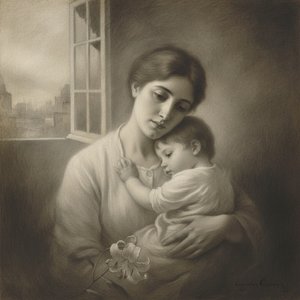
Eugène Carrière: The 'Peintre d'Âme' & Symbolist Portraiture’s Intimate Vision
Explore the haunting world of Eugène Carrière, a pivotal French Symbolist artist known for his deeply intimate portraits & 'peinture d'âme'. Discover his life, style, and lasting influence on modern masters like Picasso. Shop high-quality reproductions at OriginalUniqueArt.

The Enduring Legacy of Oil on Canvas: Technique, History & Aesthetic Impact
Explore the rich history & techniques of oil painting – from Renaissance masters to Impressionism. Discover pigments, layering methods, and why this timeless medium endures. Expert insights for artists & art enthusiasts.

The Enduring Power of Painting: A Historical & Contemporary Exploration of Form and Emotion
Explore the rich history & enduring techniques of oil painting with OriginalUniqueArt. Discover masterpieces, learn about art collecting, and find authentic handmade reproductions crafted by skilled artists.

