- Inicio

- Reproducción al óleo
- Erich Mayer
- Zimbabwe Acropolis
 Preview
 Enviar
 Compartir
 Detalles

 Descargar
 Similares
 Radiografía
 Presentación de diapositivas
Zimbabwe Acropolis
 Watercolor
- WallArt
- Contemporary Realism
 1939
1939- Modern
 29.0 x 42.0 cm
 Museos de la Universidad de Pretoria
 Ver más
Reproducción al óleo hecha a mano
Óleo sobre lienzo pintado a mano en el tamaño y marco de su elección, realizado por encargo por nuestros artistas. ( Switch to Print Switch to Image)




P118B $10

P118H $10

P118W $10

P438Z $10

P508JH $12

P508YH $12

P805H $10

P805Z $10

P919BZ $10

P919G $10

P919XJ $10

P959ZH $10

P968JZ $12

W106C $8

W218G $10

W218JH $8

W218Y $10

W307PJ $10

W316G $10

W316PJ $8

W316Y $10

W398PJ $8

W4111J $10

W500HY $15

W500JH $15

W692G $12

W849H $8

W940BG $15

W953PJ $8




Elija entre nuestros tamaños predefinidos que respetan las proporciones originales de la obra.

Puede ingresar sus propias dimensiones para adaptarse a un marco o espacio específico. Si el tamaño seleccionado no coincide con las proporciones de la imagen original, recortaremos la obra o extenderemos la pintura con elementos adicionales pintados a mano. Se le enviará una maqueta digital para su aprobación antes de comenzar la producción.
Tenga en cuenta que la vista previa en pantalla no refleja el recorte o la extensión reales. Solo la maqueta mostrará con precisión la composición final.
Si bien existen tamaños personalizados, recomendamos seleccionar una dimensión de la lista predefinida para preservar las proporciones originales.
Tras realizar el pedido, el equipo de OriginalUniqueArt.com enviará un correo electrónico al cliente para solicitar instrucciones y proporcionarle una vista previa del boceto.
Entrega mundial () en 3-4 semanas en lugar de las 5 semanas estándar. (28 julio). Sin compromisos con la calidad.

Envío exprés gratuito a todo el mundo

Lienzo de lino de alta calidad

Seguro de envío total

Garantía de reembolso de impuestos aduaneros

Garantía de fidelidad de color

Política de devolución de 60 días (solo por defectos)

Garantía de devolución del 100% del dinero

Descuento por pedido múltiple
 La opción de vidrio solo está disponible en tamaños inferiores a 110 cm.

Zimbabwe Acropolis
Técnica de reproducción
Tamaño de la reproducción
-


Precio total final
$ 300
Descripción de la obra
A Window into the Soul of Southern Africa
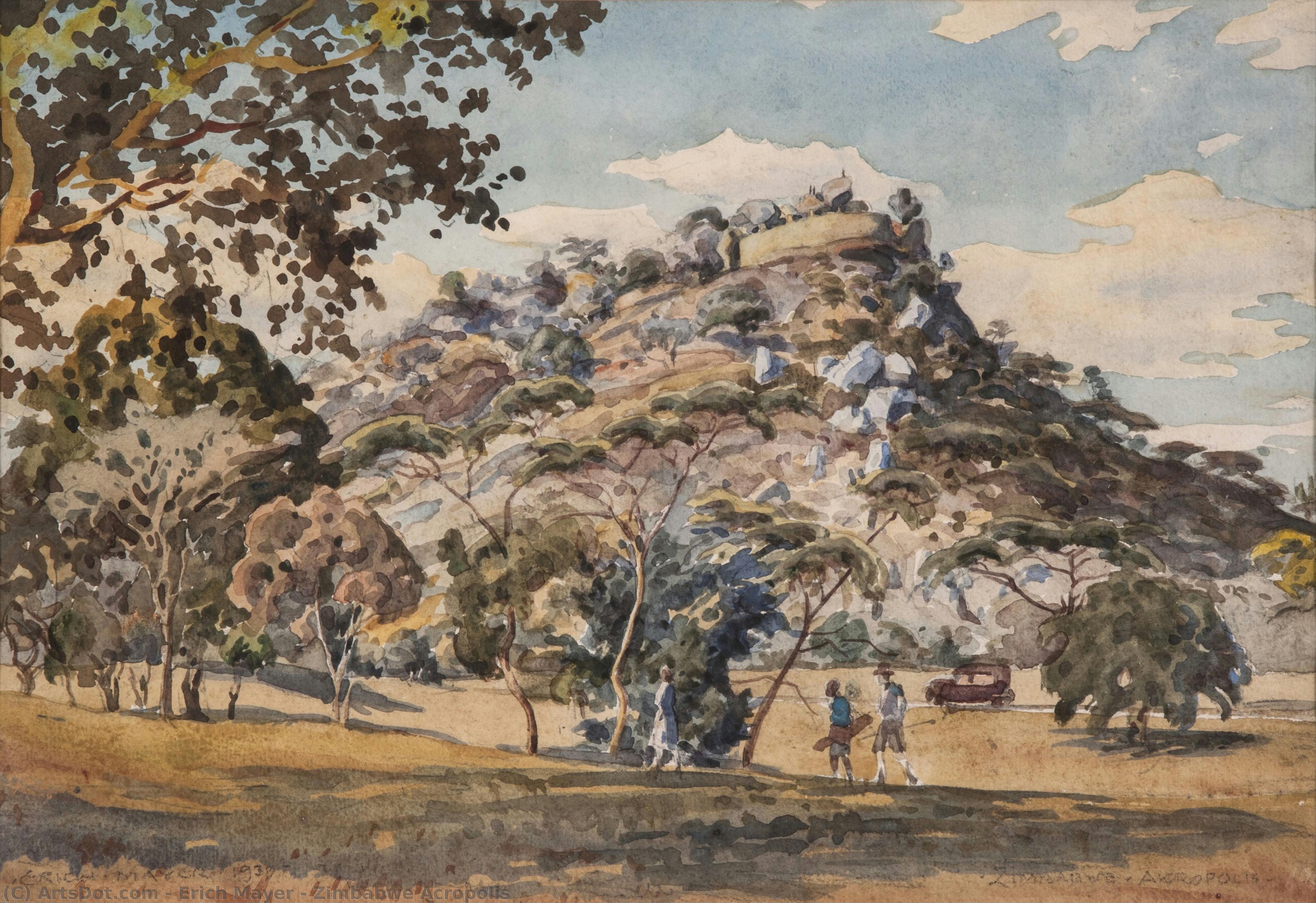
In the delicate, translucent layers of Erich Mayer’s watercolor "Zimbabwe Acropolis," we find more than just a landscape; we encounter a profound moment of stillness captured on the precipice of global upheaval. Painted in 1939, as the shadows of the Second World War began to lengthen across Europe, this work serves as a poignant testament to the enduring majesty of the African continent. Mayer, an artist whose life was defined by the turbulent shifts of history, uses the medium of watercolor to breathe life into the ancient stone structures and verdant hills of the Great Zimbabwe ruins. The painting invites the viewer to step into a serene assembly, where a small group of figures gathers amidst the sweeping grasses, their presence dwarfed by the monumental scale of the landscape, yet deeply connected to its rhythmic beauty.
The technique employed here is a masterclass in the subtle economy of watercolor. Mayer avoids heavy, oppressive strokes, opting instead for a fluid, atmospheric approach that allows light to permeate the paper itself. Through soft washes of earth tones—ochres, muted greens, and sun-bleached tans—he reconstructs the rugged topography of the Acropolis. The way the pigment settles into the grain of the paper mimics the natural textures of stone and vegetation, creating a sense of organic unity. There is a rhythmic quality to his brushwork; the scattered trees and the undulating terrain guide the eye through a composition that feels both expansive and intimate. For the collector, this piece offers a rare tactile quality, where the transparency of the medium evokes the very air of the Southern African veld.
Historical Resonance and Emotional Depth
To look upon "Zimbabwe Acropolis" is to engage with the complex biography of Erich Mayer himself. A man of German heritage living through the Anglo-Boer War and later facing internment during the World Wars, Mayer’s perspective was often that of an observer caught between worlds. This sense of being a witness is palpable in his work. The painting captures a peaceful, almost pastoral scene, yet knowing the historical context—the looming conflict that would soon disrupt such tranquility—adds a layer of bittersweet nostalgia to the viewing experience. The figures in the foreground, engaged in quiet companionship, represent a fleeting moment of human connection amidst the timelessness of the archaeological site.
For interior designers and art enthusiasts, this reproduction offers a sophisticated focal point that brings a sense of historical gravity and natural calm to any space. It is not merely a depiction of a place, but an evocative mood piece that speaks to themes of heritage, resilience, and the quiet dignity of the earth. The artwork functions beautifully in settings that value understated elegance and storytelling, providing a conversation piece that bridges the gap between the ancient past and the modern collector's eye. Owning a piece of Mayer’s legacy is an opportunity to preserve a fragment of a vanishing era, rendered with a sensitivity that remains as captivating today as it was in 1939.
Biografía del artista
Erich Mayer: Pionero del Arte Sudafricano
- Nacido: Mussino, Italia (1876)
- Fallecido: Pretoria, Sudáfrica (1960)
Primeros Años e Influencias
Erich Ernst Karl Mayer nació en Karlsruhe, Alemania, en 1876. Recibió su educación temprana en Berlín y inicialmente cursó estudios de arquitectura, obteniendo una beca para la Technische Hochschule de Charlottenburg. Sin embargo, una enfermedad interrumpió su formación arquitectónica, lo que lo llevó a buscar un clima más saludable y trasladarse a Sudáfrica en 1898. Su primer trabajo implicó servir como asistente topógrafo en el Estado Libre de Orange.
La Guerra Bóer y Desarrollo Artístico
La vida de Mayer dio un giro significativo cuando se unió a un comando bóer durante la Guerra Anglo-Bóer (1899-1902). Mientras participaba en el conflicto, comenzó a dibujar a los agricultores locales y paisajes donde estaba estacionada su unidad. Capturado por las fuerzas británicas en Mafeking, Mayer soportó el encarcelamiento en Santa Elena. Durante este período de confinamiento, se dedicó al arte, perfeccionando sus habilidades y desarrollando su visión artística. Tras su regreso a Alemania después de la guerra, estudió formalmente arte antes de regresar finalmente a Sudáfrica.
Estilo Artístico y Contribuciones
Tras establecerse en Pretoria en 1912, Mayer se convirtió en una figura destacada en la escena artística sudafricana. Es conocido principalmente por sus meticulosas pinturas al agua y óleos que representan la vida rural y los paisajes de Sudáfrica. Su obra a menudo se centraba en retratar las vidas de los agricultores y sus familias, capturando la esencia de las regiones interiores del país con sensibilidad y detalle. Un tema notable en sus obras era el árbol baobab ("Kremetartboom"). Mayer abogó activamente por una "Identidad Artística Nacional" dentro de Sudáfrica, buscando desarrollar un estilo artístico que reflejara el carácter único de la nación.
- Medios: Principalmente acuarela y óleo.
- Temas: Paisajes rurales, retratos de agricultores y sus familias, representaciones de la vida cotidiana en Sudáfrica.
- Estilo: Representacional, caracterizado por un detalle meticuloso y una representación simpática de sus temas.
Legado y Significado Histórico
La contribución de Erich Mayer al arte sudafricano es significativa por varias razones. Desempeñó un papel crucial en el fomento de una identidad artística indígena durante un período en el que predominaban las influencias europeas. Sus representaciones empáticas de la vida rural proporcionaron valiosas perspectivas sobre las vidas de personas comunes, preservando un registro visual de una época pasada. Mayer también compartió sus conocimientos y habilidades enseñando xilografía a otros artistas, incluido el renombrado JH Pierneef. Sus murales en la Oficina Postal de Jeppe Street (Johannesburgo) y la Monument High School (Krugersdorp) son testimonios duraderos de su legado artístico.
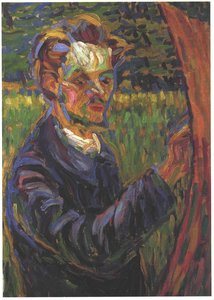
Erich Mayer
1940 - , Alemania
Datos clave
- Artistas Que Influyeron:
- Winslow Homer
- Henri Matisse
- Fecha De Fallecimiento: 1960
- Fecha De Nacimiento: 1876
- Influenciado Por: ['Henk Pierneef']
- Lugar De Nacimiento: Karlsruhe, Alemania
- Movimiento Artístico: Pintura en acuarela
- Nacionalidad: Alemán-Sudafricano
- Nombre Completo: Erich Ernst Karl Mayer
- Obras Notables: ['Estudio de baobab']
Artículos relacionados
Las 25 Obras Maestras del MET: Arte, Historia y Decoración para tu Hogar
Descubre las 25 obras maestras del MET de Nueva York: Van Gogh, Monet, Rembrandt y más. Explora la historia, el arte y los colores que inspiran tu hogar. Reproducciones de museo en OriginalUniqueArt.com.

Acuarelas Legendarias: 10 Obras Maestras que Transformaron el Arte | OriginalUniqueArt
Descubre 10 acuarelas legendarias de Turner, Monet y Sargent que revolucionaron el arte. Explora la historia, técnica y belleza de estas obras maestras impresionistas y románticas. Reproducciones de museo en OriginalUniqueArt.com.
Las 25 Obras Maestras del National Gallery of Art: Arte, Historia y Decoración Exclusiva
Descubre las 25 obras maestras del National Gallery of Art, Washington. Explora la historia de Cézanne, Matisse, Picasso y más. Encuentra reproducciones de arte exclusivas e ideas para decorar tu hogar con lienzos inolvidables en OriginalUniqueArt.com.

Katsushika Hokusai: Las 25 Obras Maestras del Ukiyo-e que Transformaron el Arte Japonés | OriginalUniqueArt
Descubre las 25 obras maestras de Katsushika Hokusai, el genio del ukiyo-e. Explora 'La Gran Ola', paisajes japoneses y su impacto en el arte moderno. Reproducciones de alta calidad para tu hogar en OriginalUniqueArt.com.

John Constable: Las 25 Obras Maestras del Paisaje Inglés | OriginalUniqueArt
Descubre las 25 obras maestras de John Constable, el pintor romántico inglés que capturó la belleza del paisaje. Explora su técnica, historia y significado en OriginalUniqueArt.com. Reproducciones de arte de alta calidad para tu hogar.

