Cambiar a impresiones
 Ver más







































 Para obras de arte o reproducciones que midan más de 105 cm (aproximadamente 41 pulgadas) en cualquiera de sus lados, el marco se enviará como un kit desmontado. Este método garantiza una entrega segura y evita daños durante el transporte.


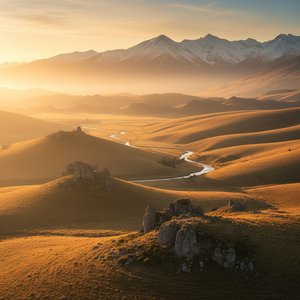
Elioth Gruner was born in New Zealand and arrived in Australia. He studied with Julian Ashton at the Art Society of New South Wales where he met the flamboyant George Lambert, an artist whose work would inspire Gruner. He died in Sydney in 1939, alone and destitute, a few weeks after the declaration of war between Great Britain and the Commonwealth and Germany.Gruner was one of the most popular landscape artists working in Australia in the period from c.1910 to 1939. He was awarded the Wynne Prize for landscape at the Art Gallery of New South Wales no fewer than 7 times from 1916 to 1937.Landscape is one of a number of works painted when Gruner discovered the Murrumbidgee River whilst staying at a property near Yass in 1929. He returned to this area a number of times over the next ten years and produced some of his major late works. The clarity of light in the region particularly impressed him and this is beautifully expressed in this picture.Gruner
Preguntas y respuestas
¿Cuál es la luminancia de "Landscape" de Elioth Gruner?
Los colores de "Landscape" presentan una luminancia de Gentle Luminance.
¿Permaneció "Landscape" en el país de origen de su artista?
No; la obra se encuentra en el extranjero. Elioth Gruner nació en Nueva Zelanda, y el original de "Landscape" se encuentra en un museo de Australia.
¿Cómo se relaciona el tema de "Landscape" con la temática habitual de Elioth Gruner?
"Landscape" representa landscape, rural australia, murrumbidgee river, tranquility, light study, impressionism, australian art, serene valley, mientras que los temas recurrentes de Elioth Gruner son late works, light studies, wynne prize winner", heidelberg school, plein air, julian ashton, rural life, australian landscape. Al comparar ambos, se observa cómo la obra se relaciona con los temas habituales del artista.
 Ver en contexto

 Enviar
 Compartir
 Detalles
 Guía


 Descargar
 Similares
 Radiografía
 Presentación de diapositivas
 Preguntas y respuestas
 Estadísticas