- Inicio

- Impresión en lienzo
- Egon Schiele
- Título traducido: Untitled (893)
 Preview
 Encargar reproducción Comprar imagen en alta resolución
 Enviar
 Compartir
 Detalles
 Añadir a favoritos

 Descargar
 Similares
 Radiografía
 Presentación de diapositivas
Título traducido: Untitled (893)

 Ver más
Giclée / Impresión de arte
Impresión giclée o en lienzo de calidad de museo con producción rápida y opciones de acabado flexibles.




P118B $10

P118H $10

P118W $10

P438Z $10

P508JH $12

P508YH $12

P805H $10

P805Z $10

P919BZ $10

P919G $10

P919XJ $10

P959ZH $10

P968JZ $12

W106C $8

W218G $10

W218JH $8

W218Y $10

W307PJ $10

W316G $10

W316PJ $8

W316Y $10

W398PJ $8

W4111J $10

W500HY $15

W500JH $15

W692G $12

W849H $8

W940BG $15

W953PJ $8




Elija entre nuestros tamaños predefinidos que respetan las proporciones originales de la obra.

Puede introducir sus propias dimensiones para adaptarse a un marco o espacio específico. Si el tamaño seleccionado no coincide con las proporciones de la imagen original, recortaremos la obra de arte o extenderemos la imagen con un borde con efecto espejo o de color sólido. Se enviará una maqueta digital para su aprobación antes de que comience la producción.
Tenga en cuenta que la vista previa en pantalla no refleja el recorte o la extensión real. Solo la maqueta mostrará con precisión la composición final.
Aunque existen tamaños personalizados, recomendamos seleccionar una dimensión de la lista predefinida para preservar las proporciones originales.
Entrega mundial () en 2 semanas en lugar de las 4/5 semanas estándar. (26 julio)

Envío exprés gratuito a todo el mundo

Lienzo de lino de alta calidad

Seguro de envío total

Garantía de reembolso de impuestos aduaneros

Garantía de fidelidad de color

Política de devolución de 60 días (solo por defectos)

Garantía de devolución del 100% del dinero

Descuento por pedido múltiple
 La opción de vidrio solo está disponible en tamaños inferiores a 110 cm.

Título traducido: Untitled (893)
Giclée / Impresión de arte
Tamaño de la reproducción
-


Precio total final
-
Descripción de la obra
A Gaze Into The Soul: Decoding Egon Schiele’s Untitled Portrait
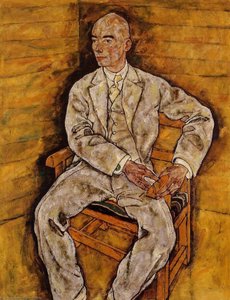
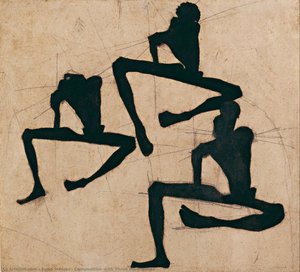
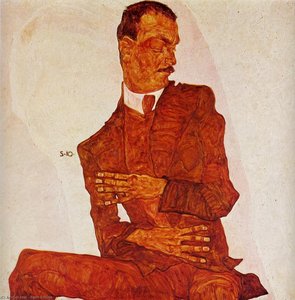
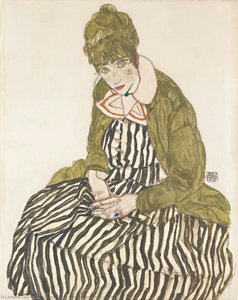
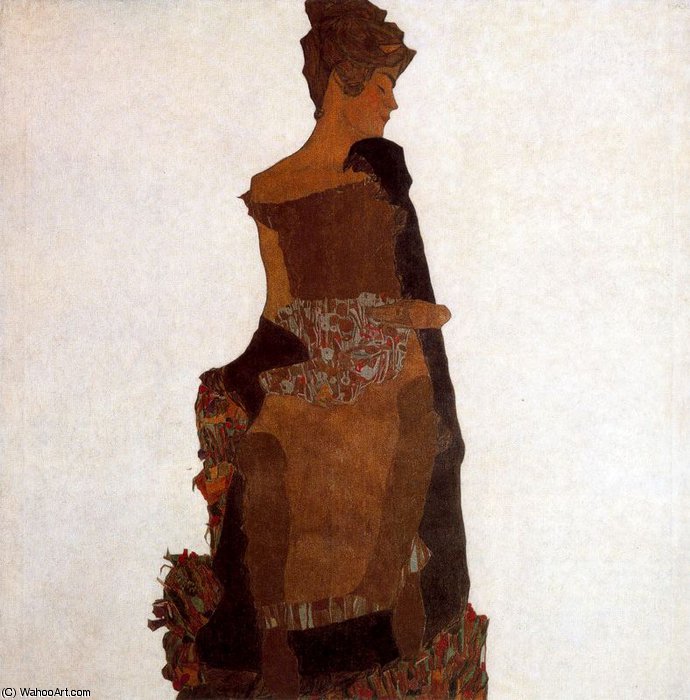
Egon Schiele's *untitled (893)* is not merely a portrait; it’s an encounter. The woman depicted, rendered in earthy browns and imbued with a palpable sense of self-possession, meets the viewer’s gaze – or rather, looks slightly downward *at* us – with an unsettling directness. This isn't the coy glance of traditional portraiture designed to please; it is a study in psychological intensity, characteristic of Schiele’s Expressionist approach. The simplicity of her attire—a long, flowing brown dress—draws attention not to fashion or status, but to the figure herself, emphasizing the contours of her body and the weight of her presence. A handbag casually placed on the ground adds a touch of everyday reality, grounding the image while simultaneously hinting at a life lived beyond the canvas’s borders. The painting's vintage aesthetic isn't simply about age; it speaks to a deliberate rejection of academic polish in favor of raw emotional honesty.The Crucible of Vienna and Schiele’s Artistic Rebellion
To understand *untitled (893)*, one must consider the turbulent artistic climate of early 20th-century Vienna. A city steeped in tradition yet simmering with avant-garde ideas, Vienna was a breeding ground for artistic rebellion. Gustav Klimt, a mentor to Schiele, had already begun to challenge conventional norms with his opulent and often provocative works. However, Schiele pushed even further, stripping away the decorative elements and delving into the darker recesses of the human psyche. Born in 1890 amidst personal hardship – the early death of his father and a controlling upbringing – Schiele’s art became a vehicle for exploring themes of sexuality, mortality, and alienation. His work was frequently met with scandal and censorship, yet it resonated deeply with a generation grappling with existential anxieties. The painting embodies this spirit of rebellion; it is an unapologetic exploration of the human form and emotional state, rendered with a boldness that shocked and captivated audiences.Technique as Emotional Language
Schiele’s technique in *untitled (893)* is integral to its emotional impact. He eschews smooth blending and idealized forms, opting instead for angular lines, distorted proportions, and a deliberately rough application of paint. This isn't carelessness; it’s a conscious choice to convey unease and vulnerability. The woman’s body appears almost brittle, her posture simultaneously confident and fragile. Schiele’s masterful use of line doesn’t merely define form; it *expresses* emotion. Each stroke seems charged with energy, revealing the artist's own internal struggles and anxieties. This deliberate rawness is a hallmark of Expressionism, where subjective experience takes precedence over objective representation. The painting isn’t about creating a likeness; it’s about capturing an essence—a fleeting moment of psychological truth.A Legacy Of Introspection
Though the specific identity of the woman in *untitled (893)* remains unknown, her image transcends individual portraiture to become a universal symbol of female strength and introspection. The painting invites us to contemplate not only the subject’s inner life but also our own relationship to vulnerability, self-awareness, and the complexities of human emotion. Schiele's tragically short life – he died in 1918 during the Spanish flu pandemic at just 28 years old – adds another layer of poignancy to his work. His paintings serve as a powerful reminder of the fragility of existence and the enduring power of art to confront uncomfortable truths.- Artist: Egon Schiele
- Birth Year: 1890
- Death Year: 1918
- Birth City: Vienna
- Birth Country: Croatia
Further Research:
Biografía del artista
Egon Schiele: Vida y Legado
Primeros Años e Influencias
- Nacido el 12 de junio de 1890 en Tulln an der Donau, Baja Austria, Egon Schiele experimentó una infancia moldeada tanto por la inclinación artística como por las dificultades personales.
- Su padre, Adolf Schiele, era jefe de estación, instando en el joven Egon una fascinación por los trenes – un motivo que aparecería sutilmente más tarde en su obra.
- El temprana fallecimiento de su padre a causa de sífilis cuando Schiele tenía 14 años lo impactó profundamente, llevando a su crianza por parte de su tío materno, Leopold Czihaczek.
- Czihaczek brindó apoyo pero también ejerció una influencia controladora, que contribuyó al complejo paisaje emocional reflejado en el arte de Schiele.
Trayectoria Artística y Desarrollo
- La formación artística de Schiele comenzó en la Kunstgewerbeschule (Escuela de Artes y Oficios) en Viena, pero pronto se trasladó a la Akademie der bildenden Künste (Academia de Bellas Artes).
- Pronto se sintió decepcionado con el enfoque conservador de la Academia, encontrándola sofocante para su visión expresiva. Finalmente, abandonó la formación formal.
- Las influencias tempranas incluyeron a Gustav Klimt, una figura destacada en la Sezión Vienesa, cuyo estilo decorativo y exploración del simbolismo resonaron con Schiele. Sin embargo, Schiele pronto desarrolló un estilo distintivamente individual.
- Sus primeras obras a menudo presentaban retratos y autorretratos inquietantes, caracterizados por figuras distorsionadas y una intensa emotividad.
Características y Temas Clave
- El arte de Schiele es reconocido por su honestidad cruda y profundidad psicológica. Exploró sin miedo temas de sexualidad, muerte, ansiedad e aislamiento.
- Su estilo distintivo presenta figuras alargadas, poses contorsionadas y líneas expresivas que transmiten una sensación de vulnerabilidad y tormento emocional.
- Autorretratos constituyen una parte significativa de su obra, ofreciendo atisbos íntimos en su mundo interior.
- También creó numerosos retratos de otros, a menudo representando a las personas con un realismo sin tapujos e insight psicológico.
- La pintura de paisajes jugó un papel en su trabajo, demostrando su dominio de la forma y el color, aunque fue menos central que sus obras figurativas.
Logros Importantes y Reconocimiento
- A pesar de enfrentar censura y desafíos legales (incluyendo una breve prisión por supuestamente corromper a menores con su arte), Schiele ganó reconocimiento en los círculos vanguardistas de Viena.
- Co-fundó el Neues Wiener Kunstgruppe (Nuevo Grupo de Arte Vienés) en 1909, mostrando su obra junto con otros artistas progresistas.
- Obras significativas incluyen Autorretrato con Physalis, Pareja Abraza y Paisaje de Campo (Kreuzberg cerca de Krumau).
- Para el tiempo de su prematura muerte, Schiele se había establecido como una figura destacada en el Expresionismo Austríaco.
Significado Histórico y Legado
- Egon Schiele murió en 1918 durante la pandemia de gripe española a los 28 años, truncando una prometedora carrera.
- Su obra influyó profundamente en las generaciones posteriores de artistas, particularmente aquellos interesados en explorar temas psicológicos y desafiar las normas artísticas convencionales.
- El enfoque audaz de Schiele en la forma y el tema sigue resonando con el público actual, convirtiéndolo en una de las figuras más importantes e influyentes del arte del siglo XX temprano.
- Sus pinturas se conservan ahora en importantes colecciones de museos en todo el mundo, y las reproducciones de su obra están ampliamente disponibles, asegurando que su legado artístico perdure.

Egon Schiele
1890 - 1918 , Croacia
Datos clave
- Artistas Que Influyeron: ['Gustav Klimt']
- Fecha De Muerte: 1918
- Fecha De Nacimiento: 12 de junio de 1890
- Influenciado A Artistas: ['Generaciones posteriores']
- Lugar De Nacimiento: Viena, Croacia
- Movimiento Artístico: Expresionismo
- Nacionalidad: Austriaco
- Nombre Completo: Egon Schiele
- Obras Notables:
- Autorretrato con Physalis
- Pareja Abraza
- Paisaje de Campo (Kreuzberg)
Artículos relacionados

El Encanto Perenne del Arte Vintage: Reproducción, Personalización y Accesibilidad con
Descubre el encanto del arte vintage con . Reproducciones hechas a mano, personalización experta y acceso fácil a obras maestras. ¡Transforma tu hogar con arte!
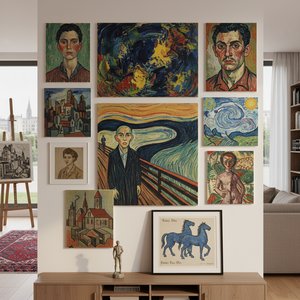
Expresionismo: 10 Obras Maestras que Revolucionaron el Arte |
Descubre las 10 obras maestras del Expresionismo que marcaron un hito en la historia del arte. Explora a Munch, Kirchner y Kandinsky en . Reproducciones de arte de museo para transformar tu hogar.
Personalización del Retrato Contemporáneo: Imaginación Creativa y Resonancia Emocional en la Comisión Artística
Descubre el arte de los retratos contemporáneos personalizados. Comisiona una obra única a artistas expertos y transforma tus recuerdos en un legado visual. Calidad museo, asesoramiento gratuito.

Crimson Threads of Narrative: Exploring Symbolism & Representation in Artworks Featuring the Red Dress
Explore the rich symbolism of the red dress in art history! From ancient power displays to iconic portraits like Cézanne’s 'Madame Cezanne', discover the cultural and artistic significance behind this captivating color. Expert analysis & insights.
Echoes of Eras Past: Exploring Themes & Techniques in Vintage Art Collections
Explore the captivating world of vintage art! Discover historical movements, iconic themes & collecting tips. Find handmade reproductions & expert appraisal at OriginalUniqueArt.