

 Vista previa
 Compartir
 Compartir
 Ver detalles
 Guía
Guía

 Descargar
 Ver artículos similares
 Radiografía
 Presentación de diapositivas
 Estadísticas
Grossglockner


 Leer más
Giclée / Impresión de arte
Impresiones giclée o en lienzo de calidad de museo con producción rápida y opciones de acabado flexibles. ( Encargar reproducción pintada a mano Ver versión en imagen digital)




P118B €10

P118H €10

P118W €10

P438Z €10

P508JH €12

P508YH €12

P805H €10

P805Z €10

P919BZ €10

P919G €10

P919XJ €10

P959ZH €10

P968JZ €12

W106C €8

W218G €10

W218JH €8

W218Y €10

W307PJ €10

W316G €10

W316PJ €8

W316Y €10

W398PJ €8

W4111J €10

W500HY €15

W500JH €15

W692G €12

W849H €8

W940BG €15

W953PJ €8




Elija entre nuestros tamaños predefinidos que respetan las proporciones originales de la obra.

Introduzca el ancho y el alto que necesite para adaptarse a su marco o pared. Una impresión solo puede recortarse, nunca hacerse más grande que la imagen original, por lo que un tamaño con una forma distinta perderá parte de la obra. Le enviaremos una maqueta digital para su aprobación antes de realizar cualquier impresión. La imagen que se muestra en esta página no refleja el recorte real; solo la maqueta lo hace.
Envío a todo el mundo () en 2 semanas en lugar de las 4/5 semanas estándar. (20 octubre)

Envío exprés gratuito a todo el mundo

Lienzo de lino de alta calidad

Seguro de envío completo

Garantía de reembolso de impuestos aduaneros

Garantía de fidelidad cromática exacta

Política de devolución de 100 días (solo por defectos)

Garantía de devolución del 100% del dinero

Oferta por volumen
 La opción de vidrio solo está disponible en tamaños inferiores a 110 cm.

Grossglockner
Giclée / Impresión de arte
Tamaño de la reproducción
-


Precio total
€ 70
A Sublime Vision of Alpine Majesty
- Subject Matter: Compton’s “Grossglockner” captures the grandeur of Austria's Grossglockner mountain massif, one of Europe’s highest peaks. The painting depicts a panoramic vista showcasing the imposing mountains bathed in soft sunlight, emphasizing their dramatic silhouette against expansive skies.
- Style: This artwork exemplifies Impressionistic tendencies, prioritizing atmospheric effects over precise representation. Compton skillfully blends brushstrokes to convey the ephemeral quality of light and shadow, creating an immersive experience for the viewer akin to witnessing the mountain landscape firsthand.
- Technique: Employing watercolor on paper—a technique favored by artists of his era—Compton achieved remarkable luminosity and tonal subtlety. Layers of translucent washes build up gradually, capturing the nuances of color and texture—the glistening snow surfaces, the textured rock faces, and the billowing clouds—resulting in a breathtakingly realistic depiction.
- Historical Context: Created in 1918, “Grossglockner” emerged during a period of artistic experimentation following Impressionism. The painting reflects the broader fascination with Alpine landscapes prevalent in European art circles at the time, fueled by burgeoning tourism and scientific exploration. Compton’s work aligns perfectly with the Romantic spirit—a yearning for sublime beauty and contemplation amidst untamed nature.
- Symbolism: Beyond its visual splendor, “Grossglockner” carries symbolic resonance. The towering mountains represent resilience, permanence, and spiritual aspiration—themes deeply rooted in Quaker beliefs. Furthermore, the serene atmosphere evokes feelings of tranquility and awe, inviting viewers to reconnect with the grandeur of the natural world.
The painting’s emotional impact is undeniable; it transports us back to a time when artists sought inspiration from the sublime—a concept championed by Edmund Burke and Coleridge—to express profound spiritual truths. Compton's masterful watercolor technique ensures that this vision of Grossglockner remains captivating for generations to come, offering a timeless reminder of the beauty and majesty of Alpine scenery.
Preguntas y respuestas
¿Qué lugar ocupa "Grossglockner" entre los temas recurrentes de Edward Theodore Compton?
Los temas recurrentes de Edward Theodore Compton incluyen romantic landscape, german alpine art, moral quaker values, watercolor technique, artist legacy; "Grossglockner" se centra en mountains, landscape, watercolor, alpine scene, snow peaks, panoramic view, victorian art.
¿De qué está hecho "Grossglockner"?
La técnica de "Grossglockner" de Edward Theodore Compton es Acrylic. Las reproducciones pretenden recrear la apariencia de esta técnica.
¿Los colores de "Grossglockner" de Edward Theodore Compton son saturados o tenues?
"Grossglockner" de Edward Theodore Compton está registrado con una saturación de Muted.
Biografía del artista
Edward Theodore Compton: Pioneer of Alpine Watercolor
Edward Theodore Compton, a singular figure in the artistic landscape of late 19th and early 20th century Europe, stands as an extraordinary testament to the intersection of art and adventure—a man who dared to conquer mountains while simultaneously capturing their sublime beauty on watercolor paper. Born in Stoke Newington, London, in 1849, Compton’s upbringing within a Quaker household instilled a profound appreciation for simplicity and moral integrity—values that would undoubtedly shape his artistic vision. Despite attending various art schools including the Royal Academy, he largely pursued self-education, honing his skills through meticulous observation and tireless experimentation. His journey to Darmstadt, Germany, in 1867, marked a pivotal moment, propelling him into a vibrant artistic community led by Grand Duke Ludwig III and fostering an enduring fascination with alpine scenery—a fascination that would define the trajectory of his life’s work.Early Influences: The Seeds of Inspiration
Compton's formative years were profoundly impacted by Quaker spirituality and nurtured by his father’s unwavering passion for art, exposing him to influential Impressionist painters like Claude Monet and Pierre-Auguste Renoir. These artists championed the pursuit of capturing fleeting moments of light and color—a stylistic approach that resonated deeply with Compton’s sensibilities and would become a cornerstone of his artistic technique. The ethereal beauty of Monet's landscapes served as an enduring model for Compton, guiding him toward conveying similar atmospheric effects in his own paintings.Academic Training & Darmstadt: Finding His Artistic Voice
Although he didn’t formally graduate from the Royal Academy—a decision reflecting his preference for independent learning—Compton benefited immensely from studying alongside Alice, Princess of Hesse, gaining invaluable experience in artistic technique and fostering connections within a burgeoning artistic milieu. Darmstadt became Compton's crucible for honing his skills, immersing him in a stimulating environment where he absorbed influences from German Romanticism and embraced innovative approaches to watercolor painting. This period solidified his belief that observation—coupled with artistic sensitivity—was paramount to achieving mastery.The Alpine Obsession: From Sketches to Masterpieces
A transformative trip to the Bernese Oberland in 1868 ignited Compton’s lifelong devotion to capturing the majesty of the Alps, particularly the iconic trio – Eiger, Mönch and Jungfrau. The breathtaking panorama captivated him, inspiring a series of watercolor paintings that would become synonymous with alpine art—paintings imbued with an unparalleled sense of grandeur and realism. His meticulous sketches documented the rugged terrain and dramatic lighting conditions, demonstrating an unwavering commitment to accuracy alongside artistic sensitivity. These preparatory drawings served as blueprints for his larger canvases, ensuring that every brushstroke faithfully reflected the essence of the mountain landscape. He believed that “the artist must strive to reproduce nature with fidelity,” a principle that underpinned his entire artistic practice.Technique: Layers of Light and Color
Compton’s distinctive style involved layering thin washes of watercolor pigment onto paper—a technique he perfected through years of experimentation—achieving luminous effects that conveyed the ethereal beauty of mountain landscapes. He skillfully manipulated color palettes, utilizing subtle gradations to depict the shifting hues of sunlight filtering through alpine peaks. This meticulous approach demanded patience and precision, reflecting Compton’s dedication to achieving artistic excellence.Notable Works: Echoes of Majesty
Among his most celebrated paintings are “Deutsch Im Wald von Valdoniello” and “Deutsch Grohmannspitze und (rechts) Fünffingerspitzen”—works that exemplify his masterful rendering of alpine vistas with breathtaking clarity and emotional resonance. These canvases capture the dramatic interplay of light and shadow, conveying the sublime grandeur of the mountains while simultaneously hinting at the challenges faced by climbers attempting to ascend their formidable slopes. They stand as enduring symbols of Compton’s artistic vision—a testament to his ability to transform observation into evocative art.A Mountaineer's Eye: Beyond the Canvas
Compton wasn’t merely a painter; he was an intrepid mountaineer who ascended over 300 peaks, including 27 first ascents—a remarkable feat that solidified his reputation as one of Britain’s foremost climbers. His expeditions to Austria, Scandinavia, North Africa, Corsica and Spain yielded invaluable visual material for his artwork, informing his compositions with firsthand experience of mountain environments. The photograph “Deutsch Allalin , Strahl und Rimpfischhorn von der Ostflanke des Alphubel” showcases Compton's dedication to topographical accuracy combined with artistic vision—a fusion that elevated mountaineering art to new heights.Legacy: An Artistic Icon
Compton’s contribution to alpine art is undeniable; he elevated watercolor painting to new levels of sophistication, establishing it as the medium of choice for depicting mountainous landscapes with unparalleled beauty and realism. His unwavering commitment to observation and artistic integrity—coupled with his daring adventures—secured his place in the annals of art history as a true pioneer—a man who embodied the spirit of exploration and creativity while simultaneously creating enduring masterpieces that continue to inspire awe and admiration today. He remains an exemplar of how passion for both art and science can converge to produce transformative results.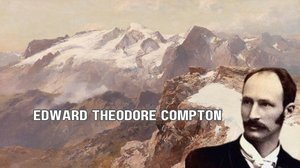
Edward Theodore Compton
1849 - 1921 , Reino Unido
Datos clave
- Artistic Movement Or Style: Arte alpino
- Artists Or Movements Influenced By This Artist: ['']
- Artists Who Influenced This Artist: ['Impresionismo']
- Date Of Birth: 1849
- Date Of Death: 1921
- Full Name: Edward Theodore Compton
- Nationality: Inglés
- Notable Artworks:
- Deutsch Im Wald von Valdoniello
- Deutsch Grohmannspitze und (rechts) Fünffingerspitzen
- Place Of Birth: Stoke Newington, Londres
Artículos relacionados
Edward Hopper: Las 25 Obras Maestras que Definen la Soledad Moderna | OriginalUniqueArt
Descubre las 25 obras maestras de Edward Hopper, el pintor de la soledad moderna. Explora su realismo americano, luz y sombra, e icónicas escenas urbanas. Reproducciones de arte en OriginalUniqueArt.com para decorar tu hogar con estilo.

Visiones Efímeras: Historia y Resonancia Emocional de la Pintura Acuarela
Descubre la fascinante historia de la acuarela, desde sus orígenes hasta su expresión contemporánea. Explora técnicas, artistas clave como Paul Klee y encuentra reproducciones de alta calidad en OriginalUniqueArt.

Acuarelas Legendarias: 10 Obras Maestras que Transformaron el Arte | OriginalUniqueArt
Descubre 10 acuarelas legendarias de Turner, Monet y Sargent que revolucionaron el arte. Explora la historia, técnica y belleza de estas obras maestras impresionistas y románticas. Reproducciones de museo en OriginalUniqueArt.com.

Ephemeral Visions: Exploring the Artistic Legacy & Contemporary Practice of Watercolor Painting
Explore the captivating world of watercolor painting! Discover its rich history, essential techniques, influential artists & collecting tips. A comprehensive guide for art enthusiasts from OriginalUniqueArt.

Ephemeral Visions: Exploring the Artistic Legacy & Nuances of Watercolor Painting
Explore the captivating world of watercolor painting! Discover its rich history, essential techniques, influential artists & collecting tips from art experts. A comprehensive guide for enthusiasts.