

 Vista previa
 Compartir
 Compartir
 Ver detalles
 Guía
Guía

 Descargar
 Ver artículos similares
 Radiografía
 Presentación de diapositivas
 Estadísticas
Deutsch Im Wald von Valdoniello
 Oil On Canvas
- WallArt
- Romantic Landscape
 1884
1884- 19th Century
 134.0 x 94.0 cm
 Leer más
Adquiera una imagen digital de alta resolución y optimizada, muy superior a la vista previa en línea.
Cada archivo es preparado meticulosamente por nuestros especialistas internos mediante el uso de herramientas avanzadas y un experto retoque manual. Nos aseguramos de que cada imagen posea una claridad excepcional, una precisión cromática impecable y un detalle minucioso.
El archivo final se entrega por correo electrónico en un plazo de 72 horas, optimizado para su uso inmediato en entornos profesionales, editoriales y de impresión. Esta es la misma calidad en la que confían los estudios de diseño, las editoriales y las galerías de primer nivel.
Imagen Digital
Descarga un archivo de alta resolución para exhibición personal, impresión y proyectos creativos. ( Cambiar a formato impreso Encargar reproducción pintada a mano)
Incluido en cada pedido de imágenes digitales
Entrega digital experta, garantizada.
Al elegir OriginalUniqueArt.com, no solo está adquiriendo una imagen; está recibiendo una obra de arte digital mejorada profesionalmente, elaborada con precisión y respaldada por una garantía de satisfacción. Esto es todo lo que incluye su pedido, automáticamente:

Entrega inmediata por email
Recibirá su archivo de imagen digital en alta resolución por correo electrónico en un plazo de 72 horas tras realizar su pedido, listo para su uso inmediato.

Archivo digital optimizado por IA
Su obra de arte se optimiza profesionalmente mediante herramientas avanzadas de IA y edición manual, garantizando el máximo detalle, claridad y precisión cromática.

Reenvío gratuito de por vida
¿Has borrado o perdido tu archivo por error? No te preocupes: te lo volveremos a enviar en cualquier momento, sin coste adicional.

Sin gastos de importación, siempre
Disfrute de su obra de arte al instante sin aduanas, aranceles ni gastos de envío; las descargas digitales siempre están libres de impuestos.

Garantía de precisión de color
Garantizamos que su imagen digital refleje los colores originales con la mayor fidelidad posible, mediante el uso de herramientas profesionales y gestión del color.

Garantía de satisfacción de 100 días
Si no está satisfecho con su imagen digital, la revisaremos o le reembolsaremos el 100% en un plazo de 100 días, sin preguntas.

100% Garantía de devolución de dinero
¿No está satisfecho? Obtenga un reembolso completo dentro de los 100 días posteriores a la recepción de su archivo digital, sin preguntas.

Descuentos por volumen
Compra 3 imágenes, ahorra 10% - Compra 5, ahorra 15% - Compra 10+, ahorra 20%. Ideal para proyectos creativos, galerías y agencias.
Deutsch Im Wald von Valdoniello: A Snapshot of Alpine Resolve
Edward Theodore Compton’s “Deutsch Im Wald von Valdoniello,” painted in 1884, is more than just a landscape; it's a potent distillation of Victorian-era exploration, artistic ambition, and the quiet fortitude required to confront the sublime. This oil on canvas depicts a group of men – likely surveyors or perhaps even early mountaineering pioneers – standing amidst a dense, ancient forest in the Valdoniello region of Germany. The scene is rendered with meticulous detail, characteristic of Compton’s style, showcasing his dedication to capturing not just the visual appearance but also the very *atmosphere* of the Alpine wilderness.
The composition immediately draws the eye towards the central figures, their postures suggesting a moment of deliberation or perhaps even weary contemplation. They are framed by towering pines and fir trees, their dark green hues contrasting sharply with the lighter tones of the sky and distant mountains. The subtle use of light and shadow adds depth to the scene, creating a sense of realism that was highly valued in academic art at the time. Note the careful attention paid to textures – the rough bark of the trees, the worn leather of their clothing, the damp earth beneath their feet – all contributing to an immersive experience for the viewer.
A Window into the Alpine Spirit
Compton’s work emerged during a period of intense interest in exploration and scientific discovery. The late 19th century witnessed a surge in expeditions to uncharted territories, driven by both romantic ideals and practical concerns – mapping resources, establishing trade routes, and, crucially, understanding the natural world. Compton's paintings were frequently commissioned by organizations like the German Alpine Association (DAV), reflecting this broader trend. The painting embodies the spirit of adventure, portraying individuals confronting a challenging environment with determination and skill.
Furthermore, the scene speaks to the burgeoning field of mountaineering itself. While not explicitly depicting a climb, the presence of these men in such a rugged landscape suggests their pursuit of conquering peaks – a symbolic representation of human ambition and resilience. The painting’s quiet dignity reflects the growing respect for nature's power and the courage required to engage with it.
Technique and Style: A Masterful Blend
Compton was renowned for his mastery of watercolor, often employing a technique he called “alpine watercolor,” which involved layering thin washes of color to create luminous effects. This is evident in "Deutsch Im Wald von Valdoniello," where subtle gradations of green and blue evoke the misty atmosphere of the forest. His brushwork is precise yet fluid, conveying both detail and movement. The use of impasto – thick application of paint – adds texture and depth to the trees and rocks, further enhancing the realism of the scene.
The painting’s palette is dominated by cool tones—greens, blues, and grays—which contribute to its sense of tranquility and remoteness. However, flashes of warm color—such as the golden light filtering through the trees—add a touch of drama and highlight the figures' presence within the landscape.
A Timeless Appeal
"Deutsch Im Wald von Valdoniello" transcends its historical context to offer a timeless appeal. It’s a painting that invites contemplation, prompting us to consider our own relationship with nature and the challenges of human endeavor. The scene's quiet strength and evocative atmosphere make it a compelling addition to any collection, offering a glimpse into a bygone era of exploration and artistic brilliance. Its detailed rendering and masterful use of light and shadow continue to captivate viewers today, solidifying Compton’s place as one of the most significant landscape painters of his time.
Biografía del artista
Edward Theodore Compton: Pioneer of Alpine Watercolor
Edward Theodore Compton, a singular figure in the artistic landscape of late 19th and early 20th century Europe, stands as an extraordinary testament to the intersection of art and adventure—a man who dared to conquer mountains while simultaneously capturing their sublime beauty on watercolor paper. Born in Stoke Newington, London, in 1849, Compton’s upbringing within a Quaker household instilled a profound appreciation for simplicity and moral integrity—values that would undoubtedly shape his artistic vision. Despite attending various art schools including the Royal Academy, he largely pursued self-education, honing his skills through meticulous observation and tireless experimentation. His journey to Darmstadt, Germany, in 1867, marked a pivotal moment, propelling him into a vibrant artistic community led by Grand Duke Ludwig III and fostering an enduring fascination with alpine scenery—a fascination that would define the trajectory of his life’s work.Early Influences: The Seeds of Inspiration
Compton's formative years were profoundly impacted by Quaker spirituality and nurtured by his father’s unwavering passion for art, exposing him to influential Impressionist painters like Claude Monet and Pierre-Auguste Renoir. These artists championed the pursuit of capturing fleeting moments of light and color—a stylistic approach that resonated deeply with Compton’s sensibilities and would become a cornerstone of his artistic technique. The ethereal beauty of Monet's landscapes served as an enduring model for Compton, guiding him toward conveying similar atmospheric effects in his own paintings.Academic Training & Darmstadt: Finding His Artistic Voice
Although he didn’t formally graduate from the Royal Academy—a decision reflecting his preference for independent learning—Compton benefited immensely from studying alongside Alice, Princess of Hesse, gaining invaluable experience in artistic technique and fostering connections within a burgeoning artistic milieu. Darmstadt became Compton's crucible for honing his skills, immersing him in a stimulating environment where he absorbed influences from German Romanticism and embraced innovative approaches to watercolor painting. This period solidified his belief that observation—coupled with artistic sensitivity—was paramount to achieving mastery.The Alpine Obsession: From Sketches to Masterpieces
A transformative trip to the Bernese Oberland in 1868 ignited Compton’s lifelong devotion to capturing the majesty of the Alps, particularly the iconic trio – Eiger, Mönch and Jungfrau. The breathtaking panorama captivated him, inspiring a series of watercolor paintings that would become synonymous with alpine art—paintings imbued with an unparalleled sense of grandeur and realism. His meticulous sketches documented the rugged terrain and dramatic lighting conditions, demonstrating an unwavering commitment to accuracy alongside artistic sensitivity. These preparatory drawings served as blueprints for his larger canvases, ensuring that every brushstroke faithfully reflected the essence of the mountain landscape. He believed that “the artist must strive to reproduce nature with fidelity,” a principle that underpinned his entire artistic practice.Technique: Layers of Light and Color
Compton’s distinctive style involved layering thin washes of watercolor pigment onto paper—a technique he perfected through years of experimentation—achieving luminous effects that conveyed the ethereal beauty of mountain landscapes. He skillfully manipulated color palettes, utilizing subtle gradations to depict the shifting hues of sunlight filtering through alpine peaks. This meticulous approach demanded patience and precision, reflecting Compton’s dedication to achieving artistic excellence.Notable Works: Echoes of Majesty
Among his most celebrated paintings are “Deutsch Im Wald von Valdoniello” and “Deutsch Grohmannspitze und (rechts) Fünffingerspitzen”—works that exemplify his masterful rendering of alpine vistas with breathtaking clarity and emotional resonance. These canvases capture the dramatic interplay of light and shadow, conveying the sublime grandeur of the mountains while simultaneously hinting at the challenges faced by climbers attempting to ascend their formidable slopes. They stand as enduring symbols of Compton’s artistic vision—a testament to his ability to transform observation into evocative art.A Mountaineer's Eye: Beyond the Canvas
Compton wasn’t merely a painter; he was an intrepid mountaineer who ascended over 300 peaks, including 27 first ascents—a remarkable feat that solidified his reputation as one of Britain’s foremost climbers. His expeditions to Austria, Scandinavia, North Africa, Corsica and Spain yielded invaluable visual material for his artwork, informing his compositions with firsthand experience of mountain environments. The photograph “Deutsch Allalin , Strahl und Rimpfischhorn von der Ostflanke des Alphubel” showcases Compton's dedication to topographical accuracy combined with artistic vision—a fusion that elevated mountaineering art to new heights.Legacy: An Artistic Icon
Compton’s contribution to alpine art is undeniable; he elevated watercolor painting to new levels of sophistication, establishing it as the medium of choice for depicting mountainous landscapes with unparalleled beauty and realism. His unwavering commitment to observation and artistic integrity—coupled with his daring adventures—secured his place in the annals of art history as a true pioneer—a man who embodied the spirit of exploration and creativity while simultaneously creating enduring masterpieces that continue to inspire awe and admiration today. He remains an exemplar of how passion for both art and science can converge to produce transformative results.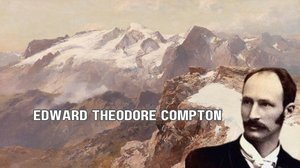
Edward Theodore Compton
1849 - 1921
Datos clave
- Artistic Movement Or Style: Arte alpino
- Artists Or Movements Influenced By This Artist: ['']
- Artists Who Influenced This Artist: ['Impresionismo']
- Date Of Birth: 1849
- Date Of Death: 1921
- Full Name: Edward Theodore Compton
- Nationality: Inglés
- Notable Artworks:
- Deutsch Im Wald von Valdoniello
- Deutsch Grohmannspitze und (rechts) Fünffingerspitzen
- Place Of Birth: Stoke Newington, Londres