
() ·
A painting made for you, by hand
Reproducción al óleo hecha a mano
Óleo sobre lienzo pintado a mano en el tamaño y marco de su elección, realizado por encargo por nuestros artistas. ( Cambiar a impresiones Cambiar a imagen digital)
Descripción del objeto
Discover 'Frederick Shum' by Edward Newling (1920). A stunning oil portrait of an elderly gentleman in formal attire. Realistic style, rich textures & classic composition. Ideal for art collectors.
Biografía del artista
Edward Newling (1890-1964) was a British artist renowned for his portraits of WWI heroes & nobility. Explore his paintings of figures like Albert Ball & McCudden.
 Ver más
from ·
Chapter 1
How large should it be?
Slide to change the size; the picture on the left shows the frame at its real width. The proportions of the original are kept.
Elija entre nuestros tamaños predefinidos que respetan las proporciones originales de la obra.

Indique el ancho y el alto que necesite para adaptarse a su marco o pared. Al tratarse de una obra pintada a mano, si requiere un tamaño con una proporción distinta, el artista puede pintar un poco más alrededor de la imagen o recortarla ligeramente; usted elige. Le enviaremos una maqueta digital para su aprobación antes de comenzar la pintura. La imagen que se muestra en esta página no refleja el resultado real; solo la maqueta lo hace.
Chapter 2
How should it arrive?
Choose the edges of the stretched canvas
Choose your frame

White €1

Blurside €1

Extended €1

P118B €10

P118H €10

P118W €10

P438Z €10

P508JH €12

P508YH €12

P805H €10

P805Z €10

P919BZ €10

P919G €10

P919XJ €10

P959ZH €10

P968JZ €12

W106C €8

W218G €10

W218JH €8

W218Y €10

W307PJ €10

W316G €10

W316PJ €8

W316Y €10

W398PJ €8

W4111J €10

W500HY €15

W500JH €15

W692G €12

W849H €8

W940BG €15

W953PJ €8

H24-GOLD €30

H24-SILVER €30

H36-GOLD €45

H36-SILVER €45
Con marco
Moulding: . Overall size with the frame: .
Chapter 3
Who paints it, and should anything change?
After order, OriginalUniqueArt.com team will email client for instructions and provide a mockup preview
Envío a todo el mundo () en 3-4 semanas en lugar de las 5 semanas estándar. (30 octubre). Sin comprometer la calidad.
Chapter 4
The finishing touches
A nameplate, as in a museum?
Detalles de la placa de bronce grabada
This elegant plaque features the artist's name and the title of the artwork, finely engraved for a timeless presentation.
It is made from bronze with a refined, elegant finish. The text is precisely laser-engraved for a sharp and permanent result. Measuring 9x2 cm, the plaque is compact yet easy to read. It's built to be durable and scratch-resistant, offering a professional, museum-quality look. Mounting is simple thanks to the included adhesive backing.
Detalles de la placa de acrílico transparente
The plaque includes essential engraved details such as the artist's name, the title of the artwork, the date it was created, the type of media used-like oil on canvas or watercolor-a brief description of the piece, and a QR code that links to the complete artwork information.
It is crafted from clear acrylic, offering a sleek, modern appearance. The text is UV-engraved in black to ensure strong visual contrast. With a size of 10x15 cm, it ensures optimal readability. It comes equipped with two metal hooks for secure wall mounting. The plaque is designed to be weather-resistant, making it suitable for various environments, and it includes interactive features that work seamlessly with smartphone scanning.
Detalles de la placa de acrílico negro
This elegant plaque includes engraved information such as the artist's name, the title of the artwork, the date it was created, the type of media used (like oil on canvas or watercolor), a short description of the artwork, and a QR code for quick access to more information.
The plaque itself is made from refined black acrylic with a premium finish. The text is laser-engraved in white for high contrast and readability. Its size is 10x15 cm, designed to be easy to read. It comes with two metal hooks for professional mounting. The design is sleek and fits any interior style. It is also weather-resistant and durable, with built-in digital integration for mobile compatibility.
A protective varnish?
When do you need it?
Chapter 5
Your painting, as you ordered it

Frederick Shum
Técnica de reproducción
Dimensiones de la reproducción
-

Selección de artistas premium
Mayor nivel de detalle, delicadeza y tiempo de producción adicional
-

Enmarcado de reproducción
-
-
Para obras de arte o reproducciones que midan más de 105 cm (aproximadamente 41 pulgadas) en cualquiera de sus lados, el marco se enviará como un kit desmontado. Este método garantiza una entrega segura y evita daños durante el transporte.
Se requiere montaje profesional: este no es un producto para hacer usted mismo (DIY).
El kit debe ser ensamblado y el lienzo tensado por un enmarcador profesional con experiencia, utilizando cola para madera (no incluida), una tenaza para tensar lienzos y sargentos para mantener los bastidores alineados mientras la cola se seca. Un montaje incorrecto o una tensión desigual del lienzo pueden dañar la obra de arte de forma permanente y no están cubiertos por nuestra garantía.
 Para obras de arte o reproducciones que midan más de 105 cm (aproximadamente 41 pulgadas) en cualquiera de sus lados, el marco se enviará como un kit desmontado. Este método garantiza una entrega segura y evita daños durante el transporte.
Se incluyen todos los listones de madera maciza, cortados con precisión según las medidas.
Se ensambla con los tornillos incluidos, además de cola para madera para las uniones de las esquinas, la cual no se incluye y debe ser proporcionada por su enmarcador.
Se requieren herramientas profesionales que no están incluidas: un alicate para tensar lienzos (tensor) y abrazaderas para mantener los bastidores alineados mientras se seca el pegamento.
Importante:
Las uniones de las esquinas requieren cola para madera, los listones deben sujetarse con prensas hasta que la cola esté completamente seca, y para tensar el lienzo en el bastidor ensamblado se requiere una pinza para tensar lienzos. Ninguno de estos elementos está incluido en el kit. Por favor, contacte con un profesional del enmarcado con experiencia antes de realizar un pedido de este tamaño.

Cartela
-
-

Barniz protector
Barniz brillante (realza los colores y protege contra la luz y la humedad)
-

Personalizar mi obra
Ejemplos de lo que se puede personalizar: sustituir el rostro por una foto del cliente; añadir una mascota (por ejemplo, cambiar un gato por un perro); incluir un mensaje oculto en el fondo; cambiar el paisaje o los elementos del fondo.
-

Envío urgente
Envío a todo el mundo () en 3 o 4 semanas, en lugar de las 5 semanas habituales. (30 octubre). Sin comprometer la calidad.
-
Envío urgente
Envío internacional () en 5 semanas. (6 noviembre).
Incluido
Precio total final
€ 265
La opción de vidrio solo está disponible en tamaños inferiores a 110 cm.
Included with every order
- Envío exprés gratuito a todo el mundo
- Lienzo de lino de alta calidad
- Seguro de envío total
- Garantía de reembolso de aranceles aduaneros
- Garantía de fidelidad cromática exacta
- Política de devolución de 100 días (solo por defectos)
- Garantía de devolución del 100% del dinero
- Descuento por cantidad


 Ver en contexto
 Enviar
 Compartir
 Detalles
 Guía
Guía

 Descargar
 Similares
 Radiografía
 Presentación de diapositivas
 Q&A
Q&A Estadísticas
In numbers
- 1920the year it was painted
- 29frames to choose from
- standard sizes, in its own proportions
- 5weeks to paint and deliver it
About the original
 Contemporary Realism
 1920
1920 101.0 x 75.0 cm
 Victoria Art Gallery
Esta obra está protegida por derechos de autor
La obra de arte que se muestra en esta página está protegida por las leyes de propiedad intelectual, lo que significa que no podemos crear ni vender legalmente una reproducción idéntica. Esta protección se hace cumplir en virtud de acuerdos internacionales como el Convenio de Berna y por las leyes nacionales, incluidas aquellas establecidas por el Ley de derechos de autor de los EE. UU. - Título 17.
Como una alternativa respetuosa y legal, ofrecemos obras de arte personalizadas y pintadas a mano inspiradas en la original. Nuestros expertos y profesionales del arte estudian cuidadosamente el estilo, el sentimiento y la esencia artística de la obra original para crear una pieza nueva y única que evoque la misma sensación, siendo al mismo tiempo una creación original por derecho propio.
Este método cumple plenamente con las normativas de derechos de autor, ya que no implica la copia ni la duplicación de la obra protegida. En su lugar, se trata de una reinterpretación creativa: una nueva pintura influenciada por la original, pero que no es idéntica a ella.

Edward Newling
1890 - 1964
Quick facts about Edward Newling
- Full Name: Edward Newling
- Nationality: British
- Date Of Birth: 1890
- Date Of Death: 1964
- Place Of Birth: WahooArt
- Notable Artworks:
- Albert Ball
- McCudden
- Artistic Movement Or Style: Portraiture
Biografía del artista
The Painter of Victorian Valor: The Life and Legacy of Edward Newling
Edward Newling (1890-1964) stands as a quietly significant figure in 20th-century British art, primarily remembered for his evocative and dignified portraits of WWI heroes and members of the aristocracy. Born in Melbourne, Australia, in 1890, he later relocated to England, establishing himself as a respected artist specializing in capturing the solemnity and inherent dignity of those who served their country during a period of immense national upheaval. His work offers a poignant glimpse into the Victorian sensibilities that persisted even amidst the horrors of modern warfare, blending traditional portraiture techniques with an understated emotional depth.
Newling’s artistic journey began with a formal education in art, though details remain somewhat sparse. He honed his skills primarily through self-study and observation, developing a distinctive style characterized by meticulous detail, subtle tonal gradations, and a remarkable ability to convey both physical presence and inner character. Unlike many of his contemporaries who embraced the bold brushstrokes and expressive distortions of modernism, Newling remained firmly rooted in academic traditions, favoring a controlled and refined approach that lent an air of timelessness to his subjects. His portraits were not flamboyant celebrations; they were quiet meditations on duty, sacrifice, and the weight of experience.
A Mastery of Character and Tradition
The essence of Newling's oeuvre revolves around his profound depictions of military figures, particularly those involved in the First World War. He produced a substantial body of work featuring legendary aviators such as Albert Ball, a Royal Flying Corps officer whose tragic death during a training flight left a void in the hearts of many, and McCudden, another celebrated pilot of the era. These portraits are far more than mere likenesses; they are imbued with a profound sense of respect and sorrow. Newling meticulously researched his subjects, often obtaining photographs and personal accounts to ensure an accurate representation of their character and the gravity of their service.
Beyond the battlefield, Newling’s talent extended to the depiction of the British upper echelons, capturing the essence of the aristocracy with a similar level of reverence. His ability to render textures—from the crispness of a military uniform to the soft folds of formal attire—demonstrates his technical prowess. Notable works such as Sir Arbuthnot Lane and Frederick Shum showcase his capacity for realism and his skill in creating compositions that feel both intimate and monumental.
Historical Significance and Artistic Impression
The historical significance of Edward Newling lies in his role as a visual chronicler of an era defined by transition. As the world moved away from the structured certainties of the Victorian age into the fragmented reality of the modern era, Newling’s art provided a sense of continuity. His work serves as a bridge, preserving the dignity of a vanishing social order and the heroism of those who faced the unprecedented challenges of the early 20th century.
To study Newling's collection is to encounter a legacy of:
- Academic Precision: A commitment to the classical techniques of portraiture that eschewed the fleeting trends of modernism.
- Emotional Resonance: The ability to translate historical tragedy into deeply moving, humanized imagery.
- Historical Documentation: Providing a vital visual record of key figures in British military and social history.
Ultimately, Newling’s contribution to the art world is found in his restraint. By avoiding the sensationalism of his age, he created works that possess an enduring, quiet power, ensuring that the faces of the past remain etched in the collective memory with all their original grace and solemnity.
Artículos relacionados
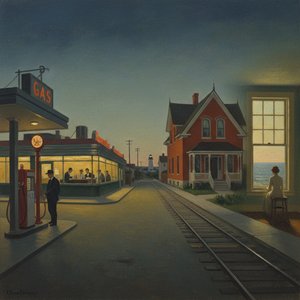
Edward Hopper: Las 25 Obras Maestras que Definen la Soledad Moderna | OriginalUniqueArt
Descubre las 25 obras maestras de Edward Hopper, el pintor de la soledad moderna. Explora su realismo americano, luz y sombra, e icónicas escenas urbanas. Reproducciones de arte en OriginalUniqueArt.com para decorar tu hogar con estilo.

El Óleo sobre Lienzo: Historia, Técnica y la Persistencia de un Medio Artístico Atemporal
Descubre la historia y técnica del óleo sobre lienzo. Explora reproducciones fieles hechas a mano, personalización artística y consejos de expertos con OriginalUniqueArt. ¡Colecciona arte con confianza!

The Enduring Power of Painting: A Historical & Contemporary Exploration of Form and Emotion
Explore the rich history & enduring techniques of oil painting with OriginalUniqueArt. Discover masterpieces, learn about art collecting, and find authentic handmade reproductions crafted by skilled artists.

El Legado Duradero del Óleo sobre Lienzo: Técnica, Historia y Práctica Contemporánea
Descubre la historia y técnica del óleo sobre lienzo. Explora reproducciones fieles hechas a mano, personalización artística y consejos de expertos con .