
 Ver en contexto
 Enviar
 Compartir
 Detalles

 Descargar
 Similares
 Radiografía
 Presentación de diapositivas
 Stats
StatsPeaceable Kingdom


 Ver más
Adquiera una imagen digital de alta resolución y optimizada, muy superior a la vista previa en línea.
Cada archivo es preparado meticulosamente por nuestros especialistas internos mediante el uso de herramientas avanzadas y un experto retoque manual. Nos aseguramos de que cada imagen posea una claridad excepcional, una precisión cromática impecable y un detalle minucioso.
El archivo final se entrega por correo electrónico en un plazo de 72 horas, optimizado para su uso inmediato en entornos profesionales, editoriales y de impresión. Esta es la misma calidad en la que confían los estudios de diseño, las editoriales y las galerías de primer nivel.
Imagen Digital
Descarga un archivo de alta resolución para exhibición personal, impresión y proyectos creativos. ( Switch to Print Comprar pintura hecha a mano)
Incluido en cada pedido de imágenes digitales
Entrega digital experta, garantizada.
Al elegir OriginalUniqueArt.com, no solo está adquiriendo una imagen; está recibiendo una obra de arte digital mejorada profesionalmente, elaborada con precisión y respaldada por una garantía de satisfacción. Esto es todo lo que incluye su pedido, automáticamente:

Entrega rápida por email
Recibirá su archivo de imagen digital en alta resolución por correo electrónico en un plazo de 72 horas tras realizar su pedido, listo para su uso inmediato.

Archivo digital optimizado por IA
Su obra de arte se optimiza profesionalmente mediante herramientas avanzadas de IA y edición manual, garantizando el máximo detalle, claridad y precisión cromática.

Reenvío gratuito de por vida
¿Has borrado o perdido tu archivo por error? No te preocupes: te lo volveremos a enviar en cualquier momento, sin coste adicional.

Sin gastos de importación, siempre
Disfrute de su obra de arte al instante sin aduanas, aranceles ni gastos de envío; las descargas digitales siempre están libres de impuestos.

Garantía de fidelidad de color
Garantizamos que su imagen digital refleje los colores originales con la mayor fidelidad posible, mediante el uso de herramientas profesionales y gestión del color.

Garantía de satisfacción de 100 días
Si no está satisfecho con su imagen digital, la revisaremos o le reembolsaremos el 100% en un plazo de 100 días, sin preguntas.

100% Garantía de devolución de dinero
¿No está satisfecho? Obtenga un reembolso completo dentro de los 100 días posteriores a la recepción de su archivo digital, sin preguntas.

Descuentos por pedidos grandes
Compra 3 imágenes, ahorra 10% - Compra 5, ahorra 15% - Compra 10+, ahorra 20%. Ideal para proyectos creativos, galerías y agencias.
A Pastoral Vision of Dominion: Edward Hicks’ “Peaceable Kingdom”
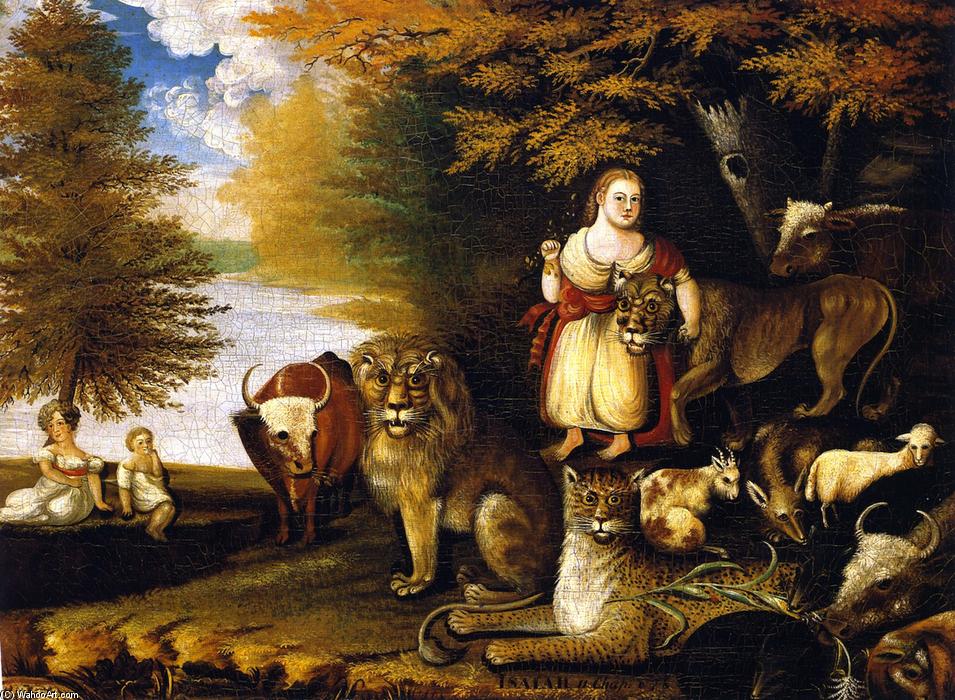
Edward Hicks' "Peaceable Kingdom," painted in 1830, is more than just a beautiful depiction of a rural landscape; it’s a profound meditation on faith, power, and the delicate balance between humanity and nature. This monumental oil painting, now a cornerstone of American art history, offers a glimpse into the heart of Quaker belief and Hicks' uniquely expressive artistic vision. The scene unfolds with an almost overwhelming sense of serenity – a vast meadow teeming with life, dominated by a central female figure holding aloft a symbolic crown or scepter. Lions, bulls, leopards, sheep, and cows gather around her, seemingly rendered docile and content under her watchful gaze. It’s a tableau that immediately evokes the grandeur of Renaissance allegories while retaining a distinctly American sensibility.
The Quaker Narrative: Faith as Foundation
Understanding Hicks' artistic practice requires acknowledging his deep connection to the Religious Society of Friends, or Quakers. Born into an Anglican family but raised by the devout Matron Elizabeth Twining, Hicks’ life was fundamentally shaped by their core tenets – simplicity, peace, and a belief in the “inner light” – that resided within each individual. "Peaceable Kingdom" isn't simply a landscape; it’s a visual representation of this spiritual philosophy. The central figure is often interpreted as representing Christ or Providence, embodying divine authority and offering a message of reconciliation and harmony. The animals, traditionally symbols of earthly power and potential conflict, are rendered peaceful and obedient, suggesting that true dominion comes not through force but through grace and understanding.
Technique and Composition: A Masterclass in Detail
Hicks’ masterful technique is immediately apparent upon close inspection. The painting is executed in the rich, layered style of oil paint, utilizing a meticulous approach to detail that was characteristic of his work. He employs a carefully constructed composition, drawing the eye towards the central figure through strategic use of light and shadow. The receding planes of land and trees create a sense of depth, while the vibrant colors – dominated by warm golds, browns, and reds – contribute to the painting’s overall warmth and inviting quality. Noticeably, Hicks utilizes impasto in certain areas, particularly within the foliage and animal fur, adding textural richness and emphasizing the tactile nature of the scene. The flattened perspective, reminiscent of earlier Renaissance styles, is skillfully balanced by a dynamic arrangement of figures and elements, preventing the composition from feeling static.
Symbolism Unveiled: A Tapestry of Meaning
Beyond its immediate visual appeal, “Peaceable Kingdom” is laden with symbolic meaning. The animals themselves carry significant weight – the lion representing strength, the bull symbolizing fertility and earthly power, the leopard embodying cunning and vigilance, while sheep represent innocence and vulnerability. The woman’s crown or scepter isn't merely a symbol of authority; it represents the divine right to rule, not through coercion but through benevolent guidance. The presence of two women seated beneath the tree on the left side adds another layer of interpretation, potentially representing the role of female wisdom and nurturing within this harmonious landscape. Even the body of water reflecting the sky reinforces the theme of interconnectedness – mirroring the heavens in the earth below.
“Peaceable Kingdom” remains a powerful testament to Edward Hicks’ artistic vision and his unwavering faith. It's a painting that invites contemplation, prompting viewers to consider their own relationship with nature, power, and the enduring promise of peace. Reproductions offer an accessible way to experience this remarkable work of art, bringing its serene beauty and profound symbolism into any space.
Biografía del artista
Vida Temprana y Antecedentes
- Nacido: 4 de abril de 1780, en Attleboro (ahora Langhorne), Condado de Bucks, Pensilvania
- Fallecido: 23 de agosto de 1849
- Sus padres eran anglicanos, pero fue criado por Matron Elizabeth Twining, una cuáquera. Esto lo introdujo a las creencias cuáqueras a una edad temprana.
- Aprendiz de los fabricantes de carruajes William y Henry Tomlinson desde la edad de trece años, aprendiendo técnicas de pintura de carruajes.
- Dejó la firma en 1800 para trabajar de forma independiente como pintor de casas y carruajes.
Ministerio Cuáquero y Desarrollo Artístico
- Aceptado en la Sociedad de Amigos en 1803 y comenzó a asistir regularmente a reuniones cuáqueras.
- Se casó con Sarah Worstall, también cuáquera, y se convirtió en predicador itinerante por Filadelfia.
- Para mantener a su familia, amplió su pintura para incluir objetos domésticos, equipos agrícolas y letreros de taberna.
- Abandonó brevemente la pintura ornamental en 1815 debido a dificultades financieras, pero la retomó en 1816.
Estilo Artístico y Obras Clave
- Artista Autodidacta: Hicks fue en gran medida autodidacta, desarrollando un estilo único de arte popular.
- Influencia Cuáquera: Su obra reflejaba las creencias cuáqueras en la "luz interior", enfatizando la experiencia espiritual personal. Esto es evidente en sus composiciones simples y su enfoque en la naturaleza.
- La Serie del Reino Pacífic: Su serie más famosa, que comprende 62 versiones, representa una visión de armonía entre humanos y animales, representando paz y coexistencia.
- Pinturas Notables:
- Reino Pacífic (31) – Alojada en la Galería de Arte de la Universidad Yale
- Cataratas del Niágara – Alojada en el Centro de Arte Popular Abby Aldrich Rockefeller
- George Washington con su ejército cruzando el Delaware – También alojada en el Centro de Arte Popular Abby Aldrich Rockefeller
- Reino Pacífic (34) - Representa el Arca de Noé en una serena pintura al óleo.
- Tumba de William Penn en Jordans, Inglaterra - Una representación de la campiña inglesa que muestra el patrimonio cuáquero.
Legado y Significado Histórico
- Icono del Arte Popular: Edward Hicks es reconocido como una figura significativa en el arte popular estadounidense, conocido por su estilo distintivo y temas recurrentes.
- Representación de los Valores Cuáqueros: Sus pinturas brindan información valiosa sobre las creencias y valores de la Sociedad de Amigos durante el siglo XIX.
- Visión Artística Única: Hicks mezcló la fe religiosa con la expresión artística, creando una obra que es a la vez visualmente atractiva y espiritualmente significativa.
- Apreciación Continua: Sus obras se exhiben en importantes museos y continúan siendo estudiadas y apreciadas por su significado histórico y artístico.

Edward Hicks
1780 - 1849 , Estados Unidos de América
Breves datos
- Fecha De Fallecimiento: 23 de agosto de 1849
- Fecha De Nacimiento: 4 de abril de 1780
- Lugar De Nacimiento: Attleboro, EE. UU.
- Movimiento Artístico: Arte popular
- Nacionalidad: Estadounidense
- Nombre Completo: Edward Hicks
- Obras Notables:
- Peaceable Kingdom (31)
- Falls of Niagara
- George Washington Crossing Delaware
- Peaceable Kingdom of the Branch
- Grave of William Penn