

 Vista previa
 Compartir
 Compartir
 Ver detalles
 Guía
Guía

 Descargar
 Ver artículos similares
 Radiografía
 Presentación de diapositivas
 Estadísticas
Indian Weaver


 Leer más
Adquiera una imagen digital de alta resolución y optimizada, muy superior a la vista previa en línea.
Cada archivo es preparado meticulosamente por nuestros especialistas internos mediante el uso de herramientas avanzadas y un experto retoque manual. Nos aseguramos de que cada imagen posea una claridad excepcional, una precisión cromática impecable y un detalle minucioso.
El archivo final se entrega por correo electrónico en un plazo de 72 horas, optimizado para su uso inmediato en entornos profesionales, editoriales y de impresión. Esta es la misma calidad en la que confían los estudios de diseño, las editoriales y las galerías de primer nivel.
Imagen Digital
Descarga un archivo de alta resolución para exhibición personal, impresión y proyectos creativos. ( Cambiar a formato impreso Encargar reproducción pintada a mano)
Incluido en cada pedido de imágenes digitales
Entrega digital experta, garantizada.
Al elegir OriginalUniqueArt.com, no solo está adquiriendo una imagen; está recibiendo una obra de arte digital mejorada profesionalmente, elaborada con precisión y respaldada por una garantía de satisfacción. Esto es todo lo que incluye su pedido, automáticamente:

Entrega inmediata por email
Recibirá su archivo de imagen digital en alta resolución por correo electrónico en un plazo de 72 horas tras realizar su pedido, listo para su uso inmediato.

Archivo digital optimizado por IA
Su obra de arte se optimiza profesionalmente mediante herramientas avanzadas de IA y edición manual, garantizando el máximo detalle, claridad y precisión cromática.

Reenvío gratuito de por vida
¿Has borrado o perdido tu archivo por error? No te preocupes: te lo volveremos a enviar en cualquier momento, sin coste adicional.

Sin gastos de importación, siempre
Disfrute de su obra de arte al instante sin aduanas, aranceles ni gastos de envío; las descargas digitales siempre están libres de impuestos.

Garantía de precisión de color
Garantizamos que su imagen digital refleje los colores originales con la mayor fidelidad posible, mediante el uso de herramientas profesionales y gestión del color.

Garantía de satisfacción de 100 días
Si no está satisfecho con su imagen digital, la revisaremos o le reembolsaremos el 100% en un plazo de 100 días, sin preguntas.

100% Garantía de devolución de dinero
¿No está satisfecho? Obtenga un reembolso completo dentro de los 100 días posteriores a la recepción de su archivo digital, sin preguntas.

Descuentos por volumen
Compra 3 imágenes, ahorra 10% - Compra 5, ahorra 15% - Compra 10+, ahorra 20%. Ideal para proyectos creativos, galerías y agencias.
A Tapestry of Tradition: Exploring Eanger Irving Couse's "Indian Weaver"
To gaze upon Eanger Irving Couse’s Indian Weaver is to step across the threshold of time, into a moment steeped in quiet industry and profound cultural continuity. This painting transcends a mere depiction; it is a living narrative rendered in paint, capturing the intimate rhythm of daily life among Native American communities near the turn of the 20th century. The scene centers on an adult weaver, her hands gracefully engaged with the loom—a testament to generations of skill and knowledge. Beside her, a child watches, their presence acting as both observer and inheritor, suggesting that the craft itself is a sacred lineage passed from one heart to the next.
Mastery in Depiction: Technique and Composition
Couse’s technique here showcases his remarkable ability to blend academic precision with heartfelt ethnographic observation. The composition is rich, drawing the viewer into the domestic space where creation happens. Beyond the central figures—the focused weaver and the attentive child—the artist has thoughtfully populated the scene with supporting details: baskets resting near the wall, carefully placed bowls in the foreground, and a cup catching the light in the upper corner. These objects are not mere filler; they anchor the narrative, suggesting a life lived fully within this immediate environment. The handling of light seems to illuminate the texture of the woven cloth and the gentle concentration on the weaver's face, giving the entire piece a luminous, almost palpable quality.
The Cultural Resonance: Context and Symbolism
Painted in 1914, this work emerges from a period when American art was deeply engaged with documenting—and sometimes romanticizing—the cultures of its indigenous peoples. Couse, known for his deep empathy, approached these subjects not as exotic curiosities, but with palpable dignity. The act of weaving itself is profoundly symbolic; it represents connection—connecting threads into fabric, connecting past to present, and connecting the individual to their community. It speaks to resilience, patience, and the enduring beauty found in skilled, repetitive labor.
Bringing the Spirit Home: For the Modern Collector
For those seeking art that whispers stories rather than shouting statements, Indian Weaver offers a sanctuary of quiet contemplation. Whether adorning an entryway or gracing a formal sitting room, this piece introduces an element of timeless, global artistry. Owning a reproduction allows one to connect with Couse’s unique bridge between European artistic training and the soulful authenticity of American frontier life. It is an heirloom quality piece that invites conversation, sparking dialogue about tradition, craftsmanship, and the enduring human spirit.
An Emotional Echo
The emotional impact of this painting is one of gentle reverence. There is a palpable sense of peace emanating from the loom—a quietude broken only by the imagined *click-clack* of the shuttle. It invites us to slow down, to observe the meticulous beauty in the making of something lasting. This artwork does more than decorate; it enriches the atmosphere with history, grace, and the enduring warmth of human connection.
Biografía del artista
Primeros Años y Educación
- Nacido: 3 de septiembre de 1866, Saginaw, Michigan
- Fallecido: 26 de abril de 1936
- Origen: Saginaw, Estados Unidos de América
- Un temprano interés en las culturas nativas americanas se desarrolló mientras crecía cerca de tribus Chippewa.
- Asistió brevemente al Instituto de Arte de Chicago y luego a la Academia Nacional de Diseño en Nueva York.
- Estudió en la École des Beaux-Arts y Académie Julian bajo William-Adolphe Bouguereau en París durante diez años. Pintó principalmente paisajes de la costa de Normandía.
Carrera Artística y Desarrollo
- Después de regresar a los Estados Unidos, pasó tiempo en Nueva York y veranos pintando en varios lugares.
- Comenzó a pasar veranos en Taos, Nuevo México, alrededor de 1898.
- Estudió y pintó las vidas y la cultura de los indios Taos.
- Se convirtió en miembro fundador y primer presidente de la Sociedad de Artistas de Taos en 1915.
- Desarrolló un estilo distintivo que retrataba la vida nativa americana, a menudo enfatizando escenas pacíficas e idílicas.
- Su obra estuvo influenciada por su formación académica en París y sus observaciones de la cultura nativa americana.
Obras Principales y Reconocimiento
- Elk-foot of the Taos Tribe: Considerada su obra maestra, adquirida para la colección nacional de arte de los Estados Unidos.
- The Captive: Obra temprana que representa un tema nativo americano, expuesta en el Salón de París en 1892.
- Numerosas pinturas encargadas por Santa Fe Railway entre 1914 y 1936, utilizadas como material publicitario.
- Recibió premios de varias instituciones, incluyendo la Academia Nacional de Diseño (Premio Altman), Salmagundi Club (Premio Isidor), Academia de Bellas Artes de Pensilvania (Premio Lippincott).
- Sus obras se encuentran en muchos museos de los Estados Unidos y a nivel internacional.
Significado Histórico y Legado
- Contribuyó significativamente al desarrollo del arte occidental americano, particularmente las representaciones de nativos americanos.
- Ayudó a establecer Taos como un centro artístico destacado.
- Su retrato de la vida nativa americana ofreció una perspectiva que difería de las representaciones más estereotipadas comunes en ese momento.
- La Casa y Estudio de Eanger Irving Couse—Estudios de Joseph Henry Sharp está incluida en el Registro Nacional de Lugares Históricos, preservando su legado para futuras generaciones.
- Su obra continúa siendo expuesta y estudiada, proporcionando información sobre la historia del arte americano y la representación cultural.
Vida Personal
- Se casó con Virginia Walker en 1889.
- Tuvo un hijo, Kibbey Couse.
- Virginia jugó un papel significativo en apoyar su carrera artística y proporcionar retroalimentación crítica.
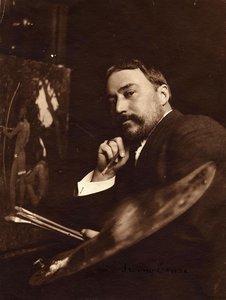
Eanger Irving Couse
1866 - 1936 , Estados Unidos de América
Datos clave
- Artistas Que Influyeron:
- William-Adolphe Bouguereau
- Tony Robert Fleury
- Fecha De Fallecimiento: 26 de abril de 1936
- Fecha De Nacimiento: 3 de septiembre de 1866
- Lugar De Nacimiento: Saginaw, Estados Unidos
- Movimiento Artístico: Impresionismo
- Nacionalidad: Estadounidense
- Nombre Completo: Eanger Irving Couse
- Obras Notables:
- Elk-foot of the Taos tribe
- Taos pueblo - moonlight
- The captive