

 Vista previa
 Compartir
 Compartir
 Ver detalles
 Guía
Guía

 Descargar
 Ver artículos similares
 Radiografía
 Presentación de diapositivas
 Estadísticas
Ambush


 Leer más
Giclée / Impresión de arte
Impresiones giclée o en lienzo de calidad de museo con producción rápida y opciones de acabado flexibles. ( Encargar reproducción pintada a mano Ver versión en imagen digital)




P118B €10

P118H €10

P118W €10

P438Z €10

P508JH €12

P508YH €12

P805H €10

P805Z €10

P919BZ €10

P919G €10

P919XJ €10

P959ZH €10

P968JZ €12

W106C €8

W218G €10

W218JH €8

W218Y €10

W307PJ €10

W316G €10

W316PJ €8

W316Y €10

W398PJ €8

W4111J €10

W500HY €15

W500JH €15

W692G €12

W849H €8

W940BG €15

W953PJ €8




Elija entre nuestros tamaños predefinidos que respetan las proporciones originales de la obra.

Introduzca el ancho y el alto que necesite para adaptarse a su marco o pared. Una impresión solo puede recortarse, nunca hacerse más grande que la imagen original, por lo que un tamaño con una forma distinta perderá parte de la obra. Le enviaremos una maqueta digital para su aprobación antes de realizar cualquier impresión. La imagen que se muestra en esta página no refleja el recorte real; solo la maqueta lo hace.
Envío a todo el mundo () en 2 semanas en lugar de las 4/5 semanas estándar. (23 octubre)

Envío exprés gratuito a todo el mundo

Lienzo de lino de alta calidad

Seguro de envío completo

Garantía de reembolso de impuestos aduaneros

Garantía de fidelidad cromática exacta

Política de devolución de 100 días (solo por defectos)

Garantía de devolución del 100% del dinero

Oferta por volumen
 La opción de vidrio solo está disponible en tamaños inferiores a 110 cm.

Ambush
Giclée / Impresión de arte
Tamaño de la reproducción
-


Precio total
€ 70
A Moment Suspended in the Arid Majesty
Eanger Irving Couse’s Ambush transports the viewer to a landscape steeped in quiet contemplation. The scene unfolds across an expanse of sun-baked earth, where undulating sand dunes meet the reflective stillness of what appears to be a distant body of water. At the heart of this serene tableau sits a solitary figure, rendered with remarkable dignity and grace. Clad in traditional attire, accented by a vibrant red headband and patterned skirt, the individual faces away from us, their posture suggesting both deep introspection and an awareness of the wild beauty surrounding them. The overall atmosphere is one of profound solitude, a momentary pause captured between breaths.
Mastery of Light and Earth Tones
Technically, Couse demonstrates a masterful command over realism, particularly in his handling of light and shadow. The palette itself speaks volumes—it is dominated by warm, resonant earth tones: ochres, siennas, and dusty browns that evoke the very essence of an arid environment. Observe how the artist has rendered the texture of the sand; it seems almost palpable, catching the imagined sunlight in subtle gradations. While the brushwork remains visible upon close inspection, it is executed with a practiced hand that prioritizes lifelike quality over overt display. This attention to detail ensures that the landscape feels not merely painted, but lived-in, inviting the collector to imagine the desert breeze carrying the scent of dry grass and distant water.
Cultural Resonance and Narrative Depth
The historical context surrounding Couse’s work is inseparable from its emotional weight. As an artist deeply connected to portraying Native American life, his depiction here carries a sense of profound respect and cultural observation. The title, Ambush, introduces a fascinating tension against the backdrop of apparent peace. It suggests that even in moments of quietude—the very definition of this scene—there lies an underlying narrative, a readiness, or perhaps a story waiting to unfold just beyond the visible horizon. This duality allows the piece to resonate on multiple levels: as a portrait of culture, a study of landscape, and a meditation on human experience.
Bringing the Southwest Home
For those seeking an artwork that anchors a space with exotic depth and narrative richness, Ambush is unparalleled. Whether placed in a grand hall or a sunlit sitting room, its warm tones will harmonize beautifully while its subject matter provides endless conversation starters. Owning a reproduction of this piece allows one to connect tangibly with the artistic bridge Couse built—a connection between European academic tradition and the enduring spirit of the American Southwest. It is more than decoration; it is an evocative journey into a timeless, sun-drenched moment.
Preguntas y respuestas
¿Es "Ambush" de Eanger Irving Couse una composición en formato retrato, paisaje o cuadrado?
El formato de "Ambush" es Portrait. Esto resulta útil al planificar dónde se colocará una reproducción.
¿Se puede reproducir legalmente "Ambush" de Eanger Irving Couse, que se encuentra en Briscoe Western Art Museum?
El estado de los derechos de autor de "Ambush" de Eanger Irving Couse es claro: la obra es en el dominio público: sus derechos de autor han expirado. Su presencia en Briscoe Western Art Museum no cambia dicho estado.
¿En qué año se creó "Ambush"?
"Ambush" de Eanger Irving Couse fue creada en 1897.
Biografía del artista
Primeros Años y Educación
- Nacido: 3 de septiembre de 1866, Saginaw, Michigan
- Fallecido: 26 de abril de 1936
- Origen: Saginaw, Estados Unidos de América
- Un temprano interés en las culturas nativas americanas se desarrolló mientras crecía cerca de tribus Chippewa.
- Asistió brevemente al Instituto de Arte de Chicago y luego a la Academia Nacional de Diseño en Nueva York.
- Estudió en la École des Beaux-Arts y Académie Julian bajo William-Adolphe Bouguereau en París durante diez años. Pintó principalmente paisajes de la costa de Normandía.
Carrera Artística y Desarrollo
- Después de regresar a los Estados Unidos, pasó tiempo en Nueva York y veranos pintando en varios lugares.
- Comenzó a pasar veranos en Taos, Nuevo México, alrededor de 1898.
- Estudió y pintó las vidas y la cultura de los indios Taos.
- Se convirtió en miembro fundador y primer presidente de la Sociedad de Artistas de Taos en 1915.
- Desarrolló un estilo distintivo que retrataba la vida nativa americana, a menudo enfatizando escenas pacíficas e idílicas.
- Su obra estuvo influenciada por su formación académica en París y sus observaciones de la cultura nativa americana.
Obras Principales y Reconocimiento
- Elk-foot of the Taos Tribe: Considerada su obra maestra, adquirida para la colección nacional de arte de los Estados Unidos.
- The Captive: Obra temprana que representa un tema nativo americano, expuesta en el Salón de París en 1892.
- Numerosas pinturas encargadas por Santa Fe Railway entre 1914 y 1936, utilizadas como material publicitario.
- Recibió premios de varias instituciones, incluyendo la Academia Nacional de Diseño (Premio Altman), Salmagundi Club (Premio Isidor), Academia de Bellas Artes de Pensilvania (Premio Lippincott).
- Sus obras se encuentran en muchos museos de los Estados Unidos y a nivel internacional.
Significado Histórico y Legado
- Contribuyó significativamente al desarrollo del arte occidental americano, particularmente las representaciones de nativos americanos.
- Ayudó a establecer Taos como un centro artístico destacado.
- Su retrato de la vida nativa americana ofreció una perspectiva que difería de las representaciones más estereotipadas comunes en ese momento.
- La Casa y Estudio de Eanger Irving Couse—Estudios de Joseph Henry Sharp está incluida en el Registro Nacional de Lugares Históricos, preservando su legado para futuras generaciones.
- Su obra continúa siendo expuesta y estudiada, proporcionando información sobre la historia del arte americano y la representación cultural.
Vida Personal
- Se casó con Virginia Walker en 1889.
- Tuvo un hijo, Kibbey Couse.
- Virginia jugó un papel significativo en apoyar su carrera artística y proporcionar retroalimentación crítica.
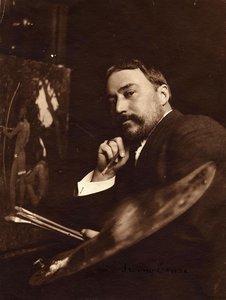
Eanger Irving Couse
1866 - 1936 , Estados Unidos de América
Datos clave
- Artistas Que Influyeron:
- William-Adolphe Bouguereau
- Tony Robert Fleury
- Fecha De Fallecimiento: 26 de abril de 1936
- Fecha De Nacimiento: 3 de septiembre de 1866
- Lugar De Nacimiento: Saginaw, Estados Unidos
- Movimiento Artístico: Impresionismo
- Nacionalidad: Estadounidense
- Nombre Completo: Eanger Irving Couse
- Obras Notables:
- Elk-foot of the Taos tribe
- Taos pueblo - moonlight
- The captive
Artículos relacionados
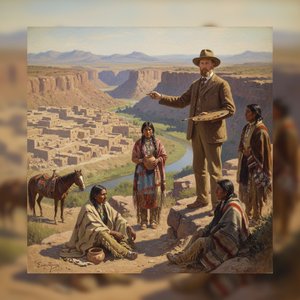
Eanger Irving Couse: Bridging Tradition & Modernity in American Southwest Art
Explore the life & art of Eanger Irving Couse, a pivotal figure in Southwestern Impressionism and founder of the Taos Society of Artists. Discover his captivating paintings & legacy.

Grant Wood & American Regionalism: Identity, Myth & the Rural Landscape
Explore the world of Grant Wood & American Regionalism with OriginalUniqueArt. Discover the symbolism behind 'American Gothic', recurring themes, and the movement's lasting impact on art history. High-quality reproductions available.

Katsushika Hokusai: Las 25 Obras Maestras del Ukiyo-e que Transformaron el Arte Japonés | OriginalUniqueArt
Descubre las 25 obras maestras de Katsushika Hokusai, el genio del ukiyo-e. Explora 'La Gran Ola', paisajes japoneses y su impacto en el arte moderno. Reproducciones de alta calidad para tu hogar en OriginalUniqueArt.com.

The Unvarnished Truth: A Cultural Journey Through the Soul of American Realism
Explore the profound beauty of American Realism. From the Ashcan School's urban grit to intimate portraits, discover how artists captured the authentic soul of a nation through unvarnished truth and masterful observation.

Realismo Estadounidense: 10 Obras Maestras que Cambiaron el Arte y la Decoración
Descubre 10 obras maestras del Realismo Estadounidense: Winslow Homer, Edward Hopper y más. Explora la historia, técnica y emoción de estos icónicos cuadros. Encuentra reproducciones de arte de museo en OriginalUniqueArt.com.

