Vista previa
 Compartir
 Compartir
 Ver detalles
 Guía
Guía

 Descargar
 Ver artículos similares
 Radiografía
 Presentación de diapositivas
 Estadísticas
David


 Leer más
Giclée / Impresión de arte
Impresiones giclée o en lienzo de calidad de museo con producción rápida y opciones de acabado flexibles. ( Encargar reproducción pintada a mano Ver versión en imagen digital)




P118B €10

P118H €10

P118W €10

P438Z €10

P508JH €12

P508YH €12

P805H €10

P805Z €10

P919BZ €10

P919G €10

P919XJ €10

P959ZH €10

P968JZ €12

W106C €8

W218G €10

W218JH €8

W218Y €10

W307PJ €10

W316G €10

W316PJ €8

W316Y €10

W398PJ €8

W4111J €10

W500HY €15

W500JH €15

W692G €12

W849H €8

W940BG €15

W953PJ €8




Elija entre nuestros tamaños predefinidos que respetan las proporciones originales de la obra.

Introduzca el ancho y el alto que necesite para adaptarse a su marco o pared. Una impresión solo puede recortarse, nunca hacerse más grande que la imagen original, por lo que un tamaño con una forma distinta perderá parte de la obra. Le enviaremos una maqueta digital para su aprobación antes de realizar cualquier impresión. La imagen que se muestra en esta página no refleja el recorte real; solo la maqueta lo hace.
Envío a todo el mundo () en 2 semanas en lugar de las 4/5 semanas estándar. (19 octubre)

Envío exprés gratuito a todo el mundo

Lienzo de lino de alta calidad

Seguro de envío completo

Garantía de reembolso de impuestos aduaneros

Garantía de fidelidad cromática exacta

Política de devolución de 100 días (solo por defectos)

Garantía de devolución del 100% del dinero

Oferta por volumen
 La opción de vidrio solo está disponible en tamaños inferiores a 110 cm.

David
Giclée / Impresión de arte
Tamaño de la reproducción
-


Precio total
€ 70
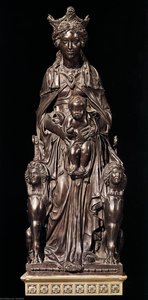
The Majesty of David: A Renaissance Masterpiece
Michelangelo’s “David,” a colossal marble sculpture residing within the Galleria dell’Accademia in Florence, isn't merely a depiction of a biblical hero; it’s an embodiment of human potential, a testament to artistic innovation, and a profound meditation on strength and vulnerability. Completed between 1501 and 1504, this iconic work represents the pinnacle of Renaissance sculpture – a moment when classical ideals were reinterpreted through a distinctly humanist lens. The sheer scale of the statue, standing over seventeen feet tall, immediately commands attention, drawing the viewer into an intimate encounter with the figure’s intense gaze and palpable energy.
The sculpture captures David in the moments *before* his confrontation with Goliath, a crucial detail that elevates it beyond a simple narrative illustration. He's not triumphant, not yet victorious; instead, he embodies resolute contemplation, a young man grappling with immense responsibility and facing an overwhelming challenge. Notice the meticulous anatomical rendering – every muscle fiber, vein, and subtle curve of the body is painstakingly sculpted to achieve breathtaking realism. Michelangelo’s mastery lies in his ability to imbue this cold, hard marble with a sense of life, of movement, of deeply felt emotion. The contrapposto pose, where David's weight shifts subtly onto one leg, creates an exquisite balance and dynamism that seems to defy the static nature of stone.
The Techniques of Divine Creation
Michelangelo’s approach to sculpting “David” was revolutionary for its time. He began with a massive block of Carrara marble – a flawed, uneven piece deemed unsuitable for other projects. This seemingly discarded material became the foundation for one of art history's most celebrated works. The process itself involved an extraordinary level of skill and patience. Michelangelo employed a technique known as *spaccatura*, exploiting existing cracks within the marble to guide his carving. He worked with remarkable precision, using chisels, rasps, and other hand tools to gradually reveal the form hidden beneath the stone. The surface is polished to a breathtaking sheen, reflecting light in a way that enhances the sculpture’s luminosity and brings out the subtle nuances of color within the marble.
Crucially, Michelangelo didn't simply carve *from* the stone; he worked *with* it, responding to its inherent qualities. The rougher textures around the hands and feet hint at the raw material, while the polished torso speaks to the artist’s transformative power. This interplay between form and substance is a hallmark of his style – a demonstration of both technical virtuosity and artistic intuition.
Symbolism and Spiritual Resonance
“David” is rich in symbolic meaning, reflecting Renaissance ideals of civic virtue and human dignity. The biblical David, the shepherd boy who felled the giant Goliath with nothing but a sling and five stones, represents courage, faith, and the triumph of the underdog against overwhelming odds. In Florence during the early 16th century, this narrative resonated deeply with the city’s republican government, which saw itself as defending its freedom from tyranny – mirroring David's victory over Goliath. The statue was originally intended for the exterior of the Florence Cathedral but was ultimately placed in the Galleria dell’Accademia due to its overwhelming scale and impact.
Beyond its political significance, “David” also embodies a broader spiritual message. The youthful figure represents humanity’s potential for greatness, a reminder that even the most ordinary individual can achieve extraordinary things through faith, determination, and moral strength. The statue's nudity is not intended to be overtly sexual but rather symbolizes vulnerability and purity – David stands exposed before God, relying on his own inner resources.
A Timeless Legacy
Michelangelo’s “David” remains one of the most recognizable and beloved sculptures in the world. Its enduring appeal lies in its perfect balance of anatomical realism, emotional intensity, and symbolic depth. It's a work that continues to inspire awe and admiration centuries after its creation, serving as a powerful reminder of the transformative power of art and the boundless capacity of the human spirit. Reproductions, such as those offered by OriginalUniqueArt.com, allow viewers to experience this masterpiece in their own homes, bringing a touch of Renaissance grandeur into any space.
Preguntas y respuestas
¿Qué tipo de obra es "David"?
"David" de Donatello está clasificada como WallArt. La categoría describe el tipo de obra de arte que es el original.
¿Qué edad tenía Donatello cuando se creó "David"?
Cuando se creó "David" en 1430, Donatello —nacido/a en 1386— tenía 44 años.
¿Qué sentimiento transmite "David" de Donatello?
En "David", un ambiente Calm acompaña a una emoción Reflective.
Biografía del artista
Vida temprana y carrera
Donato di Niccolò di Betto Bardi, conocido como Donatello, nació en Florencia, Italia alrededor de 1386. Estudió escultura clásica, lo que influyó fuertemente en su desarrollo de un estilo del primer Renacimiento. Este nuevo enfoque hacia el arte y la cultura eventualmente se convertiría en la característica distintiva del florentino renacimiento.Obras clave e innovaciones
La obra más famosa de Donatello, David, fue la primera escultura masculina desnuda independiente desde la antigüedad. Comisionada por la familia Medici, mostró su estilo innovador y experiencia técnica. Otras obras notables incluyen:- San Luis de Tolosa (ahora en el museo de la Basílica di Santa Croce), que presentaba un marco clásico diseñado por Donatello.
- El sacrificio de Isaac, creado para el campanile de Santa Maria del Fiore en Florencia, se caracterizó por fuertes detalles de retrato.
- Crucifijo (1425) para Santa Croce, que retrataba a Cristo en un momento de agonía.
Estilo artístico y legado
El estilo de Donatello puede dividirse en amplias fases, comenzando con el desarrollo de expresividad y monumentalidad clásica. Su obra no fue inmediatamente aceptada por la comunidad, pero eventualmente se convirtió en la más popular, influyendo a otros tribunales italianos y artistas europeos. Movimientos artísticos clave:Vida personal y estilo de trabajo
Donatello era conocido por ser afable y querido, pero pobre en el lado comercial de su carrera. Tendía a aceptar más comisiones de las que podía manejar, a menudo completando obras tarde o entregándolas a otros escultores. Obras de arte notables y artistas:- Leonardo da Vinci: Anunciación (detalle)
- Amico Aspertini: Estátua de Pan/León que azota a un caballo
- Miguel Ángel Buonarroti: Tondo Pitt
Museos y colecciones de arte
- Museo della Collegiata (Empoli, Italia): una joya oculta del renacimiento, con obras de Francesco Botticini y Raffaello Botticini.
- El movimiento artístico del primer Renacimiento italiano

Donatello
1386 - 1466 , Italia
Datos clave
- Artistas Que Influyeron:
- Lorenzo Ghiberti
- Nanni di Banco
- Fecha De Nacimiento: c. 1386
- Influenciado A Artistas:
- Leonardo da Vinci
- Michelangelo Buonarroti
- Lugar De Nacimiento: Florencia, Italia
- Movimiento Artístico: Renacimiento temprano
- Nacionalidad: Italiana
- Nombre Completo: Donatello (Donato di Niccolò)
- Obras Notables:
- David
- St. Louis of Toulouse
- Sacrifice of Isaac
- Crucifix (1425)
Artículos relacionados

Esculturas de Bronce Legendarias: 10 Obras Maestras que Transformaron el Arte | OriginalUniqueArt
Descubre las 10 esculturas de bronce más legendarias que revolucionaron el arte. Explora la historia de Rodin, Degas y otros maestros del bronce. Encuentra reproducciones de alta calidad e inspiración para tu hogar en OriginalUniqueArt.com.

Las 10 Obras Maestras de Bronce que Revolucionaron la Historia del Arte | OriginalUniqueArt
Descubre las 10 esculturas de bronce más influyentes de la historia del arte. Explora obras maestras de Rodin, Degas y otros genios. Encuentra reproducciones de arte de calidad museo en OriginalUniqueArt.com.

Michelangelo Buonarroti: Las 25 Obras Maestras que Definen un Genio del Renacimiento | OriginalUniqueArt
Descubre las 25 obras maestras de Michelangelo Buonarroti: del David a la Capilla Sixtina. Explora su historia, técnica y significado en el Renacimiento italiano. Reproducciones de arte exclusivas para tu hogar en OriginalUniqueArt.com.

The Enduring Legacy of Bronze: A Historical & Artistic Exploration for the Collector
Explore the rich history & enduring appeal of bronze sculpture with expert insights for collectors at OriginalUniqueArt. Learn about casting techniques, iconic artists, collecting tips & contemporary interpretations.

The Enduring Legacy of Bronze: History, Technique & Artistic Expression for the Collector
Explore the rich history & enduring appeal of bronze sculpture with expert insights for collectors at OriginalUniqueArt. Learn about casting techniques, iconic artists, and collecting tips.