
 Ver en contexto
 Enviar
 Compartir
 Detalles
 Guía
Guía

 Descargar
 Similares
 Radiografía
 Presentación de diapositivas
 Estadísticas
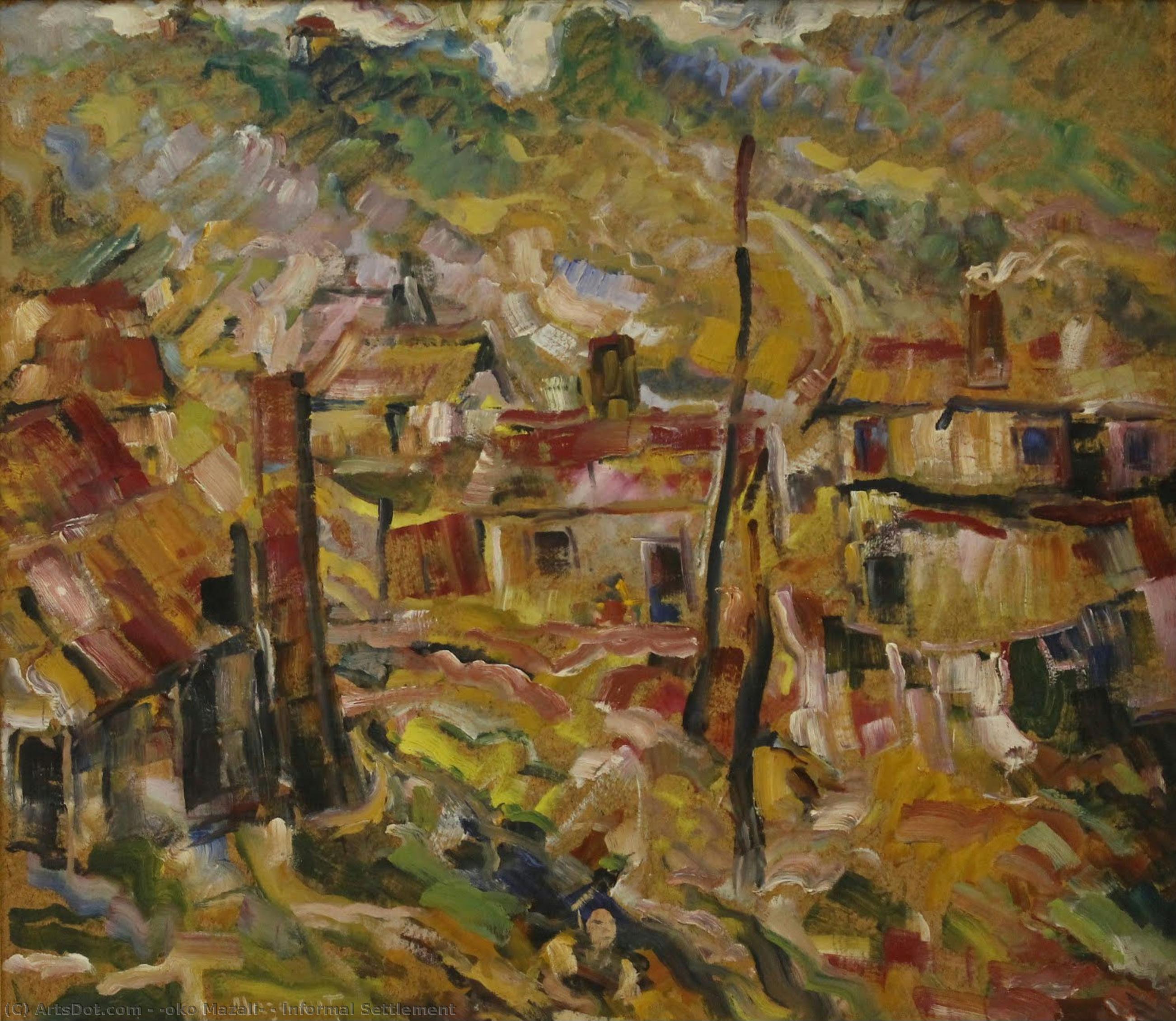
Informal Settlement


 Ver más
La obra de arte que se muestra en esta página está protegida por las leyes de propiedad intelectual, lo que significa que no podemos crear ni vender legalmente una reproducción idéntica. Esta protección se hace cumplir en virtud de acuerdos internacionales como el Convenio de Berna y por las leyes nacionales, incluidas aquellas establecidas por el Ley de derechos de autor de los EE. UU. - Título 17.
Como una alternativa respetuosa y legal, ofrecemos obras de arte personalizadas y pintadas a mano inspiradas en la original. Nuestros expertos y profesionales del arte estudian cuidadosamente el estilo, el sentimiento y la esencia artística de la obra original para crear una pieza nueva y única que evoque la misma sensación, siendo al mismo tiempo una creación original por derecho propio.
Este método cumple plenamente con las normativas de derechos de autor, ya que no implica la copia ni la duplicación de la obra protegida. En su lugar, se trata de una reinterpretación creativa: una nueva pintura influenciada por la original, pero que no es idéntica a ella.
Reproducción al óleo hecha a mano
Óleo sobre lienzo pintado a mano en el tamaño y marco de su elección, realizado por encargo por nuestros artistas. ( Cambiar a impresiones Cambiar a imagen digital)




P118B €10

P118H €10

P118W €10

P438Z €10

P508JH €12

P508YH €12

P805H €10

P805Z €10

P919BZ €10

P919G €10

P919XJ €10

P959ZH €10

P968JZ €12

W106C €8

W218G €10

W218JH €8

W218Y €10

W307PJ €10

W316G €10

W316PJ €8

W316Y €10

W398PJ €8

W4111J €10

W500HY €15

W500JH €15

W692G €12

W849H €8

W940BG €15

W953PJ €8




Elija entre nuestros tamaños predefinidos que respetan las proporciones originales de la obra.

Indique el ancho y el alto que necesite para adaptarse a su marco o pared. Al tratarse de una obra pintada a mano, si requiere un tamaño con una proporción distinta, el artista puede pintar un poco más alrededor de la imagen o recortarla ligeramente; usted elige. Le enviaremos una maqueta digital para su aprobación antes de comenzar la pintura. La imagen que se muestra en esta página no refleja el resultado real; solo la maqueta lo hace.
Tras realizar el pedido, el equipo de OriginalUniqueArt.com enviará un correo electrónico al cliente para solicitar instrucciones y proporcionarle una vista previa del boceto.
Envío a todo el mundo () en 3-4 semanas en lugar de las 5 semanas estándar. (26 octubre). Sin comprometer la calidad.

Envío exprés gratuito a todo el mundo

Lienzo de lino de alta calidad

Seguro de envío total

Garantía de reembolso de aranceles aduaneros

Garantía de fidelidad cromática exacta

Política de devolución de 100 días (solo por defectos)

Garantía de devolución del 100% del dinero

Descuento por cantidad
 La opción de vidrio solo está disponible en tamaños inferiores a 110 cm.

Informal Settlement
Técnica de reproducción
Dimensiones de la reproducción
-


Precio total final
€ 263
A Vibrant Tapestry of Life: Exploring Đoko Mazalić’s Informal Settlement
In the evocative masterpiece Informal Settlement, painted in 1962, the renowned Bosnian master Đoko Mazalić invites us into a world that breathes with the rhythm of communal existence. This work is far more than a mere depiction of a mountain village; it is a soulful window into a way of life where humanity, nature, and architecture exist in a delicate, bustling harmony. As the eye wanders across the canvas, one is immediately struck by the vividness of the scene, where the rugged contours of the mountains serve as a protective cradle for a community teeming with vitality. Mazali::ć captures a moment frozen in time, yet vibrating with the energy of a thousand small, daily interactions.
The composition is a masterclass in narrative layering. Within this mountainous enclave, the artist meticulously places elements that suggest both movement and stillness. A dog rests near the threshold of a home, while a horse stands poised on the periphery, grounding the scene in the rustic reality of pastoral life. The presence of a church, marked by its humble cross, provides a spiritual anchor to the landscape, suggesting that faith and tradition are the bedrock upon which these dwellings are built. Through his brush, the village becomes a living organism, where every figure—whether standing in quiet contemplation or moving through the streets—contributes to a larger story of resilience and togetherness.
Technique and the Mastery of Light
Mazalić’s technique in Informal Settlement showcases the stylistic versatility that defined his illustrious career. Having refined his skills at the Academy of Fine Arts in Budapest, he brought a sophisticated understanding of color theory and light to the Bosnian landscape. In this piece, the artist employs a palette that is both earthy and luminous, using light to define the textures of stone, wood, and fabric. The interplay of shadows across the hills creates a sense of depth that pulls the viewer into the heart of the settlement, making the mountains feel tangible and immense.
The brushwork serves to enhance the atmosphere of the piece; it is deliberate yet fluid, capturing the "lively and bustling" essence mentioned in historical accounts. There is a rhythmic quality to how he depicts the various buildings, ranging from simple huts to more structured dwellings, creating a visual cadence that mimics the heartbeat of the village itself. For collectors and interior designers, this painting offers a profound sense of warmth and structural complexity, making it an ideal centerpiece for spaces that require a touch of historical depth and organic beauty.
A Legacy of Connection and Nostalgia
To behold Informal Settlement is to experience a deep sense of nostalgia for a simpler, more interconnected era. Mazalić, a pivotal figure in the Bosnian art scene, had an unparalleled ability to interpret the natural world through a lens of human emotion. This painting does not merely document a location; it celebrates the spirit of the community. The way the figures are scattered throughout the landscape suggests a lack of isolation, emphasizing a social fabric that is tightly woven and inseparable from the land itself.
For those seeking to adorn their homes with art that inspires conversation and emotional resonance, this reproduction offers an unparalleled opportunity. It brings into a modern interior the timeless charm of the 1960s Balkan landscape, providing a sophisticated balance of rustic character and academic excellence. Owning a piece of Mazalić’s legacy is an invitation to reflect on our own connections to place, community, and the enduring beauty of the natural world.
Preguntas y respuestas
¿Qué emoción transmite "Informal Settlement" de Đoko Mazalić?
"Informal Settlement" se asocia con un sentimiento Energetic. El tono emocional describe la impresión que transmite la obra.
¿Qué tipo de pieza es "Informal Settlement"?
"Informal Settlement" es una obra de WallArt.
¿Qué nivel de saturación cromática tiene "Informal Settlement" de Đoko Mazalić?
La paleta de "Informal Settlement" presenta una saturación Balanced Soft.
Biografía del artista
Early Life and Education
Đoko Mazalić, a pivotal figure in Bosnian art history, was born on April 23rd, 1888, in Bosanska Kostajnica, a town steeped in tradition and natural beauty – a landscape that would profoundly influence his artistic vision. He emerged as one of the first generation of Bosnian painters to receive formal training at the prestigious Academy of Fine Arts in Budapest between 1910 and 1914. This period marked a crucial turning point, exposing him to European artistic currents while simultaneously grounding him in the rich cultural heritage of his homeland. Alongside fellow artists like Gabrijel Jurkić, Petar Tiješić, and Špiro Bočarić, Mazalić honed his skills, absorbing techniques and philosophies that would later shape his distinctive style. His early studies laid the foundation for a career dedicated to capturing the essence of Bosnia and Herzegovina through his art.Artistic Career and Style
Mazalić’s artistic journey is characterized by remarkable stylistic versatility and an unwavering commitment to quality. While he embraced various influences throughout his career, his paintings, particularly landscapes, stand as some of his most compelling achievements. He possessed a unique ability to distill the soul of nature onto canvas, imbuing each scene with a sense of atmosphere and emotion. The “Motif from Vranduk” (1920), for instance, exemplifies this talent – it’s not merely a depiction of a landscape but an evocation of its spirit, capturing the light, texture, and mood of the Bosnian countryside. His work demonstrates a fascinating interplay between realism and impressionism, often incorporating elements of symbolism and a subtle expressionistic sensibility. He navigated a diverse range of styles, from the classicism of his early years to hints of abstraction that occasionally peek through in his later works, always maintaining a remarkable consistency in his artistic vision.Teaching and Legacy
From 1923 until 1945, Đoko Mazalić dedicated himself to nurturing the next generation of Bosnian artists as a teacher in Sarajevo and Travnik. This role wasn’t merely pedagogical; it was an integral part of his artistic practice. He left an indelible mark on the art scene, shaping the sensibilities of countless young painters who followed in his footsteps. Beyond his classroom duties, Mazalić actively participated in the cultural life of Sarajevo, contributing to the formation of groups like “Četvorica” (The Four) and “Krug” (The Circle), fostering a vibrant artistic community. He also undertook significant conservation work on paintings and icons, demonstrating a deep understanding of art history and technique. Notably, he played a key role in establishing the Art Gallery of the National Museum of Bosnia and Herzegovina in 1930, serving as its director on a voluntary basis until 1943. His intellectual pursuits culminated in the publication of “Lexicon of Artists of B&H” (1965) and “The Art of Painting in B&H in the Turkish Era” (1967), scholarly works that cemented his position as a leading authority on Bosnian art history. Towards the end of his career, he contributed to the Institute for the Protection of Cultural Monuments in Sarajevo, further solidifying his commitment to preserving Bosnia’s artistic heritage.Notable Works and Historical Significance
Mazalić's oeuvre is rich and diverse, reflecting a lifelong exploration of themes ranging from folklore motifs and civic portraits to religious subjects and evocative landscapes. His “Motif from Vogošća” (1930) offers a glimpse into the urban life of Sarajevo, while "Village under snow" (1930) captures the serene beauty of winter in Bosnia. His dedication to capturing the essence of his homeland is evident throughout his work. He was one of the few Bosnian painters who chose to return home after studying abroad, establishing himself as a central figure in the post-war Sarajevo art scene. His artistic legacy extends beyond individual paintings; it represents a vital connection between tradition and modernity, a testament to the enduring power of art to capture the spirit of a nation. Mazalić’s work continues to inspire artists and art enthusiasts alike, securing his place as a cornerstone of Bosnian art history.
Đoko Mazalić
1888 - 1975 , Bosnia y Herzegovina
Datos clave
- Artistic Movement Or Style: Paisaje y retratos
- Artists Or Movements Influenced By This Artist: ['Expresionismo Influencia']
- Artists Who Influenced This Artist:
- Gabrijel Jurkić
- Petar Tiješić
- Špiro Bočarić
- Date Of Birth: 1888-04-23
- Date Of Death: 1975-02-28
- Full Name: Đoko Mazalić
- Nationality: Bosnio
- Notable Artworks:
- Motivo de Vranduk
- Motivo de Vogošća
- Pueblo bajo la nieve
- Place Of Birth: Bosanska Kostajnica, BH
Artículos relacionados

Paisajes Románticos: 10 Obras Maestras que Definieron un Movimiento Artístico
Descubre los 10 paisajes románticos más influyentes de artistas como Caspar David Friedrich y Turner. Explora la belleza, el simbolismo y las técnicas del movimiento romántico. Reproducciones de arte exclusivas en OriginalUniqueArt.com.

Evocations of Place: A Historical Journey Through Landscape Art
Explore the rich history of landscape art with OriginalUniqueArt. Discover renowned artists, movements like Impressionism & Romanticism, and expert guidance for collecting timeless pieces. Find your perfect serene escape today!

Katsushika Hokusai: Las 25 Obras Maestras del Ukiyo-e que Transformaron el Arte Japonés | OriginalUniqueArt
Descubre las 25 obras maestras de Katsushika Hokusai, el genio del ukiyo-e. Explora 'La Gran Ola', paisajes japoneses y su impacto en el arte moderno. Reproducciones de alta calidad para tu hogar en OriginalUniqueArt.com.

John Constable: Las 25 Obras Maestras del Paisaje Inglés | OriginalUniqueArt
Descubre las 25 obras maestras de John Constable, el pintor romántico inglés que capturó la belleza del paisaje. Explora su técnica, historia y significado en OriginalUniqueArt.com. Reproducciones de arte de alta calidad para tu hogar.

Capturing Nostalgia: The Timeless Allure and Art History of Village Scene Landscapes
Explore the profound beauty of village scene art. From Impressionist light to pastoral realism, discover how timeless landscapes capture nostalgia through expert artistry and historical depth. Perfect for collectors seeking evocative, museum-quality landscape inspirations.