Enviar
 Compartir
 Detalles
 Guía
Guía

 Descargar
 Similares
 Presentación de diapositivas
 Estadísticas
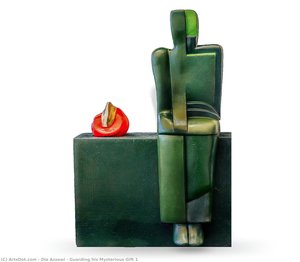
Guarding his Gift


 Ver más
La obra de arte que se muestra en esta página está protegida por las leyes de propiedad intelectual, lo que significa que no podemos crear ni vender legalmente una reproducción idéntica. Esta protección se hace cumplir en virtud de acuerdos internacionales como el Convenio de Berna y por las leyes nacionales, incluidas aquellas establecidas por el Ley de derechos de autor de los EE. UU. - Título 17.
Como una alternativa respetuosa y legal, ofrecemos obras de arte personalizadas y pintadas a mano inspiradas en la original. Nuestros expertos y profesionales del arte estudian cuidadosamente el estilo, el sentimiento y la esencia artística de la obra original para crear una pieza nueva y única que evoque la misma sensación, siendo al mismo tiempo una creación original por derecho propio.
Este método cumple plenamente con las normativas de derechos de autor, ya que no implica la copia ni la duplicación de la obra protegida. En su lugar, se trata de una reinterpretación creativa: una nueva pintura influenciada por la original, pero que no es idéntica a ella.
Reproducción al óleo hecha a mano
Óleo sobre lienzo pintado a mano en el tamaño y marco de su elección, realizado por encargo por nuestros artistas. ( Cambiar a impresiones Cambiar a imagen digital)




































Elija entre nuestros tamaños predefinidos que respetan las proporciones originales de la obra.

Indique el ancho y el alto que necesite para adaptarse a su marco o pared. Al tratarse de una obra pintada a mano, si requiere un tamaño con una proporción distinta, el artista puede pintar un poco más alrededor de la imagen o recortarla ligeramente; usted elige. Le enviaremos una maqueta digital para su aprobación antes de comenzar la pintura. La imagen que se muestra en esta página no refleja el resultado real; solo la maqueta lo hace.
Tras realizar el pedido, el equipo de OriginalUniqueArt.com enviará un correo electrónico al cliente para solicitar instrucciones y proporcionarle una vista previa del boceto.
Envío a todo el mundo () en 3-4 semanas en lugar de las 5 semanas estándar. (26 octubre). Sin comprometer la calidad.

Envío exprés gratuito a todo el mundo

Lienzo de lino de alta calidad

Seguro de envío total

Garantía de reembolso de aranceles aduaneros

Garantía de fidelidad cromática exacta

Política de devolución de 100 días (solo por defectos)

Garantía de devolución del 100% del dinero

Descuento por cantidad
 La opción de vidrio solo está disponible en tamaños inferiores a 110 cm.

Guarding his Gift
Técnica de reproducción
Dimensiones de la reproducción
-


Precio total final
€ 263
A Guardian’s Echoes: Dia al-Azzawi's "Guarding His Gift"
Dia al-Azzawi’s “Guarding His Gift,” created in 2018, isn’t merely a sculpture; it’s a distilled meditation on heritage, responsibility, and the enduring power of symbolic protection. Born in Baghdad amidst a landscape scarred by political upheaval and steeped in the echoes of ancient Mesopotamia, al-Azzawi's work consistently grapples with themes of identity, memory, and the preservation of cultural narratives – a lineage deeply rooted in his Iraqi experience. This particular piece, rendered in glazed ceramic and meticulously photographed to capture its textural richness, presents a strikingly geometric figure safeguarding an abstract form reminiscent of a seed pod or nascent growth. The composition immediately draws the eye, establishing a clear hierarchy where the figure dominates the frame, radiating a sense of watchful guardianship.
The artwork’s style leans decisively towards cubism, albeit with a subtly expressive core. Al-Azzawi masterfully employs fragmented planes and sharp angles to define the figure's form – its rigid structure contrasting sharply with the organic curves of the object it protects. This deliberate juxtaposition speaks volumes about the tension inherent in preserving tradition amidst rapid change; the geometric solidity represents established structures, while the flowing lines suggest the fluidity and potential of the future. The color palette further amplifies this duality: bold blocks of primary colors – reds, blues, yellows – are juxtaposed against stark whites and blacks, creating a visually arresting dynamism that avoids any sense of harmony or complacency.
Materiality and Technique: A Sculptor’s Dialogue
“Guarding His Gift” is not simply a photograph; it's an astute representation of a ceramic sculpture. The choice of material – glazed ceramic – immediately evokes a sense of permanence, reflecting the artist’s desire to safeguard something precious. The smooth, glossy surface suggests meticulous craftsmanship and careful attention to detail, while also hinting at a connection to Mesopotamian pottery traditions. The technique employed is one of deliberate fragmentation and reassembly, mirroring the cubist aesthetic. Al-Azzawi doesn't aim for seamless integration; instead, he strategically exposes the seams and joins between the ceramic pieces, inviting the viewer to contemplate the process of creation itself – a visual metaphor for the ongoing act of rebuilding and redefining cultural identity.
The photograph’s lighting is deliberately diffused, minimizing harsh shadows and allowing the colors and textures to emerge with clarity. This careful attention to detail ensures that every facet of the sculpture—from the subtle variations in glaze color to the precise angles of its geometric forms—is fully visible. The overall effect is one of quiet contemplation, encouraging viewers to linger and decipher the layers of meaning embedded within the artwork.
Symbolism and Emotional Resonance
At its core, “Guarding His Gift” operates as a potent symbol of responsibility and preservation. The act of guarding suggests a commitment to protecting something vulnerable – whether it be knowledge, creativity, or perhaps even the very essence of Iraqi heritage. The abstract object being shielded could be interpreted as representing the intangible values that underpin a culture’s identity: its stories, traditions, and artistic expressions. The figure's tilted head and focused gaze convey an intense sense of vigilance, suggesting a constant awareness of potential threats to these cherished elements.
Furthermore, the artwork subtly explores themes of complexity and fragmentation. The fractured form of the guardian figure might be seen as reflecting the challenges inherent in navigating a rapidly changing world – a world where traditional values are often confronted by new ideologies and global influences. The contrast between geometric and organic shapes reinforces this idea, suggesting a tension between structure and freedom, order and chaos. Ultimately, “Guarding His Gift” is not simply a depiction of protection; it’s an invitation to consider the ongoing struggle to maintain cultural continuity in the face of adversity.
A Legacy of Vision: Dia al-Azzawi's Artistic Voice
Dia al-Azzawi, born in Baghdad in 1939 and continuing his artistic practice today, stands as a pivotal figure in contemporary Arab art. His work is deeply informed by the turbulent history of Iraq, yet it transcends mere documentation, instead offering profound meditations on identity, memory, and cultural resilience. His signature style—characterized by bold colors, intricate symbolism, and a masterful command of form—has earned him international recognition as a visionary artist who consistently challenges viewers to confront complex social and political realities. “Guarding His Gift” is a prime example of al-Azzawi’s artistic prowess, embodying his enduring commitment to exploring the heart of Arab culture through a uniquely powerful and evocative lens.
Preguntas y respuestas
¿A qué etapa de la trayectoria de Dia Al-Azzawi pertenece "Guarding his Gift"?
Dentro de la trayectoria de Dia Al-Azzawi, "Guarding his Gift" pertenece al Mature Period. Esta etapa permite compararla con otras obras del artista.
¿Para qué estancia se recomienda "Guarding his Gift" de Dia Al-Azzawi?
El espacio recomendado para "Guarding his Gift" de Dia Al-Azzawi es un Living Room. Por supuesto, esta sugerencia puede adaptarse a su decoración.
¿Dónde se recomienda exhibir el formato Square de "Guarding his Gift"?
El formato Square de "Guarding his Gift" de Dia Al-Azzawi es ideal para un Living Room. El formato y el espacio orientan conjuntamente la ubicación de una reproducción.
Biografía del artista
A Life Painted in the Echoes of Mesopotamia
Dia al-Azzawi, born in Baghdad in 1939, isn’t merely an artist; he's a visual storyteller deeply rooted in the ancient heart of Iraq. His life and work are inextricably linked to the country’s turbulent history, its rich cultural heritage, and the enduring power of its artistic traditions. From his earliest years, immersed in the evocative remnants of Mesopotamian civilizations – the towering ziggurats, the intricate cylinder seals, the whispers of forgotten myths – al-Azzawi developed a profound sensitivity to symbolism, narrative, and the very essence of visual communication. This formative experience led him to the College of Arts in Baghdad, where he honed his technical skills while simultaneously absorbing the breadth of art history, a knowledge base that would later inform his distinctive artistic language. It was clear even then that al-Azzawi wasn’t simply replicating established styles; he sought to excavate and revitalize the visual memory of his ancestors, breathing new life into ancient forms and narratives.The Birth of a Distinctive Vision: Calligraphy and Rebellion
Al-Azzawi's artistic journey truly began with an exploration of abstract expressionism, but this proved merely a stepping stone towards something far more singular. He quickly gravitated toward a bold and innovative style that seamlessly integrated Arabic calligraphy into his compositions. This wasn’t mere decorative embellishment; it was a deliberate act of reclamation – a powerful assertion of Arab identity within the global art landscape. Al-Azzawi became a central figure in the *Hurufiyya* movement, a collective endeavor dedicated to liberating Arabic letters from their traditional linguistic function and exploring their inherent aesthetic potential as independent forms. His canvases began to pulsate with the energy of ancient scripts, transformed into dynamic shapes and patterns that resonated with both historical weight and contemporary relevance. The palette he employed was often vibrant and emotionally charged, reflecting not only his personal intensity but also a deep engagement with the political realities surrounding him. He didn’t shy away from confronting difficult themes; instead, he channeled them into works of profound beauty and unsettling power. This approach marked a clear departure from conventional artistic practices and established a unique visual vocabulary that would define his career.Forging New Paths: The New Vision Group
Recognizing the need for a more progressive artistic voice in Iraq during a period of significant political upheaval, al-Azzawi co-founded the New Vision group (Jama’at al-Ru’ya al-Jadida) in 1963. This collective of Iraqi artists aimed to break free from conventional norms and modernize Arab art, challenging established institutions and advocating for experimentation. Al-Azzawi’s leadership within the group proved instrumental in fostering a vibrant artistic community and inspiring a new generation of creatives. The New Vision wasn't simply about stylistic innovation; it was about redefining what it meant to be an Arab artist in a rapidly changing world, forging a path toward greater cultural autonomy and self-expression. Through exhibitions, publications, and collaborative projects, they sought to elevate the profile of modern Iraqi art both domestically and internationally.Themes of Heritage, Conflict, and Exile
Throughout his prolific career, Dia al-Azzawi has consistently addressed themes of heritage, identity, conflict, and exile – subjects deeply resonant with the experiences of the Arab world. His work serves as a poignant reflection of the political turmoil and social upheaval that have marked Iraq’s history and continue to shape its present. He masterfully navigates diverse media—painting, sculpture, printmaking, and digital art—demonstrating an unwavering commitment to artistic innovation. Notable works like “Amin Hasanain Al-Ibrahimy,” a moving tribute to the renowned Iraqi poet, and the harrowing “Nasheed Al Jassad (Bodily Anthem) Tel el Zaatar” series, commemorating the victims of the Tel al-Zaatar refugee camp massacre in Lebanon, stand as powerful testaments to his artistic conscience. His collaborative spirit is also evident in projects like the Nabu Museum in Lebanon, a testament to his dedication to preserving and promoting Arab art and culture for future generations.A Legacy Etched in Calligraphy and Courage
Today, Dia al-Azzawi is rightfully regarded as one of the most important and influential artists of the modern Arab world. His pioneering use of Arabic calligraphy, coupled with his unflinching exploration of complex socio-political themes, has left an indelible mark on subsequent generations of artists. Though he now resides in London, he remains a vital voice in contemporary art, continuing to advocate for Arab artistic expression on a global stage. His work is exhibited internationally and held in numerous prestigious collections, solidifying his place as a significant figure not only within the context of Middle Eastern art but also within the broader narrative of global art history. *Dia al-Azzawi’s legacy isn't just about aesthetic innovation; it’s about courage—the courage to confront difficult truths, to reclaim cultural identity, and to use art as a powerful tool for social change.*
Dia Al-Azzawi
1939 - , Irak
Datos clave
- Artistic Movement Or Style: Hurufiyya, Abstract
- Artists Or Movements Influenced By This Artist: ['Modern Arab artists']
- Artists Who Influenced This Artist: ['Hafidh al-Droubi']
- Date Of Birth: 1939
- Full Name: Dia al-Azzawi
- Nationality: Iraquí
- Notable Artworks:
- Amin Hasanain Al-Ibrahimy
- Nasheed Al Jassad
- Place Of Birth: Bagdad, Irak
Artículos relacionados

Las 10 Obras Maestras de Bronce que Revolucionaron la Historia del Arte | OriginalUniqueArt
Descubre las 10 esculturas de bronce más influyentes de la historia del arte. Explora obras maestras de Rodin, Degas y otros genios. Encuentra reproducciones de arte de calidad museo en OriginalUniqueArt.com.

Abstracción Geométrica: 10 Obras Maestras que Transformaron el Arte Moderno | OriginalUniqueArt
Descubre las 10 obras maestras de la abstracción geométrica que revolucionaron el arte moderno. Explora a Mondrian, Malevich y Kandinsky en OriginalUniqueArt.com. Reproducciones de alta calidad para tu hogar.

The Enduring Form: Exploring Themes & Techniques in Sculpture Across Historical Periods
Explore the rich history of sculpture from ancient masterpieces to contemporary innovations. Discover key techniques, influential artists & investment potential for discerning art collectors.

Esculturas de Bronce Legendarias: 10 Obras Maestras que Transformaron el Arte | OriginalUniqueArt
Descubre las 10 esculturas de bronce más legendarias que revolucionaron el arte. Explora la historia de Rodin, Degas y otros maestros del bronce. Encuentra reproducciones de alta calidad e inspiración para tu hogar en OriginalUniqueArt.com.

The Enduring Form: Sculpture Across History, Technique & Emotional Resonance
Explore the rich history of sculpture with OriginalUniqueArt. Discover key techniques, influential artists & investment potential for discerning collectors. Expert insights into valuing and collecting timeless masterpieces.