Compartir
 Compartir
 Ver detalles
 Guía
Guía

 Descargar
 Ver artículos similares
 Presentación de diapositivas
 Estadísticas
Desert Rose No. 4
 Escultura en bronce
- Cubist Modernism
 2012
2012 86.0 x 54.0 cm
 Colección Ibrahimi
 Leer más
La obra de arte que se muestra en esta página está protegida por las leyes de propiedad intelectual, lo que significa que no podemos crear ni vender legalmente una reproducción idéntica. Esta protección se hace cumplir en virtud de acuerdos internacionales como el Convenio de Berna y por las leyes nacionales, incluidas aquellas establecidas por el Ley de derechos de autor de los EE. UU. - Título 17.
Este método cumple plenamente con las normativas de derechos de autor, ya que no implica la copia ni la duplicación de la obra protegida. En su lugar, se trata de una reinterpretación creativa: una nueva pintura influenciada por la original, pero que no es idéntica a ella.
Giclée / Impresión de arte
Impresiones giclée o en lienzo de calidad de museo con producción rápida y opciones de acabado flexibles. ( Encargar reproducción pintada a mano Ver versión en imagen digital)




































Elija entre nuestros tamaños predefinidos que respetan las proporciones originales de la obra.

Puede introducir sus propias dimensiones para adaptarse a un marco o espacio específico. Si el tamaño seleccionado no coincide con las proporciones de la imagen original, recortaremos la obra de arte o extenderemos la imagen con un borde con efecto espejo o de color sólido. Se enviará una maqueta digital para su aprobación antes de que comience la producción.
Tenga en cuenta que la vista previa en pantalla no refleja el recorte o la extensión real. Solo la maqueta mostrará con precisión la composición final.
Aunque existen tamaños personalizados, recomendamos seleccionar una dimensión de la lista predefinida para preservar las proporciones originales.
Envío a todo el mundo () en 2 semanas en lugar de las 4/5 semanas estándar. (10 octubre)

Envío exprés gratuito a todo el mundo

Lienzo de lino de alta calidad

Seguro de envío completo

Garantía de reembolso de impuestos aduaneros

Garantía de fidelidad cromática exacta

Política de devolución de 100 días (solo por defectos)

Garantía de devolución del 100% del dinero

Oferta por volumen
 La opción de vidrio solo está disponible en tamaños inferiores a 110 cm.

Desert Rose No. 4
Giclée / Impresión de arte
Tamaño de la reproducción
-


Precio total
€ 69
Desert Rose No. 4: A Symphony of Ochre and Geometric Resonance
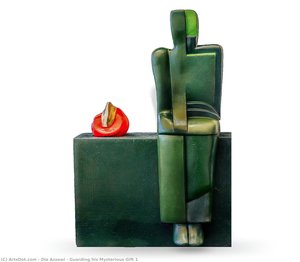
Dia al-Azzawi’s “Desert Rose No. 4” transcends mere visual representation; it's an invitation to contemplate the enduring beauty found within stark landscapes and the profound exploration of form and color. Created in 2012, this sculpture embodies the spirit of modernist abstraction while simultaneously referencing the evocative imagery of the desert rose – a flower renowned for its intricate spiral patterns mirroring geological formations. The artwork’s genesis lies in Al-Azzawi's formative years amidst Iraq’s turbulent history, fostering an artistic sensibility deeply attuned to symbolism and narrative traditions rooted in Mesopotamian heritage.- Composition & Perspective: Dominating the frame is a vertically oriented sculpture, emphasizing upward growth and dynamism. The geometric shapes—primarily rectangular and curved forms—overlap strategically, generating visual depth and complexity. A central base anchors the structure, providing stability while directing the eye upwards.
- Color Palette & Texture: The sculpture’s monochromatic palette centers on shades of orange, ranging from luminous hues to deeper tones, creating a cohesive aesthetic impact. The surface possesses a glossy sheen achieved through resin or plastic casting—a technique that amplifies light reflection and sculpturally defines contours.
- Style & Influences: “Desert Rose No. 4” draws heavily from Cubism and Constructivism, prioritizing geometric abstraction and fragmented perspectives – movements that sought to dismantle traditional artistic conventions in favor of exploring new visual languages.
- Symbolic Resonance: The vibrant orange color speaks to themes of energy, passion, and resilience—mirroring the tenacity of the desert rose itself. Furthermore, the sculpture’s forms evoke architectural elements and stylized floral motifs, symbolizing order, structure, and a connection to ancient Mesopotamian artistry.
Material & Technique: Craftsmanship Rooted in Tradition
The sculpture's materiality—likely resin or plastic—represents a deliberate choice reflecting Al-Azzawi’s engagement with both contemporary artistic trends and Iraqi craftsmanship traditions. The molding process ensures precise form replication, capturing the subtle nuances of light and shadow that contribute to its sculptural presence. This meticulous technique underscores the artist’s commitment to honoring heritage while embracing innovation.Dia al-Azzawi: A Voice for Mesopotamian Echoes
Dia al-Azzawi's artistic journey began in Baghdad, where he absorbed the profound influence of Mesopotamian folklore and archaeology—experiences that would shape his distinctive visual vocabulary. His dedication to exploring Arab identity and conflict through art is palpable in “Desert Rose No. 4,” a testament to his unwavering belief in the power of creative expression as a conduit for conveying cultural narratives and confronting historical realities. This sculpture stands as a symbol of artistic perseverance amidst challenging circumstances—a celebration of beauty born from adversity.Exploring the Desert Rose Aesthetic
“Desert Rose No. 4”’s geometric abstraction isn't merely stylistic; it embodies the spiraling patterns characteristic of desert roses – geological formations that capture the essence of resilience and transformation. By translating this natural motif into sculptural form, Al-Azzawi invites viewers to contemplate themes of permanence, beauty, and the enduring legacy of Mesopotamian artistry—a captivating dialogue between art and history.Preguntas y respuestas
¿Qué edad tenía Dia Al-Azzawi cuando creó "Desert Rose No. 4" en 2012?
Dia Al-Azzawi realizó "Desert Rose No. 4" a la edad de 73. El artista nació en 1939 y la obra data de 2012.
¿Dónde se recomienda exhibir el formato Cuadrado de "Desert Rose No. 4"?
Con su formato Cuadrado, se sugiere una reproducción de "Desert Rose No. 4" para un Salón principal.
¿Quién es el artista detrás de "Desert Rose No. 4"?
El artista detrás de "Desert Rose No. 4" es Dia Al-Azzawi. La obra está catalogada bajo el nombre de Dia Al-Azzawi.
¿En qué año se creó "Desert Rose No. 4"?
"Desert Rose No. 4" de Dia Al-Azzawi fue creada en 2012.
¿Es "Desert Rose No. 4" de Dia Al-Azzawi una obra de tonos claros u oscuros?
Los valores registrados para "Desert Rose No. 4" de Dia Al-Azzawi son: brillante de brillo y Luminoso de luminancia.
¿Cuál es el tono predominante de "Desert Rose No. 4" de Dia Al-Azzawi?
El tono dominante de "Desert Rose No. 4" de Dia Al-Azzawi es Del ámbar al azafrán. El tono es la base cromática de la paleta.
¿Qué tipo de obra es "Desert Rose No. 4"?
En el catálogo, "Desert Rose No. 4" de Dia Al-Azzawi está clasificado como sculpture. La categoría ayuda a encontrar obras similares.
Biografía del artista
A Life Painted in the Echoes of Mesopotamia
Dia al-Azzawi, born in Baghdad in 1939, isn’t merely an artist; he's a visual storyteller deeply rooted in the ancient heart of Iraq. His life and work are inextricably linked to the country’s turbulent history, its rich cultural heritage, and the enduring power of its artistic traditions. From his earliest years, immersed in the evocative remnants of Mesopotamian civilizations – the towering ziggurats, the intricate cylinder seals, the whispers of forgotten myths – al-Azzawi developed a profound sensitivity to symbolism, narrative, and the very essence of visual communication. This formative experience led him to the College of Arts in Baghdad, where he honed his technical skills while simultaneously absorbing the breadth of art history, a knowledge base that would later inform his distinctive artistic language. It was clear even then that al-Azzawi wasn’t simply replicating established styles; he sought to excavate and revitalize the visual memory of his ancestors, breathing new life into ancient forms and narratives.The Birth of a Distinctive Vision: Calligraphy and Rebellion
Al-Azzawi's artistic journey truly began with an exploration of abstract expressionism, but this proved merely a stepping stone towards something far more singular. He quickly gravitated toward a bold and innovative style that seamlessly integrated Arabic calligraphy into his compositions. This wasn’t mere decorative embellishment; it was a deliberate act of reclamation – a powerful assertion of Arab identity within the global art landscape. Al-Azzawi became a central figure in the *Hurufiyya* movement, a collective endeavor dedicated to liberating Arabic letters from their traditional linguistic function and exploring their inherent aesthetic potential as independent forms. His canvases began to pulsate with the energy of ancient scripts, transformed into dynamic shapes and patterns that resonated with both historical weight and contemporary relevance. The palette he employed was often vibrant and emotionally charged, reflecting not only his personal intensity but also a deep engagement with the political realities surrounding him. He didn’t shy away from confronting difficult themes; instead, he channeled them into works of profound beauty and unsettling power. This approach marked a clear departure from conventional artistic practices and established a unique visual vocabulary that would define his career.Forging New Paths: The New Vision Group
Recognizing the need for a more progressive artistic voice in Iraq during a period of significant political upheaval, al-Azzawi co-founded the New Vision group (Jama’at al-Ru’ya al-Jadida) in 1963. This collective of Iraqi artists aimed to break free from conventional norms and modernize Arab art, challenging established institutions and advocating for experimentation. Al-Azzawi’s leadership within the group proved instrumental in fostering a vibrant artistic community and inspiring a new generation of creatives. The New Vision wasn't simply about stylistic innovation; it was about redefining what it meant to be an Arab artist in a rapidly changing world, forging a path toward greater cultural autonomy and self-expression. Through exhibitions, publications, and collaborative projects, they sought to elevate the profile of modern Iraqi art both domestically and internationally.Themes of Heritage, Conflict, and Exile
Throughout his prolific career, Dia al-Azzawi has consistently addressed themes of heritage, identity, conflict, and exile – subjects deeply resonant with the experiences of the Arab world. His work serves as a poignant reflection of the political turmoil and social upheaval that have marked Iraq’s history and continue to shape its present. He masterfully navigates diverse media—painting, sculpture, printmaking, and digital art—demonstrating an unwavering commitment to artistic innovation. Notable works like “Amin Hasanain Al-Ibrahimy,” a moving tribute to the renowned Iraqi poet, and the harrowing “Nasheed Al Jassad (Bodily Anthem) Tel el Zaatar” series, commemorating the victims of the Tel al-Zaatar refugee camp massacre in Lebanon, stand as powerful testaments to his artistic conscience. His collaborative spirit is also evident in projects like the Nabu Museum in Lebanon, a testament to his dedication to preserving and promoting Arab art and culture for future generations.A Legacy Etched in Calligraphy and Courage
Today, Dia al-Azzawi is rightfully regarded as one of the most important and influential artists of the modern Arab world. His pioneering use of Arabic calligraphy, coupled with his unflinching exploration of complex socio-political themes, has left an indelible mark on subsequent generations of artists. Though he now resides in London, he remains a vital voice in contemporary art, continuing to advocate for Arab artistic expression on a global stage. His work is exhibited internationally and held in numerous prestigious collections, solidifying his place as a significant figure not only within the context of Middle Eastern art but also within the broader narrative of global art history. *Dia al-Azzawi’s legacy isn't just about aesthetic innovation; it’s about courage—the courage to confront difficult truths, to reclaim cultural identity, and to use art as a powerful tool for social change.*
Dia Al-Azzawi
1939 - , Irak
Datos clave
- Artistic Movement Or Style: Hurufiyya, Abstract
- Artists Or Movements Influenced By This Artist: ['Modern Arab artists']
- Artists Who Influenced This Artist: ['Hafidh al-Droubi']
- Date Of Birth: 1939
- Full Name: Dia al-Azzawi
- Nationality: Iraquí
- Notable Artworks:
- Amin Hasanain Al-Ibrahimy
- Nasheed Al Jassad
- Place Of Birth: Bagdad, Irak
Artículos relacionados

The Enduring Form: Sculpture Across History, Technique & Emotional Resonance
Explore the rich history of sculpture with OriginalUniqueArt. Discover key techniques, influential artists & investment potential for discerning collectors. Expert insights into valuing and collecting timeless masterpieces.

Esculturas de Bronce Legendarias: 10 Obras Maestras que Transformaron el Arte | OriginalUniqueArt
Descubre las 10 esculturas de bronce más legendarias que revolucionaron el arte. Explora la historia de Rodin, Degas y otros maestros del bronce. Encuentra reproducciones de alta calidad e inspiración para tu hogar en OriginalUniqueArt.com.

Las 10 Obras Maestras de Bronce que Revolucionaron la Historia del Arte | OriginalUniqueArt
Descubre las 10 esculturas de bronce más influyentes de la historia del arte. Explora obras maestras de Rodin, Degas y otros genios. Encuentra reproducciones de arte de calidad museo en OriginalUniqueArt.com.

The Enduring Form: Exploring Themes & Techniques in Sculpture Across Historical Periods
Explore the rich history of sculpture from ancient masterpieces to contemporary innovations. Discover key techniques, influential artists & investment potential for discerning art collectors.

Expresionismo Abstracto: 10 Obras Maestras que Transformaron el Arte |
Descubre las 10 obras maestras del Expresionismo Abstracto: Pollock, Rothko y más. Explora la historia, técnica y significado de estos lienzos icónicos. Reproducciones de arte exclusivas en .