
 Vista previa
 Compartir
 Compartir
 Ver detalles

 Descargar
 Ver similares
 Radiografía
 Presentación de diapositivas
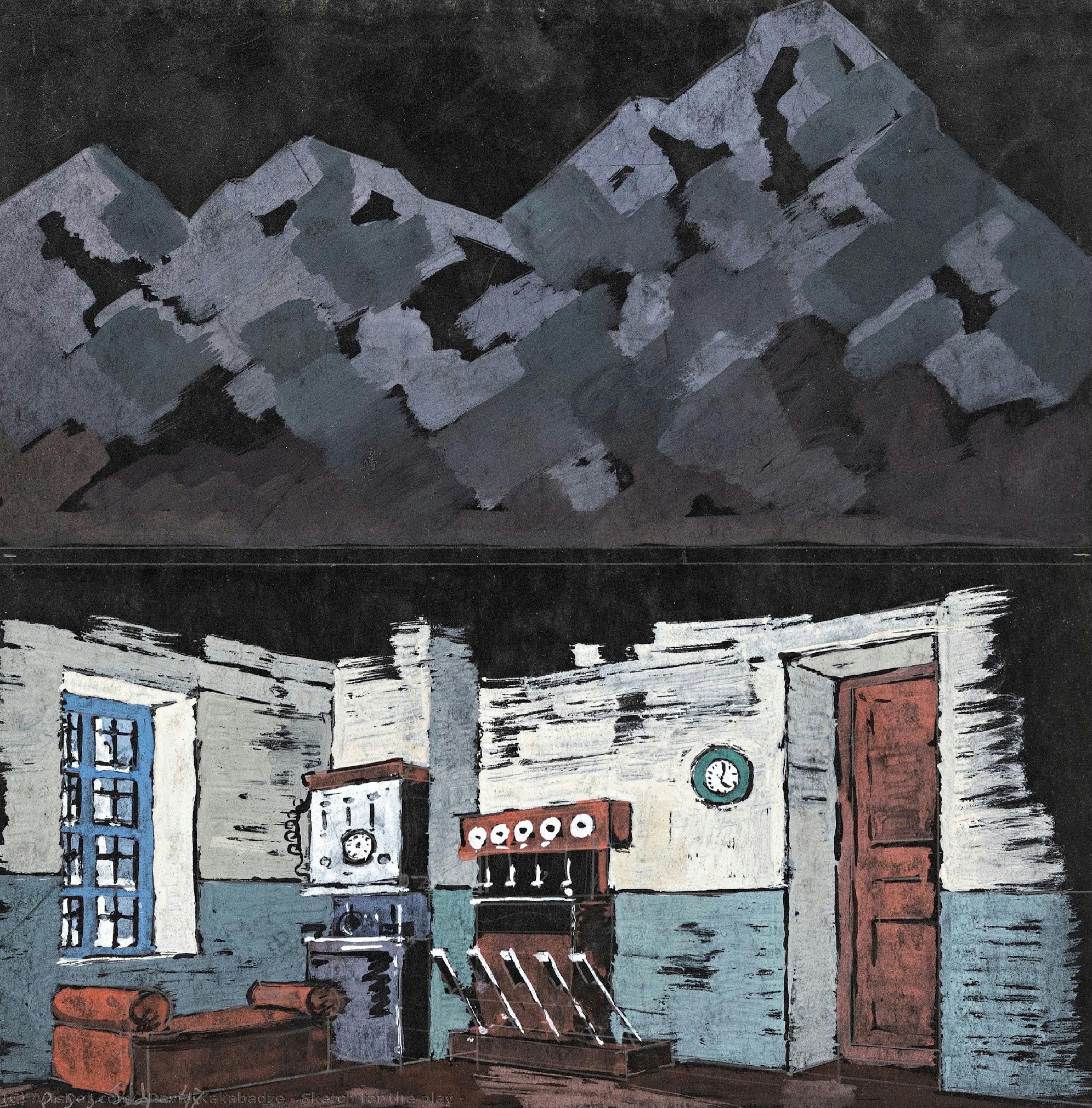
Sketch for the play
 Acrylic On Canvas
- WallArt
- Expressionism
 1947
1947 30.0 x 30.0 cm
 Palacio de Arte de Georgia – Museo de Historia Cultural
 Leer más
Reproducción al óleo hecha a mano
Óleo sobre lienzo pintado a mano en el tamaño y marco de su elección, realizado por encargo por nuestros artistas. ( Pedir impresión Comprar descarga)




P118B $10

P118H $10

P118W $10

P438Z $10

P508JH $12

P508YH $12

P805H $10

P805Z $10

P919BZ $10

P919G $10

P919XJ $10

P959ZH $10

P968JZ $12

W106C $8

W218G $10

W218JH $8

W218Y $10

W307PJ $10

W316G $10

W316PJ $8

W316Y $10

W398PJ $8

W4111J $10

W500HY $15

W500JH $15

W692G $12

W849H $8

W940BG $15

W953PJ $8




Elija entre nuestros tamaños predefinidos que respetan las proporciones originales de la obra.

Puede ingresar sus propias dimensiones para adaptarse a un marco o espacio específico. Si el tamaño seleccionado no coincide con las proporciones de la imagen original, recortaremos la obra o extenderemos la pintura con elementos adicionales pintados a mano. Se le enviará una maqueta digital para su aprobación antes de comenzar la producción.
Tenga en cuenta que la vista previa en pantalla no refleja el recorte o la extensión reales. Solo la maqueta mostrará con precisión la composición final.
Si bien existen tamaños personalizados, recomendamos seleccionar una dimensión de la lista predefinida para preservar las proporciones originales.
Tras realizar el pedido, el equipo de OriginalUniqueArt.com enviará un correo electrónico al cliente para solicitar instrucciones y proporcionarle una vista previa del boceto.
Envío a todo el mundo () en 3-4 semanas en lugar de las 5 semanas estándar. (21 agosto). Sin comprometer la calidad.

Envío exprés gratuito a todo el mundo

Lienzo de lino de alta calidad

Seguro de envío completo

Garantía de reembolso de aranceles aduaneros

Garantía de fidelidad cromática exacta

Política de devolución de 60 días (solo por defectos)

Garantía de devolución del 100% del dinero

Oferta por volumen
 La opción de vidrio solo está disponible en tamaños inferiores a 110 cm.

Sketch for the play
Técnica de reproducción
Tamaño de la reproducción
-


Precio total
$ 300
Descripción de la obra
A Storm Within: David Kakabadze’s ‘Sketch for the Play’
David Kakabadze's “Sketch for the Play,” painted in 1947, isn’t merely a depiction of a landscape; it’s an immersion into a turbulent emotional state. This arresting work, measuring a modest 30x30 cm, immediately commands attention with its dramatic interplay of color and texture – a visual representation of internal conflict rendered on canvas with bold, expressive strokes. The piece transcends the simple act of portraying a storm; it embodies the anxieties and uncertainties simmering beneath the surface of Georgian society during a period of profound change.
At first glance, the composition presents two distinct panels. The upper portion explodes with a furious sky – jagged mountain peaks clawing at a bruised, grey-blue expanse. Thick impasto brushstrokes build up layers of color, creating a palpable sense of movement and raw energy. Rain streaks across the canvas, mirroring the chaotic nature of the scene. Below this tempestuous realm lies an interior space, a cluttered studio or workshop dominated by a colossal mechanical device – likely a printing press – its intricate gears and levers hinting at industry and perhaps even a touch of oppressive machinery. Walls are painted in stark whites punctuated by patches of darker grey, suggesting age, wear, and the weight of accumulated labor.
The Expressionist Palette and Georgian Roots
Kakabadze’s stylistic choices firmly situate “Sketch for the Play” within the realm of Expressionism, a movement characterized by its emphasis on subjective experience and emotional intensity. He abandons realistic representation in favor of conveying feeling – the anxiety of the storm, the claustrophobia of the confined space. Yet, despite this embrace of modern techniques, the painting remains deeply rooted in Georgian tradition. Kakabadze’s heritage is evident in his use of color, particularly the cool blues and grays that evoke the rugged landscapes of his native region, the mountainous Caucasus. The deliberate simplification of forms, a hallmark of Expressionism, also echoes the folk art traditions prevalent in Georgia.
Born in 1889 in the village of Kukhi near Khoni, Kakabadze’s early life instilled within him a deep connection to his land and its artistic heritage. His formal training at St. Petersburg University provided exposure to European avant-garde movements, but he skillfully integrated these influences with his own unique vision, forging a distinctly Georgian modernism. His multifaceted career – encompassing painting, graphic design, scenic design for theatre, and even cinematic innovation – speaks to a restless intellect and an unwavering commitment to artistic exploration.
Symbolic Layers: Chaos and Creation
The imagery within “Sketch for the Play” is rich with symbolic potential. The storm itself can be interpreted as representing chaos, disruption, or perhaps the challenges facing Georgia during this period of political and social upheaval. Conversely, the mechanical device in the lower panel suggests order, industry, and the relentless drive to create – a potentially conflicting force within the larger composition. The juxtaposition of these elements invites contemplation on the relationship between nature and technology, tradition and modernity, and perhaps even the individual’s struggle against external forces.
The subtle use of warmer tones—hints of orange and yellow—within the mechanical device offer a glimmer of hope or resilience amidst the prevailing gloom. These touches suggest that even within the most oppressive circumstances, creativity and human ingenuity can endure. Kakabadze's masterful manipulation of impasto creates a tactile surface, drawing the viewer into the painting’s emotional core and inviting a deeply personal response.
A Legacy in Texture and Emotion
“Sketch for the Play” is more than just a visually striking artwork; it’s a poignant reflection on the complexities of the human experience. David Kakabadze's ability to capture raw emotion through bold brushstrokes, evocative color palettes, and carefully considered symbolism ensures its enduring appeal. Reproductions of this powerful piece offer an opportunity to bring this captivating vision into any space, serving as a reminder of the beauty and turbulence inherent in both nature and the human spirit. It stands as a testament to Kakabadze’s pioneering role in Georgian modernism and his profound understanding of how art can illuminate the deepest recesses of our souls.
Biografía del artista
Introducción al Artista
David Kakabadze fue un destacado pintor de vanguardia georgiano, artista gráfico y diseñador escénico. Nacido el 20 de agosto de 1889 en el pueblo de Kukhi cerca de la ciudad de Khoni, las obras de Kakabadze son notables por combinar una interpretación innovadora del arte "izquierdista" europeo con las tradiciones nacionales georgianas.Primeros Años y Educación
Kakabadze nació en una familia campesina pobre. Patrocinado por filántropos locales, estudió ciencias naturales en la Universidad de San Petersburgo en 1916. Simultáneamente, asistió a clases de pintura en el estudio de Dmitroyev-Kavkazsky e investigó las artes georgianas antiguas.Trayectoria Artística
Después de un breve período trabajando como pintor y educador en Tbilisi, Kakabadze se fue a París donde vivió de 1919 a 1927. Participó en las exposiciones de la Société des Artistes Indépendants y en exposiciones conjuntas con los artistas georgianos Lado Gudiashvili y Shalva Kikodze. El ciclo de paisajes que reproducen la naturaleza de su provincia natal de Imereti es uno de los trabajos más interesantes de sus primeros años.Estilo e Influencias
Durante su estancia en París, Kakabadze se sintió atraído por la "pintura sin objeto" y trabajó en problemas de técnica pictórica, utilizando ocasionalmente metal, espejo, vidrio esmaltado y otros materiales en lugar de pinturas. Pronto pasó a una posición aún más "izquierdista", rindiendo un generoso homenaje al cubismo. Su obra se caracteriza por:- Influencia Cubista: Kakabadze adoptó elementos del cubismo, descomponiendo formas y perspectivas para crear composiciones abstractas.
- Experimentación con Materiales: Incorporó materiales no convencionales como metal, espejo y vidrio esmaltado en sus pinturas, explorando nuevas posibilidades estéticas.
- Temática Georgiana: A pesar de su influencia europea, Kakabadze mantuvo una fuerte conexión con sus raíces georgianas, representando paisajes y elementos culturales de Imereti.
Obras Destacadas
Algunas de las obras notables de Kakabadze incluyen Veleros, Bretagne y Esbozo para obtener varios grados de luz en una sola bombilla eléctrica. Estas pinturas muestran su interpretación innovadora del arte y su capacidad para combinar el arte "izquierdista" europeo con las tradiciones nacionales georgianas.Legado
El legado de Kakabadze se puede ver en los numerosos artistas que han seguido sus pasos. Su trabajo ha sido exhibido en varios museos, incluyendo el Palacio del Arte de Georgia - Museo de Historia Cultural en Tbilisi, Georgia. Las contribuciones de Kakabadze al mundo del arte son innegables y su legado continúa inspirando a los artistas hasta el día de hoy.
David Kakabadze
1889 - 1952 , Georgia
Datos clave
- Artistas Que Influyeron:
- Cubismo europeo
- Futurismo ruso
- Fecha De Muerte: 10 de mayo de 1952
- Fecha De Nacimiento: 20 de agosto de 1889
- Influenciado A Artistas: ['Artistas georgianos']
- Lugar De Nacimiento: Kutaisi, Georgia
- Movimiento Artístico: Vanguardia georgiana
- Nacionalidad: Georgiano
- Nombre Completo: David Kakabadze
- Obras Notables:
- Veleros
- Bretagne
- Boceto para luces en bombilla
Artículos relacionados

The Enduring Legacy of Oil on Canvas: Technique, History & Aesthetic Impact
Explore the rich history & techniques of oil painting – from Renaissance masters to Impressionism. Discover pigments, layering methods, and why this timeless medium endures. Expert insights for artists & art enthusiasts.

El Óleo sobre Lienzo: Historia, Técnica y la Persistencia de un Medio Artístico Atemporal
Descubre la historia y técnica del óleo sobre lienzo. Explora reproducciones fieles hechas a mano, personalización artística y consejos de expertos con OriginalUniqueArt. ¡Colecciona arte con confianza!

El Legado Duradero del Óleo sobre Lienzo: Técnica, Historia y Práctica Contemporánea
Descubre la historia y técnica del óleo sobre lienzo. Explora reproducciones fieles hechas a mano, personalización artística y consejos de expertos con .
The Soul of Impressionism: Why Oil on Canvas Captures Eternal Light and Timeless Emotion
Discover the enchanting alchemy of Impressionism. Explore how the mastery of oil on canvas, through glazing and impasto, captures eternal light and emotion. Perfect for lovers of Monet and Van Gogh seeking the profound depth of hand-painted fine art.
Las 10 Obras Maestras al Óleo que Revolucionaron la Historia del Arte |
Descubre las 10 obras maestras al óleo que transformaron la historia del arte. Explora Van Gogh, Monet, Da Vinci y más. Reproducciones de alta calidad para decorar tu hogar con elegancia. ¡Encuentra tu obra favorita en !



