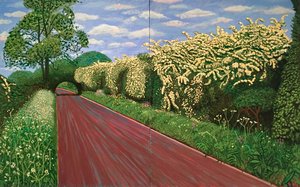
Vista previa
 Compartir
 Compartir
 Ver detalles
 Guía
Guía

 Descargar
 Ver artículos similares
 Radiografía
 Presentación de diapositivas
 Estadísticas
Cactus


 Leer más
La obra de arte que se muestra en esta página está protegida por las leyes de propiedad intelectual, lo que significa que no podemos crear ni vender legalmente una reproducción idéntica. Esta protección se hace cumplir en virtud de acuerdos internacionales como el Convenio de Berna y por las leyes nacionales, incluidas aquellas establecidas por el Ley de derechos de autor de los EE. UU. - Título 17.
Este método cumple plenamente con las normativas de derechos de autor, ya que no implica la copia ni la duplicación de la obra protegida. En su lugar, se trata de una reinterpretación creativa: una nueva pintura influenciada por la original, pero que no es idéntica a ella.
Giclée / Impresión de arte
Impresiones giclée o en lienzo de calidad de museo con producción rápida y opciones de acabado flexibles. ( Encargar reproducción pintada a mano Ver versión en imagen digital)




P118B €10

P118H €10

P118W €10

P438Z €10

P508JH €12

P508YH €12

P805H €10

P805Z €10

P919BZ €10

P919G €10

P919XJ €10

P959ZH €10

P968JZ €12

W106C €8

W218G €10

W218JH €8

W218Y €10

W307PJ €10

W316G €10

W316PJ €8

W316Y €10

W398PJ €8

W4111J €10

W500HY €15

W500JH €15

W692G €12

W849H €8

W940BG €15

W953PJ €8




Elija entre nuestros tamaños predefinidos que respetan las proporciones originales de la obra.

Introduzca el ancho y el alto que necesite para adaptarse a su marco o pared. Una impresión solo puede recortarse, nunca hacerse más grande que la imagen original, por lo que un tamaño con una forma distinta perderá parte de la obra. Le enviaremos una maqueta digital para su aprobación antes de realizar cualquier impresión. La imagen que se muestra en esta página no refleja el recorte real; solo la maqueta lo hace.
Envío a todo el mundo () en 2 semanas en lugar de las 4/5 semanas estándar. (16 octubre)

Envío exprés gratuito a todo el mundo

Lienzo de lino de alta calidad

Seguro de envío completo

Garantía de reembolso de impuestos aduaneros

Garantía de fidelidad cromática exacta

Política de devolución de 100 días (solo por defectos)

Garantía de devolución del 100% del dinero

Oferta por volumen
 La opción de vidrio solo está disponible en tamaños inferiores a 110 cm.

Cactus
Giclée / Impresión de arte
Tamaño de la reproducción
-


Precio total
€ 70
David Hockney’s ‘Cactus’: A Pop Art Still Life Rooted in Observation
David Hockney's “Cactus,” a seemingly simple depiction of a solitary cactus within a vibrant yellow bowl, reveals itself to be far more than just a botanical study. It’s a quintessential example of Hockney’s signature style – a masterful blend of meticulous observation and bold, playful experimentation that has cemented his place as one of the 20th century's most influential artists. This particular piece, painted with an eye attuned to the burgeoning pop art movement, invites us to consider beauty in the commonplace, elevating the ordinary cactus to a subject worthy of artistic contemplation.
A Bradford-Born Vision: Hockney’s Early Influences
Born in 1937 in Bradford, England, David Hockney's artistic journey was profoundly shaped by his surroundings. The industrial landscape of Yorkshire – the brick factories, the bustling markets, and the resilient spirit of its people – instilled a deep appreciation for detail and an inherent skepticism towards traditional artistic conventions. His father, Kenneth Hockney, a conscientious objector during World War II, fostered a critical mind and encouraged independent thought, values that would become central to Hockney’s creative philosophy. This early exposure is palpable in “Cactus,” evidenced by the precise rendering of the cactus's spikes and leaves – a testament to Hockney’s unwavering commitment to accurate representation, even within a deliberately stylized framework.
Pop Art and the Celebration of Color
“Cactus” exemplifies the key tenets of pop art. The use of saturated yellows, greens, and browns isn't merely decorative; it’s strategically employed to draw attention and create visual impact. Hockney’s technique relies on flat planes of color applied with a confident, almost graphic stroke – a characteristic borrowed from commercial illustration and advertising. This approach rejects the subtle gradations and atmospheric perspective favored by earlier artistic movements, embracing instead a directness and clarity that aligns perfectly with the pop art ethos. The bowl itself, presented as a bold geometric form, further reinforces this stylistic choice, echoing the influence of artists like Andy Warhol who were similarly exploring the relationship between high art and popular culture.
Symbolism and the Desert Within
Beyond its aesthetic qualities, “Cactus” carries subtle symbolic weight. The cactus, an enduring emblem of resilience, survival, and adaptation, speaks to a primal human fascination with endurance in harsh environments. Its placement within a domestic setting – the table and bowl – introduces a layer of irony, suggesting that even the most rugged elements of nature can be integrated into our everyday lives. The surrounding smaller cacti subtly reinforce this theme, creating a miniature desert landscape contained within the confines of the still life. This juxtaposition invites contemplation on themes of isolation, strength, and the delicate balance between the natural world and human intervention.
A Timeless Reproduction: Bringing ‘Cactus’ into Your Space
OriginalUniqueArt.com offers meticulously crafted hand-painted reproductions of David Hockney's “Cactus,” ensuring that you experience the full impact of this iconic artwork. Each reproduction is created using archival quality materials and techniques, faithfully capturing the vibrancy of Hockney’s original palette and the precision of his brushwork. Whether adorning a gallery wall or gracing a contemporary interior, this piece offers an accessible entry point into the world of one of Britain's most beloved and enduring artists – a timeless celebration of observation, color, and the beauty found in unexpected places.
Preguntas y respuestas
¿Cómo se combinan el contraste y la armonía en "Cactus"?
La composición cromática de "Cactus" de David Hockney combina un contraste Gentle con una armonía Balanced Harmony.
¿De qué está hecho "Cactus" y en qué estilo se encuentra?
"Cactus" de David Hockney combina la técnica de Acrylic On Canvas con el estilo Pop Art. La técnica y el movimiento describen la elaboración y el estilo de la obra.
¿Hacia qué tono se inclina "Cactus"?
Un tono Golden Yellow Range recorre "Cactus" de David Hockney.
Biografía del artista
Primeros años y educación
David Hockney, un renombrado pintor, dibujante, grabador, diseñador de escenarios y fotógrafo inglés, nació el 9 de julio de 1937 en Bradford, Inglaterra. Fue el cuarto de cinco hijos de Laura y Kenneth Hockney, este último un objetor de conciencia durante la Segunda Guerra Mundial. Su educación temprana tuvo lugar en la escuela primaria Wellington, seguida por la Escuela Gramática de Bradford y, posteriormente, asistió al Colegio de Arte de Bradford.Carrera y contribuciones
La carrera artística de Hockney floreció en la década de 1960 como una figura destacada del movimiento Pop Art. Su obra a menudo presentaba colores vibrantes, líneas audaces e imágenes reconocibles, convirtiéndolo en uno de los artistas británicos más influyentes del siglo XX.- A Bigger Splash (1966), una pintura que muestra el estilo único de Hockney, es una pieza ejemplar del Pop Art.
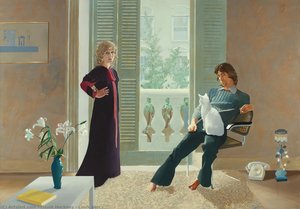
- Sus retratos dobles, como American Collectors (Fred and Marcia Weisman), demuestran su habilidad para capturar la esencia de sus sujetos.
- La exploración del amor gay en su retrato, como se ve en We Two Boys Together Clinging (1961), muestra su apertura y disposición a desafiar las normas sociales.
Evolución artística e influencias
Hockney experimentó con diversos medios y estilos a lo largo de su carrera. Inicialmente asociado al Pop Art, evolucionó hacia la exploración de la fotografía, el dibujo y la pintura paisajística. Sus viajes a California en la década de 1970 influyeron profundamente en su obra, llevando a una serie de pinturas vibrantes que capturan la luz y los colores del sur de California. Su interés por la perspectiva y la representación del espacio se evidencia en sus paisajes, donde experimentó con diferentes técnicas para transmitir la profundidad y el movimiento. La influencia de artistas como Henri Matisse y Pablo Picasso es palpable en su enfoque innovador de la forma y el color.Logros y reconocimiento
A lo largo de su ilustre carrera, Hockney ha recibido numerosos reconocimientos:- Fue nombrado Order of the Companion of Honour (CH) en 2018.
- Fue elegido Fellow of the Royal Society (FRS) en 2003.
- Recibió la Laureate of the Praemium Imperiale para pintura en el año 2000.
Legado e impacto histórico
El profundo impacto de David Hockney en el mundo del arte, particularmente en el ámbito del Pop Art, es innegable. Su estilo innovador y su disposición a explorar diversos temas han consolidado su posición como uno de los artistas británicos más influyentes del siglo XX. Su capacidad para capturar la esencia de la vida moderna, ya sea a través de sus vibrantes pinturas de piscinas o sus retratos íntimos, ha dejado una huella imborrable en la historia del arte. Su continua experimentación con nuevos medios y tecnologías lo mantiene como un artista relevante e influyente en el siglo XXI.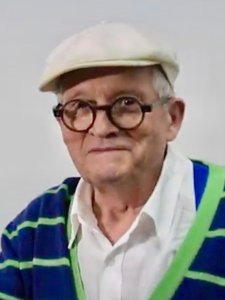
David Hockney
1937 - , Reino Unido
Datos clave
- Fecha De Nacimiento: 9 de julio de 1937
- Lugar De Nacimiento: Bradford, Reino Unido
- Movimiento Artístico: Pop Art
- Nacionalidad: Británico
- Nombre Completo: David Hockney
- Obras Notables:
- A Bigger Splash
- American Collectors
- We Two Boys Together Clinging
Artículos relacionados
Los 10 Pinturas Más Famosas Dominadas por el Verde Cadmio | Arte y Decoración de Lujo
Descubre los 10 cuadros más famosos dominados por el verde cadmio. Explora la historia, artistas como Monet y Van Gogh, e inspiración para decoración con arte en . ¡Encuentra tu obra maestra!
David Hockney: A Retrospective on Pop Art's Chronicler of Light, Space, and the Everyday
Explore the life & work of David Hockney, Pop Art's master chronicler. Discover his iconic paintings, Californian landscapes, and lasting influence on modern art. Expert analysis for collectors.
Los 10 Cuadros Más Famosos Dominados por el Verde Cromado: Arte y Decoración
Descubre los 10 cuadros más famosos dominados por el verde cromado. Explora la historia, artistas como Monet y Renoir, e inspírate para decorar tu hogar con lienzos impresionistas. Reproducciones de arte en .
Pop Surrealism Unveiled: The Sophisticated Intersection of Vibrant Pop Art and Dreamlike Subconscious Landscapes
Explore the captivating world of Pop Surrealism. Discover how vibrant Pop Art meets dreamlike subconscious imagery through the works of masters like Jeff Soto and Ryan Heshka. An expert guide for discerning collectors seeking to understand this profound contemporary art movement.
Verdant Visions: Exploring the Symbolism & Aesthetic Impact of Green in Art History
Explore the rich history & symbolism of green in art! Discover iconic paintings, techniques, and how to bring verdant harmony into your home with OriginalUniqueArt's expert guide.