Menú

() ·

A painting made for you, by hand

Roman Ruins

Reproducción al óleo hecha a mano

Óleo sobre lienzo pintado a mano en el tamaño y marco de su elección, realizado por encargo por nuestros artistas. ( Cambiar a impresiones Cambiar a imagen digital)

Descripción del objeto

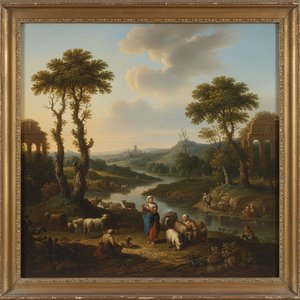
A melancholic Dutch Golden Age tondo featuring Roman ruins and pastoral figures by Cornelis van Poelenburch captures a sense of ancient grandeur that invites you to explore this timeless masterpiece.

Biografía del artista

Descubre los paisajes holandeses de Cornelis van Poelenburgh! Explora su arte romano-influenciado, escenas bíblicas y estilo del siglo XVII – admira sus obras maestras ahora.

from ·

Chapter 1

How large should it be?

Slide to change the size; the picture on the left shows the frame at its real width. The proportions of the original are kept.

Tamaño estándar
a medida
CM
INCH

Elija entre nuestros tamaños predefinidos que respetan las proporciones originales de la obra.

ancho
altura

Indique el ancho y el alto que necesite para adaptarse a su marco o pared. Al tratarse de una obra pintada a mano, si requiere un tamaño con una proporción distinta, el artista puede pintar un poco más alrededor de la imagen o recortarla ligeramente; usted elige. Le enviaremos una maqueta digital para su aprobación antes de comenzar la pintura. La imagen que se muestra en esta página no refleja el resultado real; solo la maqueta lo hace.

Chapter 2

How should it arrive?

Choose the edges of the stretched canvas

Choose your frame

Corner sample of the WhiteWrap canvas edge finish, stretched on madera maciza bars
White €1
Corner sample of the BlurSideWrap canvas edge finish, stretched on madera maciza bars
Blurside €1
Corner sample of the ExtendedWrap canvas edge finish, stretched on madera maciza bars
Extended €1
Corner sample of the P118B picture frame: poliestireno moldeado, 5 cm wide and 3 cm thick
P118B €10
Corner sample of the P118H picture frame: poliestireno moldeado, 5 cm wide and 3 cm thick
P118H €10
Corner sample of the P118W picture frame: poliestireno moldeado, 5 cm wide and 3 cm thick
P118W €10
Corner sample of the P438Z picture frame: poliestireno moldeado, 5.5 cm wide and 3.5 cm thick
P438Z €10
Corner sample of the P508JH picture frame: poliestireno moldeado, 7 cm wide and 3.5 cm thick
P508JH €12
Corner sample of the P508YH picture frame: poliestireno moldeado, 7 cm wide and 3.5 cm thick
P508YH €12
Corner sample of the P805H picture frame: poliestireno moldeado, 5 cm wide and 3.5 cm thick
P805H €10
Corner sample of the P805Z picture frame: poliestireno moldeado, 5 cm wide and 3.5 cm thick
P805Z €10
Corner sample of the P919BZ picture frame: poliestireno moldeado, 7 cm wide and 3.5 cm thick
P919BZ €10
Corner sample of the P919G picture frame: poliestireno moldeado, 7 cm wide and 3.5 cm thick
P919G €10
Corner sample of the P919XJ picture frame: poliestireno moldeado, 7 cm wide and 3.5 cm thick
P919XJ €10
Corner sample of the P959ZH picture frame: poliestireno moldeado, 5 cm wide and 3 cm thick
P959ZH €10
Corner sample of the P968JZ picture frame: poliestireno moldeado, 6 cm wide and 4 cm thick
P968JZ €12
Corner sample of the W106C picture frame: madera maciza, 5 cm wide and 3 cm thick
W106C €8
Corner sample of the W218G picture frame: madera maciza, 5 cm wide and 3 cm thick
W218G €10
Corner sample of the W218JH picture frame: madera maciza, 5 cm wide and 3 cm thick
W218JH €8
Corner sample of the W218Y picture frame: madera maciza, 5 cm wide and 3 cm thick
W218Y €10
Corner sample of the W307PJ picture frame: madera maciza, 6 cm wide and 3 cm thick
W307PJ €10
Corner sample of the W316G picture frame: madera maciza, 6 cm wide and 3 cm thick
W316G €10
Corner sample of the W316PJ picture frame: madera maciza, 6 cm wide and 3 cm thick
W316PJ €8
Corner sample of the W316Y picture frame: madera maciza, 6 cm wide and 3 cm thick
W316Y €10
Corner sample of the W398PJ picture frame: madera maciza, 5 cm wide and 3 cm thick
W398PJ €8
Corner sample of the W4111J picture frame: madera maciza, 6.5 cm wide and 3.5 cm thick
W4111J €10
Corner sample of the W500HY picture frame: madera maciza, 7 cm wide and 5 cm thick
W500HY €15
Corner sample of the W500JH picture frame: madera maciza, 7 cm wide and 5 cm thick
W500JH €15
Corner sample of the W692G picture frame: madera maciza, 8 cm wide and 4 cm thick
W692G €12
Corner sample of the W849H picture frame: madera maciza, 5 cm wide and 3 cm thick
W849H €8
Corner sample of the W940BG picture frame: madera maciza, 7.5 cm wide and 4.5 cm thick
W940BG €15
Corner sample of the W953PJ picture frame: madera maciza, 6 cm wide and 3.5 cm thick
W953PJ €8
Corner sample of the H24-GOLD picture frame: madera tallada con estuco, 10 cm wide and 6 cm thick
H24-GOLD €30
Corner sample of the H24-SILVER picture frame: madera tallada con estuco, 10 cm wide and 6 cm thick
H24-SILVER €30
Corner sample of the H36-GOLD picture frame: madera tallada con estuco, 15 cm wide and 6.5 cm thick
H36-GOLD €45
Corner sample of the H36-SILVER picture frame: madera tallada con estuco, 15 cm wide and 6.5 cm thick
H36-SILVER €45

Moulding: . Overall size with the frame: .

Chapter 3

Who paints it, and should anything change?

Examples of what can be changed: Replace face with customer photo; Add pet (e.g., replace cat with dog); Include hidden message in background; Change background landscape or elements.
After order, OriginalUniqueArt.com team will email client for instructions and provide a mockup preview

Envío a todo el mundo () en 3-4 semanas en lugar de las 5 semanas estándar. (31 octubre). Sin comprometer la calidad.

Chapter 4

The finishing touches

A nameplate, as in a museum?

Detalles de la placa de bronce grabada

This elegant plaque features the artist's name and the title of the artwork, finely engraved for a timeless presentation.

It is made from bronze with a refined, elegant finish. The text is precisely laser-engraved for a sharp and permanent result. Measuring 9x2 cm, the plaque is compact yet easy to read. It's built to be durable and scratch-resistant, offering a professional, museum-quality look. Mounting is simple thanks to the included adhesive backing.

Detalles de la placa de acrílico transparente

The plaque includes essential engraved details such as the artist's name, the title of the artwork, the date it was created, the type of media used-like oil on canvas or watercolor-a brief description of the piece, and a QR code that links to the complete artwork information.

It is crafted from clear acrylic, offering a sleek, modern appearance. The text is UV-engraved in black to ensure strong visual contrast. With a size of 10x15 cm, it ensures optimal readability. It comes equipped with two metal hooks for secure wall mounting. The plaque is designed to be weather-resistant, making it suitable for various environments, and it includes interactive features that work seamlessly with smartphone scanning.

Detalles de la placa de acrílico negro

This elegant plaque includes engraved information such as the artist's name, the title of the artwork, the date it was created, the type of media used (like oil on canvas or watercolor), a short description of the artwork, and a QR code for quick access to more information.

The plaque itself is made from refined black acrylic with a premium finish. The text is laser-engraved in white for high contrast and readability. Its size is 10x15 cm, designed to be easy to read. It comes with two metal hooks for professional mounting. The design is sleek and fits any interior style. It is also weather-resistant and durable, with built-in digital integration for mobile compatibility.

A protective varnish?

When do you need it?

Chapter 5

Your painting, as you ordered it

Roman Ruins

Técnica de reproducción

Dimensiones de la reproducción

-

Selección de artistas premium

Mayor nivel de detalle, delicadeza y tiempo de producción adicional

-

Enmarcado de reproducción

-

-

Para obras de arte o reproducciones que midan más de 105 cm (aproximadamente 41 pulgadas) en cualquiera de sus lados, el marco se enviará como un kit desmontado. Este método garantiza una entrega segura y evita daños durante el transporte.

Se requiere montaje profesional: este no es un producto para hacer usted mismo (DIY).
El kit debe ser ensamblado y el lienzo tensado por un enmarcador profesional con experiencia, utilizando cola para madera (no incluida), una tenaza para tensar lienzos y sargentos para mantener los bastidores alineados mientras la cola se seca. Un montaje incorrecto o una tensión desigual del lienzo pueden dañar la obra de arte de forma permanente y no están cubiertos por nuestra garantía.

  • Se incluyen todos los listones de madera maciza, cortados con precisión según las medidas.

  • Se ensambla con los tornillos incluidos, además de cola para madera para las uniones de las esquinas, la cual no se incluye y debe ser proporcionada por su enmarcador.

  • Se requieren herramientas profesionales que no están incluidas: un alicate para tensar lienzos (tensor) y abrazaderas para mantener los bastidores alineados mientras se seca el pegamento.

Importante:
Las uniones de las esquinas requieren cola para madera, los listones deben sujetarse con prensas hasta que la cola esté completamente seca, y para tensar el lienzo en el bastidor ensamblado se requiere una pinza para tensar lienzos. Ninguno de estos elementos está incluido en el kit. Por favor, contacte con un profesional del enmarcado con experiencia antes de realizar un pedido de este tamaño.

Cartela

-

-

Barniz protector

Barniz brillante (realza los colores y protege contra la luz y la humedad)

-

Personalizar mi obra

Ejemplos de lo que se puede personalizar: sustituir el rostro por una foto del cliente; añadir una mascota (por ejemplo, cambiar un gato por un perro); incluir un mensaje oculto en el fondo; cambiar el paisaje o los elementos del fondo.

-

Envío urgente

Envío a todo el mundo () en 3 o 4 semanas, en lugar de las 5 semanas habituales. (31 octubre). Sin comprometer la calidad.

-

Envío urgente

Envío internacional () en 5 semanas. (7 noviembre).

Incluido

Precio total final

€ 266

Precio total € 266

La opción de vidrio solo está disponible en tamaños inferiores a 110 cm.

Included with every order

  • Envío exprés gratuito a todo el mundo
  • Lienzo de lino de alta calidad
  • Seguro de envío total
  • Garantía de reembolso de aranceles aduaneros
  • Garantía de fidelidad cromática exacta
  • Política de devolución de 100 días (solo por defectos)
  • Garantía de devolución del 100% del dinero
  • Descuento por cantidad

A Window into Antiquity: The Timeless Allure of Roman Ruins

In the delicate, circular embrace of this exquisite tondo, Cornelis van Poelenburgh invites us to step through a portal into a bygone era. Painted around 1620, Roman Ruins is far more than a mere depiction of architectural decay; it is a profound meditation on the passage of time and the enduring relationship between humanity and the remnants of greatness. The composition, framed by its characteristic round format, focuses our gaze upon a landscape where the grandeur of the Roman Empire has softened into a pastoral sanctuary. Within this intimate space, the heavy stone arches and crumbling pillars serve as silent witnesses to history, now providing a backdrop for the quiet, rhythmic pulse of rural life.

The scene unfolds with a masterful use of light and shadow, reminiscent of the Dutch Golden Age's obsession with atmospheric truth. As we gaze upon the foreground, we encounter a world in gentle motion: a shepherd tending his flock, a laborer with his oxen, and figures caught in quiet contemplation. These small-scale inhabitants of the landscape bring a sense of warmth and vitality to the otherwise somber ruins. The artist employs a subtle, earthy palette—rich ochres, muted greens, and soft umbers—to weave a tapestry of textures that feels both tactile and ethereal. The hazy, overcast sky suggests the fleeting light of dawn or dusk, casting a melancholic yet peaceful glow over the entire vista, evoking a sense of nostalgia for a lost civilization.

The Mastery of the Italianate Style

Cornelis van Poelenburgh was a pivotal figure in the first generation of Dutch landscape painters who found profound inspiration in Italy. His travels to Rome allowed him to infuse his Northern training with the classical elegance of the Mediterranean. In Roman Ruins, we see this synthesis perfected. The technique is characterized by an incredible attention to detail; every crack in the ancient masonry and every distant bird in flight is rendered with a precision that draws the viewer deeper into the frame. This meticulousness does not feel clinical, however, but rather serves to enhance the three-dimensional depth of the scene, making the archway feel like a real threshold through which one might walk.

For the discerning collector or interior designer, this piece offers a unique emotional resonance. It possesses a "Caravaggesque" drama tempered by a serene, pastoral tranquility. The symbolism of the ruins—representing the inevitable cycle of rise and fall—is balanced by the resilience of the natural world and the simplicity of the human spirit. Such a work is an ideal centerpiece for a sophisticated interior, providing a conversational focal point that inspires reflection. Whether placed in a sunlit study or a grand gallery, this reproduction captures a moment of eternal stillness, offering any space it inhabits a touch of historical majesty and poetic grace.

Preguntas y respuestas

¿Qué nivel de saturación cromática tiene "Roman Ruins" de Cornelis Van Poelenburgh?

La paleta de "Roman Ruins" presenta una saturación Muted.

¿En qué técnica está ejecutada "Roman Ruins" de Cornelis Van Poelenburgh?

La técnica de "Roman Ruins" de Cornelis Van Poelenburgh es Oil. Las reproducciones pretenden recrear la apariencia de esta técnica.

¿Es "Roman Ruins" de Cornelis Van Poelenburgh un regalo recomendado y para quién?

Se sugiere "Roman Ruins" como un regalo para Anniversary, pensando en Mood.

More about this painting

Ver en contexto Vista previa en RA Cambiar a impresiones Cambiar a imagen digital Enviar
Detalles Guía Añadir a favoritos Descargar Similares Radiografía Presentación de diapositivas Q&A Estadísticas

In numbers

  • 1620the year it was painted
  • 29frames to choose from
  • standard sizes, in its own proportions
  • 5weeks to paint and deliver it
Cornelis Van Poelenburgh

Cornelis Van Poelenburgh

1594 - 1667, Países Bajos

Quick facts about Cornelis Van Poelenburgh

  • Artistic Movement Or Style: Paisaje Holandés, Italiano
  • Artists Or Movements Influenced By This Artist: ['Bloemaert']
  • Artists Who Influenced This Artist: ['Abraham Bloemaert']
  • Date Of Birth: 1594, Utrecht, NL
  • Date Of Death: 1667, Utrecht, NL
  • Full Name: Cornelis van Poelenburgh
  • Nationality: Holandés
  • Notable Artworks:
    • Satyros vigilantes
    • Consejo de dioses
  • Place Of Birth: Utrecht, Países Bajos

Biografía del artista

Early Life and Artistic Training

Cornelis van Poelenburgh, un nombre que resuena con la elegancia y el encanto de los paisajes holandeses del siglo XVII, nació en Utrecht, Países Bajos, alrededor de 1594 o 1595. Su vida temprana estuvo marcada por una sólida formación artística, comenzando bajo la tutela de Abraham Bloemaert, un reconocido pintor de su ciudad natal y figura clave del manierismo flamenco. Esta influencia inicial sentó las bases para el desarrollo de su propio estilo, caracterizado por una sensibilidad particular hacia la luz, el color y la composición. Bloemaert le proporcionó los fundamentos técnicos y estéticos necesarios, pero fue en Roma donde van Poelenburgh encontró el verdadero catalizador de su evolución artística. En 1617, emprendió un viaje a la Ciudad Eterna, una experiencia transformadora que lo sumergió en el corazón del Renacimiento italiano y le permitió estudiar directamente las obras maestras de los grandes maestros como Rafael, Miguel Ángel y Tiziano. Esta inmersión en el arte clásico fue fundamental para su posterior desarrollo, influyendo profundamente en su paleta de colores, sus composiciones y su interpretación de la naturaleza. Además, en Roma fundó con Jan van Bijlert el grupo conocido como los Bentvueghels, una sociedad de pintores nórdicos que compartían un interés común por el arte italiano y se reunían para intercambiar ideas y obras. Este ambiente creativo fomentó la experimentación y la innovación, contribuyendo a la formación de su estilo distintivo.

Artistic Career and Influences

Tras sus años en Roma, van Poelenburgh regresó a Utrecht, donde continuó desarrollando su carrera artística. Su obra se caracterizó por una serie de pequeñas pinturas, a menudo realizadas sobre cobre, que representaban paisajes italianos con figuras humanas insertadas en escenas bíblicas o mitológicas. Estas composiciones, meticulosamente detalladas y llenas de gracia, reflejan la influencia del clasicismo romano y el manierismo italiano, pero también incorporan elementos propios de la tradición holandesa. La obra de van Poelenburgh se distingue por su delicadeza, su atmósfera serena y su capacidad para evocar una sensación de armonía y belleza. A menudo, sus paisajes son dominados por colinas onduladas, ríos serpenteantes y bosques frondosos, mientras que las figuras humanas, generalmente representadas en poses elegantes y contemplativas, interactúan con el entorno natural de manera sutil y poética. Entre sus influencias más notables se encuentran los maestros del Renacimiento italiano como Leonardo da Vinci y Rafael, así como los pintores manieristas como Giorgio Vasari y Agnolo Bellini.

Notable Works and Artistic Style

Algunas de las obras más emblemáticas de van Poelenburgh incluyen "Satyrs spying on nymphs" (c. 1627), una pintura que captura la esencia del paisaje arcádico con figuras divinas en un juego de miradas y secretos; "Council of the gods" (c. 1630), donde se representa a las diosas en un entorno romano idealizado, rodeadas de ruinas antiguas y elementos mitológicos; y "Bathers in a Landscape", una escena que evoca la tranquilidad y el placer de la naturaleza. Su estilo se caracteriza por una paleta de colores suaves y luminosos, una composición equilibrada y armoniosa, y un tratamiento detallado de los elementos naturales. Van Poelenburgh era un maestro en la representación de la luz y la sombra, creando efectos atmosféricos que realzaban la belleza y el misterio de sus paisajes. Además, su habilidad para integrar figuras humanas en el entorno natural le permitía crear escenas complejas y significativas, donde la narrativa visual se combinaba con la contemplación estética.

Legacy and Historical Significance

La obra de Cornelis van Poelenburgh fue muy apreciada por sus contemporáneos, incluyendo al Gran Duque de Toscana y el Stadtholder holandés. Su talento y su capacidad para capturar la belleza del paisaje lo convirtieron en un artista muy solicitado por las clases altas de la época. Tras su regreso a Utrecht, donde falleció en 1667, dejó un legado duradero en la historia del arte holandés. Van Poelenburgh es considerado uno de los pioneros de la pintura paisajística italiana en Países Bajos, y su obra influyó en generaciones posteriores de artistas. Su estilo distintivo, caracterizado por su delicadeza, su elegancia y su capacidad para evocar una sensación de armonía y belleza, sigue siendo admirado y estudiado hasta el día de hoy. Su trabajo representa un puente entre la tradición holandesa y las influencias del Renacimiento italiano, consolidando su lugar como uno de los artistas más importantes del Siglo de Oro neerlandés.

Datos clave

  • Notable elements: Tondo circular format, light and shadow
  • Year: 1620
  • Artist: Cornelis van Poelenburch
  • Movement: Dutch Golden Age
  • Dimensions: 23 x 31 cm