Menú

() ·

A painting made for you, by hand

Melancholy

Reproducción al óleo hecha a mano

Óleo sobre lienzo pintado a mano en el tamaño y marco de su elección, realizado por encargo por nuestros artistas. ( Cambiar a impresiones Cambiar a imagen digital)

Descripción del objeto

Experience 'Melancholy' by Constance Charpentier – a poignant neoclassical painting capturing quiet introspection and emotional depth. Explore its history, style & artistic significance.

Biografía del artista

Descubre a Constance Charpentier (1767-1849): pintora francesa de escenas de género y retratos cautivadores, especialmente niños y mujeres. Estudió con David y una pintora líder de su época especializada en retratos.

from ·

Chapter 1

How large should it be?

Slide to change the size; the picture on the left shows the frame at its real width. The proportions of the original are kept.

Tamaño estándar
a medida
CM
INCH

Elija entre nuestros tamaños predefinidos que respetan las proporciones originales de la obra.

ancho
altura

Indique el ancho y el alto que necesite para adaptarse a su marco o pared. Al tratarse de una obra pintada a mano, si requiere un tamaño con una proporción distinta, el artista puede pintar un poco más alrededor de la imagen o recortarla ligeramente; usted elige. Le enviaremos una maqueta digital para su aprobación antes de comenzar la pintura. La imagen que se muestra en esta página no refleja el resultado real; solo la maqueta lo hace.

Chapter 2

How should it arrive?

Choose the edges of the stretched canvas

Choose your frame

Corner sample of the WhiteWrap canvas edge finish, stretched on madera maciza bars
White €1
Corner sample of the BlurSideWrap canvas edge finish, stretched on madera maciza bars
Blurside €1
Corner sample of the ExtendedWrap canvas edge finish, stretched on madera maciza bars
Extended €1
Corner sample of the P118B picture frame: poliestireno moldeado, 5 cm wide and 3 cm thick
P118B €10
Corner sample of the P118H picture frame: poliestireno moldeado, 5 cm wide and 3 cm thick
P118H €10
Corner sample of the P118W picture frame: poliestireno moldeado, 5 cm wide and 3 cm thick
P118W €10
Corner sample of the P438Z picture frame: poliestireno moldeado, 5.5 cm wide and 3.5 cm thick
P438Z €10
Corner sample of the P508JH picture frame: poliestireno moldeado, 7 cm wide and 3.5 cm thick
P508JH €12
Corner sample of the P508YH picture frame: poliestireno moldeado, 7 cm wide and 3.5 cm thick
P508YH €12
Corner sample of the P805H picture frame: poliestireno moldeado, 5 cm wide and 3.5 cm thick
P805H €10
Corner sample of the P805Z picture frame: poliestireno moldeado, 5 cm wide and 3.5 cm thick
P805Z €10
Corner sample of the P919BZ picture frame: poliestireno moldeado, 7 cm wide and 3.5 cm thick
P919BZ €10
Corner sample of the P919G picture frame: poliestireno moldeado, 7 cm wide and 3.5 cm thick
P919G €10
Corner sample of the P919XJ picture frame: poliestireno moldeado, 7 cm wide and 3.5 cm thick
P919XJ €10
Corner sample of the P959ZH picture frame: poliestireno moldeado, 5 cm wide and 3 cm thick
P959ZH €10
Corner sample of the P968JZ picture frame: poliestireno moldeado, 6 cm wide and 4 cm thick
P968JZ €12
Corner sample of the W106C picture frame: madera maciza, 5 cm wide and 3 cm thick
W106C €8
Corner sample of the W218G picture frame: madera maciza, 5 cm wide and 3 cm thick
W218G €10
Corner sample of the W218JH picture frame: madera maciza, 5 cm wide and 3 cm thick
W218JH €8
Corner sample of the W218Y picture frame: madera maciza, 5 cm wide and 3 cm thick
W218Y €10
Corner sample of the W307PJ picture frame: madera maciza, 6 cm wide and 3 cm thick
W307PJ €10
Corner sample of the W316G picture frame: madera maciza, 6 cm wide and 3 cm thick
W316G €10
Corner sample of the W316PJ picture frame: madera maciza, 6 cm wide and 3 cm thick
W316PJ €8
Corner sample of the W316Y picture frame: madera maciza, 6 cm wide and 3 cm thick
W316Y €10
Corner sample of the W398PJ picture frame: madera maciza, 5 cm wide and 3 cm thick
W398PJ €8
Corner sample of the W4111J picture frame: madera maciza, 6.5 cm wide and 3.5 cm thick
W4111J €10
Corner sample of the W500HY picture frame: madera maciza, 7 cm wide and 5 cm thick
W500HY €15
Corner sample of the W500JH picture frame: madera maciza, 7 cm wide and 5 cm thick
W500JH €15
Corner sample of the W692G picture frame: madera maciza, 8 cm wide and 4 cm thick
W692G €12
Corner sample of the W849H picture frame: madera maciza, 5 cm wide and 3 cm thick
W849H €8
Corner sample of the W940BG picture frame: madera maciza, 7.5 cm wide and 4.5 cm thick
W940BG €15
Corner sample of the W953PJ picture frame: madera maciza, 6 cm wide and 3.5 cm thick
W953PJ €8
Corner sample of the H24-GOLD picture frame: madera tallada con estuco, 10 cm wide and 6 cm thick
H24-GOLD €30
Corner sample of the H24-SILVER picture frame: madera tallada con estuco, 10 cm wide and 6 cm thick
H24-SILVER €30
Corner sample of the H36-GOLD picture frame: madera tallada con estuco, 15 cm wide and 6.5 cm thick
H36-GOLD €45
Corner sample of the H36-SILVER picture frame: madera tallada con estuco, 15 cm wide and 6.5 cm thick
H36-SILVER €45

Moulding: . Overall size with the frame: .

Chapter 3

Who paints it, and should anything change?

Examples of what can be changed: Replace face with customer photo; Add pet (e.g., replace cat with dog); Include hidden message in background; Change background landscape or elements.
After order, OriginalUniqueArt.com team will email client for instructions and provide a mockup preview

Envío a todo el mundo () en 3-4 semanas en lugar de las 5 semanas estándar. (31 octubre). Sin comprometer la calidad.

Chapter 4

The finishing touches

A nameplate, as in a museum?

Detalles de la placa de bronce grabada

This elegant plaque features the artist's name and the title of the artwork, finely engraved for a timeless presentation.

It is made from bronze with a refined, elegant finish. The text is precisely laser-engraved for a sharp and permanent result. Measuring 9x2 cm, the plaque is compact yet easy to read. It's built to be durable and scratch-resistant, offering a professional, museum-quality look. Mounting is simple thanks to the included adhesive backing.

Detalles de la placa de acrílico transparente

The plaque includes essential engraved details such as the artist's name, the title of the artwork, the date it was created, the type of media used-like oil on canvas or watercolor-a brief description of the piece, and a QR code that links to the complete artwork information.

It is crafted from clear acrylic, offering a sleek, modern appearance. The text is UV-engraved in black to ensure strong visual contrast. With a size of 10x15 cm, it ensures optimal readability. It comes equipped with two metal hooks for secure wall mounting. The plaque is designed to be weather-resistant, making it suitable for various environments, and it includes interactive features that work seamlessly with smartphone scanning.

Detalles de la placa de acrílico negro

This elegant plaque includes engraved information such as the artist's name, the title of the artwork, the date it was created, the type of media used (like oil on canvas or watercolor), a short description of the artwork, and a QR code for quick access to more information.

The plaque itself is made from refined black acrylic with a premium finish. The text is laser-engraved in white for high contrast and readability. Its size is 10x15 cm, designed to be easy to read. It comes with two metal hooks for professional mounting. The design is sleek and fits any interior style. It is also weather-resistant and durable, with built-in digital integration for mobile compatibility.

A protective varnish?

When do you need it?

Chapter 5

Your painting, as you ordered it

Melancholy

Técnica de reproducción

Dimensiones de la reproducción

-

Selección de artistas premium

Mayor nivel de detalle, delicadeza y tiempo de producción adicional

-

Enmarcado de reproducción

-

-

Para obras de arte o reproducciones que midan más de 105 cm (aproximadamente 41 pulgadas) en cualquiera de sus lados, el marco se enviará como un kit desmontado. Este método garantiza una entrega segura y evita daños durante el transporte.

Se requiere montaje profesional: este no es un producto para hacer usted mismo (DIY).
El kit debe ser ensamblado y el lienzo tensado por un enmarcador profesional con experiencia, utilizando cola para madera (no incluida), una tenaza para tensar lienzos y sargentos para mantener los bastidores alineados mientras la cola se seca. Un montaje incorrecto o una tensión desigual del lienzo pueden dañar la obra de arte de forma permanente y no están cubiertos por nuestra garantía.

  • Se incluyen todos los listones de madera maciza, cortados con precisión según las medidas.

  • Se ensambla con los tornillos incluidos, además de cola para madera para las uniones de las esquinas, la cual no se incluye y debe ser proporcionada por su enmarcador.

  • Se requieren herramientas profesionales que no están incluidas: un alicate para tensar lienzos (tensor) y abrazaderas para mantener los bastidores alineados mientras se seca el pegamento.

Importante:
Las uniones de las esquinas requieren cola para madera, los listones deben sujetarse con prensas hasta que la cola esté completamente seca, y para tensar el lienzo en el bastidor ensamblado se requiere una pinza para tensar lienzos. Ninguno de estos elementos está incluido en el kit. Por favor, contacte con un profesional del enmarcado con experiencia antes de realizar un pedido de este tamaño.

Cartela

-

-

Barniz protector

Barniz brillante (realza los colores y protege contra la luz y la humedad)

-

Personalizar mi obra

Ejemplos de lo que se puede personalizar: sustituir el rostro por una foto del cliente; añadir una mascota (por ejemplo, cambiar un gato por un perro); incluir un mensaje oculto en el fondo; cambiar el paisaje o los elementos del fondo.

-

Envío urgente

Envío a todo el mundo () en 3 o 4 semanas, en lugar de las 5 semanas habituales. (31 octubre). Sin comprometer la calidad.

-

Envío urgente

Envío internacional () en 5 semanas. (7 noviembre).

Incluido

Precio total final

€ 266

Precio total € 266

La opción de vidrio solo está disponible en tamaños inferiores a 110 cm.

Included with every order

  • Envío exprés gratuito a todo el mundo
  • Lienzo de lino de alta calidad
  • Seguro de envío total
  • Garantía de reembolso de aranceles aduaneros
  • Garantía de fidelidad cromática exacta
  • Política de devolución de 100 días (solo por defectos)
  • Garantía de devolución del 100% del dinero
  • Descuento por cantidad

Melancholy by Constance Charpentier: A Portrait of Quietude

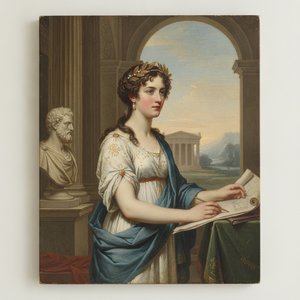
Constance Charpentier’s “Melancholy,” painted in 1801, is more than just a depiction of a seated woman; it's an exquisitely rendered meditation on solitude and the lingering grief of a generation. This oil-on-canvas masterpiece, currently residing within the hallowed halls of the Musée de Picardie in Amiens, France, offers a poignant glimpse into the artistic sensibilities of early 19th-century Europe – a period grappling with the aftermath of revolution and war.

The painting immediately draws the viewer’s eye to its central figure: a young woman lost in contemplative thought. Her posture is subtly slumped, her gaze fixed downwards, suggesting an inward journey of sorrow. The setting—a darkened landscape punctuated by indistinct trees—amplifies this sense of isolation and reinforces the theme of melancholy. Notice how Charpentier masterfully employs chiaroscuro, utilizing dramatic contrasts between light and shadow to sculpt the figure’s form and create a palpable atmosphere of quiet sadness. The muted palette – primarily creams, whites, and grays – further contributes to the painting's somber mood, while subtle variations within these tones hint at depth and texture.

Neoclassical Elegance: Style and Technique

“Melancholy” is a quintessential example of Neoclassicism, an artistic movement that sought inspiration from the art and ideals of ancient Greece and Rome. Charpentier’s work embodies this style through its emphasis on order, clarity, and balanced composition. The meticulous brushwork—evident in the delicate rendering of the fabric draped across the woman's body and the subtle modeling of her features—demonstrates a remarkable level of technical skill. The use of clean lines and defined edges is characteristic of Neoclassicism, lending the painting an air of formality and restraint.

Technically, Charpentier’s approach leans towards a restrained emotional palette, prioritizing form and structure over overt sentimentality. However, she skillfully captures the nuances of human emotion through her masterful use of light and shadow, creating a powerful sense of introspection within the subject's gaze. The painting’s shallow perspective further focuses attention on the figure, immersing the viewer in her internal world.

A Window into an Era: Historical Context

To fully appreciate “Melancholy,” it’s crucial to understand the historical context in which it was created. Following the tumultuous years of the French Revolution and Napoleonic Wars, France was a nation grappling with profound social and emotional upheaval. The loss of countless young men had left an indelible mark on society, particularly on women who often bore the brunt of responsibility and grief. Charpentier’s painting reflects this collective sorrow, offering a visual representation of the quiet despair that permeated French society at the time.

The Musée de Picardie, where “Melancholy” is housed, provides further context by showcasing other works from the same period, including pieces by Pierre Puvis de Chavannes and Frans Hals. These artists, like Charpentier, were deeply influenced by Neoclassicism and sought to capture the beauty and dignity of human experience through their art.

Symbolism and Emotional Resonance

Beyond its technical brilliance, “Melancholy” is rich in symbolism. The woman’s contemplative pose and downward gaze evoke a sense of introspection and sorrow, while the darkened landscape suggests a world shrouded in grief. The classical drapery—a hallmark of Neoclassicism—references ancient virtues and ideals, subtly hinting at a longing for a lost past or a more harmonious future. The painting's overall effect is profoundly moving, inviting viewers to contemplate the complexities of human emotion and the enduring power of melancholy.

Reproductions of “Melancholy” offer an accessible way to experience the beauty and emotional depth of this remarkable artwork. Whether displayed in a private residence or a public space, it serves as a timeless reminder of the capacity for art to capture and convey the most profound human experiences.

Preguntas y respuestas

¿Cuál es el formato de "Melancholy"?

El formato de "Melancholy" es Landscape, un dato útil para planificar la ubicación de una reproducción.

¿Qué tamaño debería elegir para imprimir "Melancholy" en mi habitación?

Para un/a Living Room, el tamaño de impresión recomendado para "Melancholy" de Constance Charpentier es Medium.

¿Quién es el autor y en qué fecha se creó "Melancholy"?

"Melancholy" fue creada por Constance Charpentier en 1801.

More about this painting

Ver en contexto Vista previa en RA Cambiar a impresiones Cambiar a imagen digital Enviar
Detalles Guía Añadir a favoritos Descargar Similares Radiografía Presentación de diapositivas Q&A Estadísticas

In numbers

  • 1801the year it was painted
  • 29frames to choose from
  • standard sizes, in its own proportions
  • 5weeks to paint and deliver it
Constance Charpentier

Constance Charpentier

1767 - 1849, Francia

Quick facts about Constance Charpentier

  • Artistic Movement Or Style: Neoclasicismo, Pintura de género
  • Artists Or Movements Influenced By This Artist:
    • David
    • Neoclasicismo
  • Artists Who Influenced This Artist:
    • David
    • Gérard
    • Bouillon
  • Date Of Birth: 1767-04-04
  • Date Of Death: 1849-08-03
  • Full Name: Constance Marie Charpentier
  • Nationality: Francesa
  • Notable Artworks:
    • Melancolía
    • Joven dibujando
  • Place Of Birth: París, Francia

Biografía del artista

Constance Charpentier: Una Vida en Retratos

Primeros Años y Formación

Constance Marie Charpentier nació en París, Francia, el 4 de abril de 1767, y falleció en 1849. Su vida temprana permanece algo envuelta en misterio, particularmente con respecto a su formación artística formal. Los registros son poco claros, pero se cree ampliamente que estudió bajo varios artistas destacados de la época.

  • A menudo se asocia con Jacques-Louis David, una figura destacada del Neoclasicismo, aunque esto sigue siendo debatido.
  • Otros posibles instructores incluyen François Gérard, Pierre Bouillon, Louis Lafitte, y miembros de la familia Wille – Johann Georg Wille o su hijo, Pierre-Alexandre Wille.

Desarrollo Artístico y Estilo

Charpentier se especializó en escenas de género y retratos, con un enfoque particular en representar a mujeres y niños. Su estilo refleja la influencia del Neoclasicismo, caracterizado por la claridad, la precisión y una paleta emocional contenida. Sin embargo, también infundió su trabajo con sensibilidad hacia el carácter y una representación íntima de la vida doméstica.

  • Sus pinturas a menudo capturan momentos de contemplación silenciosa o actividad cotidiana.
  • Demostró habilidad para representar texturas y detalles, particularmente en telas y expresiones faciales.

Carrera y Reconocimiento

Charpentier comenzó a exhibir su obra en las Salones – prestigiosas exposiciones de arte – desde 1795 hasta 1819. Durante este período, presentó aproximadamente treinta pinturas al público.

  • En 1814, recibió una medalla de oro en el Salón de París, marcando un logro significativo en su carrera.
  • También fue galardonada con una medalla de plata en el Salón de Douai en 1821.

Desafíos y Atribuciones Erróneas

El legado artístico de Charpentier ha sido complicado por instancias de atribución errónea. Algunas de sus obras fueron inicialmente acreditadas a su maestro, Jacques-Louis David.

  • Por ejemplo, la pintura Joven Dibujando (1801) fue primero atribuida a David, luego a Charpentier, pero ahora se cree que es obra de Marie-Denise Villers.
  • Esto destaca los desafíos que enfrentaron las artistas mujeres para obtener reconocimiento durante este período y la tendencia a que sus contribuciones fueran pasadas por alto o eclipsadas.

Legado e Importancia Histórica

A pesar de estos desafíos, Constance Charpentier es ahora reconocida como una de las mejores pintoras de retratos de su época. Basándose en obras supervivientes que se han identificado positivamente como suyas, demostró un talento notable para capturar los rasgos y personalidades de sus sujetos.

  • Sus pinturas ofrecen valiosas perspectivas sobre la vida de mujeres y niños en el siglo XVIII y principios del XIX en Francia.
  • Representa una figura importante en la historia del arte francés, demostrando la habilidad y la creatividad de las artistas femeninas durante un tiempo en que sus oportunidades estaban limitadas.

Datos clave

  • Title: Melancholy
  • Location: Musée de Picardie, Amiens
  • Medium: Oil on canvas
  • Subject or theme: Melancholy, contemplation
  • Artistic style: Neoclassicism

Test de conocimientos artísticos

Cada pregunta tiene una única respuesta correcta.

Pregunta 1:
What is the primary emotion conveyed by Constance Charpentier’s ‘Melancholy’?
Pregunta 2:
In what century was the painting ‘Melancholy’ created?
Pregunta 3:
The painting utilizes a shallow perspective. What effect does this primarily create?
Pregunta 4:
Where is ‘Melancholy’ currently housed?
Pregunta 5:
Which artistic movement is ‘Melancholy’ most closely associated with?