
![Ph-233 [formerly Self-portrait] — Clyfford Still](/media/artworks/images-full/e5/0d/e50dae49a1358332fb8b8691def39210.jpg)
 Vista previa
 Compartir
 Compartir
 Ver detalles
 Guía
Guía

 Descargar
 Ver artículos similares
 Radiografía
 Presentación de diapositivas
 Estadísticas
PH-233 [formerly Self-Portrait]


 Leer más
La obra de arte que se muestra en esta página está protegida por las leyes de propiedad intelectual, lo que significa que no podemos crear ni vender legalmente una reproducción idéntica. Esta protección se hace cumplir en virtud de acuerdos internacionales como el Convenio de Berna y por las leyes nacionales, incluidas aquellas establecidas por el Ley de derechos de autor de los EE. UU. - Título 17.
Este método cumple plenamente con las normativas de derechos de autor, ya que no implica la copia ni la duplicación de la obra protegida. En su lugar, se trata de una reinterpretación creativa: una nueva pintura influenciada por la original, pero que no es idéntica a ella.
Giclée / Impresión de arte
Impresiones giclée o en lienzo de calidad de museo con producción rápida y opciones de acabado flexibles. ( Encargar reproducción pintada a mano Ver versión en imagen digital)




P118B €10

P118H €10

P118W €10

P438Z €10

P508JH €12

P508YH €12

P805H €10

P805Z €10

P919BZ €10

P919G €10

P919XJ €10

P959ZH €10

P968JZ €12

W106C €8

W218G €10

W218JH €8

W218Y €10

W307PJ €10

W316G €10

W316PJ €8

W316Y €10

W398PJ €8

W4111J €10

W500HY €15

W500JH €15

W692G €12

W849H €8

W940BG €15

W953PJ €8




Elija entre nuestros tamaños predefinidos que respetan las proporciones originales de la obra.

Introduzca el ancho y el alto que necesite para adaptarse a su marco o pared. Una impresión solo puede recortarse, nunca hacerse más grande que la imagen original, por lo que un tamaño con una forma distinta perderá parte de la obra. Le enviaremos una maqueta digital para su aprobación antes de realizar cualquier impresión. La imagen que se muestra en esta página no refleja el recorte real; solo la maqueta lo hace.
Envío a todo el mundo () en 2 semanas en lugar de las 4/5 semanas estándar. (24 octubre)

Envío exprés gratuito a todo el mundo

Lienzo de lino de alta calidad

Seguro de envío completo

Garantía de reembolso de impuestos aduaneros

Garantía de fidelidad cromática exacta

Política de devolución de 100 días (solo por defectos)

Garantía de devolución del 100% del dinero

Oferta por volumen
 La opción de vidrio solo está disponible en tamaños inferiores a 110 cm.
![PH-233 [formerly Self-Portrait]](/static/images/originaluniqueart/artworks/painting.a1e74a1cb7dc.png)
PH-233 [formerly Self-Portrait]
Giclée / Impresión de arte
Tamaño de la reproducción
-


Precio total
€ 70
The Emergence of a New Vision
In the mid-1940s, as the world grappled with the profound shifts of a post-war era, a new visual language was being forged in the heart of American Modernism. Clyfford Still’s PH-233, once known as his Self-Portrait, stands as a breathtaking testament to this transformative moment. Created in 1945, this work captures an artist in the midst of a radical evolution, moving away from the representational traditions of the past toward a raw, visceral abstraction. While Still would later become a titan of Abstract Expressionism known for massive fields of color, this earlier canvas reveals a fascinating dialogue with European influences. One can sense the lingering echoes of German Expressionism and the dreamlike distortions of Surrealism, yet they are filtered through a uniquely American lens—one that seeks truth not in the depiction of objects, but in the very essence of the medium itself.
The composition is a hauntingly beautiful dance of light and shadow, where forms seem to hover within indeterminate, nebulous spaces. A tall, elongated figure rises vertically through the frame, its skeletal structure reaching upward with an almost desperate aspiration. In its grasp, a luminous red orb glows like a concentrated ember, providing a singular point of intense focus amidst a sea of darker, more mysterious tones. This central motif acts as a psychological anchor, drawing the viewer into a space where the boundaries between the physical and the metaphysical begin to dissolve.
A Symphony of Texture and Gesture
To behold this masterpiece is to witness the physical struggle of creation. Still’s technique in PH-233 is characterized by a vigorous, gestural application of paint that lends the surface an incredible tactile depth. The artist utilizes thick, expressive lines that twist and turn across the canvas, creating a sense of rhythmic movement and organic chaos. There is a palpable energy in the way the colors are laid down; the contrast between deep, shadowy recesses and sudden, brilliant flashes of yellow and blue creates a dramatic chiaroscuro effect that feels both spontaneous and deeply intentional.
The use of impasto—the thick, raised application of oil paint—gives the work a sculptural quality. This texture does more than just catch the light; it embodies the artist's intent to make the paint itself a reflection of his internal landscape. For the discerning collector or interior designer, this piece offers an unparalleled sensory experience. The ruggedness of the brushwork and the complexity of the layered pigments ensure that the artwork reveals new nuances with every change in lighting, making it a dynamic centerpiece capable of anchoring a room with its profound presence and sophisticated complexity.
Symbolism and Emotional Resonance
Beyond its formal brilliance, PH-233 is a work of deep emotional gravity. The symbolism within the piece invites endless interpretation, ranging from the existential struggle of the individual to the primal forces of nature. The red orb, held aloft by the reaching figure, may represent desire, power, or perhaps a flickering spark of hope in an uncertain world. The stark, geometric blocks of color and the skeletal silhouette evoke feelings of isolation and vulnerability, yet there is also a sense of monumental strength in the upward trajectory of the composition.
For those seeking to bring art into their personal or professional spaces, this reproduction offers more than mere decoration; it offers an invitation to contemplation. It carries an atmosphere of mystery and a hint of melancholy, yet it is ultimately an uplifting celebration of the human spirit's ability to forge meaning from chaos. Whether placed in a quiet study or a grand contemporary gallery, this work by Clyfford Still serves as a powerful reminder of the transformative power of abstraction and the enduring allure of the unknown.
Preguntas y respuestas
¿Para qué uso se sugiere "PH-233 [formerly Self-Portrait]" de Clyfford Still?
El uso recomendado de una impresión de "PH-233 [formerly Self-Portrait]" es Accent.
¿Qué color destaca más en "PH-233 [formerly Self-Portrait]"?
El color dominante de "PH-233 [formerly Self-Portrait]" de Clyfford Still es Phthalo Green (#2c2d2f).
¿Qué tan intensos son los colores en "PH-233 [formerly Self-Portrait]" de Clyfford Still?
La intensidad cromática de "PH-233 [formerly Self-Portrait]" es Balanced. La intensidad describe la fuerza con la que se perciben los colores.
Biografía del artista
A Pioneer of Abstract Expressionism: The Life and Art of Clyfford Still
Clyfford Still, born in 1904 amidst the vast landscapes of Grandin, North Dakota, stands as a pivotal figure in the evolution of American art. His journey, marked by an unwavering commitment to artistic integrity and a relentless exploration of form and color, positioned him among the leading lights of Abstract Expressionism. Though often overshadowed by contemporaries like Jackson Pollock and Mark Rothko, Still’s contribution was foundational; he ventured into non-figurative painting earlier than many of his peers, forging a path toward a new visual language that would profoundly influence modern art. His early life, spent moving between North Dakota, Washington, and Alberta, Canada, instilled in him a deep connection to the natural world – a resonance that would echo throughout his artistic career. A brief period of study at the Art Students League in New York City in 1925 offered initial exposure to the art world, but it was his subsequent experiences teaching and painting on the West Coast that truly shaped his unique vision. He wasn’t simply seeking to depict nature; he aimed to capture its raw essence, its underlying forces of creation and destruction.From Representation to Revelation: The Development of a Unique Style
The transformation from representational work to the radical abstraction for which Still is celebrated occurred between 1938 and 1942, a period of intense experimentation and self-discovery. This shift wasn’t merely stylistic; it was profoundly philosophical. He sought to strip away all recognizable imagery, believing that true artistic expression lay in confronting the fundamental elements of painting itself – color, form, and surface. Early works like PH-616 (1929) offer a glimpse into this transitional period, showcasing his initial exploration of rural life rendered with a muted palette and evocative symbolism. These paintings weren’t simply depictions; they were imbued with a sense of longing, a quiet contemplation of the human condition within the vastness of the American landscape. As he moved further toward abstraction, these representational elements gradually dissolved into jagged planes of color, fractured surfaces, and imposing vertical forms. These weren’t merely abstract shapes; they were imbued with raw emotion, existential angst, and the sublime power of nature. He worked primarily with oil paint applied with palette knives, building up layers of texture that created a dynamic interplay between light and shadow. This technique allowed him to create surfaces that seemed to pulse with energy, inviting viewers into an immersive experience—a confrontation with the very act of painting itself.The Language of Color and Form: Key Characteristics of Still’s Work
Still's mature paintings are characterized by their monumental scale and dramatic color juxtapositions. He favored large canvases, believing that only through such expansiveness could he convey the full emotional weight of his vision. His compositions typically feature irregular, fractured planes of color – often dark and brooding hues punctuated by flashes of brighter tones. These forms aren’t simply arranged on the canvas; they seem to emerge from it, creating a sense of depth and spatial ambiguity. The vertical element is particularly significant in Still's work, representing what he termed “the vertical necessity of life” – a defiant assertion of human spirit against overwhelming forces. 1957-D No. 1, with its predominantly black and yellow palette accented by white and red, exemplifies this characteristic use of color and form to evoke powerful emotional responses. He deliberately avoided titles that might suggest specific interpretations, preferring a numerical system (e.g., “1957-D No. 1”) that emphasized the painting’s purely visual qualities. This was part of his broader effort to resist categorization and maintain control over how his work was perceived. He wanted viewers to experience the paintings directly, without preconceived notions or external narratives.Legacy and Influence: A Lasting Impact on Modern Art
Clyfford Still's influence extends far beyond his own body of work. He is considered a key progenitor of Color Field painting, a movement that emphasized the expressive potential of color as an independent element in art. His uncompromising artistic vision and rejection of conventional norms paved the way for subsequent generations of abstract painters. While he often distanced himself from the New York art world, his impact on its development was undeniable. He taught at various institutions, including Washington State University and the California School of Fine Arts, inspiring countless students to explore their own creative potential. In 1959, a comprehensive retrospective of his work at the Albright-Knox Art Gallery in Buffalo, New York, solidified his reputation as a major force in American art. Perhaps one of his most significant legacies is The Clyfford Still Museum in Denver, Colorado, which houses an extraordinary collection of over 3,125 works – representing 93 percent of his lifetime output and complete archives. This museum provides unparalleled access to the breadth and depth of his artistic vision, ensuring that his contributions will continue to be studied and appreciated for generations to come. His work continues to resonate with viewers today, offering a powerful meditation on the human condition and the enduring mysteries of existence. ## Further Exploration- Explore more about Clyfford Still’s artworks at OriginalUniqueArt.com.
- Discover the Color Field art movement.
- Learn about artists like Mark Rothko and their influence on the art world.

Clyfford Still
1904 - 1980 , Estados Unidos
Datos clave
- Artistic Movement Or Style: Expresionismo abstracto
- Date Of Birth: 1904
- Date Of Death: 1980
- Full Name: Clyfford Elmer Still
- Nationality: American
- Notable Artworks:
- PH-616
- 1957-D No. 1
- Place Of Birth: Grandin, USA
Artículos relacionados
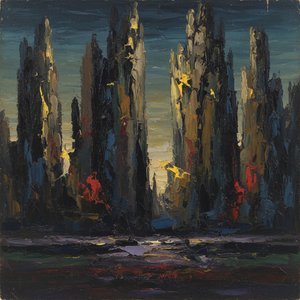
Clyfford Still's Abstract Expressionism: A Study of Color, Form & the Existential Landscape
Explore the profound world of Clyfford Still's Abstract Expressionism with OriginalUniqueArt. Discover his unique style, existential themes & investment potential. Expert analysis for discerning collectors.
Atmósferas Cromáticas: Explorando los Fundamentos Filosóficos de la Pintura Color Field
Descubra la profunda filosofía y técnica detrás de la pintura Color Field. Explore las obras maestras de Rothko, Newman, Frankenthaler y más. Guía experta para coleccionistas.
Color Field Painting: The Emotional Power of Pure Abstraction and Chromatic Depth
Explore the profound emotional depth of Color Field painting. Discover the history of mid-century abstraction, from Rothko to Newman, and learn how pure color transforms the viewer's experience through our expert art history guide.

Expresionismo Abstracto: 10 Obras Maestras que Transformaron el Arte |
Descubre las 10 obras maestras del Expresionismo Abstracto: Pollock, Rothko y más. Explora la historia, técnica y significado de estos lienzos icónicos. Reproducciones de arte exclusivas en .
Más Allá de la Representación: Explorando el Paisaje Emocional del Expresionismo Abstracto
Descubra el Expresionismo Abstracto en profundidad. Análisis de artistas clave como Rothko y Richter, su contexto histórico e inversión en arte. Guía experta para coleccionistas.


