

 Vista previa
 Compartir
 Compartir
 Ver detalles
 Guía
Guía

 Descargar
 Ver artículos similares
 Radiografía
 Presentación de diapositivas
 Estadísticas
Rural Landscape


 Leer más
Giclée / Impresión de arte
Impresiones giclée o en lienzo de calidad de museo con producción rápida y opciones de acabado flexibles. ( Encargar reproducción pintada a mano Ver versión en imagen digital)




P118B €10

P118H €10

P118W €10

P438Z €10

P508JH €12

P508YH €12

P805H €10

P805Z €10

P919BZ €10

P919G €10

P919XJ €10

P959ZH €10

P968JZ €12

W106C €8

W218G €10

W218JH €8

W218Y €10

W307PJ €10

W316G €10

W316PJ €8

W316Y €10

W398PJ €8

W4111J €10

W500HY €15

W500JH €15

W692G €12

W849H €8

W940BG €15

W953PJ €8




Elija entre nuestros tamaños predefinidos que respetan las proporciones originales de la obra.

Introduzca el ancho y el alto que necesite para adaptarse a su marco o pared. Una impresión solo puede recortarse, nunca hacerse más grande que la imagen original, por lo que un tamaño con una forma distinta perderá parte de la obra. Le enviaremos una maqueta digital para su aprobación antes de realizar cualquier impresión. La imagen que se muestra en esta página no refleja el recorte real; solo la maqueta lo hace.
Envío a todo el mundo () en 2 semanas en lugar de las 4/5 semanas estándar. (23 octubre)

Envío exprés gratuito a todo el mundo

Lienzo de lino de alta calidad

Seguro de envío completo

Garantía de reembolso de impuestos aduaneros

Garantía de fidelidad cromática exacta

Política de devolución de 100 días (solo por defectos)

Garantía de devolución del 100% del dinero

Oferta por volumen
 La opción de vidrio solo está disponible en tamaños inferiores a 110 cm.

Rural Landscape
Giclée / Impresión de arte
Tamaño de la reproducción
-


Precio total
€ 70
A Serene Vision of Rural America: Charles Harold Davis’ “Rural Landscape”
Charles Harold Davis' "Rural Landscape," painted in 1905, isn’t merely a depiction of a field and trees; it’s an invitation to step into a moment of profound tranquility. Born in Amesbury, Massachusetts, in 1856, Davis honed his artistic skills under the tutelage of prominent figures like Jules Joseph Lefebvre and Gustave Boulanger in Paris, absorbing the vibrant energy of the European art scene before returning to America and embracing a distinctly American aesthetic. His work, particularly during his time in Mystic, Connecticut, shifted towards a Tonalist style, characterized by its muted colors, atmospheric perspective, and an almost meditative focus on capturing the essence of nature – a legacy deeply influenced by the Barbizon School’s emphasis on light and shadow.
The painting immediately draws the eye with its harmonious blend of blues, greens, and browns. Davis masterfully employs a technique reminiscent of Impressionism, though tempered with a Tonalist sensibility. He doesn't strive for photographic realism; instead, he uses broken brushstrokes and subtle gradations of color to evoke a feeling of atmosphere—the hazy warmth of the afternoon sun filtering through the trees, the gentle movement of clouds across the sky. The composition is carefully balanced, leading the viewer’s eye through the scene towards a distant horizon, creating a sense of depth and spaciousness. Note the delicate rendering of the foliage – not sharply defined, but rather suggested with loose, expressive strokes that capture the texture and vitality of the landscape.
The Language of Light and Shadow
Davis’s genius lies in his ability to translate light into color and form. The painting is bathed in a soft, diffused light, characteristic of the late afternoon. He skillfully uses shadows to define shapes and create a sense of volume, particularly in the trees that frame the scene. These aren't dark, ominous shadows; they are gentle, almost luminous, suggesting warmth and inviting the viewer into the heart of the landscape. The clouds themselves are rendered with remarkable subtlety, shifting between shades of gray and blue, creating an ethereal quality that elevates the painting beyond a simple depiction of weather.
The inclusion of figures in the foreground adds a layer of narrative to the scene without disrupting its overall sense of serenity. These individuals – likely farmers or laborers – are rendered with minimal detail, serving primarily as anchors for the viewer’s eye and subtly hinting at human connection within this vast landscape. They represent not just a rural life but also a timeless harmony between humanity and nature.
Symbolism and Emotional Resonance
“Rural Landscape” is more than just a pretty picture; it's imbued with symbolism. The scene evokes a sense of nostalgia for a simpler time, a longing for connection to the land, and an appreciation for the beauty of the natural world. It speaks to the values of hard work, community, and resilience – themes that were particularly resonant in America at the turn of the 20th century.
The painting’s quietude is profoundly calming. It invites contemplation and offers a respite from the stresses of modern life. Davis's masterful use of color and light creates an emotional atmosphere of peace, contentment, and connection to something larger than oneself. The scene feels both familiar and timeless, tapping into a deep-seated human desire for beauty and tranquility.
A Legacy in American Art
Charles Harold Davis’s “Rural Landscape” stands as a testament to the power of Tonalist and Impressionistic techniques to capture the essence of the American landscape. His work is represented in prominent museums, including the Metropolitan Museum of Art and the Corcoran Gallery of Art, solidifying his place as a significant figure in American art history. Reproductions of this evocative painting offer a beautiful way to bring a touch of rural serenity into any home or office – a reminder of the enduring beauty and tranquility of the natural world.
Preguntas y respuestas
¿Qué técnica se utilizó para "Rural Landscape" y cuándo fue creado?
"Rural Landscape" fue creada en 1905 mediante la técnica de Oil On Canvas. El material y la fecha describen cómo y cuándo se realizó la obra original.
¿Qué saturación e intensidad muestra "Rural Landscape" de Charles Harold Davis?
"Rural Landscape" de Charles Harold Davis está registrado con una saturación de Subtle Color y una intensidad de Balanced.
¿Existe una ficha informativa sobre "Rural Landscape" de Charles Harold Davis para estudiantes?
Una página de Guía está disponible para "Rural Landscape" de Charles Harold Davis: una ficha imprimible sobre la obra, diseñada para estudiantes y uso en el aula.
Biografía del artista
early life and training
Charles Harold Davis (1856-1933) was born in Amesbury, Massachusetts, on January 7th, 1856. His artistic journey began with a formative education at the Boston Museum of Fine Arts, where he honed his skills before embarking on a pivotal chapter of his life: a move to Paris in 1880. Recognizing the importance of European artistic traditions, Davis sought guidance from luminaries like Jules Joseph Lefebvre and Gustave Boulanger at the Académie Julian, fostering an understanding of Impressionism’s core principles. This immersive experience profoundly shaped his future endeavors.artistic style and influences
Davis's distinctive aesthetic emerged from a deep connection with Barbizon landscapes—a movement that championed plein air painting and idealized rural vistas. He absorbed the spirit of Impressionism, mirroring its focus on capturing fleeting moments of light and color. The ethereal cloudscapes he produced exemplify this influence, demonstrating an exceptional ability to convey atmosphere and emotion. His artistic vision was undeniably shaped by masters like Jules Joseph Lefebvre and Gustave Boulanger who instilled in him a meticulous approach to observation and representation.notable achievements and affiliations
Davis ascended to prominence within the American art world when he became a full member of the National Academy of Design in 1906, cementing his position as a respected figure among fellow artists. His dedication to artistic excellence was recognized through a prestigious silver medal awarded at the Paris Exhibition of 1889—a testament to his talent and ambition. Throughout his career, Davis’s artworks graced the collections of esteemed institutions such as the Metropolitan Museum of Art in New York, the Corcoran Gallery of Art in Washington D.C., and the Boston Museum of Fine Arts, ensuring his legacy would endure for generations to come.legacy
Beyond his artistic accomplishments, Charles Harold Davis played an instrumental role in establishing the Mystic Art Colony in Connecticut during the early 20th century—a haven for artists seeking inspiration and camaraderie. This collective fostered a vibrant artistic environment that continues to celebrate Davis’s contribution to American landscape painting. His enduring influence can be seen in the continued appreciation of his serene depictions of nature and the lasting impact of Impressionistic techniques on subsequent generations of painters.- Notable artworks: “A Path along the River”, “Rural Landscape”, “A Clearing”
- Places of Inspiration: Barbizon School, Mystic CT

Charles Harold Davis
1856 - 1933 , Estados Unidos
Datos clave
- Artistic Movement Or Style: Impressionism & Tonalist
- Artists Or Movements Influenced By This Artist: ['Mystic Art Colony']
- Artists Who Influenced This Artist:
- Gustave Boulanger
- Jules Joseph Lefebvre
- Date Of Birth: January 7, 1856
- Date Of Death: 1933
- Full Name: Charles Harold Davis
- Nationality: American
- Notable Artworks:
- A Path along the River
- Rural Landscape
- A Clearing
- Place Of Birth: Amesbury, United States
Artículos relacionados

John Constable: Las 25 Obras Maestras del Paisaje Inglés | OriginalUniqueArt
Descubre las 25 obras maestras de John Constable, el pintor romántico inglés que capturó la belleza del paisaje. Explora su técnica, historia y significado en OriginalUniqueArt.com. Reproducciones de arte de alta calidad para tu hogar.

The Unvarnished Truth: A Cultural Journey Through the Soul of American Realism
Explore the profound beauty of American Realism. From the Ashcan School's urban grit to intimate portraits, discover how artists captured the authentic soul of a nation through unvarnished truth and masterful observation.

Grant Wood & American Regionalism: Identity, Myth & the Rural Landscape
Explore the world of Grant Wood & American Regionalism with OriginalUniqueArt. Discover the symbolism behind 'American Gothic', recurring themes, and the movement's lasting impact on art history. High-quality reproductions available.

Realismo Estadounidense: 10 Obras Maestras que Cambiaron el Arte y la Decoración
Descubre 10 obras maestras del Realismo Estadounidense: Winslow Homer, Edward Hopper y más. Explora la historia, técnica y emoción de estos icónicos cuadros. Encuentra reproducciones de arte de museo en OriginalUniqueArt.com.
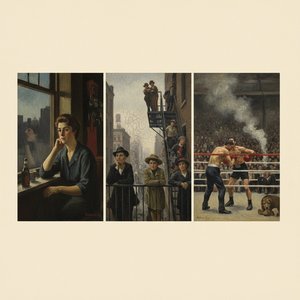
Realismo Americano: Comentario Social y Representación Artística en la Pintura del Siglo XX
Explora el Realismo Americano del siglo XX: un análisis profundo de sus artistas clave (Vertis Hayes, William Aiken Walker), técnicas y su poderoso comentario social. Descubre cómo este movimiento plasmó la identidad estadounidense.