Ver en contexto
 Enviar
 Compartir
 Detalles
 Guía
Guía

 Descargar
 Similares
 Radiografía
 Presentación de diapositivas
 Preguntas y respuestas
 Estadísticas
Ernesta


 Ver más
Giclée / Impresión de arte
Impresiones giclée o en lienzo de calidad de museo con producción rápida y opciones de acabado flexibles. ( Comprar pintura hecha a mano Cambiar a imagen digital)




P118B €10

P118H €10

P118W €10

P438Z €10

P508JH €12

P508YH €12

P805H €10

P805Z €10

P919BZ €10

P919G €10

P919XJ €10

P959ZH €10

P968JZ €12

W106C €8

W218G €10

W218JH €8

W218Y €10

W307PJ €10

W316G €10

W316PJ €8

W316Y €10

W398PJ €8

W4111J €10

W500HY €15

W500JH €15

W692G €12

W849H €8

W940BG €15

W953PJ €8




Elija entre nuestros tamaños predefinidos que respetan las proporciones originales de la obra.

Introduzca el ancho y el alto que necesite para adaptarse a su marco o pared. Una impresión solo puede recortarse, nunca hacerse más grande que la imagen original, por lo que un tamaño con una forma distinta perderá parte de la obra. Le enviaremos una maqueta digital para su aprobación antes de realizar cualquier impresión. La imagen que se muestra en esta página no refleja el recorte real; solo la maqueta lo hace.
Envío a todo el mundo () en 2 semanas en lugar de las 4/5 semanas estándar. (5 noviembre)

Envío exprés gratuito a todo el mundo

Lienzo de lino de alta calidad

Seguro de envío total

Garantía de reembolso de aranceles aduaneros

Garantía de fidelidad cromática exacta

Política de devolución de 100 días (solo por defectos)

Garantía de devolución del 100% del dinero

Descuento por cantidad
 La opción de vidrio solo está disponible en tamaños inferiores a 110 cm.

Ernesta
Giclée / Impresión de arte
Dimensiones de la reproducción
-


Precio total final
€ 72
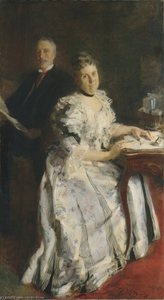
Cecilia Beaux’s Ernesta: A Portrait of Quiet Dignity
Cecilia Beaux (1855-1942) stands as a monumental figure in American portraiture, particularly during the opulent era of the Gilded Age. Her artistic journey began amidst considerable personal hardship—the premature loss of her mother at just twelve days old profoundly influenced her worldview and subtly guided her creative path. Raised by her maternal grandmother and aunts in Philadelphia, Beaux experienced childhood marked by both stability and a poignant absence of parental presence; her father’s extended absences fostered a familial dynamic characterized by detachment. Yet, despite these challenges, Beaux nurtured her artistic inclinations through instruction with Catherine Ann Drinker, an accomplished artist who served as an early mentor—a connection that would prove invaluable to her burgeoning talent.The Painting's Subject and Composition
“Ernesta Beaux Drinker,” completed in 1914, depicts a woman seated gracefully on a chair before a table adorned with a vase of flowers – primarily white lilies—a deliberate choice reflecting purity and elegance. Beaux meticulously captured her subject’s posture: hands clasped together, conveying composure and inner reflection. The gaze directed towards the viewer suggests not merely observation but perhaps a subtle acknowledgment of connection, hinting at an unspoken intimacy. Behind Ernesta sits a couch, grounding the figure within a domestic setting, while another chair adds depth to the composition. Beaux skillfully utilizes light—primarily diffused natural illumination—to sculpt the woman’s form and illuminate the vase, enhancing its visual impact.Stylistic Influences and Technique
Beaux's style aligns closely with Impressionism, albeit tempered by a refined academic sensibility. Like her contemporaries, she prioritized capturing fleeting moments of light and color, yet eschewed the unrestrained spontaneity favored by some Impressionists. Beaux’s technique involved layering thin glazes over toned canvases—a hallmark of American Impressionism—resulting in luminous surfaces that convey subtle nuances of texture and tone. The artist's meticulous attention to detail is evident in the rendering of fabrics—particularly Ernesta’s dress—which appears to shimmer with understated brilliance, demonstrating Beaux’s mastery of color and brushwork.Historical Context and Symbolism
Painted during a period of considerable social change and artistic experimentation, “Ernesta” reflects Beaux's engagement with the prevailing aesthetic trends of her time. The portrait exemplifies Beaux’s commitment to portraying individuals within their environment—a stylistic choice that underscores the importance of context in interpreting art. White lilies symbolize purity, innocence, and remembrance – motifs frequently employed by Beaux to convey dignity and grace. Furthermore, Ernesta’s contemplative gaze speaks to a broader exploration of inner life and psychological depth—a characteristic ambition of Beaux's oeuvre.Emotional Resonance and Legacy
“Ernesta Beaux Drinker” transcends mere representation; it embodies Beaux’s profound understanding of human emotion and her ability to convey subtle nuances of character. The painting evokes a sense of serenity, quiet contemplation—a testament to Beaux's artistic vision. Beaux’s enduring legacy rests upon her unwavering dedication to portraying the complexities of human experience with sensitivity and grace—a contribution that continues to inspire artists and collectors alike. Her work stands as an emblem of American Impressionism’s elegance and intellectual rigor.Preguntas y respuestas
¿Qué tipo de obra es "Ernesta" de Cecilia Beaux?
"Ernesta" es una obra de WallArt.
¿En qué espacio se recomienda colocar "Ernesta" de Cecilia Beaux?
Se recomienda "Ernesta" de Cecilia Beaux para un Living Room. Esta sugerencia se basa en el tema, los colores y la atmósfera de la obra.
¿Dónde se encuentra actualmente en exposición "Ernesta" de Cecilia Beaux?
"Ernesta" de Cecilia Beaux se encuentra en exhibición en Museo Metropolitano de Arte, New York, United States of America. La información del museo se refiere a la obra original, no a reproducciones.
Biografía del artista
Primeros años y formación
Cecilia Beaux, una destacada retratista estadounidense de la sociedad, nació el 1 de mayo de 1855 en Filadelfia, Pensilvania. Su infancia temprana se vio marcada por la prematura muerte de su madre, Cecilia Kent Leavitt, cuando Beaux era solo una bebé. Este evento llevó a que fuera criada por su abuela materna y sus tías en Filadelfia. El viaje artístico de Beaux comenzó con lecciones de Catherine Ann Drinker, una pariente y artista consumada, a la edad de 16 años. Continuó su formación bajo Francis Adolf van der Wielen durante dos años, centrándose en la perspectiva y el dibujo de moldes. Dada la inclinación de la época victoriana contra las estudiantes femeninas, se le negó el estudio directo de anatomía hasta mucho más tarde.Carrera artística
El avance de Beaux llegó cuando comenzó a asistir a la Academia de Bellas Artes de Pensilvania en 1876, bajo la influencia de Thomas Eakins. Aunque evitó los fervientes seguidores de Eakins, su trabajo se vio significativamente influenciado por la progresista filosofía docente de este último. Beaux ganó el premio Mary Smith en las exposiciones de la Academia de Bellas Artes de Pensilvania en 1885, 1887, 1891 y 1892.- Sus representaciones empáticas de la clase dirigente estadounidense la convirtieron en una de las retratistas más exitosas de su época.
- Junto con John Singer Sargent y William Merritt Chase, Beaux fue una retratista líder en los Estados Unidos a principios del siglo XX.
- Chase la elogió como "no solo la mayor pintora mujer viviente, sino la mejor que jamás haya existido".
Obras notables y legado
Una de las obras más aclamadas de Beaux es su retrato de Harriet Sears Amory, que muestra sus retratos de gran formato de la élite social e intelectual. Esta pieza, ejecutada con los pinceladas audaces y el impasto pesado del impresionismo, ejemplifica su dominio del género. Vea más obras de Cecilia Beaux en OriginalUniqueArt.com:- Cecilia Beaux: retrato de Harriet Sears Amory
- Explore la página Cecilia Beaux para una colección completa de sus obras de arte.
Museos y colecciones con su obra
- El Museo Westmoreland de Arte Americano (Estados Unidos): presenta una impresionante colección de arte estadounidense, incluidas obras de Beaux.
- Academia de Bellas Artes de Pensilvania (Filadelfia, Estados Unidos): donde Beaux recibió su formación y ganó varios premios.
- El Museo Westmoreland de Arte Americano (Estados Unidos)
- El museo Academia de Bellas Artes de Pensilvania (Filadelfia, Estados Unidos)
Influencias y desarrollo artístico
Beaux fue influenciada por varios artistas importantes. Su estudio en la Academia Julian en París le expuso al trabajo de Tony Robert-Fleury y William-Adolphe Bouguereau, así como a las obras de Édouard Manet y Edgar Degas. Su estilo se comparó con el de John Singer Sargent, lo que demuestra su habilidad para capturar la esencia del sujeto con una técnica magistral. Beaux creía en la conexión entre las características físicas y los rasgos de comportamiento, un concepto que influyó en su enfoque de la representación humana.
Cecilia Beaux
1855 - 1942 , Estados Unidos de América
Datos clave
- Artistas Que Influyeron:
- Thomas Eakins
- William Sartain
- Fecha De Fallecimiento: 17 de septiembre de 1942
- Fecha De Nacimiento: 1 de mayo de 1855
- Lugar De Nacimiento: Filadelfia, Estados Unidos
- Movimiento Artístico: Retrato, Impresionismo
- Nacionalidad: Estadounidense
- Nombre Completo: Cecilia Beaux
- Obras Notables: ['Retrato de Harriet Sears Amory']
Artículos relacionados

El Auge del Arte Académico: Tradición, Técnica y la Búsqueda de la Forma Ideal en el Siglo XIX
Descubre el auge del arte académico en el siglo XIX: técnicas impecables, maestros como Bouguereau y Gérôme, y la búsqueda de la belleza ideal. Un análisis profundo para amantes del arte clásico.

Realismo Estadounidense: 10 Obras Maestras que Cambiaron el Arte y la Decoración
Descubre 10 obras maestras del Realismo Estadounidense: Winslow Homer, Edward Hopper y más. Explora la historia, técnica y emoción de estos icónicos cuadros. Encuentra reproducciones de arte de museo en OriginalUniqueArt.com.
El Retrato Académico: Tradición, Técnica y la Evolución del Arte Representacional
Descubra el legado del retrato académico: técnica, artistas clave como Dubufe y Roden, e influencia en la historia del arte. Análisis experto y profundo.

Grant Wood & American Regionalism: Identity, Myth & the Rural Landscape
Explore the world of Grant Wood & American Regionalism with OriginalUniqueArt. Discover the symbolism behind 'American Gothic', recurring themes, and the movement's lasting impact on art history. High-quality reproductions available.

American Regionalism: The Soul of the Heartland and the Mastery of Grant Wood
Explore the profound history of American Regionalism. Discover how Grant Wood captured the heart of the Midwest through masterpieces like American Gothic. An expert guide to the movement, its cultural impact, and the enduring beauty of American Realism.