Ver en contexto
 Enviar
 Compartir
 Detalles
 Guía
Guía

 Descargar
 Similares
 Radiografía
 Presentación de diapositivas
 Preguntas y respuestas
 Estadísticas
Cecil Kent Drinker


 Ver más
Giclée / Impresión de arte
Impresiones giclée o en lienzo de calidad de museo con producción rápida y opciones de acabado flexibles. ( Comprar pintura hecha a mano Cambiar a imagen digital)




P118B €10

P118H €10

P118W €10

P438Z €10

P508JH €12

P508YH €12

P805H €10

P805Z €10

P919BZ €10

P919G €10

P919XJ €10

P959ZH €10

P968JZ €12

W106C €8

W218G €10

W218JH €8

W218Y €10

W307PJ €10

W316G €10

W316PJ €8

W316Y €10

W398PJ €8

W4111J €10

W500HY €15

W500JH €15

W692G €12

W849H €8

W940BG €15

W953PJ €8




Elija entre nuestros tamaños predefinidos que respetan las proporciones originales de la obra.

Introduzca el ancho y el alto que necesite para adaptarse a su marco o pared. Una impresión solo puede recortarse, nunca hacerse más grande que la imagen original, por lo que un tamaño con una forma distinta perderá parte de la obra. Le enviaremos una maqueta digital para su aprobación antes de realizar cualquier impresión. La imagen que se muestra en esta página no refleja el recorte real; solo la maqueta lo hace.
Envío a todo el mundo () en 2 semanas en lugar de las 4/5 semanas estándar. (5 noviembre)

Envío exprés gratuito a todo el mundo

Lienzo de lino de alta calidad

Seguro de envío total

Garantía de reembolso de aranceles aduaneros

Garantía de fidelidad cromática exacta

Política de devolución de 100 días (solo por defectos)

Garantía de devolución del 100% del dinero

Descuento por cantidad
 La opción de vidrio solo está disponible en tamaños inferiores a 110 cm.

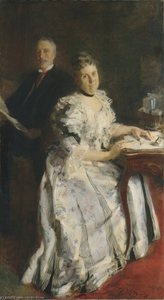
Cecil Kent Drinker
Giclée / Impresión de arte
Dimensiones de la reproducción
-


Precio total final
€ 72
A Portrait of Quiet Strength: Cecilia Beaux’s Cecil Kent Drinker
Cecilia Beaux's "Cecil Kent Drinker," painted in 1891, isn’t merely a portrait; it’s a carefully constructed study in observation and subtle emotion. The painting depicts a young boy, likely around eight or nine years old, dressed in the elaborate attire of a medieval knight – a helmet perched jauntily on his head, a simple tunic revealing a hint of youthful form beneath. He holds a wooden stick, not with aggressive intent, but with a gentle curiosity, and gazes out at the viewer with an expression that balances innocence and quiet contemplation. Beaux’s masterful handling of light and shadow immediately draws the eye, creating a sense of depth and realism within this fantastical scene. The boy isn't posed stiffly; instead, he appears caught in a moment of private reflection, suggesting a personality both spirited and thoughtful. This wasn’t simply a likeness; Beaux sought to capture the essence of her young subject, revealing something deeper than just his appearance.The Gilded Age and the Portraiture of Character
To fully appreciate "Cecil Kent Drinker," it's essential to understand the context in which it was created – the late 19th century American Gilded Age. This era witnessed unprecedented wealth and social change, marked by lavish displays of opulence and a burgeoning interest in capturing the lives of the elite through portraiture. Beaux, a prominent figure in this artistic milieu, specialized in depicting wealthy patrons and their families with remarkable sensitivity. Unlike many of her contemporaries who favored overtly formal and idealized representations, Beaux was known for her ability to imbue her subjects with genuine character. She wasn’t interested in creating mere images of wealth; she aimed to reveal the inner lives and personalities of those she painted. The choice of a medieval knight as the subject's costume is particularly significant – it speaks to a desire for adventure, chivalry, and perhaps even a touch of romantic idealism, all qualities Beaux skillfully conveyed through her brushstrokes.Technique and Impressionistic Nuances
Beaux’s technique in "Cecil Kent Drinker" exemplifies her distinctive style—a blend of realism and impressionism. She employed loose, visible brushstrokes to capture the play of light on the boy's clothing and skin, creating a sense of immediacy and movement. The background is deliberately muted, allowing the figure to dominate the composition and drawing attention to his expressive face. Beaux’s use of color is restrained yet effective, relying on subtle gradations of tone to create depth and volume. Notice how she uses highlights to accentuate the boy's features – the curve of his cheekbone, the sparkle in his eyes—and shadows to define his form. The painting demonstrates a remarkable ability to capture not just the outward appearance but also the fleeting emotions that flicker across a young face. Beaux’s approach was revolutionary for her time, prioritizing capturing the *impression* of a moment over strict adherence to academic rules.Symbolism and the Child's Inner World
Beyond its technical brilliance, "Cecil Kent Drinker" is rich in symbolic meaning. The medieval costume itself represents a yearning for adventure, a desire to transcend the limitations of everyday life. The boy’s contemplative gaze suggests an awareness of his own potential, hinting at a future filled with possibilities. Beaux was known for her ability to capture the inner lives of her subjects, and this painting is no exception. It's not simply a portrait of a child in costume; it’s a window into his imagination, a glimpse of the boy’s hopes and dreams. The stick he holds could be interpreted as a symbol of leadership or protection—perhaps representing his role as a knight in his own private world. The overall effect is one of quiet dignity and youthful promise.A Legacy of Elegance
Today, "Cecil Kent Drinker" resides at the Philadelphia Museum of Art, a testament to Beaux’s enduring legacy. It stands as a prime example of her ability to capture both the outward appearance and inner character of her subjects—a rare feat in portraiture. The painting continues to resonate with viewers today, offering a poignant reminder of childhood innocence, quiet strength, and the power of art to reveal the beauty within us all. Reproductions of this captivating work offer an accessible way to experience Beaux’s artistry and appreciate the subtle nuances of her masterful technique.Preguntas y respuestas
¿Permaneció "Cecil Kent Drinker" en el país de origen de su artista?
Sí, la obra se encuentra en el país de origen del artista. El país de nacimiento de Cecilia Beaux es Estados Unidos de América, y el museo que alberga el original de "Cecil Kent Drinker" se encuentra en Estados Unidos de América.
¿A qué etapa de la trayectoria de Cecilia Beaux corresponde la fecha de 1891 de "Cecil Kent Drinker"?
La fecha de 1891 sitúa a "Cecil Kent Drinker" en el Gilded Age del desarrollo de Cecilia Beaux.
¿Cuál es la fecha y el estilo de "Cecil Kent Drinker" de Cecilia Beaux?
"Cecil Kent Drinker" fue creada en 1891 como una obra del movimiento Gilded Age Portraiture. La fecha y el movimiento sitúan la pieza en su contexto histórico dentro de la historia del arte.
Biografía del artista
Primeros años y formación
Cecilia Beaux, una destacada retratista estadounidense de la sociedad, nació el 1 de mayo de 1855 en Filadelfia, Pensilvania. Su infancia temprana se vio marcada por la prematura muerte de su madre, Cecilia Kent Leavitt, cuando Beaux era solo una bebé. Este evento llevó a que fuera criada por su abuela materna y sus tías en Filadelfia. El viaje artístico de Beaux comenzó con lecciones de Catherine Ann Drinker, una pariente y artista consumada, a la edad de 16 años. Continuó su formación bajo Francis Adolf van der Wielen durante dos años, centrándose en la perspectiva y el dibujo de moldes. Dada la inclinación de la época victoriana contra las estudiantes femeninas, se le negó el estudio directo de anatomía hasta mucho más tarde.Carrera artística
El avance de Beaux llegó cuando comenzó a asistir a la Academia de Bellas Artes de Pensilvania en 1876, bajo la influencia de Thomas Eakins. Aunque evitó los fervientes seguidores de Eakins, su trabajo se vio significativamente influenciado por la progresista filosofía docente de este último. Beaux ganó el premio Mary Smith en las exposiciones de la Academia de Bellas Artes de Pensilvania en 1885, 1887, 1891 y 1892.- Sus representaciones empáticas de la clase dirigente estadounidense la convirtieron en una de las retratistas más exitosas de su época.
- Junto con John Singer Sargent y William Merritt Chase, Beaux fue una retratista líder en los Estados Unidos a principios del siglo XX.
- Chase la elogió como "no solo la mayor pintora mujer viviente, sino la mejor que jamás haya existido".
Obras notables y legado
Una de las obras más aclamadas de Beaux es su retrato de Harriet Sears Amory, que muestra sus retratos de gran formato de la élite social e intelectual. Esta pieza, ejecutada con los pinceladas audaces y el impasto pesado del impresionismo, ejemplifica su dominio del género. Vea más obras de Cecilia Beaux en OriginalUniqueArt.com:- Cecilia Beaux: retrato de Harriet Sears Amory
- Explore la página Cecilia Beaux para una colección completa de sus obras de arte.
Museos y colecciones con su obra
- El Museo Westmoreland de Arte Americano (Estados Unidos): presenta una impresionante colección de arte estadounidense, incluidas obras de Beaux.
- Academia de Bellas Artes de Pensilvania (Filadelfia, Estados Unidos): donde Beaux recibió su formación y ganó varios premios.
- El Museo Westmoreland de Arte Americano (Estados Unidos)
- El museo Academia de Bellas Artes de Pensilvania (Filadelfia, Estados Unidos)
Influencias y desarrollo artístico
Beaux fue influenciada por varios artistas importantes. Su estudio en la Academia Julian en París le expuso al trabajo de Tony Robert-Fleury y William-Adolphe Bouguereau, así como a las obras de Édouard Manet y Edgar Degas. Su estilo se comparó con el de John Singer Sargent, lo que demuestra su habilidad para capturar la esencia del sujeto con una técnica magistral. Beaux creía en la conexión entre las características físicas y los rasgos de comportamiento, un concepto que influyó en su enfoque de la representación humana.
Cecilia Beaux
1855 - 1942 , Estados Unidos de América
Datos clave
- Artistas Que Influyeron:
- Thomas Eakins
- William Sartain
- Fecha De Fallecimiento: 17 de septiembre de 1942
- Fecha De Nacimiento: 1 de mayo de 1855
- Lugar De Nacimiento: Filadelfia, Estados Unidos
- Movimiento Artístico: Retrato, Impresionismo
- Nacionalidad: Estadounidense
- Nombre Completo: Cecilia Beaux
- Obras Notables: ['Retrato de Harriet Sears Amory']
Artículos relacionados

American Regionalism: The Soul of the Heartland and the Mastery of Grant Wood
Explore the profound history of American Regionalism. Discover how Grant Wood captured the heart of the Midwest through masterpieces like American Gothic. An expert guide to the movement, its cultural impact, and the enduring beauty of American Realism.

El Óleo sobre Lienzo: Historia, Técnica y la Persistencia de un Medio Artístico Atemporal
Descubre la historia y técnica del óleo sobre lienzo. Explora reproducciones fieles hechas a mano, personalización artística y consejos de expertos con OriginalUniqueArt. ¡Colecciona arte con confianza!

The Enduring Legacy of Oil on Canvas: Technique, History & Aesthetic Impact
Explore the rich history & techniques of oil painting – from Renaissance masters to Impressionism. Discover pigments, layering methods, and why this timeless medium endures. Expert insights for artists & art enthusiasts.

Grant Wood & American Regionalism: Identity, Myth & the Rural Landscape
Explore the world of Grant Wood & American Regionalism with OriginalUniqueArt. Discover the symbolism behind 'American Gothic', recurring themes, and the movement's lasting impact on art history. High-quality reproductions available.

Realismo Estadounidense: 10 Obras Maestras que Cambiaron el Arte y la Decoración
Descubre 10 obras maestras del Realismo Estadounidense: Winslow Homer, Edward Hopper y más. Explora la historia, técnica y emoción de estos icónicos cuadros. Encuentra reproducciones de arte de museo en OriginalUniqueArt.com.