

 Vista previa
 Compartir
 Compartir
 Ver detalles

 Descargar
 Ver similares
 Radiografía
 Presentación de diapositivas
Kentish Landscape
 37.0 x 31.0 cm
 Colección de Arte de Southwark
 Leer más
Adquiera una imagen digital de alta resolución y optimizada, muy superior a la vista previa en línea.
Cada archivo es preparado meticulosamente por nuestros especialistas internos mediante el uso de herramientas avanzadas y un experto retoque manual. Nos aseguramos de que cada imagen posea una claridad excepcional, una precisión cromática impecable y un detalle minucioso.
El archivo final se entrega por correo electrónico en un plazo de 72 horas, optimizado para su uso inmediato en entornos profesionales, editoriales y de impresión. Esta es la misma calidad en la que confían los estudios de diseño, las editoriales y las galerías de primer nivel.
Imagen Digital
Descarga un archivo de alta resolución para exhibición personal, impresión y proyectos creativos. ( Pedir impresión Encargar reproducción pintada a mano)
Incluido en cada compra de imágenes digitales
Entrega digital experta, garantizada.
Al elegir OriginalUniqueArt.com, no solo está adquiriendo una imagen; está recibiendo una obra de arte digital mejorada profesionalmente, elaborada con precisión y respaldada por una garantía de satisfacción. Esto es todo lo que incluye su pedido, automáticamente:

Entrega rápida por email
Recibirá su archivo de imagen digital en alta resolución por correo electrónico en un plazo de 72 horas tras realizar su pedido, listo para su uso inmediato.

Archivo digital optimizado por IA
Su obra de arte se optimiza profesionalmente mediante herramientas avanzadas de IA y edición manual, garantizando el máximo detalle, claridad y precisión cromática.

Reenvío gratuito de por vida
¿Has borrado o perdido tu archivo por error? No te preocupes: te lo volveremos a enviar en cualquier momento, sin coste adicional.

Sin gastos de importación, siempre
Disfrute de su obra de arte al instante sin aduanas, aranceles ni gastos de envío; las descargas digitales siempre están libres de impuestos.

Garantía de precisión de color
Garantizamos que su imagen digital refleje los colores originales con la mayor fidelidad posible, mediante el uso de herramientas profesionales y gestión del color.

Garantía de satisfacción de 60 días
Si no está satisfecho con su imagen digital, la revisaremos o le reembolsaremos el 100% en un plazo de 60 días, sin preguntas.

100% Garantía de devolución de dinero
¿No está satisfecho? Obtenga un reembolso completo dentro de los 60 días posteriores a la recepción de su archivo digital, sin necesidad de explicaciones.

Descuentos por volumen
Compra 3 imágenes, ahorra 10% - Compra 5, ahorra 15% - Compra 10+, ahorra 20%. Ideal para proyectos creativos, galerías y agencias.
Biografía del artista
Cecil Leonard Burns: A Painter of Light and Sentiment
Cecil Leonard Burns (1863-1929) emerges from the late Victorian and Edwardian art world as a quietly significant figure, an artist whose evocative landscapes and intimate portraits offer a glimpse into a specific sensibility – one deeply rooted in observation, light, and a subtle, almost melancholic, appreciation for the everyday. While not commanding the same immediate fame as some of his contemporaries, Burns’s work possesses a persistent charm and atmospheric quality that continues to resonate with viewers today. His career spanned several continents, from his formative years in England to his pivotal role establishing an art school in India, reflecting a life shaped by travel, education, and a profound connection to the natural world.
Born in St. Pancras, London, in 1863, Burns’s artistic journey began under the tutelage of Sir Hubert von Herkomer at the Bushey School of Art. This early training instilled in him a meticulous attention to detail and a respect for traditional techniques – particularly watercolor and oil painting. He quickly developed a distinctive style characterized by soft, diffused light, delicate brushwork, and an ability to capture fleeting moments of beauty. His subjects often included idyllic English countryside scenes—rolling hills, meandering rivers, and charming villages—but it was his portraits, especially those of children, that garnered particular attention. These weren’t grand, heroic depictions; rather, they were intimate studies filled with a gentle warmth and an almost wistful quality.
Burns's career took a significant turn when he accepted the position of Principal at the Sir JJ School of Art in Bombay (now Mumbai), India, in 1899. This move marked a pivotal moment, exposing him to new artistic influences and broadening his perspective dramatically. The vibrant colors, exotic landscapes, and diverse cultures of India profoundly impacted his work, subtly shifting his palette towards warmer tones and introducing elements of Indian river scenes into his repertoire. He continued to paint in England during this period, producing works that seamlessly blended his established style with the lessons he’d learned abroad. His time in India wasn't just a geographical shift; it represented a crucial evolution in his artistic vocabulary.
The "Linda" Studies and Kentish Landscapes
Among Burns’s most celebrated works are his “Linda” studies, a series of intimate portraits of a young woman named Linda. These paintings aren't merely likenesses; they capture a sense of quiet contemplation and vulnerability. The lighting is particularly noteworthy – often soft and diffused, creating an ethereal atmosphere that seems to draw the viewer into Linda’s world. The details are rendered with remarkable sensitivity: the way her hair falls across her face, the subtle expression in her eyes—all contribute to the paintings' profound emotional impact.
Alongside his portraits, Burns produced a substantial body of work depicting Kentish landscapes. These scenes – rolling hills, quaint villages, and picturesque farms—are imbued with a similar sense of tranquility and nostalgia. He wasn’t interested in dramatic vistas or heroic compositions; instead, he focused on capturing the subtle beauty of everyday life. His use of light is consistently masterful, creating an atmosphere that is both luminous and melancholic. The “Girls Gathering Flowers (Teasels)” exemplifies this perfectly – a seemingly simple scene transformed into a meditation on childhood innocence and the fleeting beauty of nature.
Influences and Artistic Style
Burns’s artistic style can be understood as a synthesis of several influences. His early training under Sir Hubert von Herkomer instilled in him a respect for academic traditions, while his time in India exposed him to new color palettes and compositional approaches. He was also influenced by the Pre-Raphaelites, particularly their interest in depicting beauty and emotion through carefully observed detail. However, Burns’s work possesses a unique character—a quiet introspection and a subtle melancholy that sets it apart from many of his contemporaries.
His technique is characterized by meticulous brushwork, a delicate handling of color, and an exceptional ability to capture the effects of light. He frequently employed watercolor for landscapes, utilizing its transparency and luminosity to create atmospheric depth. In oil paintings, he favored soft, blended tones and subtle gradations of value, creating a sense of realism without sacrificing beauty. Burns’s work is not about grand gestures or dramatic displays; it's about capturing the quiet poetry of everyday life.
Legacy and Historical Significance
Despite his relatively modest recognition during his lifetime, Cecil Leonard Burns left a lasting legacy as an artist and educator. His influence extended beyond his own paintings, as he played a key role in establishing the Sir JJ School of Art in Bombay, shaping the artistic landscape of India. His work continues to be exhibited and studied today, appreciated for its quiet beauty, technical skill, and evocative atmosphere.
Burns’s story also offers a valuable insight into the broader context of Victorian and Edwardian art—a period marked by both rapid industrialization and a deep appreciation for nature. His paintings reflect this duality, capturing the changing world while retaining a sense of timeless beauty. Cecil Leonard Burns remains a testament to the power of observation, sensitivity, and a profound connection to the natural world – an artist whose work invites us to slow down, look closely, and appreciate the simple pleasures of life.
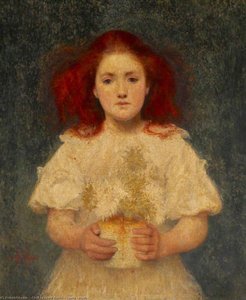
cecil leonard burns
1863 - 1929
Datos clave
- Artistic Movement Or Style: Atmospheric landscapes
- Artists Or Movements Influenced By This Artist: ['Victorian Art']
- Artists Who Influenced This Artist: ['Sir Hubert von Herkomer']
- Date Of Birth: 1863
- Date Of Death: 1929
- Full Name: Cecil Leonard Burns
- Nationality: British
- Notable Artworks:
- Calypso
- Linda (study)
- Girls Gathering Flowers
- Place Of Birth: St. Pancras, London

