

 Vista previa
 Compartir
 Compartir
 Ver detalles
 Guía
Guía

 Descargar
 Ver artículos similares
 Radiografía
 Presentación de diapositivas
 Estadísticas
Virgin and Child Enthroned
 Tempera On Panel
- WallArt
- Baroque art
 1476
1476- Renaissance
 107.0 x 55.0 cm
 Museo de las Artes de Budapest
 Leer más
Reproducción al óleo hecha a mano
Óleo sobre lienzo pintado a mano en el tamaño y marco de su elección, realizado por encargo por nuestros artistas. ( Cambiar a formato impreso Ver versión en imagen digital)




P118B $10

P118H $10

P118W $10

P438Z $10

P508JH $12

P508YH $12

P805H $10

P805Z $10

P919BZ $10

P919G $10

P919XJ $10

P959ZH $10

P968JZ $12

W106C $8

W218G $10

W218JH $8

W218Y $10

W307PJ $10

W316G $10

W316PJ $8

W316Y $10

W398PJ $8

W4111J $10

W500HY $15

W500JH $15

W692G $12

W849H $8

W940BG $15

W953PJ $8




Elija entre nuestros tamaños predefinidos que respetan las proporciones originales de la obra.

Puede ingresar sus propias dimensiones para adaptarse a un marco o espacio específico. Si el tamaño seleccionado no coincide con las proporciones de la imagen original, recortaremos la obra o extenderemos la pintura con elementos adicionales pintados a mano. Se le enviará una maqueta digital para su aprobación antes de comenzar la producción.
Tenga en cuenta que la vista previa en pantalla no refleja el recorte o la extensión reales. Solo la maqueta mostrará con precisión la composición final.
Si bien existen tamaños personalizados, recomendamos seleccionar una dimensión de la lista predefinida para preservar las proporciones originales.
Tras realizar el pedido, el equipo de OriginalUniqueArt.com enviará un correo electrónico al cliente para solicitar instrucciones y proporcionarle una vista previa del boceto.
Envío a todo el mundo () en 3-4 semanas en lugar de las 5 semanas estándar. (27 septiembre). Sin comprometer la calidad.

Envío exprés gratuito a todo el mundo

Lienzo de lino de alta calidad

Seguro de envío completo

Garantía de reembolso de impuestos aduaneros

Garantía de fidelidad cromática exacta

Política de devolución de 100 días (solo por defectos)

Garantía de devolución del 100% del dinero

Oferta por volumen
 La opción de vidrio solo está disponible en tamaños inferiores a 110 cm.

Virgin and Child Enthroned
Técnica de reproducción
Tamaño de la reproducción
-


Precio total
$ 300
A Regal Vision of Faith: The Luminous World of Carlo Crivelli
In the quiet sanctity of the late 15th century, few artists could command the eye with as much decorative splendor and spiritual intensity as Carlo Crivelli. His masterpiece, "Virgin and Child Enthroned," completed around 1476, stands as a breathtaking portal into the Late Gothic soul. This is not merely a painting; it is an immersive experience of divine presence. As one gazes upon this exquisite work, the viewer is immediately struck by a sense of profound majesty. The Virgin Mary, crowned and richly dressed as the Queen of Heaven, sits regally upon a marble throne, cradling the Christ Child in her arms. The composition radiates a celestial calm, yet it is charged with a meticulous, almost hyper-real detail that pulls the observer into a world where the sacred and the material intersect.
Crivelli’s unique artistic journey provides the essential backdrop for such a captivating creation. Born in Venice around 1435, he was steeped in the Venetian tradition, absorbing the luminous color palettes and linear precision of masters like Vivarini and Mantegna. However, as he moved toward the Marche region, his style evolved into something entirely singular. While his contemporaries in Florence were embracing the sweeping humanism of the High Renaissance, Crivulously embraced a more conservative, decorative Late Gothic aesthetic. This choice allowed him to master the trompe l’oeil technique—a skillful manipulation of perspective that creates an illusion of three-dimensional reality. Through thin, layered glazes of tempera on wood, he achieved a textural depth so profound that the viewer can almost feel the weight of the crown and the smoothness of the marble throne.
Symbolism and the Art of Detail
Every element within this composition serves a higher theological purpose, woven into a tapestry of symbolic meaning. The presence of the apples, positioned with deliberate care near the edges of the frame, acts as a poignant reminder of the Fall of Man, contrasting sharply with the purity of the Virgin and the promise of salvation embodied by the Christ Child. This interplay between sin and redemption is central to the emotional impact of the piece. Crivelli’s attention to detail—from the intricate patterns on the garments to the subtle shadows cast by the figures—creates a sense of "materiality" that makes the divine feel tangibly present in our own world.
For the discerning collector or interior designer, this artwork offers more than just historical significance; it provides a focal point of unparalleled elegance. The painting’s ability to balance heavy, ornamental detail with a serene, meditative atmosphere makes it a versatile choice for sophisticated spaces. Whether placed in a gallery-style setting or as a centerpiece in a classically designed room, a high-quality reproduction of this work brings with it an aura of timelessness and intellectual depth. It is a piece that invites long periods of contemplation, rewarding the viewer with new discoveries of light and shadow upon every encounter.
Biografía del artista
Vida y Formación Temprana
Carlo Crivelli, pintor del Renacimiento italiano, nació en Venecia alrededor de 1430-35. Provenía de una familia de pintores y recibió su formación artística tanto en Venecia como en Padua. Se cree que su temprana formación estuvo bajo la tutela de Jacobello del Fiore, quien aún estaba activo en 1436. También estudió en la escuela de Vivarini en Venecia.
Estilo Artístico y Carrera
Crivelli pasó sus primeros años en el Véneto, absorbiendo influencias de Vivarini, Squarcione y Mantegna. En 1458, abandonó el Véneto y pasó la mayor parte de su carrera en las Marcas de Ancona, desarrollando un estilo personal distintivo que contrasta con el de su contemporáneo veneciano Giovanni Bellini. Su obra se caracteriza por una sensibilidad decorativa gótica tardía conservadora, marcada por una cualidad lineal, atención al detalle y el uso de técnicas de "trompe l'oeil".
Obras Destacadas y Colaboraciones
- La pintura de Carlo Crivelli "Madonna y Niño en el Trono" (106 x 55 cm, Museo de Bellas Artes, Budapest, Hungría) es un ejemplo primordial de su estilo.
- Colaboró con su hermano menor Vittorio Crivelli en varios proyectos.
- Pietro Alemanno, un pintor que emigró a las Marcas de Ancona desde Alemania/Austria, fue su alumno y colaborador.
Museos y Colecciones
- La Pinacoteca di Brera en Milán, Italia, exhibe varias obras de Crivelli, incluyendo la "Pietà" (128 x 241 cm).
- El Museo San Giovanni en Bragora en Venecia, Italia, tiene una colección de obras de arte de varios períodos y estilos, incluyendo algunas atribuidas a Crivelli.
Legado e Importancia Histórica
Ver las obras de Carlo Crivelli en OriginalUniqueArt.com
Explorar las obras de Jacopo Robusti en OriginalUniqueArt.com
Leer más sobre Carlo Crivelli en Wikipedia
El legado de Crivelli continúa inspirando a entusiastas del arte y académicos por igual, con su obra permaneciendo como un testimonio del poder perdurable de la sensibilidad decorativa gótica tardía conservadora. Su habilidad para combinar elementos góticos tradicionales con técnicas renacentistas lo convierte en una figura única e importante en la historia del arte italiano.

Carlo Crivelli
1435 - 1495 , Italia
Datos clave
- Artistas Que Influyeron:
- Jacobello del Fiore
- Vivarini
- Squarcione
- Mantegna
- Fecha De Muerte: 1495
- Fecha De Nacimiento: 1435
- Lugar De Nacimiento: Venecia, Italia
- Movimiento Artístico: Renacimiento tardío gótico
- Museos Y Colecciones:
- Pinacoteca di Brera
- San Giovanni in Bragora
- Nacionalidad: Italiana
- Nombre Completo: Carlo Crivelli
- Obras Notables:
- Virgen con el Niño en trono
- Pietà
Artículos relacionados
Jacob Henricus Maris: A Master of Dutch Atmospheric Realism & the Intimate Landscape
Explore the captivating world of Jacob Henricus Maris, a leading figure of the Dutch Hague School. Discover his atmospheric landscapes, signature brushstrokes & lasting influence on 19th-century art. Learn more at OriginalUniqueArt.
Divine Grace: A Journey Through the Most Iconic Depictions of the Virgin Mary in Art History
Embark on a profound journey through art history with our exploration of the most iconic depictions of the Virgin Mary. Discover the divine grace, symbolism, and masterful techniques found in Renaissance masterpieces and sacred iconography.

Divine Grace: An Art Historian's Journey Through Iconic Masterpieces of the Virgin Mary
Explore the profound beauty of Marian iconography through an art historian's lens. Discover iconic masterpieces by Raphael and Renaissance masters, celebrating the divine grace and timeless elegance of the Virgin Mary in classical fine art.
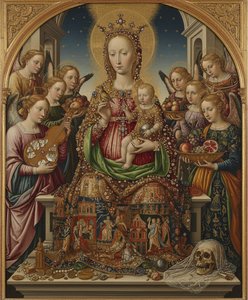
Carlo Crivelli: Mysticism & Materiality in Renaissance Venice
Explore the captivating world of Carlo Crivelli, a Renaissance master blending Gothic detail with profound symbolism. Discover his unique style & lasting influence on Venetian art history.
Fra Angelico: Las 25 Obras Maestras del Renacimiento para Decorar con Arte y Fe
Descubre las 25 obras maestras de Fra Angelico, el pintor renacentista que llenó el arte sacro de luz y fe. Explora su técnica, simbolismo y belleza en frescos e iconos. Encuentra reproducciones de alta calidad para decorar tu hogar con OriginalUniqueArt.com.


