Cambiar a impresiones
 Ver más







































 Para obras de arte o reproducciones que midan más de 105 cm (aproximadamente 41 pulgadas) en cualquiera de sus lados, el marco se enviará como un kit desmontado. Este método garantiza una entrega segura y evita daños durante el transporte.


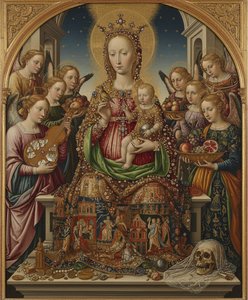
A Moment of Divine Grace: Exploring Carlo Crivelli’s Coronation of the Virgin
Carlo Crivelli's "Coronation of the Virgin," completed in 1493, stands as a testament to the enduring power of Early Renaissance devotional art. Measuring an impressive 225 x 255 cm, this monumental painting captures a pivotal scene from Mary’s life – her formal coronation by Jesus Christ – and embodies the artistic sensibilities of its time with remarkable precision and emotional depth. The artwork resides in the Museum of Fine Arts, Budapest, Hungary, offering visitors a chance to experience firsthand one of Crivelli's most celebrated achievements.Style and Technique: A Legacy of Gothic Elegance
Crivelli’s style represents a fascinating crossroads between late Gothic formalism and burgeoning Renaissance innovation. While retaining elements of the gothic tradition—particularly in its linear quality and meticulous attention to detail—the painting diverges significantly from its Venetian contemporaries like Giovanni Bellini, showcasing Crivelli's distinctive approach. He skillfully employs "trompe l'oeil" techniques, creating an illusionistic depth that enhances the grandeur of the architectural backdrop and draws viewers into the sacred space depicted. The artist’s masterful brushwork contributes to a velvety surface texture, conveying both luminosity and textural richness—a hallmark of Crivelli’s oeuvre.Historical Context: Venice Amidst Artistic Transformation
Painted during a period of profound artistic change in Italy, “Coronation of the Virgin” reflects the broader trends shaping Venetian art in the mid-fifteenth century. The influence of Vivarini, Squarcione, and Mantegna is palpable, demonstrating Crivelli’s engagement with the artistic dialogues of his era. However, unlike Bellini's more humanist explorations, Crivelli prioritizes spiritual contemplation and devotional fervor. This painting speaks to a society grappling with religious upheaval and seeking solace in representations of divine grace—a sentiment powerfully conveyed through the serene expressions of Mary and the surrounding figures.Symbolism: Layers of Meaning Within Sacred Imagery
The composition itself is laden with symbolic significance. The central figure of Mary, adorned in opulent robes and surrounded by angels, embodies purity and humility – virtues considered paramount in Christian theology. The architectural setting—a richly ornamented building—represents Jerusalem, the Holy City and the locus of Christ’s triumph over death. Furthermore, the inclusion of two birds symbolizes hope and resurrection, reinforcing the painting's overarching message of divine redemption. These carefully chosen elements underscore Crivelli’s intention to elevate the viewer’s gaze toward spiritual contemplation.Emotional Impact: A Window into Devotion
“Coronation of the Virgin” transcends mere visual representation; it aspires to evoke a profound emotional response in its audience. The painting's luminous palette and meticulous detailing capture the ethereal beauty of sacred iconography, transporting viewers back to a time when faith permeated every aspect of life. As an exquisite reproduction, this artwork offers collectors and interior designers alike the opportunity to bring a piece of Renaissance spirituality into their homes—a timeless reminder of humanity’s yearning for transcendence and divine grace.Preguntas y respuestas
¿A qué etapa de la trayectoria de Carlo Crivelli pertenece "Coronación de la Virgen" (1493)?
La fecha de 1493 sitúa a "Coronación de la Virgen" en el Mature Period del desarrollo de Carlo Crivelli.
¿A qué etapa de la trayectoria de Carlo Crivelli pertenece "Coronación de la Virgen"?
Dentro de la trayectoria de Carlo Crivelli, "Coronación de la Virgen" pertenece al Mature Period. Esta etapa permite compararla con otras obras del artista.
¿En qué tamaño se recomienda imprimir "Coronación de la Virgen"?
Se recomienda una reproducción de Grande para "Coronación de la Virgen" de Carlo Crivelli. El tamaño puede ajustarse manteniendo las proporciones.
 Ver en contexto
 Enviar
 Compartir
 Detalles
 Guía
Guía

 Descargar
 Similares
 Radiografía
 Presentación de diapositivas
 Q&A
Q&A Estadísticas