- Inicio

- Reproducción al óleo
- Carlo Carrà
- Florence

 Preview
 Comprar impresión Comprar imagen en alta resolución
 Enviar
 Compartir
 Detalles
 Añadir a favoritos

 Descargar
 Similares
 Radiografía
 Presentación de diapositivas
Florence
 Oil On Canvas
- WallArt
- Futurist Painting
 Modern
 50.0 x 60.0 cm
 MAGA Museo Arte Gallarate
 Ver más
Reproducción al óleo hecha a mano
Óleo sobre lienzo pintado a mano en el tamaño y marco de su elección, realizado por encargo por nuestros artistas.




P118B $10

P118H $10

P118W $10

P438Z $10

P508JH $12

P508YH $12

P805H $10

P805Z $10

P919BZ $10

P919G $10

P919XJ $10

P959ZH $10

P968JZ $12

W106C $8

W218G $10

W218JH $8

W218Y $10

W307PJ $10

W316G $10

W316PJ $8

W316Y $10

W398PJ $8

W4111J $10

W500HY $15

W500JH $15

W692G $12

W849H $8

W940BG $15

W953PJ $8




Elija entre nuestros tamaños predefinidos que respetan las proporciones originales de la obra.

Puede ingresar sus propias dimensiones para adaptarse a un marco o espacio específico. Si el tamaño seleccionado no coincide con las proporciones de la imagen original, recortaremos la obra o extenderemos la pintura con elementos adicionales pintados a mano. Se le enviará una maqueta digital para su aprobación antes de comenzar la producción.
Tenga en cuenta que la vista previa en pantalla no refleja el recorte o la extensión reales. Solo la maqueta mostrará con precisión la composición final.
Si bien existen tamaños personalizados, recomendamos seleccionar una dimensión de la lista predefinida para preservar las proporciones originales.
Tras realizar el pedido, el equipo de OriginalUniqueArt.com enviará un correo electrónico al cliente para solicitar instrucciones y proporcionarle una vista previa del boceto.
Entrega mundial () en 3-4 semanas en lugar de las 5 semanas estándar. (26 julio). Sin compromisos con la calidad.

Envío exprés gratuito a todo el mundo

Lienzo de lino de alta calidad

Seguro de envío total

Garantía de reembolso de impuestos aduaneros

Garantía de fidelidad de color

Política de devolución de 60 días (solo por defectos)

Garantía de devolución del 100% del dinero

Descuento por pedido múltiple
 La opción de vidrio solo está disponible en tamaños inferiores a 110 cm.

Florence
Técnica de reproducción
Tamaño de la reproducción
-


Precio total final
-
Descripción de la obra
A Vision of Eternal Florence
To gaze upon this depiction of Florence is to step through a veil of time, into a moment suspended between vibrant history and quiet contemplation. Carlo Carrà’s vision captures more than just the magnificent dome of Santa Maria del Fiore; it encapsulates the very soul of Florentine artistry—a spirit rooted in the rigorous beauty of the Quattrocento. The composition itself feels like an archaeological discovery rendered in paint, presenting the city not as a mere collection of buildings, but as a unified, breathing volume. Carrà masterfully guides the eye across this aerial panorama, where every overlapping block and delicate curve speaks to centuries of human endeavor and artistic devotion.
Mastery in Light and Line: Technique and Form
Technically, the painting is a profound study in restraint. Carrà employs a technique characterized by light, quick brushstrokes and the exquisite layering of transparent glazes, or velature. This process allows the color to build up luminosity from within, giving the entire scene an ethereal, almost spiritual glow that seems to emanate from the very stone of the city. The structure is defined by thin, delicate black outlines—lines that are structural rather than restrictive. These lines serve to delineate the cubic forms of the architecture, suggesting a geometric order beneath the soft wash of color. It is this interplay between the rigid geometry suggested by the outlines and the atmospheric softness achieved through glazing that gives the piece its unique visual tension.
Historical Echoes: Carrà’s Late Period Synthesis
This work stands as a beautiful testament to the breadth of Carrà's artistic journey. Having navigated the turbulent waters of Futurism, Metaphysics, and various avant-garde movements throughout the twentieth century, here he finds a profound synthesis. In this later period, his focus turns inward, toward essential forms and pictorial simplicity. The painting moves away from overt naturalism or dramatic impressionism, instead achieving an equilibrium between concrete reality and sublime abstraction. It is Carrà distilling the monumental into its most fundamental visual components—a mature artist finding quiet power in elegant reduction.
Symbolism of Place and Spirit
The subject matter itself carries immense symbolic weight. Florence, particularly viewed through the lens of Brunelleschi’s dome, represents the pinnacle of Renaissance humanism and artistic revival. For Carrà, this city was not just a backdrop; it was a cultural touchstone. The muted palette—of soft blues, earthy grays, and pale terracotta—contributes to an overwhelming sense of tranquility. It invites the viewer into a meditative state, suggesting that true beauty lies in the enduring structure of culture itself. Owning this piece is acquiring not just art, but a tangible connection to the deep, abiding spirit of Italian artistic heritage.
Bringing the Masterpiece Home
For collectors and designers seeking an object imbued with history and quiet grandeur, this reproduction offers unparalleled depth. The soft luminosity achieved through Carrà’s glazing technique translates beautifully into interior spaces, acting as a focal point that uplifts any room without overwhelming it. It speaks to those who appreciate art that rewards close looking—a piece where the eye can wander from the defined geometry of the foreground blocks to the hazy, luminous expanse of the sky, finding continuous beauty in every subtle shift of tone.
Biografía del artista
Early Life and the Seeds of Artistic Rebellion
Carlo Carrà, born in Quargnento near Alessandria, Italy, on February 11, 1881, embarked on a path diverging sharply from academic tradition. His youth was marked by necessity; at twelve years old, he left his family to apprentice as a mural decorator. This formative experience, steeped in the physicality of art-making and craftsmanship, indelibly shaped his artistic sensibilities. It wasn’t merely applying paint—it was immersion into color, form, and visual communication. A sojourn to Paris at the turn of the century, decorating pavilions for the Exposition Universelle, exposed him to burgeoning currents of contemporary French art, a crucial awakening that broadened his horizons beyond Italian provincialism. This exposure was followed by a brief period in London, where he encountered exiled Italian anarchists—a political undercurrent subtly informing his early work with themes of social unrest and rebellion. Returning to Milan in 1901, Carrà honed his skills, eventually enrolling at the Brera Academy in 1906, studying under Cesare Tallone. Yet, even within the academy’s structure, a restless spirit persisted, yearning for artistic innovation.Embracing Dynamism: The Futurist Years
The year 1910 proved pivotal. Carrà joined Umberto Boccioni, Luigi Russolo, and Giacomo Balla, signing the manifesto of the Futurist painters—a declaration irrevocably altering Italian art’s course. Futurism was a radical ideology, an explosive celebration of modernity, speed, technology, youth, and the machine age's relentless energy. It rejected the past, embracing dynamism and anticipating a future defined by progress. Carrà’s early Futurist works, such as The Funeral of the Anarchist Galli (1911) and Rhythms of Objects (1911), vividly embody these principles. The Funeral of the Anarchist Galli, a chaotic yet compelling depiction of grief and protest, isn’t merely representation but a visceral experience of movement and emotion. The fractured forms and jarring colors convey the raw energy of the crowd and disruptive political force. Rhythms of Objects further demonstrates his exploration of dynamism, breaking down everyday objects into fragmented shapes suggesting motion and transformation. These paintings weren’t about *what* was depicted but *how* it was perceived—a revolutionary approach to representation. Carrà wasn’t just painting scenes; he attempted to capture the very essence of modern life in all its frenetic glory.From Futurism to Metaphysics and Beyond
The fervor of Futurism waned for Carrà as World War I loomed, his artistic trajectory taking an unexpected turn. Around 1917, a profound shift occurred, influenced by his encounter with Giorgio de Chirico in Ferrara. De Chirico’s “Metaphysical Painting”—characterized by unsettling juxtapositions, eerie perspectives, and a dreamlike atmosphere—resonated deeply with Carrà. He began incorporating mannequin imagery into his work, as seen in The Daughters of Lot (1919), creating scenes both familiar and disturbing. This period marked a move away from Futurism’s outward dynamism toward an inward exploration of psychological states and existential anxieties. The 1920s and 30s witnessed another evolution as Carrà turned to landscape painting. He developed a more atmospheric style, characterized by flattened perspectives and textured brushwork, exemplified in works like Morning by the Sea (1928). This wasn’t a rejection of earlier experimentation but an integration into a new visual language—a quieter, more contemplative approach to art.Exploring Carrà's World Further
Carrà’s legacy lies not only in iconic images but also in his relentless pursuit of artistic truth—a quest leading him through innovation, reflection, and engagement with a tumultuous political landscape. He was pivotal in both Futurism and Metaphysical Painting, pushing boundaries and challenging norms. His willingness to experiment throughout his career demonstrates remarkable intellectual curiosity and artistic courage. His influence extends beyond painting, impacting sculpture, literature, and design through the Futurist movement’s interdisciplinary approach.- Delve deeper into his works at various online art databases.
- Explore the revolutionary spirit of Futurism and its key figures.
- Consult reputable sources like Wikipedia and Britannica for comprehensive biographical information.
- The Funeral of the Anarchist Galli (1911)
- Rhythms of Objects (1911)
- The Daughters of Lot (1919)
- Morning by the Sea (1928)

Carlo Carrà
1881 - 1966 , Italia
Datos clave
- Artistic Movement Or Style: Futurism, Metaphysical art
- Artists Who Influenced This Artist:
- Giacomo Balla
- Giorgio de Chirico
- Date Of Birth: Feb 11, 1881
- Date Of Death: Apr 13, 1966
- Full Name: Carlo Carrà
- Nationality: Italian
- Notable Artworks:
- Funeral of Galli
- Rhythms of Objects
- Daughters of Lot
- Morning by the Sea
- Place Of Birth: Alessandria, Italy
Artículos relacionados

Alfred Worthington: Bridging Victorian Realism & Early Modern Landscape Painting
Explore the captivating landscapes of Alfred Worthington (1834-1927), a pivotal figure bridging Victorian realism & early Impressionism. Discover his Welsh hunting scenes, artistic evolution, and collecting guide.

Carlo Carrà: Futurist Visions & Metaphysical Transformations in Early 20th-Century Italian Painting
Explore the artistic journey of Carlo Carrà, a pivotal figure in Italian Futurism & Metaphysical painting. Discover his dynamic compositions, collaborations with de Chirico, and lasting influence on modern art history.

Concrete Visions: Exploring the Urban Landscape in Painting – From Realism to Contemporary Art
Explore the evolution of cityscape painting from Realism to contemporary art with OriginalUniqueArt. Discover key artists & invest in timeless urban visions. Expert guidance, museum-quality reproductions.

Evocations of Place: A Historical Journey Through Landscape Art
Explore the rich history of landscape art with OriginalUniqueArt. Discover renowned artists, movements like Impressionism & tonalism, and expert guidance for collecting timeless pieces. Find your perfect serene escape today!
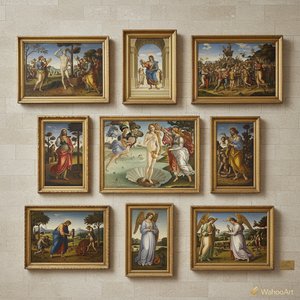
Los 10 Maestros del Renacimiento Temprano: Arte que Transformó el Mundo |
Descubre los 10 maestros del Renacimiento Temprano: Botticelli, Leonardo da Vinci y más. Explora la historia, técnica y belleza de obras icónicas italianas. Reproducciones de arte exclusivas en .


