
 Ver en contexto
 Enviar
 Compartir
 Detalles
 Guía
Guía

 Descargar
 Similares
 Radiografía
 Presentación de diapositivas
 Q&A
Q&A Estadísticas
Untitled (AQTDLT)


 Ver más
Giclée / Impresión de arte
Impresiones giclée o en lienzo de calidad de museo con producción rápida y opciones de acabado flexibles. ( Comprar pintura hecha a mano Cambiar a imagen digital)




P118B €10

P118H €10

P118W €10

P438Z €10

P508JH €12

P508YH €12

P805H €10

P805Z €10

P919BZ €10

P919G €10

P919XJ €10

P959ZH €10

P968JZ €12

W106C €8

W218G €10

W218JH €8

W218Y €10

W307PJ €10

W316G €10

W316PJ €8

W316Y €10

W398PJ €8

W4111J €10

W500HY €15

W500JH €15

W692G €12

W849H €8

W940BG €15

W953PJ €8




Elija entre nuestros tamaños predefinidos que respetan las proporciones originales de la obra.

Introduzca el ancho y el alto que necesite para adaptarse a su marco o pared. Una impresión solo puede recortarse, nunca hacerse más grande que la imagen original, por lo que un tamaño con una forma distinta perderá parte de la obra. Le enviaremos una maqueta digital para su aprobación antes de realizar cualquier impresión. La imagen que se muestra en esta página no refleja el recorte real; solo la maqueta lo hace.
Envío a todo el mundo () en 2 semanas en lugar de las 4/5 semanas estándar. (1 noviembre)

Envío exprés gratuito a todo el mundo

Lienzo de lino de alta calidad

Seguro de envío total

Garantía de reembolso de aranceles aduaneros

Garantía de fidelidad cromática exacta

Política de devolución de 100 días (solo por defectos)

Garantía de devolución del 100% del dinero

Descuento por cantidad
 La opción de vidrio solo está disponible en tamaños inferiores a 110 cm.

Untitled (AQTDLT)
Giclée / Impresión de arte
Dimensiones de la reproducción
-


Precio total final
€ 71
A Majestic Vista: Carleton Watkins’ 1883 Depiction of Mountain & Town Life
- Subject and Composition: This striking black and white photograph by Carleton Watkins presents a compelling juxtaposition of the natural world and burgeoning human settlement. A dominant, imposing mountain forms the backdrop, its scale dwarfing the town nestled at its base. The composition skillfully balances these elements – the rugged wilderness versus the ordered structures of civilization. Numerous buildings, identifiable by their chimneys, populate the townscape, suggesting a thriving community. The inclusion of a train adds another layer to this narrative, hinting at connectivity and progress.
- Technique & Style: Watkins was a master of the collodion wet-plate process, demanding meticulous preparation and execution in the field. This technique resulted in images characterized by incredible detail, tonal range, and sharpness – qualities readily apparent here. The photograph isn’t merely a record; it's an *interpretation* of the landscape. Watkins didn’t simply capture what was there; he carefully selected viewpoints, controlled exposure, and utilized large-format cameras to create images that conveyed his artistic vision. His style leans towards Pictorialism, emphasizing aesthetic beauty and atmospheric effects over purely documentary accuracy.
Historical Context: The American West & the Railroad’s Influence
- The Era of Expansion: Created in 1883, this photograph exists within a pivotal moment in American history – the rapid expansion westward. Following the Civil War, the completion of the transcontinental railroad spurred settlement and economic development across the West. Watkins’ work often documented these changes, serving as both artistic statements and visual records of a transforming nation.
- Watkins & Preservation: Interestingly, while documenting this expansion, Watkins' photographs also played a crucial role in advocating for the preservation of Western landscapes. His images were instrumental in convincing Congress to establish Yosemite National Park – a testament to the power of photography as an agent of conservation.
- The train visible within the scene is not merely a detail; it’s symbolic of this era, representing progress, connection, and the changing relationship between humans and the environment.
Emotional Impact & Symbolic Resonance
- A Sense of Awe: The photograph evokes a powerful sense of awe in the face of nature’s grandeur. The sheer scale of the mountain inspires humility, while the town represents human ambition and resilience.
- Contrasts & Tensions: There's an underlying tension within the image – a contrast between the untamed wilderness and the ordered world created by humans. This duality speaks to the complex relationship between civilization and nature, a theme that continues to resonate today.
- Timeless Appeal: Watkins’ masterful composition and technical skill ensure this photograph remains captivating for contemporary viewers. It offers not only a glimpse into the past but also prompts reflection on our own place within the natural world.
Preguntas y respuestas
¿Qué elementos de la obra de Carleton Watkins se encuentran en "Untitled (AQTDLT)"?
"Untitled (AQTDLT)" comparte con otras obras de Carleton Watkins su estilo American Romanticism y sus temas recurrentes: american romanticism, westward expansion, landscape pioneer, railroad era views, conservationist themes, yosemite advocacy, photographic documentation, early landscape photography.
¿Qué tan armoniosos son los colores de "Untitled (AQTDLT)" de Carleton Watkins?
"Untitled (AQTDLT)" de Carleton Watkins presenta una armonía de color Strong Color Unity.
¿Dónde puedo encontrar una guía sobre "Untitled (AQTDLT)"?
Una página de Ficha informativa está disponible para "Untitled (AQTDLT)" de Carleton Watkins: una ficha imprimible sobre la obra, diseñada para estudiantes y su uso en el aula.
Biografía del artista
Carleton Watkins: Pionero de la Fotografía Paisajista
Carleton Watkins (1829-1916) fue un fotógrafo estadounidense del siglo XIX cuyo trabajo revolucionó la representación visual del Oeste americano y tuvo una influencia duradera en el movimiento artístico conocido como Escuela Hudson. Nacido en Oneonta, Nueva York, Watkins emigró a California alrededor de 1851 impulsado por la promesa de riqueza asociada con la fiebre del oro, donde rápidamente demostró interés por la fotografía gracias a circunstancias fortuitas. Este encuentro casual con Robert H. Vance, un fotógrafo daguerrotipista local, marcó el inicio de una trayectoria artística que cambiaría para siempre el panorama artístico de su época.Vida Temprana y Orígenes (1829-1851)
- Nacimiento: 11 de noviembre de 1829, en Oneonta, Nueva York.
- Carleton E. Watkins era el mayor de ocho hijos nacidos de John y Julia Watkins, un carpintero y una hospedera respectivamente.
- Disfrutó de una crianza rural, desarrollando habilidades como cazador y pescador, y participando en actividades locales como el club coral y la coral de la iglesia presbiteriana.
- En 1851, impulsado por el atractivo de la fortuna, Watkins viajó a San Francisco con su amigo de la infancia, Collis Huntington.
Carrera Temprana y Orígenes Fotográficos (1851-1861)
- Aunque inicialmente no tuvo éxito encontrando oro, tanto Watkins como Huntington tuvieron éxito en sus respectivos campos.
- Watkins comenzó trabajando como proveedor de suministros para operaciones mineras antes de convertirse en empleado de tienda en la librería de George Murray.
- Un momento decisivo: Una vacante inesperada en el estudio del fotógrafo daguerrotipista Robert H. Vance llevó a Watkins a una aprendiz, a pesar de no tener experiencia previa en fotografía.
- Aprendió rápidamente el arte y superó a su instructor, estableciendo una reputación por su trabajo de calidad.
- Para 1858, Watkins estableció su propio negocio fotográfico, realizando encargos como ilustrar California para James Mason Hutchings y documentar propiedades mineras.
Yosemite y la Era de las Placas Gigantes (1861-1867)
- El punto de inflexión: En julio de 1861, Watkins viajó a Yosemite Valley equipado con su cámara de placas gigantes y una cámara estereoscópica.
- Capturó algunas de las primeras fotografías detalladas de Yosemite, mostrando su grandeza al público oriental.
- Estas imágenes fueron cruciales para convencer al Congreso de preservar Yosemite Valley como parque nacional – un testimonio del poder de la documentación visual.
- En 1864, fue contratado por la Encuesta Geológica Estatal de California para fotografiar Yosemit
Legado e Influencia Histórica
Watkins no solo produjo imágenes excepcionales que capturaron la esencia del paisaje occidental sino que también desempeñó un papel fundamental en el nacimiento del movimiento artístico conocido como Escuela Hudson. Sus fotografías inspiraron otros artistas y escritores, quienes encontraron en Yosemite Valley una fuente de inspiración para expresar la belleza sublime de la naturaleza y la importancia de su conservación. Además, Watkins fue pionero en el uso de técnicas fotográficas innovadoras como las placas gigantes y los estereoviews, estableciendo nuevos estándares de calidad artística y científica.
Nota: Este texto ha sido generado por IA con instrucciones específicas para crear un artículo informativo y atractivo sobre Carleton Watkins.
Carleton Watkins
1829 - 1916 , Estados Unidos
Datos clave
- Artistic Movement Or Style: Fotografía Paisajista
- Artists Or Movements Influenced By This Artist: ['Escuela Hudson']
- Artists Who Influenced This Artist: ['Robert H. Vance']
- Date Of Birth: 1829-11-11
- Date Of Death: 1916
- Full Name: Carleton E. Watkins
- Nationality: American
- Notable Artworks:
- El Diablo
- Pohono, Bridal Veil, 900 Pies
- Place Of Birth: Oneonta, Nueva York
Artículos relacionados

Grant Wood & American Regionalism: Identity, Myth & the Rural Landscape
Explore the world of Grant Wood & American Regionalism with OriginalUniqueArt. Discover the symbolism behind 'American Gothic', recurring themes, and the movement's lasting impact on art history. High-quality reproductions available.

Albert Bierstadt: Luminosity, Landscape & the American Ideal
Explore the breathtaking landscapes of Albert Bierstadt, master of the American West & a leading figure in the Hudson River School. Discover his luminous style and iconic paintings – a timeless investment for art lovers.
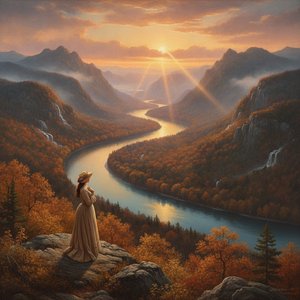
Capturing the Soul of Nature: A Journey Through the Sublime Majesty of American Romanticism
Explore the breathtaking beauty of American Romanticism. Discover how Hudson River School masters captured the sublime spirit of the wilderness through luminous oil landscapes and emotional depth. A journey into the soul of nature for the true art enthusiast.

Evocations of Place: A Historical Journey Through Landscape Art
Explore the rich history of landscape art with OriginalUniqueArt. Discover renowned artists, movements like Impressionism & Romanticism, and expert guidance for collecting timeless pieces. Find your perfect serene escape today!

Herman Herzog: Capturing American Landscapes & the Pursuit of Domestic Idealism
Explore the captivating landscapes of Herman Herzog, a pivotal American artist known for his realistic depictions of Yosemite & Florida scenes. Discover his legacy, artistic journey, and market value with OriginalUniqueArt.


