
 Ver en contexto
 Enviar
 Compartir
 Detalles
 Guía
Guía

 Descargar
 Similares
 Radiografía
 Presentación de diapositivas
 Preguntas y respuestas
 Estadísticas
Untitled (AQTDJM)


 Ver más
Giclée / Impresión de arte
Impresiones giclée o en lienzo de calidad de museo con producción rápida y opciones de acabado flexibles. ( Comprar pintura hecha a mano Cambiar a imagen digital)




P118B €10

P118H €10

P118W €10

P438Z €10

P508JH €12

P508YH €12

P805H €10

P805Z €10

P919BZ €10

P919G €10

P919XJ €10

P959ZH €10

P968JZ €12

W106C €8

W218G €10

W218JH €8

W218Y €10

W307PJ €10

W316G €10

W316PJ €8

W316Y €10

W398PJ €8

W4111J €10

W500HY €15

W500JH €15

W692G €12

W849H €8

W940BG €15

W953PJ €8




Elija entre nuestros tamaños predefinidos que respetan las proporciones originales de la obra.

Introduzca el ancho y el alto que necesite para adaptarse a su marco o pared. Una impresión solo puede recortarse, nunca hacerse más grande que la imagen original, por lo que un tamaño con una forma distinta perderá parte de la obra. Le enviaremos una maqueta digital para su aprobación antes de realizar cualquier impresión. La imagen que se muestra en esta página no refleja el recorte real; solo la maqueta lo hace.
Envío a todo el mundo () en 2 semanas en lugar de las 4/5 semanas estándar. (9 noviembre)

Envío exprés gratuito a todo el mundo

Lienzo de lino de alta calidad

Seguro de envío total

Garantía de reembolso de aranceles aduaneros

Garantía de fidelidad cromática exacta

Política de devolución de 100 días (solo por defectos)

Garantía de devolución del 100% del dinero

Descuento por cantidad
 La opción de vidrio solo está disponible en tamaños inferiores a 110 cm.

Untitled (AQTDJM)
Giclée / Impresión de arte
Dimensiones de la reproducción
-


Precio total final
€ 72
A Vista of Tranquility: Carleton Watkins’ 1883 Yosemite Landscape
This captivating black and white photograph, *Untitled (AQTDJM)*, by Carleton E. Watkins, transports viewers to the heart of Yosemite Valley in 1883. The scene unfolds with a serene lake mirroring the majestic mountains that rise dramatically in the background. Towering trees line the shore, their forms softened by distance, while snow-capped peaks pierce the sky, creating a breathtaking panorama. Scattered figures populate the landscape, hinting at human interaction with—and reverence for—this natural wonder. A small boat gently rests on the water’s surface, adding to the overall sense of peaceful contemplation.The Master of Yosemite: Watkins and the American Landscape
Carleton Watkins (1829-1916) was a pivotal figure in 19th-century landscape photography. Born in New York and later establishing himself in San Francisco, he became renowned for his large-format photographs of the American West, particularly Yosemite Valley. Watkins’ work wasn't merely documentation; it was an artistic interpretation that profoundly influenced public perception of these landscapes. His images played a crucial role in advocating for the preservation of Yosemite, ultimately contributing to its designation as a national park. This photograph exemplifies his mastery of the collodion wet-plate process, requiring meticulous preparation and execution in the field. The resulting detail and tonal range are remarkable, capturing the grandeur and subtlety of the natural world with unparalleled clarity.Technique & Emotional Resonance
Watkins employed a large-format camera and the laborious wet collodion process to create this image. This involved coating a glass plate with light-sensitive chemicals *immediately* before exposure, demanding speed and precision. The resulting photographs are characterized by their incredible detail, tonal richness, and expansive depth of field. The composition in *Untitled (AQTDJM)* is carefully balanced; the lake acts as a reflective plane, doubling the impact of the mountains and sky. The inclusion of human figures provides scale and invites viewers to imagine themselves within this idyllic setting. The overall effect is one of profound tranquility and awe – a feeling that resonates deeply even today.A Legacy of Preservation & Artistic Inspiration
Watkins’ photographs weren't just aesthetically pleasing; they were instrumental in shaping the conservation movement. His images, widely circulated through exhibitions and publications, demonstrated the sublime beauty of Yosemite to Congress and President Lincoln, leading to its protection in 1864. Today, reproductions of his work continue to inspire a sense of wonder and appreciation for the natural world. This particular photograph, with its harmonious composition and evocative atmosphere, is an ideal addition to any collection – offering not only a stunning visual experience but also a connection to a pivotal moment in American art and environmental history.Preguntas y respuestas
¿Dónde puedo encontrar una guía sobre "Untitled (AQTDJM)"?
La guía de "Untitled (AQTDJM)" es la página Ficha informativa de la obra: una ficha imprimible que presenta la pieza con su pie de foto, línea de crédito y tabla de datos (artista, fechas, técnica, tamaño original, colección).
¿Qué nivel de saturación cromática tiene "Untitled (AQTDJM)" de Carleton Watkins?
La paleta de "Untitled (AQTDJM)" presenta una saturación Subtle Color.
¿Puedo ver "Untitled (AQTDJM)" de Carleton Watkins en mi propia pared antes de comprarlo?
"Untitled (AQTDJM)" cuenta con una vista previa en realidad aumentada: la página de Vista previa en RA de la obra permite visualizarla en su propio espacio mediante un dispositivo compatible.
Biografía del artista
Carleton Watkins: Pionero de la Fotografía Paisajista
Carleton Watkins (1829-1916) fue un fotógrafo estadounidense del siglo XIX cuyo trabajo revolucionó la representación visual del Oeste americano y tuvo una influencia duradera en el movimiento artístico conocido como Escuela Hudson. Nacido en Oneonta, Nueva York, Watkins emigró a California alrededor de 1851 impulsado por la promesa de riqueza asociada con la fiebre del oro, donde rápidamente demostró interés por la fotografía gracias a circunstancias fortuitas. Este encuentro casual con Robert H. Vance, un fotógrafo daguerrotipista local, marcó el inicio de una trayectoria artística que cambiaría para siempre el panorama artístico de su época.Vida Temprana y Orígenes (1829-1851)
- Nacimiento: 11 de noviembre de 1829, en Oneonta, Nueva York.
- Carleton E. Watkins era el mayor de ocho hijos nacidos de John y Julia Watkins, un carpintero y una hospedera respectivamente.
- Disfrutó de una crianza rural, desarrollando habilidades como cazador y pescador, y participando en actividades locales como el club coral y la coral de la iglesia presbiteriana.
- En 1851, impulsado por el atractivo de la fortuna, Watkins viajó a San Francisco con su amigo de la infancia, Collis Huntington.
Carrera Temprana y Orígenes Fotográficos (1851-1861)
- Aunque inicialmente no tuvo éxito encontrando oro, tanto Watkins como Huntington tuvieron éxito en sus respectivos campos.
- Watkins comenzó trabajando como proveedor de suministros para operaciones mineras antes de convertirse en empleado de tienda en la librería de George Murray.
- Un momento decisivo: Una vacante inesperada en el estudio del fotógrafo daguerrotipista Robert H. Vance llevó a Watkins a una aprendiz, a pesar de no tener experiencia previa en fotografía.
- Aprendió rápidamente el arte y superó a su instructor, estableciendo una reputación por su trabajo de calidad.
- Para 1858, Watkins estableció su propio negocio fotográfico, realizando encargos como ilustrar California para James Mason Hutchings y documentar propiedades mineras.
Yosemite y la Era de las Placas Gigantes (1861-1867)
- El punto de inflexión: En julio de 1861, Watkins viajó a Yosemite Valley equipado con su cámara de placas gigantes y una cámara estereoscópica.
- Capturó algunas de las primeras fotografías detalladas de Yosemite, mostrando su grandeza al público oriental.
- Estas imágenes fueron cruciales para convencer al Congreso de preservar Yosemite Valley como parque nacional – un testimonio del poder de la documentación visual.
- En 1864, fue contratado por la Encuesta Geológica Estatal de California para fotografiar Yosemit
Legado e Influencia Histórica
Watkins no solo produjo imágenes excepcionales que capturaron la esencia del paisaje occidental sino que también desempeñó un papel fundamental en el nacimiento del movimiento artístico conocido como Escuela Hudson. Sus fotografías inspiraron otros artistas y escritores, quienes encontraron en Yosemite Valley una fuente de inspiración para expresar la belleza sublime de la naturaleza y la importancia de su conservación. Además, Watkins fue pionero en el uso de técnicas fotográficas innovadoras como las placas gigantes y los estereoviews, estableciendo nuevos estándares de calidad artística y científica.
Nota: Este texto ha sido generado por IA con instrucciones específicas para crear un artículo informativo y atractivo sobre Carleton Watkins.
Carleton Watkins
1829 - 1916 , Estados Unidos
Datos clave
- Artistic Movement Or Style: Fotografía Paisajista
- Artists Or Movements Influenced By This Artist: ['Escuela Hudson']
- Artists Who Influenced This Artist: ['Robert H. Vance']
- Date Of Birth: 1829-11-11
- Date Of Death: 1916
- Full Name: Carleton E. Watkins
- Nationality: American
- Notable Artworks:
- El Diablo
- Pohono, Bridal Veil, 900 Pies
- Place Of Birth: Oneonta, Nueva York
Artículos relacionados

Grant Wood & American Regionalism: Identity, Myth & the Rural Landscape
Explore the world of Grant Wood & American Regionalism with OriginalUniqueArt. Discover the symbolism behind 'American Gothic', recurring themes, and the movement's lasting impact on art history. High-quality reproductions available.
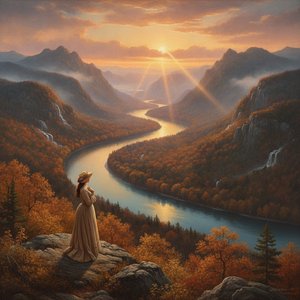
Capturing the Soul of Nature: A Journey Through the Sublime Majesty of American Romanticism
Explore the breathtaking beauty of American Romanticism. Discover how Hudson River School masters captured the sublime spirit of the wilderness through luminous oil landscapes and emotional depth. A journey into the soul of nature for the true art enthusiast.

Albert Bierstadt: Luminosity, Landscape & the American Ideal
Explore the breathtaking landscapes of Albert Bierstadt, master of the American West & a leading figure in the Hudson River School. Discover his luminous style and iconic paintings – a timeless investment for art lovers.

Evocations of Place: A Historical Journey Through Landscape Art
Explore the rich history of landscape art with OriginalUniqueArt. Discover renowned artists, movements like Impressionism & Romanticism, and expert guidance for collecting timeless pieces. Find your perfect serene escape today!

Herman Herzog: Capturing American Landscapes & the Pursuit of Domestic Idealism
Explore the captivating landscapes of Herman Herzog, a pivotal American artist known for his realistic depictions of Yosemite & Florida scenes. Discover his legacy, artistic journey, and market value with OriginalUniqueArt.


