Text size

() ·

A painting made for you, by hand

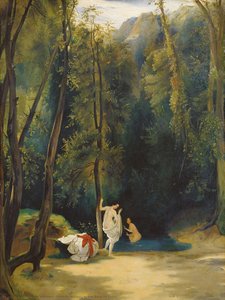
Bathers in Terni Park

Reproducción al óleo hecha a mano

Óleo sobre lienzo pintado a mano en el tamaño y marco de su elección, realizado por encargo por nuestros artistas. ( Cambiar a impresiones Cambiar a imagen digital)

Descripción del objeto

Carl Blechen’s ‘Bathers in Terni Park,’ painted in 1836, captures a tranquil scene of people enjoying the outdoors. Featuring three central figures interacting with the natural environment alongside a bird perched on a branch, it exemplifies Romantic landscape painting and Blechen's fascination with industrialization.

Biografía del artista

Carl Blechen (1798-1840) fue un pintor romántico alemán célebre por sus paisajes evocadores y sus pioneras representaciones de la industrialización temprana. Explora sus bocetos italianos y su legado perdurable.

from ·

Chapter 1

How large should it be?

Slide to change the size; the picture on the left shows the frame at its real width. The proportions of the original are kept.

Tamaño estándar
a medida
CM
INCH

Elija entre nuestros tamaños predefinidos que respetan las proporciones originales de la obra.

ancho
altura

Indique el ancho y el alto que necesite para adaptarse a su marco o pared. Al tratarse de una obra pintada a mano, si requiere un tamaño con una proporción distinta, el artista puede pintar un poco más alrededor de la imagen o recortarla ligeramente; usted elige. Le enviaremos una maqueta digital para su aprobación antes de comenzar la pintura. La imagen que se muestra en esta página no refleja el resultado real; solo la maqueta lo hace.

Chapter 2

How should it arrive?

Choose the edges of the stretched canvas

Choose your frame

Corner sample of the WhiteWrap canvas edge finish, stretched on madera maciza bars
White €1
Corner sample of the BlurSideWrap canvas edge finish, stretched on madera maciza bars
Blurside €1
Corner sample of the ExtendedWrap canvas edge finish, stretched on madera maciza bars
Extended €1
Corner sample of the P118B picture frame: poliestireno moldeado, 5 cm wide and 3 cm thick
P118B €10
Corner sample of the P118H picture frame: poliestireno moldeado, 5 cm wide and 3 cm thick
P118H €10
Corner sample of the P118W picture frame: poliestireno moldeado, 5 cm wide and 3 cm thick
P118W €10
Corner sample of the P438Z picture frame: poliestireno moldeado, 5.5 cm wide and 3.5 cm thick
P438Z €10
Corner sample of the P508JH picture frame: poliestireno moldeado, 7 cm wide and 3.5 cm thick
P508JH €12
Corner sample of the P508YH picture frame: poliestireno moldeado, 7 cm wide and 3.5 cm thick
P508YH €12
Corner sample of the P805H picture frame: poliestireno moldeado, 5 cm wide and 3.5 cm thick
P805H €10
Corner sample of the P805Z picture frame: poliestireno moldeado, 5 cm wide and 3.5 cm thick
P805Z €10
Corner sample of the P919BZ picture frame: poliestireno moldeado, 7 cm wide and 3.5 cm thick
P919BZ €10
Corner sample of the P919G picture frame: poliestireno moldeado, 7 cm wide and 3.5 cm thick
P919G €10
Corner sample of the P919XJ picture frame: poliestireno moldeado, 7 cm wide and 3.5 cm thick
P919XJ €10
Corner sample of the P959ZH picture frame: poliestireno moldeado, 5 cm wide and 3 cm thick
P959ZH €10
Corner sample of the P968JZ picture frame: poliestireno moldeado, 6 cm wide and 4 cm thick
P968JZ €12
Corner sample of the W106C picture frame: madera maciza, 5 cm wide and 3 cm thick
W106C €8
Corner sample of the W218G picture frame: madera maciza, 5 cm wide and 3 cm thick
W218G €10
Corner sample of the W218JH picture frame: madera maciza, 5 cm wide and 3 cm thick
W218JH €8
Corner sample of the W218Y picture frame: madera maciza, 5 cm wide and 3 cm thick
W218Y €10
Corner sample of the W307PJ picture frame: madera maciza, 6 cm wide and 3 cm thick
W307PJ €10
Corner sample of the W316G picture frame: madera maciza, 6 cm wide and 3 cm thick
W316G €10
Corner sample of the W316PJ picture frame: madera maciza, 6 cm wide and 3 cm thick
W316PJ €8
Corner sample of the W316Y picture frame: madera maciza, 6 cm wide and 3 cm thick
W316Y €10
Corner sample of the W398PJ picture frame: madera maciza, 5 cm wide and 3 cm thick
W398PJ €8
Corner sample of the W4111J picture frame: madera maciza, 6.5 cm wide and 3.5 cm thick
W4111J €10
Corner sample of the W500HY picture frame: madera maciza, 7 cm wide and 5 cm thick
W500HY €15
Corner sample of the W500JH picture frame: madera maciza, 7 cm wide and 5 cm thick
W500JH €15
Corner sample of the W692G picture frame: madera maciza, 8 cm wide and 4 cm thick
W692G €12
Corner sample of the W849H picture frame: madera maciza, 5 cm wide and 3 cm thick
W849H €8
Corner sample of the W940BG picture frame: madera maciza, 7.5 cm wide and 4.5 cm thick
W940BG €15
Corner sample of the W953PJ picture frame: madera maciza, 6 cm wide and 3.5 cm thick
W953PJ €8
Corner sample of the H24-GOLD picture frame: madera tallada con estuco, 10 cm wide and 6 cm thick
H24-GOLD €30
Corner sample of the H24-SILVER picture frame: madera tallada con estuco, 10 cm wide and 6 cm thick
H24-SILVER €30
Corner sample of the H36-GOLD picture frame: madera tallada con estuco, 15 cm wide and 6.5 cm thick
H36-GOLD €45
Corner sample of the H36-SILVER picture frame: madera tallada con estuco, 15 cm wide and 6.5 cm thick
H36-SILVER €45

Moulding: . Overall size with the frame: .

Chapter 3

Who paints it, and should anything change?

Examples of what can be changed: Replace face with customer photo; Add pet (e.g., replace cat with dog); Include hidden message in background; Change background landscape or elements.
After order, OriginalUniqueArt.com team will email client for instructions and provide a mockup preview

Envío a todo el mundo () en 3-4 semanas en lugar de las 5 semanas estándar. (2 noviembre). Sin comprometer la calidad.

Chapter 4

The finishing touches

A nameplate, as in a museum?

Detalles de la placa de bronce grabada

This elegant plaque features the artist's name and the title of the artwork, finely engraved for a timeless presentation.

It is made from bronze with a refined, elegant finish. The text is precisely laser-engraved for a sharp and permanent result. Measuring 9x2 cm, the plaque is compact yet easy to read. It's built to be durable and scratch-resistant, offering a professional, museum-quality look. Mounting is simple thanks to the included adhesive backing.

Detalles de la placa de acrílico transparente

The plaque includes essential engraved details such as the artist's name, the title of the artwork, the date it was created, the type of media used-like oil on canvas or watercolor-a brief description of the piece, and a QR code that links to the complete artwork information.

It is crafted from clear acrylic, offering a sleek, modern appearance. The text is UV-engraved in black to ensure strong visual contrast. With a size of 10x15 cm, it ensures optimal readability. It comes equipped with two metal hooks for secure wall mounting. The plaque is designed to be weather-resistant, making it suitable for various environments, and it includes interactive features that work seamlessly with smartphone scanning.

Detalles de la placa de acrílico negro

This elegant plaque includes engraved information such as the artist's name, the title of the artwork, the date it was created, the type of media used (like oil on canvas or watercolor), a short description of the artwork, and a QR code for quick access to more information.

The plaque itself is made from refined black acrylic with a premium finish. The text is laser-engraved in white for high contrast and readability. Its size is 10x15 cm, designed to be easy to read. It comes with two metal hooks for professional mounting. The design is sleek and fits any interior style. It is also weather-resistant and durable, with built-in digital integration for mobile compatibility.

A protective varnish?

When do you need it?

Chapter 5

Your painting, as you ordered it

Bathers in Terni Park

Técnica de reproducción

Dimensiones de la reproducción

-

Selección de artistas premium

Mayor nivel de detalle, delicadeza y tiempo de producción adicional

-

Enmarcado de reproducción

-

-

Para obras de arte o reproducciones que midan más de 105 cm (aproximadamente 41 pulgadas) en cualquiera de sus lados, el marco se enviará como un kit desmontado. Este método garantiza una entrega segura y evita daños durante el transporte.

Se requiere montaje profesional: este no es un producto para hacer usted mismo (DIY).
El kit debe ser ensamblado y el lienzo tensado por un enmarcador profesional con experiencia, utilizando cola para madera (no incluida), una tenaza para tensar lienzos y sargentos para mantener los bastidores alineados mientras la cola se seca. Un montaje incorrecto o una tensión desigual del lienzo pueden dañar la obra de arte de forma permanente y no están cubiertos por nuestra garantía.

  • Se incluyen todos los listones de madera maciza, cortados con precisión según las medidas.

  • Se ensambla con los tornillos incluidos, además de cola para madera para las uniones de las esquinas, la cual no se incluye y debe ser proporcionada por su enmarcador.

  • Se requieren herramientas profesionales que no están incluidas: un alicate para tensar lienzos (tensor) y abrazaderas para mantener los bastidores alineados mientras se seca el pegamento.

Importante:
Las uniones de las esquinas requieren cola para madera, los listones deben sujetarse con prensas hasta que la cola esté completamente seca, y para tensar el lienzo en el bastidor ensamblado se requiere una pinza para tensar lienzos. Ninguno de estos elementos está incluido en el kit. Por favor, contacte con un profesional del enmarcado con experiencia antes de realizar un pedido de este tamaño.

Cartela

-

-

Barniz protector

Barniz brillante (realza los colores y protege contra la luz y la humedad)

-

Personalizar mi obra

Ejemplos de lo que se puede personalizar: sustituir el rostro por una foto del cliente; añadir una mascota (por ejemplo, cambiar un gato por un perro); incluir un mensaje oculto en el fondo; cambiar el paisaje o los elementos del fondo.

-

Envío urgente

Envío a todo el mundo () en 3 o 4 semanas, en lugar de las 5 semanas habituales. (2 noviembre). Sin comprometer la calidad.

-

Envío urgente

Envío internacional () en 5 semanas. (9 noviembre).

Incluido

Precio total final

€ 267

Precio total € 267

La opción de vidrio solo está disponible en tamaños inferiores a 110 cm.

Included with every order

  • Envío exprés gratuito a todo el mundo
  • Lienzo de lino de alta calidad
  • Seguro de envío total
  • Garantía de reembolso de aranceles aduaneros
  • Garantía de fidelidad cromática exacta
  • Política de devolución de 100 días (solo por defectos)
  • Garantía de devolución del 100% del dinero
  • Descuento por cantidad

A Moment of Tranquility: Carl Blechen’s ‘Bathers in Terni Park’

Carl Blechen's “Bathers in Terni Park,” painted in 1836, is more than just a picturesque depiction of figures enjoying a woodland retreat; it’s a poignant meditation on the burgeoning relationship between humanity and the natural world at a pivotal moment in European history. Measuring 107 x 78 cm, this work offers a captivating glimpse into the Romantic era's fascination with both sublime beauty and the unsettling realities of industrialization – a theme subtly woven throughout Blechen’s oeuvre.

  • Subject Matter: The scene unfolds within the Terni Park, a location that provided Blechen with ample opportunity to observe and capture the evolving landscape. Three figures are centrally positioned, engaged in an activity suggestive of leisure – perhaps contemplation or simply appreciating the serenity of their surroundings. A delicate bird adds a layer of natural detail, enhancing the sense of peaceful observation.
  • Style & Technique: Blechen’s style aligns firmly with Romanticism, yet he distinguishes himself through his acute awareness of the changing world around him. The brushwork is loose and expressive, characteristic of the period, but tempered by a meticulous attention to detail in rendering the foliage and light. He employs atmospheric perspective skillfully, creating depth and emphasizing the vastness of the park.

Historical Context: Romantic Industrialization

Painted in 1836, “Bathers in Terni Park” emerges from a fascinating historical context – the dawn of industrialization. Carl Blechen was one of the first artists to confront this new reality head-on. While many Romantic painters idealized untouched nature, Blechen recognized that human activity was already beginning to reshape the landscape. The presence of figures enjoying the park subtly acknowledges this shift, prompting reflection on humanity’s role within a world undergoing profound transformation. This painting can be viewed as a visual document of this transition, capturing a moment before the full impact of industrialization irrevocably altered the natural environment.

Interestingly, Blechen's work echoes themes explored in “Woman Bathing in the Park of Terni” (1829), demonstrating a consistent engagement with the intersection of nature and human experience. This connection is further reinforced by the bird motif – often associated with freedom and spirituality – adding another layer of symbolic resonance to the composition.

Symbolism & Emotional Impact

The painting’s emotional impact lies in its quiet contemplation. The figures, seemingly lost in their own thoughts or simply enjoying the beauty around them, evoke a sense of tranquility and connection with nature. Blechen masterfully captures a fleeting moment of peace – a sentiment deeply valued within the Romantic movement. The composition invites the viewer to share in this serenity, offering a respite from the anxieties of an era defined by rapid change.

Provenance & Reproduction

This hand-painted reproduction faithfully recreates Blechen’s original vision, capturing the nuances of light and color that define his distinctive style. A testament to Blechen's artistic legacy, this artwork is ideal for enhancing any interior space, bringing a touch of Romantic elegance and thoughtful reflection to your home or office.

Preguntas y respuestas

¿Qué tamaño se recomienda para "Bathers in Terni Park" en un Living Room?

La combinación recomendada para "Bathers in Terni Park" de Carl Blechen: una impresión de Medium en un/a Living Room.

¿A qué estilo pertenece "Bathers in Terni Park"?

"Bathers in Terni Park" de Carl Blechen pertenece al movimiento Romantic Industrialization. Este movimiento aporta el contexto estilístico de la obra.

¿Qué nivel de contraste presenta "Bathers in Terni Park" de Carl Blechen?

El nivel de contraste de "Bathers in Terni Park" de Carl Blechen es Statement.

More about this painting

Ver en contexto Vista previa en RA Cambiar a impresiones Cambiar a imagen digital Enviar
Detalles Guía Añadir a favoritos Descargar Similares Radiografía Presentación de diapositivas Q&A Estadísticas

In numbers

  • 1836the year it was painted
  • 29frames to choose from
  • standard sizes, in its own proportions
  • 5weeks to paint and deliver it
Carl Blechen

Carl Blechen

1798 - 1840, Alemania

Quick facts about Carl Blechen

  • Artistas Que Influyeron:
    • Caspar David Friedrich
    • Johann Christian Dahl
  • Fecha De Fallecimiento: 23 de julio de 1840
  • Fecha De Nacimiento: 29 de julio de 1798
  • Lugar De Nacimiento: Cottbus, Alemania
  • Movimiento Artístico: Romanticismo
  • Nacionalidad: Alemán
  • Nombre Completo: Carl Eduard Ferdinand Blechen
  • Obras Notables:
    • Im Berliner Tiergarten
    • Waldweg bei Spandau
    • Bau der Teufelsbrücke

Biografía del artista

Un Pionero de la Industrialización Romántica: La Vida y el Arte de Carl Blechen

Carl Eduard Ferdinand Blechen, nacido en Cottbus, Alemania, en 1798, ocupa una posición singular y a menudo pasada por alto dentro de la tradición paisajística. Su vida estuvo marcada tanto por el brillo artístico como por las turbulencias personales, una dualidad que moldeó profundamente su obra evocadora e innovadora. Inicialmente destinado a una carrera pragmática en la banca debido a limitaciones financieras familiares, las inclinaciones artísticas inherentes de Blechen finalmente prevalecieron. Se dedicó a estudiar en la Academia de Artes de Berlín en 1822, embarcándose en un camino que lo convertiría en uno de los primeros artistas en abordar los desafíos estéticos –y las posibilidades– presentados por la temprana industrialización.

Los años formativos de Blechen estuvieron impregnados de los ideales románticos que recorrían Europa. Sin embargo, a diferencia de muchos de sus contemporáneos que se centraron únicamente en la belleza natural idealizada o la grandeza histórica, la mirada de Blechen se dirigió hacia un mundo cambiante. Un viaje crucial a Italia en 1828-1829 resultó transformador. Sumergido en la luz y la atmósfera del campo italiano, perfeccionó sus habilidades en el bocetaje al aire libre, capturando momentos fugaces y efectos dramáticos con una sensibilidad notable. Estos bocetos no eran meros estudios preparatorios; estaban imbuidos de una energía vibrante que caracterizaría su estilo maduro. Regresó a Berlín no solo como un pintor técnicamente competente sino como un artista con una visión distinta –una que buscaba reconciliar la sublime belleza de la naturaleza con las realidades invasoras de la modernidad.

Navegando entre Tradición y Transformación

La producción artística de Blechen se caracteriza por una tensión convincente entre sensibilidad romántica y un incipiente realismo. No rehuyó representar el floreciente paisaje industrial, pero tampoco lo celebró acríticamente. Obras como Bau der Teufelsbrücke (Construcción del Puente del Diablo), pintada entre 1830 y 1832, ejemplifican este enfoque. La pintura no glorifica la hazaña de ingeniería; en cambio, presenta una escena de arduo trabajo ambientada sobre un telón de fondo dramático, insinuando tanto la ambición humana como el potencial de interrupción del orden natural. Esta voluntad de confrontar las complejidades de su tiempo lo distingue de muchos de sus contemporáneos.

Sus paisajes a menudo están impregnados de una atmósfera melancólica, que refleja no solo el cambiante entorno físico sino también sus propias luchas internas. Waldweg bei Spandau (Camino Forestal cerca de Spandau), por ejemplo, evoca una sensación de soledad e introspección, al tiempo que muestra la maestría de Blechen en la luz y la sombra. Empleó hábilmente la perspectiva atmosférica para crear profundidad y estado de ánimo, atrayendo al espectador a la escena e invitándolo a la contemplación. No se limitaba a registrar lo que veía; transmitía una respuesta emocional a ello.

Un Genio Atormentado y un Legado Duradero

A pesar de sus logros artísticos, la vida de Blechen se truncó trágicamente por enfermedad mental. Nombrado Profesor de Pintura Paisajística en la Academia de Berlín en 1831 –un testimonio de su creciente reputación– su condición comenzó a deteriorarse rápidamente después de 1835. Obligado a tomarse una licencia y finalmente hospitalizado, continuó creando arte incluso en medio de su sufrimiento, produciendo conmovedores dibujos que ofrecen un vistazo a su atribulado mundo interior. Murió en Berlín en 1840 a la edad de 41 años.

Aunque su carrera fue relativamente breve, la influencia de Carl Blechen en las generaciones posteriores de artistas es innegable. Sus innovadoras representaciones de paisajes industriales allanaron el camino para los pintores realistas e impresionistas posteriores que buscaron capturar el rostro cambiante de la vida moderna. Demostró que era posible encontrar belleza –y significado– incluso en medio de la transformación, una lección que continúa resonando con los artistas de hoy. Su obra sigue siendo un poderoso recordatorio de la compleja relación entre la humanidad, la naturaleza y el progreso.

Obras Clave y Colecciones

  • Im Berliner Tiergarten (El Zoológico de Berlín), 1825: Un ejemplo temprano de su capacidad para capturar efectos atmosféricos y escenas cotidianas con una sensibilidad romántica.
  • Waldweg bei Spandau (Camino Forestal cerca de Spandau): Un paisaje inquietante que ejemplifica su dominio de la luz, la sombra y el estado de ánimo.
  • Bau der Teufelsbrücke (Construcción del Puente del Diablo), 1830–32: Una representación innovadora de la temprana industrialización, que muestra tanto la ambición humana como su impacto en el mundo natural.

Hoy en día, las obras de Blechen se pueden encontrar en colecciones de museos prominentes en todo el mundo, incluido el Kunsthalle Bielefeld en Alemania, The Fitzwilliam Museum en Cambridge y la National Gallery en Londres. Estas instituciones preservan su legado para las generaciones futuras, asegurando que su visión innovadora continúe inspirando y desafiando a los espectadores.

Datos clave

  • Artistic style: Evocative Romanticism
  • Year: 1836
  • Location: Nationalgalerie, Berlin
  • Dimensions: 107 x 78 cm
  • Medium: Oil on canvas
  • Influences: German Romanticism

Test de conocimientos artísticos

Cada pregunta tiene una única respuesta correcta.

Pregunta 1:
What artistic movement is Carl Blechen primarily associated with?
Pregunta 2:
The painting depicts a scene of:
Pregunta 3:
What is notable about Blechen's approach to portraying the natural world?
Pregunta 4:
In what year was ‘Bathers in Terni Park’ created?
Pregunta 5:
Carl Blechen's style is considered a pioneering example of what artistic trend?