

 Vista previa
 Compartir
 Compartir
 Ver detalles
 Guía
Guía

 Descargar
 Ver artículos similares
 Radiografía
 Presentación de diapositivas
 Estadísticas
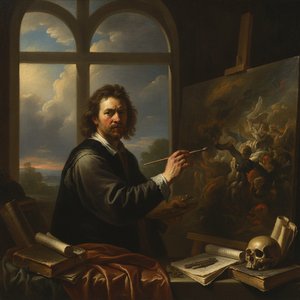
Self-Portrait
 Oil On Canvas
- WallArt
- Baroque
 Early Modern
 62.0 x 51.0 cm
 Pinacoteca Antigua de Múnich
 Leer más
Giclée / Impresión de arte
Impresiones giclée o en lienzo de calidad de museo con producción rápida y opciones de acabado flexibles. ( Encargar reproducción pintada a mano Ver versión en imagen digital)




P118B €10

P118H €10

P118W €10

P438Z €10

P508JH €12

P508YH €12

P805H €10

P805Z €10

P919BZ €10

P919G €10

P919XJ €10

P959ZH €10

P968JZ €12

W106C €8

W218G €10

W218JH €8

W218Y €10

W307PJ €10

W316G €10

W316PJ €8

W316Y €10

W398PJ €8

W4111J €10

W500HY €15

W500JH €15

W692G €12

W849H €8

W940BG €15

W953PJ €8




Elija entre nuestros tamaños predefinidos que respetan las proporciones originales de la obra.

Introduzca el ancho y el alto que necesite para adaptarse a su marco o pared. Una impresión solo puede recortarse, nunca hacerse más grande que la imagen original, por lo que un tamaño con una forma distinta perderá parte de la obra. Le enviaremos una maqueta digital para su aprobación antes de realizar cualquier impresión. La imagen que se muestra en esta página no refleja el recorte real; solo la maqueta lo hace.
Envío a todo el mundo () en 2 semanas en lugar de las 4/5 semanas estándar. (22 octubre)

Envío exprés gratuito a todo el mundo

Lienzo de lino de alta calidad

Seguro de envío completo

Garantía de reembolso de impuestos aduaneros

Garantía de fidelidad cromática exacta

Política de devolución de 100 días (solo por defectos)

Garantía de devolución del 100% del dinero

Oferta por volumen
 La opción de vidrio solo está disponible en tamaños inferiores a 110 cm.

Self-Portrait
Giclée / Impresión de arte
Tamaño de la reproducción
-


Precio total
€ 70
The Gaze of Genius: An Encounter with Carel Fabritius' Self-Portrait
To stand before a self-portrait by an artist like Carel Fabritius is not merely to observe a likeness; it is to engage in a profound, almost conspiratorial dialogue across the centuries. This painting captures more than just the man who painted it—the intense gaze, the carefully chosen attire of the black hat adorned with its feather, and the striking splash of red against the muted background all coalesce into a singular statement of artistic presence. Fabritius, whose life was tragically brief, imbued his work with an intensity that belies the shortness of his tenure in the vibrant tapestry of the Dutch Golden Age.
Mastery in Shadow and Hue: Technique and Style
Fabritius’s technique is a masterclass in controlled drama. While the subject matter—a direct confrontation with the viewer—is immediate, the execution speaks to a sophisticated understanding of light. One can almost feel the subtle interplay between illumination catching the sheen of his long hair and the deep shadows pooling around him. The richness of the red clothing serves not just as fashion, but as a deliberate focal point, drawing the eye immediately into the emotional core of the piece. His handling of paint suggests an academic rigor combined with an almost spontaneous, visceral energy, hallmarks of an artist pushing the boundaries of portraiture.
Historical Echoes and Emotional Resonance
Dating to a period when Dutch art was at its zenith, this self-portrait functions as both a personal testament and a historical document. The background, with its simple wall texture, strips away unnecessary distraction, forcing the viewer into an intimate space with the sitter. This directness is emotionally potent; it bypasses polite observation and demands acknowledgment. It speaks to the artist's own journey—a life lived intensely, culminating in art that refuses to be easily categorized or forgotten.
Bringing the Masterpiece Home: Decorating with Depth
For the discerning collector or designer seeking an anchor of profound character for a room, this reproduction offers unparalleled depth. The dramatic chiaroscuro inherent in Fabritius’s style adds immediate gravitas to any space, whether it be a formal study or a richly appointed drawing-room. Owning a piece that carries such palpable artistic weight means inviting not just decoration, but conversation—a continuous meditation on genius, perception, and the enduring power of the human gaze.
Preguntas y respuestas
¿Cómo se construye la composición cromática de "Self-Portrait" de Carel Fabritius?
La composición cromática de "Self-Portrait" de Carel Fabritius combina un contraste Gentle con una armonía Unified Palette.
¿Dónde se recomienda exhibir el formato Portrait de "Self-Portrait"?
El formato (Portrait) y el espacio recomendado (Living Room) son los dos datos de colocación registrados para "Self-Portrait" de Carel Fabritius.
¿Cómo se sitúa históricamente "Self-Portrait"?
"Self-Portrait" de Carel Fabritius pertenece al movimiento Baroque, dentro del periodo Early Modern. Juntos le otorgan a la obra su lugar en la historia del arte.
Biografía del artista
Early Life and Training
Carel Fabritius (1622 – 1654) was born in Muiden, Netherlands, a village situated just north of Amsterdam, on February 27th, 1622. He descended from Pieter Carelsz Fabritius, a painter and schoolteacher, and Barbertje van der Maes, who married in 1641. Fabritius’s father instilled in him an early appreciation for artistic pursuits, shaping his formative years with instruction in the craft of painting. Like many artists of his time, Fabritius received his initial training under Rembrandt van Rijn, arguably the most celebrated artist of the Dutch Golden Age—a connection that profoundly impacted his artistic trajectory. Under Rembrandt’s watchful eye, Fabritius honed his skills and cultivated a distinctive style characterized by meticulous observation and masterful execution. This mentorship cemented Fabritius's place within the Delft School, an influential movement known for its unwavering commitment to realism and its nuanced portrayal of everyday life.Delft School and Artistic Style
Fabritius’s affiliation with the Delft School distinguished him from many other painters of his era. Artists associated with this school prioritized capturing the subtleties of reality—the textures of fabrics, the play of light on surfaces, and the expressions of human emotion—with unparalleled precision. Fabritius embraced Rembrandt's innovative approach to painting, particularly his use of *chiaroscuro*, a technique that dramatically contrasted light and dark hues to create an illusion of volume and depth. This method became Fabritius’s signature style, evident in numerous canvases where he skillfully manipulated tonal ranges to convey atmosphere and emotion. His paintings frequently depicted domestic scenes—interior interiors bathed in soft illumination—reflecting the Delft School's fascination with portraying intimate moments of daily life.Notable Works and Influences
Fabritius’s artistic vision drew inspiration from the Italian Caravaggisti, artists who championed dramatic lighting and emotionally charged compositions. Like Michelangelo Buonarroti and Titian, Fabritius sought to convey profound psychological states through visual representation—a pursuit that aligns with the broader humanist ideals of his time. Furthermore, Fabritius skillfully employed *atmospheric perspective*, a technique that simulates the effects of distance by diminishing color intensity and blurring contours. This masterful manipulation of spatial illusion contributed significantly to the immersive quality of his artworks. His legacy extends beyond his own creations; Johannes Vermeer—a fellow Delft School painter—acknowledged Fabritius’s influence, adopting similar stylistic conventions to achieve remarkable visual harmony.Legacy and Historical Significance
Fabritius's untimely demise in October 1654 during the devastating Delft Powder Explosion tragically curtailed his artistic career. Despite producing only thirteen confirmed paintings—a relatively modest output compared to many of his contemporaries—Fabritius’s works stand as testaments to his exceptional talent and unwavering dedication to artistic innovation. His canvases, including *The Goldfinch* and *The Sentry*, continue to captivate audiences with their luminous palettes, masterful draughtsmanship, and profound psychological insight. Fabritius's contribution to the Delft School solidified its reputation for portraying domestic life with remarkable realism—a legacy that persists in museums worldwide where his paintings are revered as masterpieces of Baroque art. His innovative use of light and shadow, combined with his meticulous attention to detail, cemented Fabritius’s place among the most influential artists of the Dutch Golden Age, ensuring his enduring presence within the annals of art history.
Carel Fabritius
1622 - 1654 , Países Bajos
Datos clave
- Artistic Movement Or Style: Barroco
- Artists Or Movements Influenced By This Artist: ['Caravaggisti']
- Artists Who Influenced This Artist: ['Rembrandt van Rijn']
- Date Of Birth: 27 febrero 1622
- Date Of Death: 12 octubre 1654
- Full Name: Carel Pietersz Fabritius
- Nationality: Holandés
- Notable Artworks:
- La resurrección de Lázaro
- Una vista de Delft
- El Centinela
- Place Of Birth: Muiden, Países Bajos
Artículos relacionados

Golden Light & Dutch Skies: The Timeless Magic of Dutch Golden Age Landscapes
Discover the breathtaking beauty of Dutch Golden Age landscapes. Explore the mastery of light, chiaroscuro, and 17th-century realism through an expert art history lens, celebrating the enduring legacy of the Dutch Masters for discerning collectors and art lovers.

Rembrandt van Rijn: Las 25 Obras Maestras que Definen un Genio | Arte, Historia y Decoración
Descubre las 25 obras maestras de Rembrandt van Rijn, el genio del barroco holandés. Explora su historia, técnica y simbolismo en retratos icónicos como 'La Ronda Nocturna'. Encuentra reproducciones de arte exclusivas para decorar tu hogar con OriginalUniqueArt.com.

Rembrandt van Rijn: A Life Illuminated – Innovation, Emotion, and the Dutch Golden Age
Explore the life & art of Rembrandt van Rijn, a Dutch Golden Age master. Discover his innovative techniques, iconic paintings like 'The Night Watch', and enduring legacy. Expert insights for collectors & enthusiasts.
Dutch Baroque Unlocked: Mastering Chiaroscuro, Epic Drama, and the High-Impact Legacy of Rembrandt
Explore the dramatic power of Dutch Baroque art. Master the secrets of Rembrandt’s chiaroscuro, discover the epic scale of the Golden Age, and learn how to bring high-impact, hand-painted historical masterpieces into your modern collection with expert precision.

Los 10 Maestros del Barroco Holandés: Obras que Definen una Época | OriginalUniqueArt
Descubre los 10 imprescindibles del Barroco holandés: Rembrandt, Vermeer y más. Explora la historia, técnica y belleza de estas obras maestras. Reproducciones de arte en OriginalUniqueArt.com para decorar tu hogar con elegancia.


