

 Vista previa
 Compartir
 Compartir
 Ver detalles
 Guía
Guía

 Descargar
 Ver artículos similares
 Radiografía
 Presentación de diapositivas
 Estadísticas
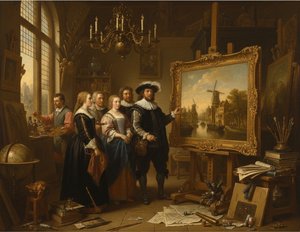
Abraham De Potter
 Oil On Canvas
- WallArt
- Baroque
 1649
1649 69.0 x 57.0 cm
 Rijksmuseum
 Leer más
Giclée / Impresión de arte
Impresiones giclée o en lienzo de calidad de museo con producción rápida y opciones de acabado flexibles. ( Encargar reproducción pintada a mano Ver versión en imagen digital)




P118B €10

P118H €10

P118W €10

P438Z €10

P508JH €12

P508YH €12

P805H €10

P805Z €10

P919BZ €10

P919G €10

P919XJ €10

P959ZH €10

P968JZ €12

W106C €8

W218G €10

W218JH €8

W218Y €10

W307PJ €10

W316G €10

W316PJ €8

W316Y €10

W398PJ €8

W4111J €10

W500HY €15

W500JH €15

W692G €12

W849H €8

W940BG €15

W953PJ €8




Elija entre nuestros tamaños predefinidos que respetan las proporciones originales de la obra.

Introduzca el ancho y el alto que necesite para adaptarse a su marco o pared. Una impresión solo puede recortarse, nunca hacerse más grande que la imagen original, por lo que un tamaño con una forma distinta perderá parte de la obra. Le enviaremos una maqueta digital para su aprobación antes de realizar cualquier impresión. La imagen que se muestra en esta página no refleja el recorte real; solo la maqueta lo hace.
Envío a todo el mundo () en 2 semanas en lugar de las 4/5 semanas estándar. (24 octubre)

Envío exprés gratuito a todo el mundo

Lienzo de lino de alta calidad

Seguro de envío completo

Garantía de reembolso de impuestos aduaneros

Garantía de fidelidad cromática exacta

Política de devolución de 100 días (solo por defectos)

Garantía de devolución del 100% del dinero

Oferta por volumen
 La opción de vidrio solo está disponible en tamaños inferiores a 110 cm.

Abraham De Potter
Giclée / Impresión de arte
Tamaño de la reproducción
-


Precio total
€ 70
The Dignity of Portraiture in the Dutch Golden Age
To stand before a portrait like this depiction of Abraham De Potter is to step directly into the rarefied atmosphere of 17th-century Dutch society. It is more than just a likeness; it is a carefully constructed monument to status, intellect, and enduring presence. The subject commands attention with an air of profound contemplation. His gaze, though neutral, seems to observe something beyond the confines of the canvas, inviting the modern viewer into a silent dialogue across the centuries. The overall impression is one of meticulous dignity, characteristic of the era when portraiture served not only as commemoration but also as a subtle declaration of worldly standing.
Mastery in Technique and Texture
The technical brilliance evident in this work speaks volumes about the skill of its creator, Carel Fabritius. Observe how the light interacts with the various textures: the soft fall of illumination across the forehead contrasts sharply with the intricate, almost architectural detail of the ruff collar and the rich depth suggested within the beard. Fabritius employed a technique that relied heavily on layering thin glazes of oil paint. This process allowed him to build up color and shadow with an unparalleled subtlety, giving the skin a lifelike translucency while simultaneously lending weight and substance to the heavy black robe. The background, deliberately muted and indistinct, functions as nothing more than a velvet curtain, ensuring that every ounce of focus remains fixed upon the compelling humanity captured in the sitter’s face.
Symbolism Woven into Fabric and Form
Every element within this composition seems imbued with symbolic meaning. The elaborate ruff, for instance, was not merely fashionable; it spoke to the sitter's adherence to contemporary codes of wealth and social order. Similarly, the sobriety of the black attire suggests gravitas and perhaps scholarly pursuits. In the context of the Dutch Golden Age, where mercantile success fueled artistic patronage, such portraits were potent symbols. They affirmed lineage, professional achievement, and a measured participation in the burgeoning bourgeois culture. The stillness captured here is thus not merely repose, but a carefully curated statement of enduring worth.
An Echo of Fabritius's Genius
Knowing that this piece hails from the tragically brief career of Carel Fabritius adds an extra layer of poignant resonance to the viewing experience. His life was cut short by disaster, leaving behind a body of work that feels both intensely immediate and hauntingly ephemeral. When acquiring a reproduction of such a piece, one is not just purchasing paint on canvas; one is connecting with a moment of artistic genius—a fleeting glimpse into an artist whose mastery illuminated the Dutch world before it was tragically dimmed. It offers collectors and designers alike a touchstone of historical depth, capable of lending unparalleled sophistication to any interior space.
Preguntas y respuestas
¿Qué lugar ocupa "Abraham De Potter" dentro de la obra de Carel Fabritius?
"Abraham De Potter" comparte con otras obras de Carel Fabritius su estilo Baroque y los temas recurrentes: early mature work, transition to delft school, exploration of portraiture, rembrandt's influence, baroque lighting techniques, detailed realism style, dutch merchant society, calvinist values.
¿Dónde puedo encontrar obras de arte similares a "Abraham De Potter" de Carel Fabritius?
Las obras similares a "Abraham De Potter" se encuentran listadas en la página de Similares de la obra.
¿Cuál es el tamaño de impresión recomendado para "Abraham De Potter" de Carel Fabritius?
El tamaño de impresión recomendado para "Abraham De Potter" de Carel Fabritius es Medium.
Biografía del artista
Early Life and Training
Carel Fabritius (1622 – 1654) was born in Muiden, Netherlands, a village situated just north of Amsterdam, on February 27th, 1622. He descended from Pieter Carelsz Fabritius, a painter and schoolteacher, and Barbertje van der Maes, who married in 1641. Fabritius’s father instilled in him an early appreciation for artistic pursuits, shaping his formative years with instruction in the craft of painting. Like many artists of his time, Fabritius received his initial training under Rembrandt van Rijn, arguably the most celebrated artist of the Dutch Golden Age—a connection that profoundly impacted his artistic trajectory. Under Rembrandt’s watchful eye, Fabritius honed his skills and cultivated a distinctive style characterized by meticulous observation and masterful execution. This mentorship cemented Fabritius's place within the Delft School, an influential movement known for its unwavering commitment to realism and its nuanced portrayal of everyday life.Delft School and Artistic Style
Fabritius’s affiliation with the Delft School distinguished him from many other painters of his era. Artists associated with this school prioritized capturing the subtleties of reality—the textures of fabrics, the play of light on surfaces, and the expressions of human emotion—with unparalleled precision. Fabritius embraced Rembrandt's innovative approach to painting, particularly his use of *chiaroscuro*, a technique that dramatically contrasted light and dark hues to create an illusion of volume and depth. This method became Fabritius’s signature style, evident in numerous canvases where he skillfully manipulated tonal ranges to convey atmosphere and emotion. His paintings frequently depicted domestic scenes—interior interiors bathed in soft illumination—reflecting the Delft School's fascination with portraying intimate moments of daily life.Notable Works and Influences
Fabritius’s artistic vision drew inspiration from the Italian Caravaggisti, artists who championed dramatic lighting and emotionally charged compositions. Like Michelangelo Buonarroti and Titian, Fabritius sought to convey profound psychological states through visual representation—a pursuit that aligns with the broader humanist ideals of his time. Furthermore, Fabritius skillfully employed *atmospheric perspective*, a technique that simulates the effects of distance by diminishing color intensity and blurring contours. This masterful manipulation of spatial illusion contributed significantly to the immersive quality of his artworks. His legacy extends beyond his own creations; Johannes Vermeer—a fellow Delft School painter—acknowledged Fabritius’s influence, adopting similar stylistic conventions to achieve remarkable visual harmony.Legacy and Historical Significance
Fabritius's untimely demise in October 1654 during the devastating Delft Powder Explosion tragically curtailed his artistic career. Despite producing only thirteen confirmed paintings—a relatively modest output compared to many of his contemporaries—Fabritius’s works stand as testaments to his exceptional talent and unwavering dedication to artistic innovation. His canvases, including *The Goldfinch* and *The Sentry*, continue to captivate audiences with their luminous palettes, masterful draughtsmanship, and profound psychological insight. Fabritius's contribution to the Delft School solidified its reputation for portraying domestic life with remarkable realism—a legacy that persists in museums worldwide where his paintings are revered as masterpieces of Baroque art. His innovative use of light and shadow, combined with his meticulous attention to detail, cemented Fabritius’s place among the most influential artists of the Dutch Golden Age, ensuring his enduring presence within the annals of art history.
Carel Fabritius
1622 - 1654 , Países Bajos
Datos clave
- Artistic Movement Or Style: Barroco
- Artists Or Movements Influenced By This Artist: ['Caravaggisti']
- Artists Who Influenced This Artist: ['Rembrandt van Rijn']
- Date Of Birth: 27 febrero 1622
- Date Of Death: 12 octubre 1654
- Full Name: Carel Pietersz Fabritius
- Nationality: Holandés
- Notable Artworks:
- La resurrección de Lázaro
- Una vista de Delft
- El Centinela
- Place Of Birth: Muiden, Países Bajos
Artículos relacionados

Mastering Light & Shadow: A Journey Through the Dutch Golden Age's Luminous Legacy
Embark on a cultural journey through the Dutch Golden Age. Explore the masterful interplay of light and shadow in 17th-century masterpieces, from Rembrandt to Vermeer, and discover how this era of profound realism continues to inspire fine art collectors today.

Los 10 Maestros del Siglo de Oro Holandés: Arte, Historia y Decoración Exclusiva
Descubre los 10 imprescindibles del Siglo de Oro Holandés: Rembrandt, Vermeer y más. Explora la historia, técnica y belleza de estos lienzos clásicos. Encuentra reproducciones de arte exclusivas para decorar tu hogar en .

Chiaroscuro and Character: A Masterclass in Light and Shadow within Dutch Golden Age Painting
Explore the profound mastery of light and shadow in Dutch Golden Age painting. From chiaroscuro to atmospheric landscapes, discover the techniques that defined an era and learn how to bring these timeless masterpieces into your home through museum-quality oil reproductions.
La Luz y la República: Innovación Artística en el Siglo de Oro Neerlandés
Descubra la innovación artística del Siglo de Oro Neerlandés. Explore las obras maestras de Rembrandt y Vermeer, técnicas revolucionarias y el legado perdurable de este florecimiento cultural. ¡Sumérjase en la luz y la belleza!

Golden Light & Dutch Skies: The Timeless Magic of Dutch Golden Age Landscapes
Discover the breathtaking beauty of Dutch Golden Age landscapes. Explore the mastery of light, chiaroscuro, and 17th-century realism through an expert art history lens, celebrating the enduring legacy of the Dutch Masters for discerning collectors and art lovers.


