Menú
Text size

() ·

A painting made for you, by hand

Músico con laúd

Reproducción al óleo hecha a mano

Óleo sobre lienzo pintado a mano en el tamaño y marco de su elección, realizado por encargo por nuestros artistas. ( Cambiar a impresiones Cambiar a imagen digital)

Descripción del objeto

Una obra maestra barroca de Caravaggio que captura la esencia del amor y la música con una iluminación dramática y observación realista. Descubre su belleza.

Biografía del artista

Explora a Caravaggio (1571-1610): Maestro barroco del realismo y el tenebrismo. Escenas religiosas dramáticas, intenso claroscuro y un estilo revolucionario que influyó a Rubens y Rembrandt.

from ·

Chapter 1

How large should it be?

Slide to change the size; the picture on the left shows the frame at its real width. The proportions of the original are kept.

Tamaño estándar
a medida
CM
INCH

Elija entre nuestros tamaños predefinidos que respetan las proporciones originales de la obra.

ancho
altura

Indique el ancho y el alto que necesite para adaptarse a su marco o pared. Al tratarse de una obra pintada a mano, si requiere un tamaño con una proporción distinta, el artista puede pintar un poco más alrededor de la imagen o recortarla ligeramente; usted elige. Le enviaremos una maqueta digital para su aprobación antes de comenzar la pintura. La imagen que se muestra en esta página no refleja el resultado real; solo la maqueta lo hace.

Chapter 2

How should it arrive?

Choose the edges of the stretched canvas

Choose your frame

Corner sample of the WhiteWrap canvas edge finish, stretched on madera maciza bars
White €1
Corner sample of the BlurSideWrap canvas edge finish, stretched on madera maciza bars
Blurside €1
Corner sample of the ExtendedWrap canvas edge finish, stretched on madera maciza bars
Extended €1
Corner sample of the P118B picture frame: poliestireno moldeado, 5 cm wide and 3 cm thick
P118B €10
Corner sample of the P118H picture frame: poliestireno moldeado, 5 cm wide and 3 cm thick
P118H €10
Corner sample of the P118W picture frame: poliestireno moldeado, 5 cm wide and 3 cm thick
P118W €10
Corner sample of the P438Z picture frame: poliestireno moldeado, 5.5 cm wide and 3.5 cm thick
P438Z €10
Corner sample of the P508JH picture frame: poliestireno moldeado, 7 cm wide and 3.5 cm thick
P508JH €12
Corner sample of the P508YH picture frame: poliestireno moldeado, 7 cm wide and 3.5 cm thick
P508YH €12
Corner sample of the P805H picture frame: poliestireno moldeado, 5 cm wide and 3.5 cm thick
P805H €10
Corner sample of the P805Z picture frame: poliestireno moldeado, 5 cm wide and 3.5 cm thick
P805Z €10
Corner sample of the P919BZ picture frame: poliestireno moldeado, 7 cm wide and 3.5 cm thick
P919BZ €10
Corner sample of the P919G picture frame: poliestireno moldeado, 7 cm wide and 3.5 cm thick
P919G €10
Corner sample of the P919XJ picture frame: poliestireno moldeado, 7 cm wide and 3.5 cm thick
P919XJ €10
Corner sample of the P959ZH picture frame: poliestireno moldeado, 5 cm wide and 3 cm thick
P959ZH €10
Corner sample of the P968JZ picture frame: poliestireno moldeado, 6 cm wide and 4 cm thick
P968JZ €12
Corner sample of the W106C picture frame: madera maciza, 5 cm wide and 3 cm thick
W106C €8
Corner sample of the W218G picture frame: madera maciza, 5 cm wide and 3 cm thick
W218G €10
Corner sample of the W218JH picture frame: madera maciza, 5 cm wide and 3 cm thick
W218JH €8
Corner sample of the W218Y picture frame: madera maciza, 5 cm wide and 3 cm thick
W218Y €10
Corner sample of the W307PJ picture frame: madera maciza, 6 cm wide and 3 cm thick
W307PJ €10
Corner sample of the W316G picture frame: madera maciza, 6 cm wide and 3 cm thick
W316G €10
Corner sample of the W316PJ picture frame: madera maciza, 6 cm wide and 3 cm thick
W316PJ €8
Corner sample of the W316Y picture frame: madera maciza, 6 cm wide and 3 cm thick
W316Y €10
Corner sample of the W398PJ picture frame: madera maciza, 5 cm wide and 3 cm thick
W398PJ €8
Corner sample of the W4111J picture frame: madera maciza, 6.5 cm wide and 3.5 cm thick
W4111J €10
Corner sample of the W500HY picture frame: madera maciza, 7 cm wide and 5 cm thick
W500HY €15
Corner sample of the W500JH picture frame: madera maciza, 7 cm wide and 5 cm thick
W500JH €15
Corner sample of the W692G picture frame: madera maciza, 8 cm wide and 4 cm thick
W692G €12
Corner sample of the W849H picture frame: madera maciza, 5 cm wide and 3 cm thick
W849H €8
Corner sample of the W940BG picture frame: madera maciza, 7.5 cm wide and 4.5 cm thick
W940BG €15
Corner sample of the W953PJ picture frame: madera maciza, 6 cm wide and 3.5 cm thick
W953PJ €8
Corner sample of the H24-GOLD picture frame: madera tallada con estuco, 10 cm wide and 6 cm thick
H24-GOLD €30
Corner sample of the H24-SILVER picture frame: madera tallada con estuco, 10 cm wide and 6 cm thick
H24-SILVER €30
Corner sample of the H36-GOLD picture frame: madera tallada con estuco, 15 cm wide and 6.5 cm thick
H36-GOLD €45
Corner sample of the H36-SILVER picture frame: madera tallada con estuco, 15 cm wide and 6.5 cm thick
H36-SILVER €45

Moulding: . Overall size with the frame: .

Chapter 3

Who paints it, and should anything change?

Examples of what can be changed: Replace face with customer photo; Add pet (e.g., replace cat with dog); Include hidden message in background; Change background landscape or elements.
After order, OriginalUniqueArt.com team will email client for instructions and provide a mockup preview

Envío a todo el mundo () en 3-4 semanas en lugar de las 5 semanas estándar. (30 octubre). Sin comprometer la calidad.

Chapter 4

The finishing touches

A nameplate, as in a museum?

Detalles de la placa de bronce grabada

This elegant plaque features the artist's name and the title of the artwork, finely engraved for a timeless presentation.

It is made from bronze with a refined, elegant finish. The text is precisely laser-engraved for a sharp and permanent result. Measuring 9x2 cm, the plaque is compact yet easy to read. It's built to be durable and scratch-resistant, offering a professional, museum-quality look. Mounting is simple thanks to the included adhesive backing.

Detalles de la placa de acrílico transparente

The plaque includes essential engraved details such as the artist's name, the title of the artwork, the date it was created, the type of media used-like oil on canvas or watercolor-a brief description of the piece, and a QR code that links to the complete artwork information.

It is crafted from clear acrylic, offering a sleek, modern appearance. The text is UV-engraved in black to ensure strong visual contrast. With a size of 10x15 cm, it ensures optimal readability. It comes equipped with two metal hooks for secure wall mounting. The plaque is designed to be weather-resistant, making it suitable for various environments, and it includes interactive features that work seamlessly with smartphone scanning.

Detalles de la placa de acrílico negro

This elegant plaque includes engraved information such as the artist's name, the title of the artwork, the date it was created, the type of media used (like oil on canvas or watercolor), a short description of the artwork, and a QR code for quick access to more information.

The plaque itself is made from refined black acrylic with a premium finish. The text is laser-engraved in white for high contrast and readability. Its size is 10x15 cm, designed to be easy to read. It comes with two metal hooks for professional mounting. The design is sleek and fits any interior style. It is also weather-resistant and durable, with built-in digital integration for mobile compatibility.

A protective varnish?

When do you need it?

Chapter 5

Your painting, as you ordered it

Músico con laúd

Técnica de reproducción

Dimensiones de la reproducción

-

Selección de artistas premium

Mayor nivel de detalle, delicadeza y tiempo de producción adicional

-

Enmarcado de reproducción

-

-

Para obras de arte o reproducciones que midan más de 105 cm (aproximadamente 41 pulgadas) en cualquiera de sus lados, el marco se enviará como un kit desmontado. Este método garantiza una entrega segura y evita daños durante el transporte.

Se requiere montaje profesional: este no es un producto para hacer usted mismo (DIY).
El kit debe ser ensamblado y el lienzo tensado por un enmarcador profesional con experiencia, utilizando cola para madera (no incluida), una tenaza para tensar lienzos y sargentos para mantener los bastidores alineados mientras la cola se seca. Un montaje incorrecto o una tensión desigual del lienzo pueden dañar la obra de arte de forma permanente y no están cubiertos por nuestra garantía.

  • Se incluyen todos los listones de madera maciza, cortados con precisión según las medidas.

  • Se ensambla con los tornillos incluidos, además de cola para madera para las uniones de las esquinas, la cual no se incluye y debe ser proporcionada por su enmarcador.

  • Se requieren herramientas profesionales que no están incluidas: un alicate para tensar lienzos (tensor) y abrazaderas para mantener los bastidores alineados mientras se seca el pegamento.

Importante:
Las uniones de las esquinas requieren cola para madera, los listones deben sujetarse con prensas hasta que la cola esté completamente seca, y para tensar el lienzo en el bastidor ensamblado se requiere una pinza para tensar lienzos. Ninguno de estos elementos está incluido en el kit. Por favor, contacte con un profesional del enmarcado con experiencia antes de realizar un pedido de este tamaño.

Cartela

-

-

Barniz protector

Barniz brillante (realza los colores y protege contra la luz y la humedad)

-

Personalizar mi obra

Ejemplos de lo que se puede personalizar: sustituir el rostro por una foto del cliente; añadir una mascota (por ejemplo, cambiar un gato por un perro); incluir un mensaje oculto en el fondo; cambiar el paisaje o los elementos del fondo.

-

Envío urgente

Envío a todo el mundo () en 3 o 4 semanas, en lugar de las 5 semanas habituales. (30 octubre). Sin comprometer la calidad.

-

Envío urgente

Envío internacional () en 5 semanas. (6 noviembre).

Incluido

Precio total final

€ 266

Precio total € 266

La opción de vidrio solo está disponible en tamaños inferiores a 110 cm.

Included with every order

  • Envío exprés gratuito a todo el mundo
  • Lienzo de lino de alta calidad
  • Seguro de envío total
  • Garantía de reembolso de aranceles aduaneros
  • Garantía de fidelidad cromática exacta
  • Política de devolución de 100 días (solo por defectos)
  • Garantía de devolución del 100% del dinero
  • Descuento por cantidad

Michelangelo Merisi Da Caravaggio: The Lute Player – A Symphony of Light and Emotion

Michelangelo Merisi da Caravaggio, universally known as Caravaggio (1571–1610), stands as one of the most influential figures in Baroque art. His revolutionary approach to painting—characterized by dramatic chiaroscuro, intense realism, and psychological depth—continues to captivate audiences centuries later. This essay delves into the intricacies of “The Lute Player,” examining its artistic merit, historical significance, and enduring legacy.

Background: Caravaggio’s early biographer Giovanni Baglione recounts a tale that encapsulates his artistic vision: he painted for Cardinal Francesco Maria del Monte a young man who played the lute, creating an illusion of life so convincing that it resembled a carafe brimming with water. Reflections from a window mirrored within the water, overlaid with dew glistening on the blossoms—all meticulously rendered—demonstrated Caravaggio’s unparalleled skill in capturing essence through observation.

The Composition: The painting depicts a young woman absorbed in music, her eyes closed as she plays the lute. Positioned centrally, the instrument dominates the scene, its strings visible and contributing to the sense of depth. Two vases flank the woman—one on the upper left corner and another on the lower right—adding visual balance and reinforcing the theme of harmony. Beneath the lute rests a book, suggesting musical notation and furthering the narrative’s contemplative mood.

Symbolism and Elements: Caravaggio imbued his canvases with symbolic richness. The scattered fruits – apples in the lower left and oranges near the top right—represent abundance and prosperity. More profoundly, the luminous interplay of light and shadow—a hallmark of Caravaggio's technique—embodies spiritual contemplation. The artist’s masterful use of chiaroscuro creates a dramatic contrast between illuminated areas and darkened recesses, drawing the viewer’s gaze inward and conveying an emotional intensity rarely achieved in earlier art.

Versions and Exhibitions: Three versions of “The Lute Player” exist—the original residing at Badminton House since 2001, another housed in the Wildenstein Collection, and a third displayed at the Galleria Borghese in Rome during a joint exhibition with the Hermitage Museum in 2020. The meticulous reproductions produced by OriginalUniqueArt.com capture the essence of Caravaggio’s masterpiece, allowing enthusiasts to experience its beauty firsthand.

Artistic Influence: Caravaggio's style profoundly impacted subsequent artists like Diego Velázquez, whose portraits—such as “Head of a Man”—demonstrate the enduring influence of his groundbreaking approach. His innovations extended beyond technique; he challenged conventions regarding representation and psychological portrayal, paving the way for new artistic expressions.

Reproductions and Prints: OriginalUniqueArt.com offers exceptional handmade oil painting reproductions and prints on canvas of Caravaggio’s celebrated artworks, including “The Lute Player.” These reproductions are crafted with unwavering attention to detail, preserving the luminous drama and emotional resonance of Caravaggio's original vision.

Conclusion: “The Lute Player” stands as a testament to Caravaggio’s unparalleled mastery of light and shadow, alongside his profound understanding of human emotion. This painting continues to inspire admiration worldwide, cementing Caravaggio's place among the titans of Baroque art.

Preguntas y respuestas

¿Puedo usar la realidad aumentada para ver "Músico con laúd" de Caravaggio en mi habitación?

Puedes visualizar "Músico con laúd" de Caravaggio en tu propia pared con la página de Vista previa en RA de la obra, utilizando realidad aumentada en un dispositivo compatible.

¿Quién es el autor de "Músico con laúd" y a qué movimiento pertenece?

"Músico con laúd" es una obra de Caravaggio perteneciente al movimiento Baroque.

¿Quién creó "Músico con laúd" y en qué año?

"Músico con laúd" es una obra de Caravaggio, realizada en 1596.

More about this painting

Ver en contexto Vista previa en RA Cambiar a impresiones Cambiar a imagen digital Enviar
Detalles Guía Añadir a favoritos Descargar Similares Radiografía Presentación de diapositivas Q&A Estadísticas

In numbers

  • 1596the year it was painted
  • 29frames to choose from
  • standard sizes, in its own proportions
  • 5weeks to paint and deliver it
Caravaggio

Caravaggio

1571 - 1610, España

Quick facts about Caravaggio

  • Artistas Influenciados:
    • Pedro Pablo Rubens
    • Jusepe de Ribera
    • Gerrit van Honthorst
  • Artistas Que Influyeron:
    • Simone Peterzano
    • Tiziano
    • Leonardo da Vinci
    • Miguel Ángel
  • Fecha De Muerte: 1610
  • Fecha De Nacimiento: 1571
  • Lugar De Nacimiento: Milán, España
  • Movimiento Artístico: Barroco
  • Nacionalidad: Italiana
  • Nombre Completo: Michelangelo Merisi da Caravaggio
  • Obras Notables:
    • La Fortuna Diriente
    • Cena en Emmaús
    • San Francisco en Éxtasis
    • La Toma de Cristo
    • David con la cabeza de Goliat
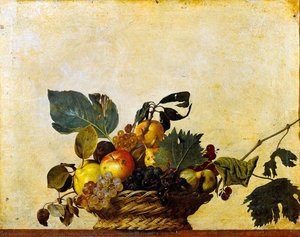
    • Cesta de Frutas
    • Flagelación de San Pedro
    • Écue Homo

Biografía del artista

Michelangelo Merisi da Caravaggio: Vida y Legado

Primeros Años y Formación (1571-1592)

  • Michelangelo Merisi da Caravaggio, comúnmente conocido simplemente como Caravaggio, nació en Milán en 1571.
  • Su familia se mudó al pueblo de Caravaggio debido a una devastadora epidemia que asoló Milán.
  • Tras la muerte de su padre y abuelo en 1577, su madre crió a sus cinco hijos en relativa pobreza.
  • En 1584, comenzó un aprendizaje de cuatro años con Simone Peterzano, un pintor que había sido alumno de Tiziano. Esta formación fundamental le inculcó las técnicas de la pintura renacentista.

Carrera Artística y Estilo (1592-1610)

  • La carrera artística de Caravaggio floreció en Roma, donde llegó alrededor de 1592. Inicialmente tuvo dificultades para obtener reconocimiento pero rápidamente se estableció con su estilo innovador.
  • Su característica más definitoria fue el uso magistral del claroscuro, el contraste dramático entre la luz y la oscuridad. Esta técnica, a menudo denominada tenebrismo, se convirtió en una marca registrada de la pintura barroca.
  • Rechazó las formas idealizadas en favor de representaciones realistas, a menudo utilizando personas comunes como modelos para figuras religiosas.
  • Las pinturas de Caravaggio son conocidas por su intensa realidad emocional y narrativas dramáticas.

Obras Clave

  • La Profesora de Cartomancia (1594): Una obra temprana que muestra su estilo realista y atención al detalle.
  • La Cena en Emaús (1601-1602): Una representación poderosa de la escena bíblica, demostrando su maestría del claroscuro y la intensidad emocional.
  • San Francisco de Asís en Ecstasis (1594): Ilustra su capacidad para transmitir experiencia espiritual a través de imágenes realistas.
  • La Captura de Cristo (c. 1602): Una composición dramática que destaca la traición y el arresto de Jesús.
  • David con la Cabeza de Goliat (c. 1610): Un retrato psicológicamente complejo del héroe bíblico.

Influencias y Desarrollo Artístico

  • Caravaggio fue influenciado por las obras de maestros renacentistas como Tiziano, Leonardo da Vinci y Miguel Ángel, que estudió durante su aprendizaje.
  • Se alejó del estilo predominante manierista, adoptando un enfoque más directo y naturalista a la pintura.
  • Su uso de luz y sombra se inspiró tanto en las tradiciones artísticas como en la iluminación teatral común en Roma en ese momento.

Logros Importantes e Importancia Histórica

  • Caravaggio revolucionó la pintura barroca con su realismo dramático, el uso innovador del claroscuro y las composiciones cargadas de emoción.
  • Inspiró a una generación de artistas conocidos como los “caravaggistas” o “sombras”, que adoptaron su estilo en toda Europa. Seguidores notables incluyen a Pedro Pablo Rubens, Jusepe de Ribera y Gerrit van Honthorst.
  • Su obra desafió las convenciones artísticas y allanó el camino para un enfoque más moderno a la pintura.
  • A pesar de una vida personal tumultuosa marcada por la violencia y los problemas legales, el legado artístico de Caravaggio sigue siendo profundo e imborrable.

Vida Tardía y Muerte

  • En 1606, Caravaggio huyó de Roma después de matar a un hombre en una pelea. Pasó los siguientes años viajando entre Nápoles, Malta y Sicilia.
  • Solicitó el perdón papal pero continuó enfrentándose a desafíos legales y conflictos personales.
  • Caravaggio murió en Porto Ercole, Italia, en 1610 bajo circunstancias misteriosas. La causa de su muerte sigue siendo debatida, con teorías que van desde la fiebre hasta el envenenamiento.

Datos clave

  • Artistic style: Caravaggismo
  • Title: El Lute Player
  • Dimensions: 94 x 119 cm
  • Notable elements or techniques: Iluminación dramática; observación realista
  • Year: 1596
  • Artist: Michelangelo Merisi Da Caravaggio

Test de conocimientos artísticos

Cada pregunta tiene una única respuesta correcta.

Pregunta 1:
¿Quién pintó La Lute Player?
Pregunta 2:
¿En qué año fue creada La Lute Player?
Pregunta 3:
¿Cuál es el estilo artístico predominante en esta obra?
Pregunta 4:
¿Qué instrumento musical se muestra junto al joven músico?
Pregunta 5:
¿Cuál es el significado simbólico de los frutos presentes en la pintura?