
 Ver en contexto
 Enviar
 Compartir
 Detalles

 Descargar
 Similares
 Radiografía
 Presentación de diapositivas
 Estadísticas
Winter
 Oil On Canvas
- WallArt
- Dutch Golden Age
 1646
1646- Early Modern
 97.0 x 81.0 cm
 Rijksmuseum
 Ver más
Giclée / Impresión de arte
Impresiones giclée o en lienzo de calidad de museo con producción rápida y opciones de acabado flexibles. ( Comprar pintura hecha a mano Cambiar a imagen digital)




P118B $10

P118H $10

P118W $10

P438Z $10

P508JH $12

P508YH $12

P805H $10

P805Z $10

P919BZ $10

P919G $10

P919XJ $10

P959ZH $10

P968JZ $12

W106C $8

W218G $10

W218JH $8

W218Y $10

W307PJ $10

W316G $10

W316PJ $8

W316Y $10

W398PJ $8

W4111J $10

W500HY $15

W500JH $15

W692G $12

W849H $8

W940BG $15

W953PJ $8




Elija entre nuestros tamaños predefinidos que respetan las proporciones originales de la obra.

Puede introducir sus propias dimensiones para adaptarse a un marco o espacio específico. Si el tamaño seleccionado no coincide con las proporciones de la imagen original, recortaremos la obra de arte o extenderemos la imagen con un borde con efecto espejo o de color sólido. Se enviará una maqueta digital para su aprobación antes de que comience la producción.
Tenga en cuenta que la vista previa en pantalla no refleja el recorte o la extensión real. Solo la maqueta mostrará con precisión la composición final.
Aunque existen tamaños personalizados, recomendamos seleccionar una dimensión de la lista predefinida para preservar las proporciones originales.
Envío a todo el mundo () en 2 semanas en lugar de las 4/5 semanas estándar. (9 septiembre)

Envío exprés gratuito a todo el mundo

Lienzo de lino de alta calidad

Seguro de envío total

Garantía de reembolso de impuestos aduaneros

Garantía de fidelidad cromática exacta

Política de devolución de 100 días (solo por defectos)

Garantía de devolución del 100% del dinero

Descuento por cantidad
 La opción de vidrio solo está disponible en tamaños inferiores a 110 cm.

Winter
Giclée / Impresión de arte
Dimensiones de la reproducción
-


Precio total final
$ 80
A Whisper of Winter's Stillness
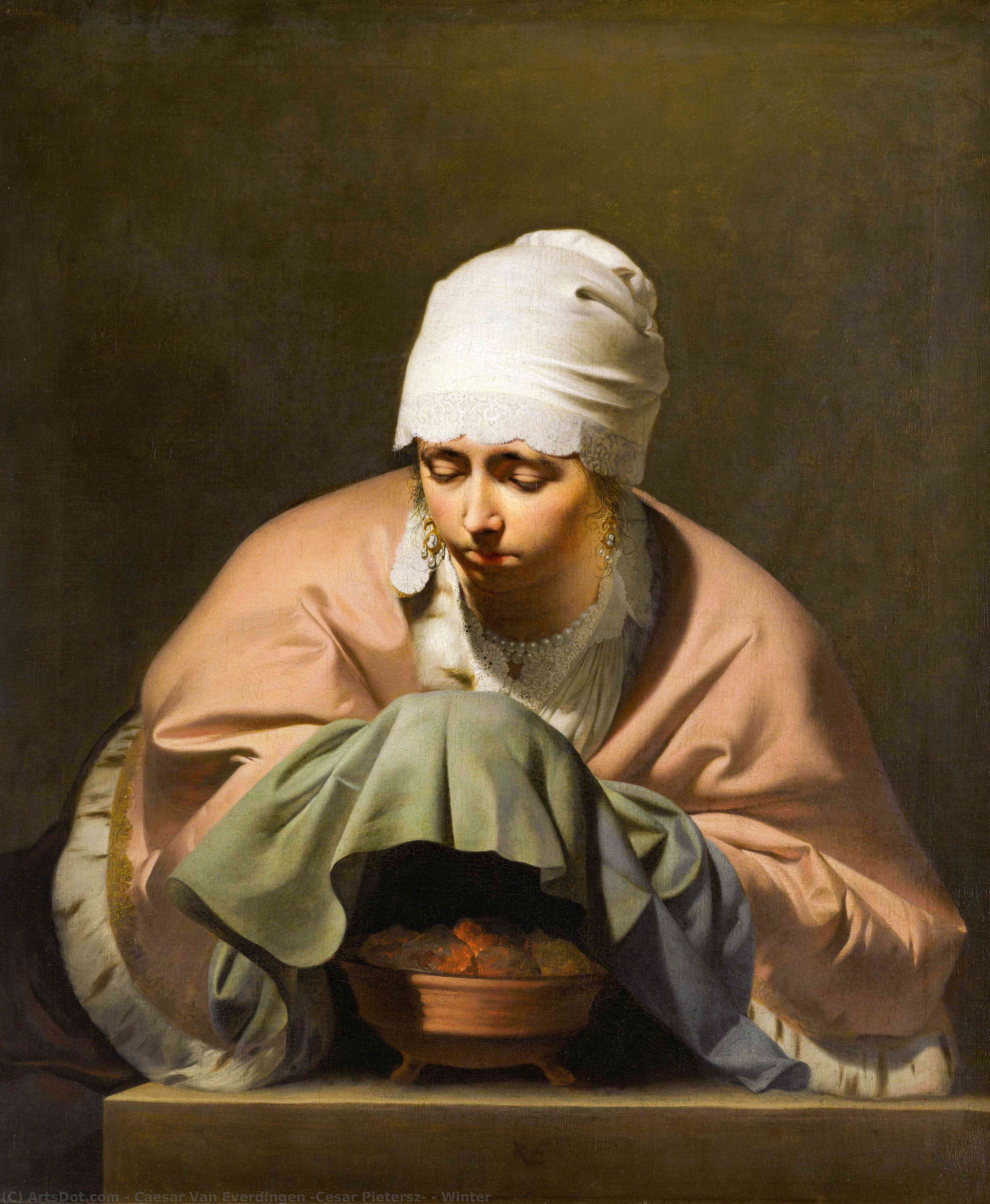
To gaze upon Caesar Van Everdingen’s Winter is to step directly into the hushed, contemplative atmosphere of the Dutch Golden Age. This painting, executed in 1646, transcends a mere depiction of a season; it captures an ephemeral moment—a pause in the rhythm of daily life under the soft dominion of winter's breath. The composition immediately draws the eye to the central figure: a young woman whose presence is both delicate and profound. Clad in attire that speaks of quiet dignity, she holds forth a bowl, suggesting sustenance or perhaps a symbolic offering. The entire scene is imbued with a sense of gentle melancholy, inviting the viewer to slow their own hurried pace and simply observe.
Mastery of Light and Domestic Intimacy
Technically, the work showcases Van Everdingen’s remarkable skill in handling oil on canvas. While the subject matter hints at elements of still life—the bowl, the table setting—the narrative weight is carried by the human element. Notice how the artist employs light not just to illuminate, but to sculpt. The background recedes into a rich, dark depth, allowing the illuminated figures and objects in the foreground to emerge with startling clarity. This dramatic interplay of chiaroscuro, so characteristic of the period, gives the painting an almost three-dimensional presence. It is a masterclass in rendering texture—from the soft drape of the white veil to the implied smoothness of the table cloth.
Symbolism Woven into the Scene
The symbolism within Winter is rich and layered, inviting endless scholarly contemplation. The season itself often represents dormancy, reflection, or a necessary period of rest before renewal. Paired with the domestic setting and the offering in the bowl, one might interpret this as a meditation on provision, endurance, or perhaps even the passage of time itself. The young woman acts as a conduit for these deeper themes; her quiet demeanor suggests an inner life unfolding against the backdrop of seasonal change. For the collector or decorator, this depth means the piece offers more than mere decoration—it offers conversation.
Echoes of Dutch Golden Age Grandeur
Caesar Pietersz van Everdingen was a painter deeply rooted in the traditions and advancements of his time. His ability to blend historical narrative with intimate genre scenes marks him as a significant figure. Owning a reproduction of Winter allows one to bring the sophisticated aesthetic of 17th-century Dutch art into a contemporary space. It speaks to an appreciation for meticulous detail, skilled craftsmanship, and the profound humanism that defined the Golden Age. Whether placed in a formal drawing-room or a thoughtfully curated study, this artwork promises an immediate elevation of ambiance, wrapping any room in a cloak of timeless, artistic elegance.
Biografía del artista
Un legado de luz y línea: La vida de Caesar van Everdingen
En la era dorada de la pintura neerlandesa, donde el juego entre la luz y la sombra definía la identidad visual de una nación, Caesar van Everdingen emergió como un maestro de la emoción sutil y la profundidad atmosférica. Nacido alrededor de 1616 en la histórica ciudad de Alkmaar, Países Bajos, su viaje artístico estuvo profundamente entrelazado con el prestigioso linaje de su familia. Aunque a menudo se le menciona junto a sus célebres hermanos, Allart y Jan, Caesar logró forjar un espacio propio dentro de la Edad de Oro neerlandesa. Su formación temprana bajo la tutela del estimado Jan Gerritsz van Bronckhorst en Utrecht le proporcionó una base rigurosa en la estética clásica, inculcándole una precisión que más tarde le permitiría trascender la mera habilidad técnica para alcanzar una verdadera visión artística.
Su ascenso profesional comenzó formalmente en 1632, cuando se unió oficialmente al gremio de Alkmaar. Durante estos años formativos, su repertorio se caracterizó por retratos meticulosos y evocadoras escenas de género, obras que exigían una observación intensa de la condición humana. Sin embargo, a medida que su talento maduraba, también lo hacía su ambición. Se alejó de los confines de la representación literal, desarrollando una capacidad única para manipular las pinceladas con el fin de capturar los matices fugaces de la luz y el peso de la atmósfera. Esta evolución marcó su transición de un hábil artesano a un pintor visionario capaz de insuflar vida al lienzo.
Los años en Haarlem y sus grandes ambiciones
Un capítulo crucial en la vida de Van Everdingen se desarrolló en 1648, cuando se trasladó a la vibrante y culturalmente rica ciudad de Haarlem. Este movimiento fue más que un simple cambio de escenario; fue una inmersión en el corazón mismo del mundo del arte neerlandés. Al integrarse en el prestigioso Gremio de San Lucas de Haarlem y participar activamente en la schutterij (guardia cívica), Caesar se incrustó en el tejido mismo de la élite social y política de la ciudad. Estos vínculos resultaron fundamentales para asegurar encargos que definirían su importancia histórica.
Quizás el logro más impresionante de su carrera fue su participación en la decoración de la Oranje Zaal (Sala Naranja) dentro del Huis ten Bosch. Esta monumental tarea requería un dominio de la pintura histórica a gran escala, un género que exigía tanto complejidad narrativa como grandeza dimensional. En este escenario, Caesar demostró su destreza al componer escenas épicas, fusionando la gravedad histórica con un toque delicado. Su trabajo durante este periodo mostró una creciente capacidad para manejar composiciones complejas, asegurando que su nombre quedara grabado en la historia arquitectónica de los Países Bajos.
Madurez artística e influencia perdurable
En sus últimos años, Caesar regresó a sus raíces en Alkmaar, estableciendo un taller que se convirtió en un santuario para la enseñanza artística. Este periodo de su vida estuvo marcado por una profunda dedicación al refinamiento de su oficio y a la mentoría de una nueva generación de pintores. Sus obras tardías reflejan una vida de sabiduría acumulada, caracterizada por una fascinación recurrente con temas celestiales y etéreos. Se hizo particularmente renombrado por sus representaciones de figuras aladas —ángeles y seres divinos— plasmados con una suavidad que sugería la presencia de lo sublime.
La importancia de Caesar van Everdingen reside no solo en sus obras maestras individuales, sino en su papel como puente entre las rigurosas tradiciones de principios del siglo XVII y los estilos más emotivos y atmosféricos que le sucedieron. Su capacidad para casar la precisión del retrato neerlandés con la grandeza de la narrativa histórica permanece como un testimonio de su versatilidad. Hoy en día, sus obras sirven como ventanas vitales al alma de la Edad de Oro neerlandesa, recordándonos una época en la que cada pincelada era un intento de capturar lo eterno dentro de lo efímero.

Caesar Van Everdingen
1616 - 1678 , Países Bajos
Datos clave
- Artistic Movement Or Style: Retrato e Historia
- Artists Who Influenced This Artist: ['Jan Gerritsz van Bronckhorst']
- Date Of Birth: 1616/17
- Date Of Death: 1678
- Full Name: Cesar Pietersz van Everdingen
- Nationality: Neerlandés
- Notable Artworks:
- Vertumno y Pomona
- Mujer joven calentándose las manos
- Place Of Birth: Alkmaar, Países Bajos
Artículos relacionados

Golden Light & Dutch Skies: Bringing the Magic of Dutch Golden Age Landscapes into Your Home
Transform your home with the breathtaking light of Dutch Golden Age landscapes. Discover how hand-painted oil reproductions of masterworks like Ruisdael and Vermeer bring timeless elegance, atmosphere, and soulful texture to modern interiors. Elevate your space with museum-quality art.

Los 10 Maestros del Siglo de Oro Holandés: Arte, Historia y Decoración Exclusiva
Descubre los 10 imprescindibles del Siglo de Oro Holandés: Rembrandt, Vermeer y más. Explora la historia, técnica y belleza de estos lienzos clásicos. Encuentra reproducciones de arte exclusivas para decorar tu hogar en .

Reflejos de una Época Dorada: La Pintura Barroca Holandesa y la Innovación Cultural
Descubra la riqueza y el detalle de la pintura barroca holandesa del Siglo de Oro. Explore las obras maestras de Rembrandt, Vermeer y otros artistas clave. Análisis experto e historia cultural.

La Luz y la República: Innovación Artística en el Siglo de Oro Neerlandés
Descubra la innovación artística del Siglo de Oro Neerlandés. Explore las obras maestras de Rembrandt y Vermeer, técnicas revolucionarias y el legado perdurable de este florecimiento cultural. ¡Sumérjase en la luz y la belleza!
Abraham Hendricksz van Beyeren: Pioneering Dutch Still Life & the Banquet Tradition
Explore the captivating world of Dutch Golden Age still life with Abraham van Beyeren. Discover his innovative techniques, symbolic banquet scenes & lasting influence on art history. Learn about collecting these masterpieces.