Vista previa
 Compartir
 Compartir
 Ver detalles
 Guía
Guía

 Descargar
 Ver artículos similares
 Radiografía
 Presentación de diapositivas
 Estadísticas
Triptych


 Leer más
Reproducción al óleo hecha a mano
Óleo sobre lienzo pintado a mano en el tamaño y marco de su elección, realizado por encargo por nuestros artistas. ( Cambiar a formato impreso Ver versión en imagen digital)




P118B €10

P118H €10

P118W €10

P438Z €10

P508JH €12

P508YH €12

P805H €10

P805Z €10

P919BZ €10

P919G €10

P919XJ €10

P959ZH €10

P968JZ €12

W106C €8

W218G €10

W218JH €8

W218Y €10

W307PJ €10

W316G €10

W316PJ €8

W316Y €10

W398PJ €8

W4111J €10

W500HY €15

W500JH €15

W692G €12

W849H €8

W940BG €15

W953PJ €8




Elija entre nuestros tamaños predefinidos que respetan las proporciones originales de la obra.

Escriba el ancho y el alto que necesite para adaptarse a su marco o a su pared. Al ser una obra pintada a mano, para un tamaño con una forma distinta, el artista puede pintar un poco más alrededor de la imagen o recortar un poco; usted elige. Le enviaremos una maqueta digital para su aprobación antes de comenzar la pintura. La imagen que se muestra en esta página no refleja el resultado real; solo la maqueta lo hace.
Tras realizar el pedido, el equipo de OriginalUniqueArt.com enviará un correo electrónico al cliente para solicitar instrucciones y proporcionarle una vista previa del boceto.
Envío a todo el mundo () en 3-4 semanas en lugar de las 5 semanas estándar. (22 octubre). Sin comprometer la calidad.

Envío exprés gratuito a todo el mundo

Lienzo de lino de alta calidad

Seguro de envío completo

Garantía de reembolso de impuestos aduaneros

Garantía de fidelidad cromática exacta

Política de devolución de 100 días (solo por defectos)

Garantía de devolución del 100% del dinero

Oferta por volumen
 La opción de vidrio solo está disponible en tamaños inferiores a 110 cm.

Triptych
Técnica de reproducción
Tamaño de la reproducción
-


Precio total
€ 263
A Vision in Wood: The Devotional Splendor of the Triptych
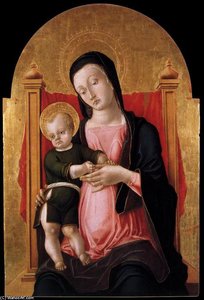
To stand before this magnificent triptych is to step directly into the hushed, sacred atmosphere of a late Gothic chapel. This work, dating from 1460, is not merely a painting; it is a devotional portal, crafted with painstaking reverence for the divine narrative. The structure itself—the three hinged panels—invites an intimate viewing experience, suggesting that the viewer must physically open the piece to reveal its full spiritual scope. At its heart lies the central panel, where the Virgin Mary cradles the infant Jesus Christ, surrounded by celestial attendants and saints whose gazes seem to follow the eye across centuries of faith.
Mastery in Tempera: Technique and Detail
The technical brilliance evident in this piece speaks volumes about the skill of its creator. Executed in tempera on wood panels, the medium lends a characteristic luminosity and permanence to the colors. One can almost feel the subtle texture of the aged wood beneath the vibrant pigments. Observe the meticulous rendering of the drapery; the folds of the garments are not simply painted but seem to possess weight and life, catching the light as if they were woven from silk and prayer. The attention paid to every detail, from the delicate wings of the surrounding angels to the rich embroidery on the saints' vestments, speaks to an era where art was considered a form of sacred labor.
Symbolism Woven into Sacred Scenes
The narrative complexity is breathtaking. On the left wing, St. John the Baptist stands in contemplative repose, his traditional attire and the presence of the lamb serving as potent symbols of innocence and prophecy. The right panel offers a contrasting scene, perhaps within the cool embrace of a cloister, where another saint engages in deep study from a manuscript, suggesting the enduring power of scripture and contemplation. These flanking scenes do not merely decorate; they frame the central mystery—the Incarnation—with supporting pillars of Christian virtue: prophecy, devotion, and wisdom. The pointed Gothic arches framing each section further anchor the piece within an architectural vocabulary that speaks of heavenly aspiration.
Historical Echoes and Enduring Piety
This triptych belongs to a period when religious art served as both high art and essential teaching tool for the faithful. It captures the profound piety characteristic of the late Gothic era, a time deeply invested in personal spiritual experience. While the artist's hand may have been guided by the traditions of masters like Bartolomeo Vivarini, the emotional resonance is universal. For the modern collector or designer, owning such a reproduction offers more than mere decoration; it provides an immediate connection to the deep currents of European spirituality and artisanal excellence.
Preguntas y respuestas
¿Quién creó "Triptych" y en qué año?
El autor de "Triptych" es Bartolomeo Vivarini, y la obra data de 1460.
¿En qué movimiento y en qué época se sitúa "Triptych" de Bartolomeo Vivarini?
En "Triptych" de Bartolomeo Vivarini, el movimiento Late Gothic se encuentra con la era Renacimiento.
¿Qué tipo de obra es "Triptych"?
En el catálogo, "Triptych" de Bartolomeo Vivarini está clasificado como wall art. La categoría ayuda a encontrar obras similares.
Biografía del artista
Un legado de luz veneciana y devoción
En la atmósfera vibrante y centelleante del Quattrocento, Bartolomeo Vivarini emergió como una figura fundamental en la evolución de la pintura veneciana. Nacido en el legendario núcleo de la cristalería de Murano, Italia, formó parte de una influyente dinastía de artistas que ayudaron a forjar la identidad visual de la República de Venecia. Como miembro de la familia Vivarini, su vida y su obra estuvieron profundamente entrelazadas con el pulso artístico de su tierra natal, tendiendo un puente durante la transición entre las ornamentadas y doradas tradiciones del periodo gótico tardío y el floreciente humanismo del Renacimiento temprano.
El arte de Vivarini se caracteriza por un profundo sentido de espiritualidad y precisión técnica. Si bien fue un maestro de la tempera, utilizando a menudo el pan de oro para imbuir sus composiciones con un lujo celestial, también fue un innovador en el uso de nuevos medios. Se destaca que aprendió el arte de la pintura al óleo de Antonello da Messina, y se le atribuye la producción de lo que se cree que fue la primera pintura al óleo en Venecia alrededor de 1473. Este dominio le permitió manipular la luz y la textura de formas que aportaron un nuevo nivel de intimidad y serenidad a sus temas religiosos.
Maestría de la forma y el simbolismo
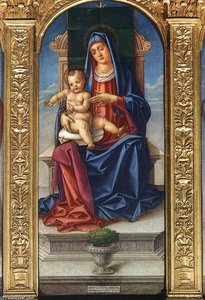
La obra de Vivarini presenta a menudo un equilibrio sorprendente entre contornos definidos y una paleta de colores rica y emotiva. Sus figuras poseen con frecuencia una expresión digna y devota, capturando la solemnidad requerida para los retablos que adornaban las basílicas venecianas. Esta capacidad para transmitir la emoción humana a través de formas estructuradas lo convirtió en un pintor muy solicitado para importantes encargos religiosos. Un ejemplo notable de su destreza se encuentra en su Madonna y Niño, donde utiliza la luz que entra por las ventanas y profundos ropajes rojos para crear una sensación de espacio sagrado.
Más allá de las propias figuras, las pinturas de Vivarini suelen estar revestidas de un profundo significado simbólico:
- El uso del oro: Su frecuente aplicación de pan de oro no solo sirve como decoración, sino como un medio para representar la luz divina.
- Motivos naturales: En un encantador guiño a su nombre —ya que vivarino se traduce como jilguero en italiano—, ocasionalmente incluía este pequeño pájaro como una sutil firma dentro de sus obras.
- Profundidad arquitectónica: Sus composiciones, como el Políptico de Conversano, demuestran una comprensión sofisticada de la perspectiva y la integración de figuras sagradas en estructuras complejas de múltiples paneles.
Significancia histórica e influencia artística
La importancia histórica de Bartolomeo Vivarini reside en su papel como puente entre eras. Se situó en la encrucijada entre las tradiciones de influencia bizantina de sus predecesores y los revolucionarios estilos renacentistas traídos por artistas como Fra Angelico y Giovanni Bellini. Al fusionar estas diversas influencias, ayudó a establecer un lenguaje visual veneciano único, uno que priorizaba el color luminoso y la resonancia emocional.
Su influencia se extendió a través de su linaje familiar, impactando notablemente en la obra de su sobrino, Alvise Vivarini, quien se convertiría en un artista destacado en Venecia antes del ascenso de Bellini. A través de su meticuloso detalle y su adopción pionera de las técnicas al óleo, Bartolomeo Vivarini dejó una huella indeleble en la historia del arte italiano, asegurando que la grandeza espiritual y estética de Murano y Venecia se preservara para las generaciones venideras.

Bartolomeo Vivarini
1440 - 1499 , Italia
Datos clave
- Artistic Movement Or Style: Renacimiento veneciano
- Artists Or Movements Influenced By This Artist: ['Alvise Vivarini']
- Artists Who Influenced This Artist:
- Antonello da Messina
- Fra Angelico
- Date Of Birth: 1440
- Date Of Death: 1499
- Full Name: Bartolomeo Vivarini
- Nationality: Italiano
- Notable Artworks:
- Madonna y Niño
- Políptico de Conversano
- Tríptico (detalle)
- Place Of Birth: Murano, Italia
Artículos relacionados

The Beauty of Late Gothic Art: Elegance, Intricate Detail, and the Dawn of the Renaissance
Explore the exquisite elegance of Late Gothic art. Discover how masters like Carlo Crivelli and Stefan Lochner blended intricate detail and religious devotion to bridge the Middle Ages and the Renaissance in this expert art history guide for true connoisseurs.
El Crepúsculo Radiante de la Visión Medieval: Fe, Forma y Emotividad en el Arte Gótico Tardío (c. 1300-1500)
Explore el esplendor del arte gótico tardío (c. 1300-1500). Descubra la síntesis de fe, forma y emoción en la pintura internacional, los retablos medievales y la influencia de Giotto. Análisis experto.
Late Gothic Art: The Divine Transition from Medieval Symbolism to Renaissance Naturalism
Explore the profound transition of Late Gothic art from medieval symbolism to Renaissance naturalism. Discover the elegance of International Gothic, the legacy of Master Theodoric, and the evolution of European courtly masterpieces through an expert art-historical lens.

Giclée Prints: Archival Quality & Aesthetic Nuances for the Discerning Collector
Explore the world of giclée prints with OriginalUniqueArt. Learn about archival quality, aesthetic nuances & investment potential. Expert guidance for discerning art collectors seeking museum-quality reproductions and lasting value.

Gothic Glamour Reimagined: How Late Medieval Aesthetics are Driving the Next Big Interior Design Trend
Discover how Late Medieval art is revolutionizing modern interiors. From Gothic drama to Renaissance naturalism, learn to integrate high-impact, historical aesthetics into your urban space with expert trend forecasts and design inspiration.