

 Vista previa
 Compartir
 Compartir
 Ver detalles
 Guía
Guía

 Descargar
 Ver artículos similares
 Radiografía
 Presentación de diapositivas
 Estadísticas
The Annunciation
 Oil On Canvas
- WallArt
- Spanish Baroque
 1680
1680 98.0 x 100.0 cm
 Leer más
Giclée / Impresión de arte
Impresiones giclée o en lienzo de calidad de museo con producción rápida y opciones de acabado flexibles. ( Encargar reproducción pintada a mano Ver versión en imagen digital)




P118B €10

P118H €10

P118W €10

P438Z €10

P508JH €12

P508YH €12

P805H €10

P805Z €10

P919BZ €10

P919G €10

P919XJ €10

P959ZH €10

P968JZ €12

W106C €8

W218G €10

W218JH €8

W218Y €10

W307PJ €10

W316G €10

W316PJ €8

W316Y €10

W398PJ €8

W4111J €10

W500HY €15

W500JH €15

W692G €12

W849H €8

W940BG €15

W953PJ €8




Elija entre nuestros tamaños predefinidos que respetan las proporciones originales de la obra.

Introduzca el ancho y el alto que necesite para adaptarse a su marco o pared. Una impresión solo puede recortarse, nunca hacerse más grande que la imagen original, por lo que un tamaño con una forma distinta perderá parte de la obra. Le enviaremos una maqueta digital para su aprobación antes de realizar cualquier impresión. La imagen que se muestra en esta página no refleja el recorte real; solo la maqueta lo hace.
Envío a todo el mundo () en 2 semanas en lugar de las 4/5 semanas estándar. (22 octubre)

Envío exprés gratuito a todo el mundo

Lienzo de lino de alta calidad

Seguro de envío completo

Garantía de reembolso de impuestos aduaneros

Garantía de fidelidad cromática exacta

Política de devolución de 100 días (solo por defectos)

Garantía de devolución del 100% del dinero

Oferta por volumen
 La opción de vidrio solo está disponible en tamaños inferiores a 110 cm.

The Annunciation
Giclée / Impresión de arte
Tamaño de la reproducción
-


Precio total
€ 70
A Moment of Grace: Bartolomé Murillo’s ‘The Annunciation’
Bartolomé Esteban Murillo's “The Annunciation,” painted in 1680, is more than just a depiction of a biblical scene; it’s a profound meditation on faith, humility, and the transformative power of divine intervention. Measuring 98 x 100 cm, this exquisite work transports us to a moment of quiet reverence within the heart of Seville, Spain – the very city that nurtured Murillo's extraordinary talent. The painting captures the pivotal event of the Archangel Gabriel announcing Mary’s impending motherhood to the Virgin herself, an encounter laden with spiritual significance and rendered with breathtaking sensitivity.
- Subject Matter: The composition centers on Mary, seated thoughtfully on a bench, her posture conveying both vulnerability and profound contemplation. An angel stands beside her, not with imposing grandeur but with gentle attentiveness, holding a book – a symbol of divine knowledge and revelation – as he delivers the momentous news.
- Technical Brilliance: Murillo’s mastery of light and color is immediately apparent. He employs a warm, rich palette dominated by ochres, browns, and reds, creating an atmosphere of deep intimacy and spiritual warmth. The use of chiaroscuro—the dramatic interplay of light and shadow—adds depth to the figures and enhances the sense of drama within the scene.
- Compositional Harmony: The balanced composition, with its carefully arranged figures, contributes significantly to the painting’s serene effect. Murillo skillfully guides the viewer's eye through the scene, drawing attention to Mary’s expression of wonder and the angel’s solemn announcement.
The Sevillean Style & Baroque Influence
Murillo’s artistic style is deeply rooted in the traditions of Spanish Baroque painting, yet he developed a distinctly personal approach that would come to define his legacy. Influenced by artists like Juan del Castillo, Murillo initially focused on religious subjects, particularly depictions of children and women – themes that resonated powerfully with the devout populace of Seville. His work reflects the prevailing artistic currents of the era, characterized by emotional intensity, dramatic lighting, and a focus on narrative clarity. However, unlike some of his contemporaries who embraced the more flamboyant excesses of Baroque style, Murillo favored a restrained elegance and a profound sense of human emotion.
- Baroque Elements: The use of dynamic composition, strong contrasts in light and shadow, and expressive gestures are hallmarks of the Baroque period, evident in “The Annunciation.”
- Humanism: Murillo’s emphasis on the emotional experience of his subjects – Mary's vulnerability, the angel’s solemnity – reflects a growing humanist sensibility within Spanish art.
Symbolism and Spiritual Resonance
“The Annunciation” is rich in symbolic meaning, reflecting the profound religious beliefs of 17th-century Spain. The book held by the angel represents divine revelation, while Mary’s posture embodies humility and acceptance of God's will. The inclusion of the infant Jesus, cradled in Mary’s arms, foreshadows his future role as savior and reinforces the central themes of faith and redemption. Beyond its religious significance, the painting speaks to universal human experiences – the search for guidance, the acceptance of destiny, and the profound connection between humanity and the divine.
- The Angel’s Gesture: The angel's outstretched hand and downward gaze symbolize his role as a messenger of God’s grace.
- Mary’s Expression: Mary’s serene expression conveys both surprise and acceptance, reflecting her unwavering faith.
A Timeless Masterpiece – A Reproduction for Your Space
This meticulously crafted hand-painted reproduction of Bartolomé Esteban Murillo's “The Annunciation” captures the essence of this iconic artwork with exceptional fidelity. Created using traditional techniques and archival quality materials, it offers a stunning addition to any art collection or interior design scheme. Its warm tones and serene composition evoke a sense of tranquility and spiritual contemplation, making it ideal for bedrooms, studies, or any space where you seek beauty and inspiration. Bring the timeless grace of Murillo’s masterpiece into your home with OriginalUniqueArt.
Preguntas y respuestas
¿Dónde puedo descargar "The Annunciation" de Bartolomé Esteban Murillo?
Hay una descarga disponible para "The Annunciation": la página de Descargar de la obra ofrece descarga de una imagen digital en alta resolución.
¿Para qué estancia se recomienda "The Annunciation" de Bartolomé Esteban Murillo?
Una reproducción de "The Annunciation" encaja perfectamente en un Living Room.
¿Qué tan saturada es la paleta de "The Annunciation"?
"The Annunciation" de Bartolomé Esteban Murillo está registrado con una saturación de Balanced Soft.
Biografía del artista
Primeros años y formación
Bartolomé Esteban Murillo, un destacado pintor barroco español, nació a finales de diciembre de 1617 en Sevilla, España y fue bautizado el 1 de enero de 1618. Era el hijo menor de Gaspar Esteban y María Pérez, con una familia de catorce hijos. Tras la muerte de sus padres en 1627 y 1628, Murillo se convirtió en pupilo de su cuñado, Juan Agustín Lagares. Murillo comenzó sus estudios artísticos en Sevilla bajo la tutela de Juan del Castillo, un pariente de su madre, quien también era artista. Sus primeras obras estuvieron influenciadas por el enfoque realista de Zurbarán, Jusepe de Ribera y Alonzo Cano.Evolución artística y estilo
El estilo artístico de Murillo evolucionó con el tiempo, inicialmente influenciado por la pintura flamenca y el "tratado sobre imágenes sagradas" de Molanus. A medida que maduró, su obra desarrolló un estilo pulido que se adaptaba a los gustos burgueses y aristocráticos de la época, particularmente en sus obras religiosas católicas romanas.- Joven con una cesta de fruta o personificación del verano (c. 1640-50), mostrando su enfoque realista temprano.
- El joven mendigo (c. 1645, Musée du Louvre, París, Francia), demostrando la influencia de Velázquez.
- San Jerónimo (c. 1650-52), ejemplificando su estilo maduro, suave y luminoso.
Obras destacadas y temas recurrentes
Murillo es reconocido por sus representaciones idealizadas de la Virgen María con el Niño Jesús, así como por sus escenas religiosas que transmiten una profunda devoción y serenidad. También pintó numerosos retratos de personajes contemporáneos, especialmente mujeres y niños, capturando la vida cotidiana de su época con realismo y ternura. Entre sus obras más famosas se encuentran "La Adoración de los Pastores", "El Niño Jesús distribuyendo pan a los peregrinos" y "San Agustín con la Virgen y el Niño". Su habilidad para crear atmósferas luminosas y personajes expresivos lo convirtió en uno de los pintores barrocos españoles más populares.Legado e influencia
Murillo tuvo numerosos alumnos y seguidores, asegurando su reputación en España y fama por toda Europa. Artistas influenciados por su estilo incluyen a Gainsborough y Greuze. Su enfoque en la representación realista y emotiva de temas religiosos y cotidianos dejó una huella duradera en el arte español y europeo. Explore más obras de Murillo en OriginalUniqueArt: * Bartolomé Esteban Murillo * Colección Andrés Blaisten (México) (con arte latinoamericano, incluyendo algunas obras influenciadas por el estilo de Murillo).Museos y colecciones
Las pinturas de Murillo se pueden encontrar en varios museos de todo el mundo, incluyendo:- El Museo del Prado (Madrid, España)
- El Hermitage Museum (San Petersburgo, Rusia)
- La Wallace Collection (Londres)
- El Timken Museum of Art (San Diego, con Cristo en la cruz)
- El Krannert Art Museum (Champaign, Illinois, con Cristo después de la flagelación).

Bartolomé Esteban Murillo
1618 - 1682 , España
Datos clave
- Artistas Que Influyeron:
- Zurbarán
- Velázquez
- Ribera
- Cano
- Estilo Artístico: Barroco español
- Fecha De Muerte: 1682
- Fecha De Nacimiento: 1618
- Influencia En Artistas:
- Gainsborough
- Greuze
- Lugar De Nacimiento: Sevilla, España
- Nacionalidad: Española
- Nombre Completo: Bartolomé Esteban Murillo
- Obras Notables:
- Joven con cesta de fruta
- El joven mendigo
- San Jerónimo
- La Adoración de los Pastores
Artículos relacionados

The Dramatic Flourish: Exploring the Baroque Movement's Enduring Legacy in Art History
Explore the dramatic world of Baroque art! Discover iconic artists like Caravaggio & Rubens, defining techniques, and its lasting impact on art history. Expert insights for collectors & enthusiasts at OriginalUniqueArt.

Bartolomé Esteban Murillo: Divine Light & Social Commentary in Golden Age Seville
Explore the captivating world of Bartolomé Esteban Murillo, a master of Spanish Baroque painting. Discover his luminous religious scenes, tender genre paintings & lasting legacy in Golden Age Seville. Learn more at OriginalUniqueArt.
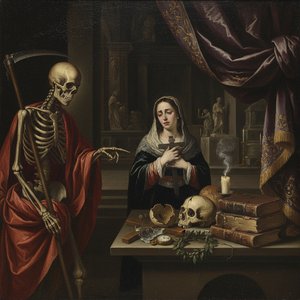
Juan de Valdés Leal: Baroque Realism, Memento Mori & Theatricality of Spanish Grief
Explore the powerful Baroque realism of Juan de Valdés Leal (1622-1690). Discover his somber masterpieces, iconic 'In Ictu Oculi', and profound explorations of mortality. Museum-quality reproductions available at OriginalUniqueArt.

The Golden Age Reforged: Dramatic Realism & Religious Zeal in Spanish Baroque Art
Explore the dramatic world of Spanish Baroque art! Discover masters like Zurbarán & the powerful influence of religious zeal on painting techniques – a guide for collectors and enthusiasts.

Giclée Prints: Archival Quality & Aesthetic Nuances for the Discerning Collector
Explore the world of giclée prints with OriginalUniqueArt. Learn about archival quality, aesthetic nuances & investment potential. Expert guidance for discerning art collectors seeking museum-quality reproductions and lasting value.


