

 Ver en contexto
 Enviar
 Compartir
 Detalles
 Guía
Guía

 Descargar
 Similares
 Radiografía
 Presentación de diapositivas
 Estadísticas
Winter landscape
 Oil On Panel
- Romantic Landscape Painting
 1838
1838- 19th Century
 62.0 x 75.0 cm
 Rijksmuseum
 Ver más
Giclée / Impresión de arte
Impresiones giclée o en lienzo de calidad de museo con producción rápida y opciones de acabado flexibles. ( Comprar pintura hecha a mano Cambiar a imagen digital)




P118B €10

P118H €10

P118W €10

P438Z €10

P508JH €12

P508YH €12

P805H €10

P805Z €10

P919BZ €10

P919G €10

P919XJ €10

P959ZH €10

P968JZ €12

W106C €8

W218G €10

W218JH €8

W218Y €10

W307PJ €10

W316G €10

W316PJ €8

W316Y €10

W398PJ €8

W4111J €10

W500HY €15

W500JH €15

W692G €12

W849H €8

W940BG €15

W953PJ €8




Elija entre nuestros tamaños predefinidos que respetan las proporciones originales de la obra.

Introduzca el ancho y el alto que necesite para adaptarse a su marco o pared. Una impresión solo puede recortarse, nunca hacerse más grande que la imagen original, por lo que un tamaño con una forma distinta perderá parte de la obra. Le enviaremos una maqueta digital para su aprobación antes de realizar cualquier impresión. La imagen que se muestra en esta página no refleja el recorte real; solo la maqueta lo hace.
Envío a todo el mundo () en 2 semanas en lugar de las 4/5 semanas estándar. (27 octubre)

Envío exprés gratuito a todo el mundo

Lienzo de lino de alta calidad

Seguro de envío total

Garantía de reembolso de aranceles aduaneros

Garantía de fidelidad cromática exacta

Política de devolución de 100 días (solo por defectos)

Garantía de devolución del 100% del dinero

Descuento por cantidad
 La opción de vidrio solo está disponible en tamaños inferiores a 110 cm.

Winter landscape
Giclée / Impresión de arte
Dimensiones de la reproducción
-


Precio total final
€ 70
A Winter's Embrace: Exploring Barend Cornelis Koekkoek’s “Winter Landscape”
The Dutch Romantic landscape painter Barend Cornelis Koekkoek’s “Winter Landscape,” completed in 1833, transcends mere depiction; it embodies the spirit of a bygone era and speaks to enduring themes of resilience and beauty amidst adversity. Executed on wood with oil paint—a technique favored by Koekkoek for its ability to capture subtle tonal variations—the painting presents a serene yet poignant tableau of a snowy road winding through a sparsely populated Dutch countryside.Style and Technique: Romantic Precision
Koekkoek’s artistic vision aligns perfectly with the tenets of Romanticism, prioritizing emotional intensity alongside meticulous observation. Unlike earlier Baroque landscapes that sought to impose grandeur upon nature, Koekkoek embraced its inherent wildness, conveying a sense of contemplative solitude rather than triumphant dominion. His brushstrokes are deliberate and controlled, blending seamlessly to create luminous washes of color—primarily blues and whites—that dominate the composition. The artist skillfully utilizes chiaroscuro—the interplay between light and shadow—to sculpt the forms of trees, snowdrifts, and distant buildings, enhancing depth and creating a palpable atmosphere of coldness and stillness.Historical Context: Reflecting Dutch Identity
“Winter Landscape” emerged during a period of significant artistic ferment in Holland, mirroring broader cultural anxieties surrounding the Napoleonic Wars and the subsequent Restoration. The painting served as a powerful emblem of Dutch national identity—a celebration of its pastoral heritage and an assertion of moral fortitude in the face of political upheaval. Koekkoek’s depiction of a quiet rural scene resonated deeply with viewers who longed for stability and continuity amidst turbulent times, reflecting a desire to reconnect with simpler values and traditions.Symbolism: Resilience Amidst Winter's Grip
Beyond its aesthetic qualities, “Winter Landscape” is laden with symbolic significance. The snow itself represents hardship and purification—a blank slate upon which new beginnings can emerge. Yet, despite the bleakness of the winter season, Koekkoek’s careful rendering of trees bearing fruit underscores the promise of fecundity and renewal. Furthermore, the solitary figures traversing the road symbolize perseverance and determination—individuals striving onward despite obstacles, mirroring the broader human experience of confronting challenges with courage and grace.Emotional Impact: A Momentary Pause for Reflection
Ultimately, Koekkoek’s “Winter Landscape” invites contemplation and introspection. Its muted palette and tranquil composition evoke a profound sense of peace and melancholy—a recognition of beauty found in vulnerability and solitude. The painting compels viewers to pause amidst the frenetic pace of modern life, encouraging them to appreciate the quiet grandeur of nature and to contemplate the enduring power of resilience and hope. It remains an exquisite testament to Koekkoek’s artistic prowess and a timeless masterpiece capturing the essence of Romantic sensibility.Preguntas y respuestas
¿Cuál es la técnica y las dimensiones de "Winter landscape"?
La obra original "Winter landscape" de Barend Cornelis Koekkoek es una pieza de Oil On Panel con unas dimensiones de 62 x 75 cm. La técnica y el tamaño describen la obra original.
¿Cuál es el tamaño de impresión recomendado para "Winter landscape" de Barend Cornelis Koekkoek?
El tamaño de impresión recomendado para "Winter landscape" de Barend Cornelis Koekkoek es Medium.
¿Qué forma y dimensiones tiene "Winter landscape" de Barend Cornelis Koekkoek?
"Winter landscape" de Barend Cornelis Koekkoek es una composición en Landscape con unas dimensiones de 62 x 75 cm en su formato original.
Biografía del artista
Primeros años y comienzos artísticos (1803-1824)
- Nacimiento: 11 de octubre de 1803, en Middelburg, Zelanda, Países Bajos
- Antecedentes familiares: Hijo de Johannes Hermanus Koekkoek, un renombrado pintor de temas marinos y de género, y Anna van Koolwijk. Creció en un entorno artístico con varios hermanos artistas (Hermanus, Johannes y Marinus).
- Educación temprana: Se inscribió en la Academia de Dibujo de Middelburg bajo Abraham Krayestein.
- Mudanza a Ámsterdam: Estudió durante cuatro años en la Koninklijke Academie van Beeldende Kunsten en Ámsterdam (1822-1826).
- Ambición temprana: Expresó su ambición de convertirse en pintor de paisajes en 1824.
- Influencias: La formación inicial bajo su padre y Krayestein sentaron las bases para su desarrollo artístico.
Desarrollo del estilo y mudanza a Cléveris (1826-1836)
- Influencias románticas: Inspirado por el movimiento romántico que se extendía por Europa, Koekkoek desarrolló un estilo distintivo caracterizado por paisajes dramáticos y efectos atmosféricos.
- Tiempo en Hilversum (1826-1827): Pasó dos años en Hilversum, un entorno rural conocido por su colonia de pintores de paisajes y ganado, consolidando su compromiso con el arte del paisaje.
- Reconocimiento: Recibió una medalla de oro de la sociedad Felix Meritis de Ámsterdam en 1829 por uno de sus paisajes de verano.
- Matrimonio: Se casó con Elise Thérèse Daiwaille en 1833, hija del artista Jean Augustin Daiwaille.
- Mudanza a Cléveris (1836): Se trasladó a Cléveris, Alemania, buscando el tema ideal para sus paisajes románticos: la región de los ríos Ahr, Ruhr y Rin.
Período artístico cumbre y fundación del Zeichen Collegium (1837-1859)
- Romanticismo de Cléveris: Se estableció como una figura destacada en la escuela de pintura de paisajes "Romanticismo de Cléveris".
- Temática: Se centró en extensos valles fluviales, vistas idílicas del bosque dominadas por robles y paisajes dramáticos que enfatizaban el poder de la naturaleza.
- Filosofía artística: Abogó por la meticulosa observación de la naturaleza y el dibujo riguroso, como se describe en su libro Herinneringen en mededeelingen van eenen landschapsschilder (Recuerdos y comunicaciones de un pintor de paisajes) publicado en 1841.
- Zeichen Collegium: Fundó su propia academia de dibujo (Zeichen Collegium) en Cléveris, atrayendo a numerosos aspirantes a artistas que adoptaron sus principios. Entre sus alumnos notables se encontraban Frederik Marinus Kruseman, Lodewijk Johannes Kleijn y Johann Bernard Klombeck.
- Influencia sobre los alumnos: Guió a los estudiantes a estudiar la naturaleza de cerca, observar las condiciones de luz y examinar las obras de los maestros holandeses del siglo XVII.
Años posteriores y legado (1860-1862)
- Accidente cerebrovascular y declive: Sufrió un accidente cerebrovascular importante en noviembre de 1859, lo que puso fin efectivamente a su carrera como pintor.
- Fallecimiento: Murió el 5 de abril de 1862 en Cléveris.
- Significado artístico: Reconocido como el "Príncipe de la pintura de paisajes" y considerado el padre fundador de la pintura de paisajes románticos holandeses.
- Influencia: Su obra influyó significativamente en generaciones posteriores de artistas paisajistas holandeses a través de sus alumnos y su énfasis en la observación detallada y la reproducción atmosférica.
- Legado: Las pinturas de Koekkook se conservan ahora en museos de todo el mundo, testimonio de su perdurable legado artístico.

Barend Cornelis Koekkoek
1803 - 1862 , Países Bajos
Datos clave
- Artistas Que Influyeron:
- Hobbema
- Cuyp
- Ruisdael
- Fecha De Fallecimiento: 5 de abril de 1862
- Fecha De Nacimiento: 11 de octubre de 1803
- Influenciado A Artistas:
- Kruseman
- Kleijn
- Klombeck
- Lugar De Nacimiento: Middelburg, Países Bajos
- Movimiento Artístico: Pintura paisajística romántica
- Nacionalidad: Neerlandés
- Nombre Completo: Barend Cornelis Koekkoek
Artículos relacionados

Katsushika Hokusai: Las 25 Obras Maestras del Ukiyo-e que Transformaron el Arte Japonés | OriginalUniqueArt
Descubre las 25 obras maestras de Katsushika Hokusai, el genio del ukiyo-e. Explora 'La Gran Ola', paisajes japoneses y su impacto en el arte moderno. Reproducciones de alta calidad para tu hogar en OriginalUniqueArt.com.

Paisajes Románticos: 10 Obras Maestras que Definieron un Movimiento Artístico
Descubre los 10 paisajes románticos más influyentes de artistas como Caspar David Friedrich y Turner. Explora la belleza, el simbolismo y las técnicas del movimiento romántico. Reproducciones de arte exclusivas en OriginalUniqueArt.com.

Golden Light & Dutch Skies: Bringing the Magic of Dutch Golden Age Landscapes into Your Home
Transform your home with the breathtaking light of Dutch Golden Age landscapes. Discover how hand-painted oil reproductions of masterworks like Ruisdael and Vermeer bring timeless elegance, atmosphere, and soulful texture to modern interiors. Elevate your space with museum-quality art.

Golden Light & Dutch Skies: The Timeless Magic of Dutch Golden Age Landscapes
Discover the breathtaking beauty of Dutch Golden Age landscapes. Explore the mastery of light, chiaroscuro, and 17th-century realism through an expert art history lens, celebrating the enduring legacy of the Dutch Masters for discerning collectors and art lovers.
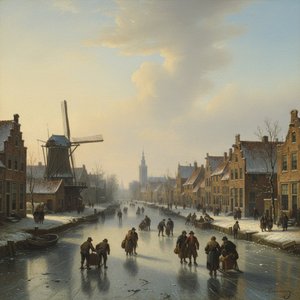
Charles Leickert: Capturing the Dutch Golden Age Light – A Comprehensive Study of Technique, Context, and Legacy
Explore the captivating winter landscapes of Charles Leickert, a master of Dutch Golden Age light & atmosphere. Discover his techniques, symbolism, and lasting legacy – a comprehensive study for art enthusiasts and collectors.