Vista previa
 Compartir
 Compartir
 Ver detalles
 Guía
Guía

 Descargar
 Ver artículos similares
 Radiografía
 Presentación de diapositivas
 Estadísticas
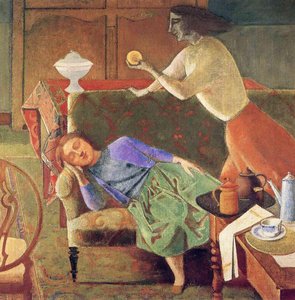
The Cat in the Mirror
 Oil
Oil- WallArt
- Contemporary Realism
 1988
1988- Modern
 170.0 x 200.0 cm
 Leer más
La obra de arte que se muestra en esta página está protegida por las leyes de propiedad intelectual, lo que significa que no podemos crear ni vender legalmente una reproducción idéntica. Esta protección se hace cumplir en virtud de acuerdos internacionales como el Convenio de Berna y por las leyes nacionales, incluidas aquellas establecidas por el Ley de derechos de autor de los EE. UU. - Título 17.
Este método cumple plenamente con las normativas de derechos de autor, ya que no implica la copia ni la duplicación de la obra protegida. En su lugar, se trata de una reinterpretación creativa: una nueva pintura influenciada por la original, pero que no es idéntica a ella.
Giclée / Impresión de arte
Impresiones giclée o en lienzo de calidad de museo con producción rápida y opciones de acabado flexibles. ( Encargar reproducción pintada a mano Ver versión en imagen digital)




P118B €10

P118H €10

P118W €10

P438Z €10

P508JH €12

P508YH €12

P805H €10

P805Z €10

P919BZ €10

P919G €10

P919XJ €10

P959ZH €10

P968JZ €12

W106C €8

W218G €10

W218JH €8

W218Y €10

W307PJ €10

W316G €10

W316PJ €8

W316Y €10

W398PJ €8

W4111J €10

W500HY €15

W500JH €15

W692G €12

W849H €8

W940BG €15

W953PJ €8




Elija entre nuestros tamaños predefinidos que respetan las proporciones originales de la obra.

Introduzca el ancho y el alto que necesite para adaptarse a su marco o pared. Una impresión solo puede recortarse, nunca hacerse más grande que la imagen original, por lo que un tamaño con una forma distinta perderá parte de la obra. Le enviaremos una maqueta digital para su aprobación antes de realizar cualquier impresión. La imagen que se muestra en esta página no refleja el recorte real; solo la maqueta lo hace.
Envío a todo el mundo () en 2 semanas en lugar de las 4/5 semanas estándar. (25 octubre)

Envío exprés gratuito a todo el mundo

Lienzo de lino de alta calidad

Seguro de envío completo

Garantía de reembolso de impuestos aduaneros

Garantía de fidelidad cromática exacta

Política de devolución de 100 días (solo por defectos)

Garantía de devolución del 100% del dinero

Oferta por volumen
 La opción de vidrio solo está disponible en tamaños inferiores a 110 cm.

The Cat in the Mirror
Giclée / Impresión de arte
Tamaño de la reproducción
-


Precio total
€ 70
A Quiet Enigma: The Intimate World of Balthus
In the vast landscape of twentieth-century figurative painting, few artists possess the ability to weave such profound mystery into the fabric of domesticity as Balthus. His 1988 masterpiece, The Cat in the Mirror, serves as a hauntingly beautiful window into a private, almost dreamlike realm. The scene unfolds within the quiet confines of a bedroom, where a woman sits prominently upon a bed, her presence commanding yet shrouded in a sense of introspective solitude. As she holds a mirror, the viewer is invited to contemplate not just the physical reflection, but the psychological depths of the subject. This work is not merely a depiction of a room; it is an invitation into a silent dialogue between the seen and the unseen, a hallmark of Balthus’s unique ability to revitalize classical forms with a modern, unsettling edge.
The composition is masterfully balanced, utilizing the sprawling expanse of the bed to anchor the lower portion of the canvas. Scattered throughout this intimate setting are elements that suggest a lived-in, yet staged, reality: two handbags resting near the woman, a solitary cup placed near her feet, and a chair tucked into the periphery. The presence of cats—one close to the central figure and another drifting toward the edge of the frame—adds a layer of feline grace and unpredictable energy to the stillness. These creatures act as silent witnesses to the woman's introspection, their watchful eyes mirroring the enigmatic gaze of the subject herself. For the collector or interior designer, this painting offers a sophisticated focal point that commands attention through its narrative complexity rather than overt spectacle.
Technically, the painting exemplifies Balthus’s reverence for the Old Masters, blended with a textured, almost tactile application of paint. The interplay of light and shadow creates a soft, atmospheric glow that lends the room an air of timelessness. There is a deliberate weight to the figures and objects, achieved through a masterful use of tonal depth that makes the scene feel both tangible and ethereal. The brushwork, while controlled, possesses a rhythmic quality that guides the eye across the various textures—from the soft fabric of the bedding to the smooth surface of the mirror. This meticulous technique ensures that every time one views a reproduction of this piece, new details emerge from the shadows.
Beyond its aesthetic brilliance, The Cat in the Mirror resonates on an emotional level through its profound symbolism. The mirror serves as a powerful metaphor for self-reflection and the duality of identity, while the cats represent the untamed, instinctive aspects of the human psyche lurking within the domestic sphere. It is a work that speaks to the tension between comfort and curiosity, between the known and the mysterious. For those seeking to infuse a space with intellectual depth and a sense of quiet drama, this painting provides an unparalleled source of inspiration. It is more than a decoration; it is a profound atmospheric element that transforms a room into a sanctuary of thought and contemplation.
Preguntas y respuestas
¿Qué saturación e intensidad muestra "The Cat in the Mirror" de Balthus?
Los colores de "The Cat in the Mirror" de Balthus muestran una saturación Balanced Soft con una intensidad Balanced.
¿Qué colores predominan en "The Cat in the Mirror" de Balthus?
"The Cat in the Mirror" se define por una paleta de Earthy liderada por Espresso (#474024).
¿Está "The Cat in the Mirror" libre de derechos de autor?
La información sobre los derechos de autor de "The Cat in the Mirror" de Balthus: la obra es aún protegido por derechos de autor. Esto determina si las reproducciones de la imagen pueden realizarse libremente.
Biografía del artista
Primeros años e influencias
Balthasar Klossowski de Rola, conocido artísticamente como Balthus, nació el 29 de febrero de 1908 en París. Sus primeros años estuvieron marcados por una rica herencia cultural gracias a su familia. Su padre, Erich Klossowski, era un destacado historiador del arte, y su madre, Elisabeth Dorothea Spiro (conocida como Baladine Klossowska), formaba parte de la élite artística parisina. El hermano mayor de Balthus, Pierre Klossowski, fue un filósofo influenciado por los escritos del Marqués de Sade.
- Jean Cocteau, amigo de la familia, se inspiró para su novela Les Enfants Terribles (1929) durante sus visitas.
Trayectoria artística
La carrera artística de Balthus comenzó a tomar forma en la década de 1930 con su primera exposición en París en 1934, que presentaba obras como La lección de guitarra, la cual generó controversia debido a sus imágenes sexualmente explícitas. Este trabajo temprano estuvo influenciado por pintores del Quattrocento y las obras de Emily Brontë, Lewis Carroll y Simone Martini.
- La rue (1933) y La toilette de Cathy (1933) son obras notables de este período, que muestran el estilo único de Balthus.
- Su compositor favorito era Wolfgang Amadeus Mozart, reflejando su aprecio por lo clásico y los aspectos sensuales del arte.
Controversia y vida posterior
La vida posterior de Balthus estuvo marcada por controversias en torno a sus orígenes familiares. A pesar de las afirmaciones de no tener ascendencia judía, el verdadero linaje de su madre sigue siendo objeto de debate.
- Su matrimonio con Setsuko Ideta, una japonesa treinta y cinco años menor que él, añadió un halo de misterio a su vida.
- La Fundación Balthus, establecida en 1998 por su viuda, la condesa Setsuko Klossowska de Rola, continúa promoviendo su obra y legado.
Legado e influencia
La obra de Balthus ha influenciado a numerosos artistas contemporáneos, incluyendo Jan Saudek, Will Barnet, Duane Michals, John Currin, Eli Levin, Emile Chambon y Elena Zolotnitsky.
- Su estilo, principalmente clásico, ha sido influenciado por diversos artistas como Masaccio, Piero della Francesca, Simone Martini, Poussin, Jean-Étienne Liotard, Joseph Reinhardt, Géricault, Ingres, Goya, Jean-Baptiste Camille Corot, Courbet, Edgar Degas, Félix Vallotton y Paul Cézanne.
- Como artista importante del siglo XX, su obra continúa siendo ampliamente reconocida y admirada.
Obras destacadas y exposiciones
- Girl at a Window (1957), incluida en la película Domicile Conjugal (Bed & Board, 1970) de François Truffaut.
- Exposiciones en el Museum of Modern Art (1956) y la Galerie Pierre Matisse (1934) mostraron el estilo único de Balthus.
OriginalUniqueArt ofrece una extensa colección de obras de Balthus, proporcionando una visión general completa de su estilo artístico y legado.

Balthus
1908 - 2001 , Francia
Datos clave
- Artistas Influenciados:
- Jan Saudek
- Will Barnet
- Duane Michals
- Artistas Que Influyeron:
- Rainer Maria Rilke
- Pierre Bonnard
- Masaccio
- Piero della Francesca
- Estilo Artístico: Clásico, figurativo
- Fecha De Nacimiento: 29 de febrero de 1908
- Lugar De Nacimiento: París, Francia
- Nacionalidad: Polaco-francés
- Nombre Completo: Balthasar Kłossowski de Rola
- Obras Notables:
- La niña con el gato
- La calle
- Roberte frente al espejo
Artículos relacionados

Balthus: Exploring the Enigmatic World of Childhood, Myth & Modernist Disquiet
Explore the captivating world of Balthus – a master of figurative art renowned for dreamlike compositions & psychologically charged portraits. Discover his unique style, symbolism, and controversial legacy at OriginalUniqueArt.
Edward Hopper: Las 25 Obras Maestras que Definen la Soledad Moderna | OriginalUniqueArt
Descubre las 25 obras maestras de Edward Hopper, el pintor de la soledad moderna. Explora su realismo americano, luz y sombra, e icónicas escenas urbanas. Reproducciones de arte en OriginalUniqueArt.com para decorar tu hogar con estilo.

Beyond Reality: Unveiling the Enigmatic Essence of Metaphysical Art
Explore the profound mystery of Metaphysical Art. From Giorgio de Chirico’s haunting dreamscapes to the deep symbolism of the movement, discover how this enigmatic style transcends reality through expert art history analysis and timeless aesthetic beauty.
Las 10 Obras de Arte Más Enigmáticas que Despiertan el Alma |
Descubre las 10 obras de arte más enigmáticas de la historia. Explora el simbolismo, las emociones y los secretos detrás de cada pincelada de artistas como Dalí y Munch. Encuentra reproducciones de alta calidad para tu hogar en

Gustav Klimt: Las 25 Obras Maestras que Definen un Ícono del Arte Moderno | OriginalUniqueArt
Descubre las 25 obras maestras de Gustav Klimt, ícono del simbolismo y Art Nouveau. Explora 'El Beso', 'Judith' y más. Reproducciones de arte en OriginalUniqueArt.com para decorar tu hogar con elegancia. ¡Inspírate!