Vista previa
 Compartir
 Compartir
 Ver detalles
 Guía
Guía

 Descargar
 Ver artículos similares
 Radiografía
 Presentación de diapositivas
 Estadísticas
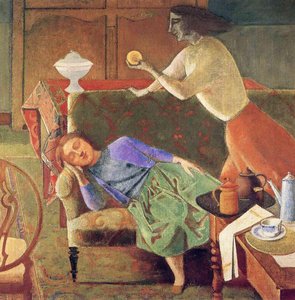
Guitar lesson
 Oil On Canvas
- WallArt
- Surrealist Art
 1934
1934 161.0 x 138.0 cm
 Leer más
La obra de arte que se muestra en esta página está protegida por las leyes de propiedad intelectual, lo que significa que no podemos crear ni vender legalmente una reproducción idéntica. Esta protección se hace cumplir en virtud de acuerdos internacionales como el Convenio de Berna y por las leyes nacionales, incluidas aquellas establecidas por el Ley de derechos de autor de los EE. UU. - Título 17.
Este método cumple plenamente con las normativas de derechos de autor, ya que no implica la copia ni la duplicación de la obra protegida. En su lugar, se trata de una reinterpretación creativa: una nueva pintura influenciada por la original, pero que no es idéntica a ella.
Giclée / Impresión de arte
Impresiones giclée o en lienzo de calidad de museo con producción rápida y opciones de acabado flexibles. ( Encargar reproducción pintada a mano Ver versión en imagen digital)




P118B €10

P118H €10

P118W €10

P438Z €10

P508JH €12

P508YH €12

P805H €10

P805Z €10

P919BZ €10

P919G €10

P919XJ €10

P959ZH €10

P968JZ €12

W106C €8

W218G €10

W218JH €8

W218Y €10

W307PJ €10

W316G €10

W316PJ €8

W316Y €10

W398PJ €8

W4111J €10

W500HY €15

W500JH €15

W692G €12

W849H €8

W940BG €15

W953PJ €8




Elija entre nuestros tamaños predefinidos que respetan las proporciones originales de la obra.

Introduzca el ancho y el alto que necesite para adaptarse a su marco o pared. Una impresión solo puede recortarse, nunca hacerse más grande que la imagen original, por lo que un tamaño con una forma distinta perderá parte de la obra. Le enviaremos una maqueta digital para su aprobación antes de realizar cualquier impresión. La imagen que se muestra en esta página no refleja el recorte real; solo la maqueta lo hace.
Envío a todo el mundo () en 2 semanas en lugar de las 4/5 semanas estándar. (25 octubre)

Envío exprés gratuito a todo el mundo

Lienzo de lino de alta calidad

Seguro de envío completo

Garantía de reembolso de impuestos aduaneros

Garantía de fidelidad cromática exacta

Política de devolución de 100 días (solo por defectos)

Garantía de devolución del 100% del dinero

Oferta por volumen
 La opción de vidrio solo está disponible en tamaños inferiores a 110 cm.

Guitar lesson
Giclée / Impresión de arte
Tamaño de la reproducción
-


Precio total
€ 70
A Portrait of Intimacy: Exploring Balthus’s “Guitar Lesson”
The painting "Guitar Lesson," created by Polish-French artist Balthus in 1934, stands as an arresting testament to surrealist art's ability to delve beneath surface appearances and confront viewers with profound psychological complexities. Measuring 161 x 138 cm and executed in oil on canvas, it’s more than just a depiction of two women; it’s a carefully constructed tableau brimming with symbolic resonance and reflecting the anxieties of its time. Balthus deliberately eschewed the prevailing stylistic conventions of his era, prioritizing meticulous observation and capturing fleeting moments of human emotion—a characteristic that distinguishes him from many of his contemporaries.Style and Technique: Classical Revival Infused with Modern Sensibility
Balthus’s approach to painting was rooted in a deep admiration for the Old Masters, particularly Rembrandt and Vermeer. However, he wasn't simply replicating their techniques; rather, he skillfully adapted them to express his own distinctive vision. The artist employed a technique characterized by subtle gradations of color and painstaking brushwork—a hallmark of his oeuvre—creating an illusionistic depth that draws the eye into the scene. Unlike Impressionists who sought to capture atmospheric effects, Balthus focused on portraying figures with unflinching realism, prioritizing anatomical accuracy and conveying psychological nuance rather than superficial beauty. The muted palette contributes to the painting’s contemplative mood, emphasizing texture and form over vibrant hues.Historical Context: Navigating Uncertainty Amidst Artistic Shifts
“Guitar Lesson” emerged during a period of significant artistic upheaval in Europe—the aftermath of World War I and the burgeoning influence of Surrealism. While Surrealists championed dreamlike imagery and irrational juxtapositions, Balthus resisted these trends, opting for a more restrained aesthetic that nonetheless conveyed a palpable sense of unease. The painting reflects the anxieties surrounding gender roles and societal expectations prevalent in the 1930s—a time when women’s liberation movements were gaining momentum but traditional norms persisted. This tension is subtly communicated through the posture of the seated woman, whose expansive legs suggest vulnerability while simultaneously embodying a quiet defiance.Symbolism: Music, Vulnerability, and Hidden Narratives
The inclusion of a guitar and violin serves as more than just decorative elements; they are potent symbols representing harmony and creativity—concepts that Balthus consistently explored in his work. The woman playing the guitar embodies artistic expression and perhaps hints at an unspoken desire for connection. Simultaneously, her posture conveys vulnerability, mirroring the psychological complexities inherent in human relationships. The empty chair beside her underscores the solitude of experience and invites contemplation about unspoken emotions. These subtle visual cues elevate “Guitar Lesson” beyond a simple portrait, transforming it into a meditation on intimacy and emotional truth.Emotional Impact: A Masterpiece of Psychological Observation
Ultimately, "Guitar Lesson" succeeds in capturing a moment of profound psychological observation—a feat rarely achieved by artists of its time. Balthus’s masterful rendering of human anatomy and emotion compels viewers to confront uncomfortable truths about desire, vulnerability, and the unspoken dynamics of interpersonal connections. It's a painting that lingers in the mind long after viewing, prompting reflection on the complexities of human experience and reaffirming Balthus’s enduring legacy as one of the most perceptive and unsettlingly beautiful artists of the 20th century.Preguntas y respuestas
¿Qué tan fuerte es el contraste en "Guitar lesson" de Balthus?
"Guitar lesson" de Balthus muestra un contraste Statement entre sus zonas de luz y sombra.
¿Qué color predomina en la composición de "Guitar lesson" de Balthus?
El color dominante de "Guitar lesson" de Balthus es Walnut (#7e471e).
¿Quién vende copias pintadas a mano de "Guitar lesson" de Balthus?
Las copias pintadas a mano de "Guitar lesson" de Balthus se venden en este sitio web: una reproducción al óleo pintada a mano sobre lienzo de lino, las cuales pueden solicitarse desde su página de Reproducción pintada a mano.
Biografía del artista
Primeros años e influencias
Balthasar Klossowski de Rola, conocido artísticamente como Balthus, nació el 29 de febrero de 1908 en París. Sus primeros años estuvieron marcados por una rica herencia cultural gracias a su familia. Su padre, Erich Klossowski, era un destacado historiador del arte, y su madre, Elisabeth Dorothea Spiro (conocida como Baladine Klossowska), formaba parte de la élite artística parisina. El hermano mayor de Balthus, Pierre Klossowski, fue un filósofo influenciado por los escritos del Marqués de Sade.
- Jean Cocteau, amigo de la familia, se inspiró para su novela Les Enfants Terribles (1929) durante sus visitas.
Trayectoria artística
La carrera artística de Balthus comenzó a tomar forma en la década de 1930 con su primera exposición en París en 1934, que presentaba obras como La lección de guitarra, la cual generó controversia debido a sus imágenes sexualmente explícitas. Este trabajo temprano estuvo influenciado por pintores del Quattrocento y las obras de Emily Brontë, Lewis Carroll y Simone Martini.
- La rue (1933) y La toilette de Cathy (1933) son obras notables de este período, que muestran el estilo único de Balthus.
- Su compositor favorito era Wolfgang Amadeus Mozart, reflejando su aprecio por lo clásico y los aspectos sensuales del arte.
Controversia y vida posterior
La vida posterior de Balthus estuvo marcada por controversias en torno a sus orígenes familiares. A pesar de las afirmaciones de no tener ascendencia judía, el verdadero linaje de su madre sigue siendo objeto de debate.
- Su matrimonio con Setsuko Ideta, una japonesa treinta y cinco años menor que él, añadió un halo de misterio a su vida.
- La Fundación Balthus, establecida en 1998 por su viuda, la condesa Setsuko Klossowska de Rola, continúa promoviendo su obra y legado.
Legado e influencia
La obra de Balthus ha influenciado a numerosos artistas contemporáneos, incluyendo Jan Saudek, Will Barnet, Duane Michals, John Currin, Eli Levin, Emile Chambon y Elena Zolotnitsky.
- Su estilo, principalmente clásico, ha sido influenciado por diversos artistas como Masaccio, Piero della Francesca, Simone Martini, Poussin, Jean-Étienne Liotard, Joseph Reinhardt, Géricault, Ingres, Goya, Jean-Baptiste Camille Corot, Courbet, Edgar Degas, Félix Vallotton y Paul Cézanne.
- Como artista importante del siglo XX, su obra continúa siendo ampliamente reconocida y admirada.
Obras destacadas y exposiciones
- Girl at a Window (1957), incluida en la película Domicile Conjugal (Bed & Board, 1970) de François Truffaut.
- Exposiciones en el Museum of Modern Art (1956) y la Galerie Pierre Matisse (1934) mostraron el estilo único de Balthus.
OriginalUniqueArt ofrece una extensa colección de obras de Balthus, proporcionando una visión general completa de su estilo artístico y legado.

Balthus
1908 - 2001 , Francia
Datos clave
- Artistas Influenciados:
- Jan Saudek
- Will Barnet
- Duane Michals
- Artistas Que Influyeron:
- Rainer Maria Rilke
- Pierre Bonnard
- Masaccio
- Piero della Francesca
- Estilo Artístico: Clásico, figurativo
- Fecha De Nacimiento: 29 de febrero de 1908
- Lugar De Nacimiento: París, Francia
- Nacionalidad: Polaco-francés
- Nombre Completo: Balthasar Kłossowski de Rola
- Obras Notables:
- La niña con el gato
- La calle
- Roberte frente al espejo
Artículos relacionados

The Soul of Impressionism: Why Oil on Canvas Captures Eternal Light and Timeless Emotion
Discover the enchanting alchemy of Impressionism. Explore how the mastery of oil on canvas, through glazing and impasto, captures eternal light and emotion. Perfect for lovers of Monet and Van Gogh seeking the profound depth of hand-painted fine art.

El Legado Duradero del Óleo sobre Lienzo: Técnica, Historia y Práctica Contemporánea
Descubre la historia y técnica del óleo sobre lienzo. Explora reproducciones fieles hechas a mano, personalización artística y consejos de expertos con .

Las 10 Obras Maestras al Óleo que Revolucionaron la Historia del Arte |
Descubre las 10 obras maestras al óleo que transformaron la historia del arte. Explora Van Gogh, Monet, Da Vinci y más. Reproducciones de alta calidad para decorar tu hogar con elegancia. ¡Encuentra tu obra favorita en !

The Enduring Legacy of Oil on Canvas: Technique, History & Aesthetic Impact
Explore the rich history & techniques of oil painting – from Renaissance masters to Impressionism. Discover pigments, layering methods, and why this timeless medium endures. Expert insights for artists & art enthusiasts.

El Óleo sobre Lienzo: Historia, Técnica y la Persistencia de un Medio Artístico Atemporal
Descubre la historia y técnica del óleo sobre lienzo. Explora reproducciones fieles hechas a mano, personalización artística y consejos de expertos con OriginalUniqueArt. ¡Colecciona arte con confianza!