

 Vista previa
 Compartir
 Compartir
 Ver detalles
 Guía
Guía

 Descargar
 Ver artículos similares
 Radiografía
 Presentación de diapositivas
 Estadísticas
Red house in park
 Oil On Canvas
- WallArt
- German Expressionism
 1914
1914- Modern
 60.0 x 80.0 cm
 Leer más
Giclée / Impresión de arte
Impresiones giclée o en lienzo de calidad de museo con producción rápida y opciones de acabado flexibles. ( Encargar reproducción pintada a mano Ver versión en imagen digital)




P118B €10

P118H €10

P118W €10

P438Z €10

P508JH €12

P508YH €12

P805H €10

P805Z €10

P919BZ €10

P919G €10

P919XJ €10

P959ZH €10

P968JZ €12

W106C €8

W218G €10

W218JH €8

W218Y €10

W307PJ €10

W316G €10

W316PJ €8

W316Y €10

W398PJ €8

W4111J €10

W500HY €15

W500JH €15

W692G €12

W849H €8

W940BG €15

W953PJ €8




Elija entre nuestros tamaños predefinidos que respetan las proporciones originales de la obra.

Introduzca el ancho y el alto que necesite para adaptarse a su marco o pared. Una impresión solo puede recortarse, nunca hacerse más grande que la imagen original, por lo que un tamaño con una forma distinta perderá parte de la obra. Le enviaremos una maqueta digital para su aprobación antes de realizar cualquier impresión. La imagen que se muestra en esta página no refleja el recorte real; solo la maqueta lo hace.
Envío a todo el mundo () en 2 semanas en lugar de las 4/5 semanas estándar. (24 octubre)

Envío exprés gratuito a todo el mundo

Lienzo de lino de alta calidad

Seguro de envío completo

Garantía de reembolso de impuestos aduaneros

Garantía de fidelidad cromática exacta

Política de devolución de 100 días (solo por defectos)

Garantía de devolución del 100% del dinero

Oferta por volumen
 La opción de vidrio solo está disponible en tamaños inferiores a 110 cm.

Red house in park
Giclée / Impresión de arte
Tamaño de la reproducción
-


Precio total
€ 70
A Moment Frozen in Tranquility: The Vibrant Soul of August Macke
In the fleeting moments before the world was irrevocably changed by the shadows of the Great War, August Macke captured a vision of peace that remains as luminous today as it was in 1914. His masterpiece, "Red House in Park," is far more than a mere landscape; it is a profound emblem of German Expressionism’s brief but incandescent flowering. At first glance, the viewer is greeted by a deceptally simple scene—a solitary red house nestled within a lush, verdant sanctuary. Yet, beneath this tranquil surface lies an intense emotional resonance, a deliberate attempt to distill the very spirit of life through color and form. The painting serves as a poignant window into a pivotal era, capturing a sense of stability and warmth even as the historical tides began to turn toward uncertainty.
The brilliance of Macke’s technique lies in his ability to prioritize feeling over meticulous detail. Eschewing the rigid accuracy of traditional realism, he employs loose, expressive brushstrokes that breathe life into the canvas. The composition is a masterclass in harmonious balance, where the commanding vibrant red of the house acts as a heartbeat for the entire piece, strategically positioned against a textured tapestry of deep greens and earthy browns. Through the skillful use of geometric shapes—squares and rectangles that provide structural integrity—Mackeb creates a sense of permanence. This is further heightened by his use of chiaroscuro, where the delicate interplay of light and shadow sculpts the contours of the trees and the architecture, lending a three-dimensional drama to an otherwise serene setting.
Symbolism and the Language of Color
For the discerning collector or interior designer, "Red House in Park" offers a sophisticated palette that can transform any space. The color choices are not merely descriptive but deeply symbolic; the warmth of the red hue serves as a defiant counterpoint to the pervasive gloom of the early 20th century. This fascination with Fauvist-inspired color palettes allows the artwork to evoke sensations of vitality and joy, making it an ideal centerpiece for rooms designed to inspire energy and calm simultaneously. The pathway leading toward the house invites the viewer’s eye into the scene, creating a sense of depth and dimension that draws one into the heart of the park.
Beyond its aesthetic appeal, the painting carries a heavy historical weight. As a prominent member of Der Blaue Reiter (The Blue Rider) movement, Macke sought to integrate the avant-garde elements of his time—such as the rhythmic energy of Impressionism and the bold color theory of Post-Impressionism—into a cohesive emotional experience. The house itself can be viewed as a symbol of domesticity and sanctuary, a quiet refuge amidst the encroaching chaos of the modern world. To possess a reproduction of this work is to hold a fragment of history—a beautiful, defiant moment of peace captured by an artist whose life was tragically cut short, leaving behind a legacy of light that continues to illuminate the halls of art history.
Preguntas y respuestas
¿Cuál es el tono emocional de "Red house in park" de Augusto Macke?
El tono emocional registrado para "Red house in park" de Augusto Macke es Tranquil. Este resume el sentimiento que expresa la obra.
¿Qué nivel de saturación cromática tiene "Red house in park" de Augusto Macke?
Los colores de "Red house in park" de Augusto Macke tienen una saturación Balanced Soft. La saturación describe qué tan vivos o apagados son los colores.
¿Qué estado de ánimo expresa "Red house in park" de Augusto Macke dentro de German Expressionism?
La emoción Tranquil de "Red house in park" acompaña a su estilo German Expressionism.
Biografía del artista
Primeros años y carrera artística
August Robert Ludwig Macke, un renombrado pintor expresionista alemán, nació el 3 de enero de 1887 en Meschede, Westfalia. Su viaje artístico comenzó en la Kunstakademie Düsseldorf (1904-1906), bajo la tutela de Adolf Maennchen. El estilo de Macke fue moldeado por el impresionismo francés y el postimpresionismo, influenciado posteriormente por el fauvismo.Influencias artísticas y estilo
El encuentro de Macke con Robert Delaunay en París (1912) lo introdujo al cubismo cromático, también conocido como orfismo. Esta influencia se puede apreciar en su pintura tiendas ventanas, una interpretación personal del estilo de Delaunay combinada con la simultaneidad de imágenes encontrada en el futurismo italiano. Macke formó parte del grupo expresionista alemán *Der Blaue Reiter* (El Jinete Azul), junto a Wassily Kandinsky, Franz Marc y Paul Klee. Sus pinturas, como chicas bañándose con el pueblo al fondo (100 x 80 cm, Staatsgalerie Moderner Kunst, Múnich, Alemania), exhiben su estilo único caracterizado por colores vivos y un dibujo audaz.Obras destacadas y legado
- Mujer con una chaqueta verde (1913, Museo Ludwig Colonia, Alemania), una pieza ejemplar del expresionismo.
- Paisaje con vacas y camello (1914, Kunsthaus Zúrich, Suiza), un ejemplo esencial de su estilo.
- Türkisches Café (1914), una obra maestra que muestra su enfoque luminista durante su último período.
Fin trágico e impacto duradero
La vida de Macke se truncó cuando murió el 26 de septiembre de 1914, en el frente en Champagne, Francia. Su última pintura, despedida, captura el estado de ánimo de tristeza que se cernía sobre Europa durante la Primera Guerra Mundial.Contexto Histórico y Evolución Artística
Macke desarrolló su arte en un período de profundos cambios sociales y políticos en Alemania. El auge del expresionismo reflejó una creciente inquietud por la industrialización, la urbanización y la guerra inminente. Su participación en *Der Blaue Reiter* lo conectó con otros artistas que buscaban romper con las convenciones artísticas tradicionales y explorar nuevas formas de expresión. A través de su experimentación con el color, la forma y la composición, Macke contribuyó significativamente al desarrollo del expresionismo alemán y dejó un legado duradero en la historia del arte moderno. Su obra sigue siendo admirada por su vitalidad, originalidad y capacidad para transmitir emociones profundas.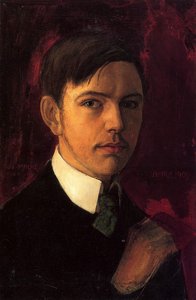
Augusto Macke
1887 - 1914 , Alemania
Datos clave
- Artistas Que Influyeron:
- Robert Delaunay
- Paul Klee
- Franz Marc
- Wassily Kandinsky
- Fecha De Muerte: 26 de septiembre de 1914
- Fecha De Nacimiento: 3 de enero de 1887
- Lugar De Nacimiento: Meschede, Alemania
- Movimiento Artístico: Expresionismo alemán
- Movimientos Influenciados:
- Orfismo
- Fauvismo
- Futurismo italiano
- Nacionalidad: Alemán
- Nombre Completo: August Macke
- Obras Notables:
- Mujer con una chaqueta verde
- Paisaje con vacas y camello
- Chicas bañándose...
- La Tienda de Sombreros
- Türkisches Café
Artículos relacionados

Paisajes Románticos: 10 Obras Maestras que Definieron un Movimiento Artístico
Descubre los 10 paisajes románticos más influyentes de artistas como Caspar David Friedrich y Turner. Explora la belleza, el simbolismo y las técnicas del movimiento romántico. Reproducciones de arte exclusivas en OriginalUniqueArt.com.

John Constable: Las 25 Obras Maestras del Paisaje Inglés | OriginalUniqueArt
Descubre las 25 obras maestras de John Constable, el pintor romántico inglés que capturó la belleza del paisaje. Explora su técnica, historia y significado en OriginalUniqueArt.com. Reproducciones de arte de alta calidad para tu hogar.

Crimson Threads of Narrative: Exploring Symbolism & Representation in Artworks Featuring the Red Dress
Explore the rich symbolism of the red dress in art history! From ancient power displays to iconic portraits like Cézanne’s 'Madame Cezanne', discover the cultural and artistic significance behind this captivating color. Expert analysis & insights.
Evocations of Place: A Historical Journey Through Landscape Art
Explore the rich history of landscape art with OriginalUniqueArt. Discover renowned artists, movements like Impressionism & tonalism, and expert guidance for collecting timeless pieces. Find your perfect serene escape today!

Evocations of Place: A Historical Journey Through Landscape Art
Explore the rich history of landscape art with OriginalUniqueArt. Discover renowned artists, movements like Impressionism & Romanticism, and expert guidance for collecting timeless pieces. Find your perfect serene escape today!


