

 Ver en contexto
 Enviar
 Compartir
 Detalles
 Guía
Guía

 Descargar
 Similares
 Radiografía
 Presentación de diapositivas
 Estadísticas
Man Reading in a Park


 Ver más
Giclée / Impresión de arte
Impresiones giclée o en lienzo de calidad de museo con producción rápida y opciones de acabado flexibles. ( Comprar pintura hecha a mano Cambiar a imagen digital)




P118B €10

P118H €10

P118W €10

P438Z €10

P508JH €12

P508YH €12

P805H €10

P805Z €10

P919BZ €10

P919G €10

P919XJ €10

P959ZH €10

P968JZ €12

W106C €8

W218G €10

W218JH €8

W218Y €10

W307PJ €10

W316G €10

W316PJ €8

W316Y €10

W398PJ €8

W4111J €10

W500HY €15

W500JH €15

W692G €12

W849H €8

W940BG €15

W953PJ €8




Elija entre nuestros tamaños predefinidos que respetan las proporciones originales de la obra.

Introduzca el ancho y el alto que necesite para adaptarse a su marco o pared. Una impresión solo puede recortarse, nunca hacerse más grande que la imagen original, por lo que un tamaño con una forma distinta perderá parte de la obra. Le enviaremos una maqueta digital para su aprobación antes de realizar cualquier impresión. La imagen que se muestra en esta página no refleja el recorte real; solo la maqueta lo hace.
Envío a todo el mundo () en 2 semanas en lugar de las 4/5 semanas estándar. (27 octubre)

Envío exprés gratuito a todo el mundo

Lienzo de lino de alta calidad

Seguro de envío total

Garantía de reembolso de aranceles aduaneros

Garantía de fidelidad cromática exacta

Política de devolución de 100 días (solo por defectos)

Garantía de devolución del 100% del dinero

Descuento por cantidad
 La opción de vidrio solo está disponible en tamaños inferiores a 110 cm.

Man Reading in a Park
Giclée / Impresión de arte
Dimensiones de la reproducción
-


Precio total final
€ 70
A Moment Suspended in Time: The Leisure of August Macke
To gaze upon Man Reading in a Park is to step through a veil into a perfect afternoon—a moment so richly imbued with quiet contemplation that it feels almost suspended outside the rush of modern life. This painting by August Macke captures more than just a man on a bench; it encapsulates the very essence of leisure, the profound luxury of simply being present amidst the vibrant chaos of nature and society. The composition draws the eye immediately to the central figure, absorbed in the narrative held within his newspaper, yet the surrounding park life—the distant figures, the delicate perch of a bird against the foliage—reminds us that solitude is often found within community.
The Luminous Brushwork of German Expressionism
Macke’s technique here is a masterful blend of Impressionistic light play and the emotional depth characteristic of early German Expressionism. While his style hints at the bright, almost joyous palette associated with the movement, there is an underlying sense of poignant introspection. Observe the handling of the paint; it possesses a palpable texture, suggesting Macke’s skilled use of impasto that allows the sunlight filtering through the leaves to become visible pigment itself. The background is not merely painted scenery; it breathes. It vibrates with color and suggestion, allowing the viewer's own imagination to fill in the details of conversation or activity happening just beyond our direct focus.
Context and the Fleeting Nature of Joy
Painted in 1914, this work carries the bittersweet resonance of its time. August Macke’s life was tragically cut short by the looming shadow of global conflict, making works like this an artifact imbued with a poignant nostalgia for peace and simple pleasures. The park setting becomes a sanctuary—a temporary haven before the storm. It speaks to a yearning for permanence in an era defined by rapid change, suggesting that true beauty resides in these small, unrepeatable pockets of calm.
Symbolism of Solitude Amidst Life
The symbolism within Man Reading in a Park is wonderfully layered. The newspaper itself acts as a barrier and a portal; it connects the man to the outside world's discourse while simultaneously isolating him in his personal bubble of thought. Meanwhile, the surrounding activity—the other figures enjoying their day—serves as a beautiful counterpoint, reminding us that even when we seek quietude, we are always part of a larger, interconnected human tapestry. The bird perched overhead is nature’s silent witness, observing the ritual of human repose.
Bringing Macke's Atmosphere Home
For collectors and designers alike, this piece offers more than mere decoration; it offers an emotional anchor. Reproducing the luminosity and evocative mood of Man Reading in a Park allows one to infuse a space with sophisticated tranquility. Imagine this scene rendered on a wall—a vibrant conversation starter that whispers tales of sun-drenched afternoons and thoughtful repose, transforming any room into a curated retreat.
Preguntas y respuestas
¿Puedo ver "Man Reading in a Park" de Augusto Macke en mi propia pared antes de comprarlo?
"Man Reading in a Park" cuenta con una vista previa en realidad aumentada: la página de Vista previa en RA de la obra permite visualizarla en su propio espacio mediante un dispositivo compatible.
¿Puedo ver "Man Reading in a Park" de Augusto Macke bajo diferentes luces?
La vista de rayos X de "Man Reading in a Park" de Augusto Macke se encuentra en la página Radiografía de la obra: un examen interactivo de la imagen a través de once capas ópticas.
¿Quién creó "Man Reading in a Park" y en qué año?
"Man Reading in a Park" es una obra de Augusto Macke, realizada en 1914.
Biografía del artista
Primeros años y carrera artística
August Robert Ludwig Macke, un renombrado pintor expresionista alemán, nació el 3 de enero de 1887 en Meschede, Westfalia. Su viaje artístico comenzó en la Kunstakademie Düsseldorf (1904-1906), bajo la tutela de Adolf Maennchen. El estilo de Macke fue moldeado por el impresionismo francés y el postimpresionismo, influenciado posteriormente por el fauvismo.Influencias artísticas y estilo
El encuentro de Macke con Robert Delaunay en París (1912) lo introdujo al cubismo cromático, también conocido como orfismo. Esta influencia se puede apreciar en su pintura tiendas ventanas, una interpretación personal del estilo de Delaunay combinada con la simultaneidad de imágenes encontrada en el futurismo italiano. Macke formó parte del grupo expresionista alemán *Der Blaue Reiter* (El Jinete Azul), junto a Wassily Kandinsky, Franz Marc y Paul Klee. Sus pinturas, como chicas bañándose con el pueblo al fondo (100 x 80 cm, Staatsgalerie Moderner Kunst, Múnich, Alemania), exhiben su estilo único caracterizado por colores vivos y un dibujo audaz.Obras destacadas y legado
- Mujer con una chaqueta verde (1913, Museo Ludwig Colonia, Alemania), una pieza ejemplar del expresionismo.
- Paisaje con vacas y camello (1914, Kunsthaus Zúrich, Suiza), un ejemplo esencial de su estilo.
- Türkisches Café (1914), una obra maestra que muestra su enfoque luminista durante su último período.
Fin trágico e impacto duradero
La vida de Macke se truncó cuando murió el 26 de septiembre de 1914, en el frente en Champagne, Francia. Su última pintura, despedida, captura el estado de ánimo de tristeza que se cernía sobre Europa durante la Primera Guerra Mundial.Contexto Histórico y Evolución Artística
Macke desarrolló su arte en un período de profundos cambios sociales y políticos en Alemania. El auge del expresionismo reflejó una creciente inquietud por la industrialización, la urbanización y la guerra inminente. Su participación en *Der Blaue Reiter* lo conectó con otros artistas que buscaban romper con las convenciones artísticas tradicionales y explorar nuevas formas de expresión. A través de su experimentación con el color, la forma y la composición, Macke contribuyó significativamente al desarrollo del expresionismo alemán y dejó un legado duradero en la historia del arte moderno. Su obra sigue siendo admirada por su vitalidad, originalidad y capacidad para transmitir emociones profundas.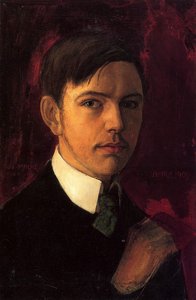
Augusto Macke
1887 - 1914 , Alemania
Datos clave
- Artistas Que Influyeron:
- Robert Delaunay
- Paul Klee
- Franz Marc
- Wassily Kandinsky
- Fecha De Muerte: 26 de septiembre de 1914
- Fecha De Nacimiento: 3 de enero de 1887
- Lugar De Nacimiento: Meschede, Alemania
- Movimiento Artístico: Expresionismo alemán
- Movimientos Influenciados:
- Orfismo
- Fauvismo
- Futurismo italiano
- Nacionalidad: Alemán
- Nombre Completo: August Macke
- Obras Notables:
- Mujer con una chaqueta verde
- Paisaje con vacas y camello
- Chicas bañándose...
- La Tienda de Sombreros
- Türkisches Café
Artículos relacionados

Unmasking Emotion: A Journey Through the Raw Power and Visceral Beauty of German Expressionism
Explore the raw emotional power of German Expressionism. From Kirchner to Die Brücke, discover how artists used distortion and vibrant color to unmask the human psyche. A deep dive into art history for the discerning collector and enthusiast.

Expresionismo Alemán: 10 Obras Maestras que Transformaron el Arte | OriginalUniqueArt
Descubre las 10 obras maestras del Expresionismo Alemán: Kirchner, Munch y más. Explora la historia, técnica y emoción detrás de estos lienzos icónicos. Reproducciones de arte de museo en OriginalUniqueArt.com. ¡Inspira tu hogar con arte!
August Macke: Expressionist Visions of Harmony & Modern Life
Explore the vibrant Expressionist paintings of August Macke (1887-1914). Discover his key role in Der Blaue Reiter, Fauvist influences, and captivating depictions of modern life. A comprehensive guide for art enthusiasts & collectors.

Los 10 Maestros del Paisaje Impresionista: Obras que Cambiaron la Historia del Arte
Descubre los 10 lienzos impresionistas que revolucionaron el arte. Explora la historia de Monet, Van Gogh y Renoir, sus técnicas y colores vibrantes. Encuentra reproducciones de alta calidad para decorar tu hogar en OriginalUniqueArt.com
El Grito Visceral de una Nación: Explorando la Emoción y la Distorsión en el Expresionismo Alemán
Descubre el expresionismo alemán en profundidad. Analizamos sus orígenes, artistas clave como Kirchner y Kandinsky, técnicas innovadoras y su impacto duradero en el arte moderno. Guía para coleccionistas.


