Ver en contexto
 Enviar
 Compartir
 Detalles
 Guía
Guía

 Descargar
 Similares
 Radiografía
 Presentación de diapositivas
 Preguntas y respuestas
 Estadísticas
The Critic


 Ver más
Giclée / Impresión de arte
Impresiones giclée o en lienzo de calidad de museo con producción rápida y opciones de acabado flexibles. ( Comprar pintura hecha a mano Cambiar a imagen digital)




P118B €10

P118H €10

P118W €10

P438Z €10

P508JH €12

P508YH €12

P805H €10

P805Z €10

P919BZ €10

P919G €10

P919XJ €10

P959ZH €10

P968JZ €12

W106C €8

W218G €10

W218JH €8

W218Y €10

W307PJ €10

W316G €10

W316PJ €8

W316Y €10

W398PJ €8

W4111J €10

W500HY €15

W500JH €15

W692G €12

W849H €8

W940BG €15

W953PJ €8




Elija entre nuestros tamaños predefinidos que respetan las proporciones originales de la obra.

Introduzca el ancho y el alto que necesite para adaptarse a su marco o pared. Una impresión solo puede recortarse, nunca hacerse más grande que la imagen original, por lo que un tamaño con una forma distinta perderá parte de la obra. Le enviaremos una maqueta digital para su aprobación antes de realizar cualquier impresión. La imagen que se muestra en esta página no refleja el recorte real; solo la maqueta lo hace.
Envío a todo el mundo () en 2 semanas en lugar de las 4/5 semanas estándar. (11 noviembre)

Envío exprés gratuito a todo el mundo

Lienzo de lino de alta calidad

Seguro de envío total

Garantía de reembolso de aranceles aduaneros

Garantía de fidelidad cromática exacta

Política de devolución de 100 días (solo por defectos)

Garantía de devolución del 100% del dinero

Descuento por cantidad
 La opción de vidrio solo está disponible en tamaños inferiores a 110 cm.

The Critic
Giclée / Impresión de arte
Dimensiones de la reproducción
-


Precio total final
€ 73
A Fragmented Portrait of Judgment
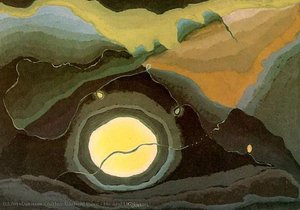
Arthur Garfield Dove’s “The Critic,” painted in 1925, isn't merely a depiction of an art critic; it’s a potent visual embodiment of the very act of critical observation itself. Born amidst the vibrant currents of early 20th-century America, Dove was a pioneer, boldly rejecting representational painting and forging his own path towards abstraction – a move that positioned him as one of the first true American abstract artists. This work, created during a period of intense experimentation within the Dada movement, reflects this spirit with its deliberate deconstruction and layered complexity. The piece immediately commands attention not through polished beauty, but through an unsettling honesty—a raw portrayal of the fragmented nature of perception and judgment.
The composition is strikingly unconventional. A humanoid figure, constructed from a chaotic assemblage of newspaper clippings, printed papers, and other found materials, dominates the center of the canvas. This isn’t a portrait in the traditional sense; rather, it's an almost architectural construction, suggesting a being built not of flesh and blood, but of ideas, opinions, and the relentless flow of information. The figure’s elongated limbs and angular silhouette contribute to a feeling of unease, as if it were perpetually caught mid-thought or in the process of dissecting something unseen. The background is a dense tapestry of text – snippets from newspapers, advertisements, and other printed sources—creating a visual echo of the critic's environment: a world saturated with commentary and opinion.
Dadaist Techniques & Materiality
Dove’s masterful use of collage is central to “The Critic’s” impact. He doesn’t simply adhere paper to a surface; he layers, overlaps, and manipulates the materials to create a tactile and visually rich experience. The rough texture of the newspaper fragments—the creases, tears, and faded ink—are deliberately preserved, adding an element of historical weight and reminding us that this critic is constructed from the remnants of past discourse. The deliberate lack of clean lines – relying instead on the inherent boundaries created by the paper itself – speaks to the Dadaist rejection of traditional artistic conventions. The artist’s technique involved careful cutting, precise pasting, and a meticulous arrangement designed to achieve a specific effect: a visual representation of intellectual dissection.
Symbolism & The Burden of Judgment
The symbolism within “The Critic” is layered and open to interpretation. The fragmented figure can be seen as representing the subjective nature of criticism – an individual’s perspective inevitably shaped by their own biases, experiences, and preconceptions. The newspaper clippings, a constant barrage of information, suggest the overwhelming pressure faced by critics to analyze and interpret the world around them. The bright red hat worn by the figure adds a touch of theatricality and perhaps even a hint of defiance—a visual assertion of individuality within a sea of opinion. Furthermore, the inclusion of text fragments hints at the ephemeral nature of public opinion, constantly shifting and evolving.
A Window into the 1920s & Dove’s Legacy
“The Critic” was created during a period of profound social and artistic change in America—the Roaring Twenties. The rise of mass media, coupled with the burgeoning avant-garde movements like Dadaism and Surrealism, challenged traditional notions of art and representation. Dove's work reflects this spirit of experimentation and rebellion, pushing the boundaries of what was considered acceptable within the American art scene. His pioneering role as an abstract painter paved the way for future generations of artists to explore non-representational forms. Studying “The Critic” offers a fascinating glimpse into the intellectual climate of the era and reveals Dove’s enduring legacy as a visionary artist who dared to question established norms.
Preguntas y respuestas
¿En qué estancia encaja mejor "The Critic" de Arthur Garfield Dove, considerando su paleta de colores?
Con su paleta de Dark, "The Critic" de Arthur Garfield Dove es ideal para una Living Room. Sus colores son parte de la razón de esta sugerencia.
¿Cuál es el formato de "The Critic"?
El formato de "The Critic" es Portrait, un dato útil para planificar la ubicación de una reproducción.
¿Cuántas personas ven "The Critic"?
Existe una página de Estadísticas para "The Critic". En ella se detallan las visitas mensuales de la obra y de otras piezas del artista, con desgloses por país e idioma.
Biografía del artista
Introducción a Arthur Garfield Dove
Arthur Garfield Dove, un artista estadounidense, es reconocido por sus obras abstractas que exploran la relación entre la forma y el color. Nacido el 2 de agosto de 1880 en Canandaigua, Nueva York, Dove fue uno de los primeros artistas estadounidenses en experimentar con estilos modernistas.Vida Temprana y Educación
Dove creció en una familia adinerada y fue nombrado en honor a los candidatos republicanos para la presidencia y la vicepresidencia en las elecciones de 1880, James Garfield y Chester Arthur. Sus intereses infantiles incluían tocar el piano, tomar clases de pintura y ser lanzador en un equipo de béisbol de la escuela secundaria. Dove asistió al Hobart College y a la Universidad Cornell, graduándose de Cornell en 1903.Carrera Artística
La carrera de Dove como artista comenzó con ilustración comercial en Nueva York, trabajando para Harper's Magazine y The Saturday Evening Post. Se convirtió en un ilustrador reconocido, pero sus padres eran poco receptivos a las dificultades que implicaba una carrera en el arte. En 1907, Dove viajó a Francia y se mudó a París, entonces la capital mundial del arte. Se unió a un grupo de artistas experimentales estadounidenses, incluyendo a Alfred Henry Maurer. Dove fue introducido a nuevos estilos de pintura, particularmente las obras fauvistas de Henri Matisse, y expuso en el Salón de Otoño anual en 1908 y 1909.Desarrollo Artístico y Obras Clave
Dove utilizó una amplia gama de medios, a veces en combinaciones poco convencionales, para producir sus abstracciones y paisajes abstractos. Su pintura "Yo y la Luna" de 1937 es un buen ejemplo de un paisaje abstracto. Dove también experimentó con técnicas, combinando pinturas como óleo o témpera mezclados a mano sobre una emulsión de cera, como se ejemplifica en su pintura "Tanques" de 1938, que se encuentra en la colección del Museo de Bellas Artes de Boston. Dove se refería a su tipo de abstracción como "extracción", donde extraía las formas esenciales de una escena de la naturaleza. Su trabajo muestra una evolución desde representaciones más figurativas hacia composiciones cada vez más abstractas, explorando el color y la forma con una libertad innovadora para su época.Legado e Importancia Histórica
Las pinturas abstractas de Dove han tenido un impacto significativo en el modernismo estadounidense. Su uso de medios y técnicas no convencionales ha influenciado a generaciones de artistas. Como pionero en el arte abstracto, la obra de Dove se puede encontrar en varios museos, incluyendo el Museo Hirshhorn y Jardín de Esculturas, que alberga varias de sus obras notables.- Visite https://OriginalUniqueArt.com/@/arthur-garfield-dove para explorar la obra de Dove.
- Descubra más sobre Alfred Stieglitz y su contribución al modernismo estadounidense en /es/art/show/art-8xyffg-es/.
- Infórmese sobre el Museo de Bellas Artes de Boston y su colección de arte moderno en /es/art/show/art-5zkg47-es/.

Arthur Garfield Dove
1880 - 1946 , Estados Unidos de América
Datos clave
- Artistas Que Influyeron: ['Henri Matisse']
- Fecha De Fallecimiento: 1946
- Fecha De Nacimiento: 2 de agosto de 1880
- Influenciado A Artistas: ['Generaciones de artistas']
- Lugar De Nacimiento: Canandaigua, EE. UU.
- Movimiento Artístico: Modernismo americano
- Nacionalidad: Estadounidense
- Nombre Completo: Arthur Garfield Dove
- Obras Notables:
- Me y la luna
- Tanques
Artículos relacionados

Arthur Dove: Pioneering American Abstraction & the Poetic Language of Modernism
Explore the groundbreaking work of Arthur Dove, a pioneer of American abstraction. Discover his artistic evolution, influences, and investment potential with OriginalUniqueArt's expert guide.

Expresionismo Abstracto: 10 Obras Maestras que Transformaron el Arte |
Descubre las 10 obras maestras del Expresionismo Abstracto: Pollock, Rothko y más. Explora la historia, técnica y significado de estos lienzos icónicos. Reproducciones de arte exclusivas en .

Lyrical Abstraction: The High-Energy Soul of Modern Art’s Most Vibrant Movement
Dive into the high-energy world of Lyrical Abstraction. Explore how bold colors, fluid motion, and emotional depth define this modern masterpiece movement. Discover iconic artists and learn to bring this vibrant, soulful energy into your contemporary space.

Abstracción Geométrica: 10 Obras Maestras que Transformaron el Arte Moderno | OriginalUniqueArt
Descubre las 10 obras maestras de la abstracción geométrica que revolucionaron el arte moderno. Explora a Mondrian, Malevich y Kandinsky en OriginalUniqueArt.com. Reproducciones de alta calidad para tu hogar.
The Soul of Color: A Journey into the Emotional Resonance of Lyrical Abstraction
Embark on a cultural journey through Lyrical Abstraction. Explore how masters like Kandinsky used color and motion to translate emotion into visual poetry. Discover the profound beauty of abstract expressionism and learn to curate emotional resonance in your own art collection.