

 Vista previa
 Compartir
 Compartir
 Ver detalles
 Guía
Guía

 Descargar
 Ver artículos similares
 Radiografía
 Presentación de diapositivas
 Estadísticas
The Lucky Hand (scene 1)
 Acrylic On Canvas
- WallArt
- Expressionist Modernism
 1910
1910 30.0 x 21.0 cm
 Arnold Schönberg Center
 Leer más
Giclée / Impresión de arte
Impresiones giclée o en lienzo de calidad de museo con producción rápida y opciones de acabado flexibles. ( Encargar reproducción pintada a mano Ver versión en imagen digital)




P118B $10

P118H $10

P118W $10

P438Z $10

P508JH $12

P508YH $12

P805H $10

P805Z $10

P919BZ $10

P919G $10

P919XJ $10

P959ZH $10

P968JZ $12

W106C $8

W218G $10

W218JH $8

W218Y $10

W307PJ $10

W316G $10

W316PJ $8

W316Y $10

W398PJ $8

W4111J $10

W500HY $15

W500JH $15

W692G $12

W849H $8

W940BG $15

W953PJ $8




Elija entre nuestros tamaños predefinidos que respetan las proporciones originales de la obra.

Puede introducir sus propias dimensiones para adaptarse a un marco o espacio específico. Si el tamaño seleccionado no coincide con las proporciones de la imagen original, recortaremos la obra de arte o extenderemos la imagen con un borde con efecto espejo o de color sólido. Se enviará una maqueta digital para su aprobación antes de que comience la producción.
Tenga en cuenta que la vista previa en pantalla no refleja el recorte o la extensión real. Solo la maqueta mostrará con precisión la composición final.
Aunque existen tamaños personalizados, recomendamos seleccionar una dimensión de la lista predefinida para preservar las proporciones originales.
Envío a todo el mundo () en 2 semanas en lugar de las 4/5 semanas estándar. (26 septiembre)

Envío exprés gratuito a todo el mundo

Lienzo de lino de alta calidad

Seguro de envío completo

Garantía de reembolso de impuestos aduaneros

Garantía de fidelidad cromática exacta

Política de devolución de 100 días (solo por defectos)

Garantía de devolución del 100% del dinero

Oferta por volumen
 La opción de vidrio solo está disponible en tamaños inferiores a 110 cm.

The Lucky Hand (scene 1)
Giclée / Impresión de arte
Tamaño de la reproducción
-


Precio total
$ 80
A Descent into the Unseen: "The Lucky Hand" (Scene 1) – A Reflection of Schönberg’s Dark Vision
OriginalUniqueArt.com presents a meticulously crafted hand-painted reproduction of Arnold Schönberg's “The Lucky Hand” (Scene 1), a haunting tableau born from the composer’s intensely personal and profoundly unsettling drama, "Die glückliche Hand." Completed in 1910, this monochrome artwork transcends mere illustration; it is a visual embodiment of Schönberg’s exploration of fate, guilt, and the grotesque – themes that would dominate his later, more radical compositions. The scene, meticulously rendered in shades of grey and black, immediately draws the viewer into a space of palpable unease, mirroring the drama's core anxieties.
- Subject Matter: The artwork depicts a nightmarish scenario – a man lying prone on the stage, seemingly violated by a monstrous hybrid creature. This unsettling image is central to the play’s narrative, representing a descent into psychological torment and the consequences of transgression.
- Composition & Technique: Schönberg's meticulous attention to detail is evident in the layering of textures and the subtle manipulation of light and shadow. The use of a shallow curve for the stage emphasizes claustrophobia, while the strategically placed green-lit faces peering from behind the velvet curtain create an atmosphere of voyeurism and judgment. The artist’s skill lies in conveying both physical horror and psychological dread through a restrained palette.
Historical Context & Schönberg's Artistic Journey
Created during a period of immense artistic upheaval, “The Lucky Hand” reflects the broader anxieties of early 20th-century Europe. Schönberg was at the forefront of musical innovation, challenging traditional harmonic structures and paving the way for atonality – a compositional technique that abandoned established tonal centers. This radical shift mirrored a wider cultural questioning of established norms and values. Born in Vienna in 1874, Schönberg’s early works, such as “Verklärte Nacht,” demonstrated a synthesis of Brahmsian and Wagnerian influences before he fully embraced his revolutionary approach. The work's creation aligns with the period when Schönberg was developing his groundbreaking theories about tone color and exploring the expressive potential of dissonance – concepts that would profoundly impact 20th-century music.
Artist Information: Artist: Arnold Schönberg Birth Year: 1874 Death Year: 1951Symbolism & Emotional Resonance
The imagery within “The Lucky Hand” is laden with symbolic weight. The hyena-like creature, with its bat wings, represents a primal, almost demonic force – a manifestation of guilt and the subconscious. The man’s position, face down, suggests vulnerability and helplessness. The green light emanating from the hidden faces symbolizes judgment and the inescapable scrutiny of conscience. The candles, meticulously arranged on the wall, could represent fleeting moments of hope or perhaps the flickering remnants of sanity in the face of overwhelming darkness. The overall effect is profoundly unsettling, evoking a sense of dread and despair.
Dimensions & Acquisition
This hand-painted reproduction measures 30 x 21 cm (11.8 x 8.3 inches), making it ideal for a variety of settings – from intimate study spaces to larger art collections. Its monochrome palette lends itself beautifully to diverse interior design styles, offering a timeless and sophisticated aesthetic. Order your hand-painted reproduction of “The Lucky Hand” (Scene 1) today and bring this powerful work of art into your home or office.
Biografía del artista
Early Life and Musical Beginnings
Arnold Schoenberg, born September 13, 1874, in Vienna, Austria, embarked on a musical journey shaped by humble origins—his father operated a shoe shop. Despite this modest upbringing, Schoenberg possessed an innate passion for music that propelled him to largely self-educate himself within the realm of composition and theory. His formative years witnessed a synthesis of Brahmsian and Wagnerian styles, as evidenced in his early works like “Verklärte Nacht” (1899), establishing him as a prominent figure within the second Viennese School alongside Alban Berg and Anton Webern. This school championed innovation and challenged established musical conventions.Notable Compositions and Musical Innovations
Schoenberg’s compositional output solidified his reputation as one of the most influential figures in 20th-century classical music. Pieces such as “String Quartet No. 2” (1907–1908) and “Erwartung” (1909) exemplify his pioneering exploration of atonality—a radical departure from tonal harmony—marking a pivotal moment in musical history. Furthermore, "Pierrot Lunaire" (1912), with its groundbreaking use of Sprechstimme (speech-song), pushed the boundaries of vocal expression and cemented Schoenberg's position as a visionary composer.The Viennese School and Serialism
Schoenberg’s influence extended far beyond his immediate contemporaries, shaping the aesthetic sensibilities of subsequent generations of composers. He spearheaded the development of serialism—a systematic method of composition based on mathematical sequences—which revolutionized musical thinking and provided a framework for exploring new sonic possibilities. This approach fundamentally altered how music was conceived and produced during the interwar period.Emigration to America and Later Artistic Pursuits
Facing increasing persecution from Nazi authorities in 1933, Schoenberg reluctantly resigned from the Prussian Academy of Arts, labeling his music as “degenerate.” He sought refuge in the United States, accepting a professorship at UCLA (1936–1944), where facilities bear his name—a testament to his enduring legacy. During this period, he continued to experiment with film music and revisited tonal composition, culminating in "Chamber Symphony No. 2" (1939). Notably, “Ode to Napoleon” (1942) served as a satirical critique of fascist ideology, inspired by Byron’s poetry.Legacy and Recognition
Post-war Vienna honored Schoenberg with citizenship, though he succumbed to illness shortly thereafter. His String Trio (1946), reflecting his frail condition, stands as a poignant reminder of his artistic dedication. Recognizing the profound impact of the Holocaust, Schoenberg commemorated its victims in “Survivor from Warsaw” (1947). Finally, the Israel Conservatory and Academy of Music elected him honorary president in 1951—a fitting culmination to a remarkable life devoted to musical innovation and intellectual rigor. His contributions continue to inspire musicians and scholars alike, ensuring his place as an icon of modern classical music.
Arnold Schoenberg
1874 - 1951 , Austria
Datos clave
- Artistic Movement Or Style: Técnica dodecafónica; Expresionismo
- Artists Or Movements Influenced By This Artist:
- Anton Webern
- Alban Berg
- Artists Who Influenced This Artist:
- Johannes Brahms
- Richard Wagner
- Date Of Birth: 13 septiembre 1874
- Date Of Death: 1951
- Full Name: Arnold Schoenberg
- Nationality: Austríaco-americano
- Notable Artworks:
- Suite, op. 29
- Música Teclística
- Cuarteto de cuerda nº 2
- Place Of Birth: Vienna, Austria
Artículos relacionados

Echoes of Time: Exploring the Enduring Appeal & Historical Context of Vintage Art Prints
Explore the captivating world of vintage art prints! Discover their history, collecting tips & enduring appeal. Expert insights on chromolithography and building a legacy collection with OriginalUniqueArt.

Las 10 Pinturas Más Famosas Dominadas por el Negro | Arte y Decoración
Descubre las 10 pinturas más impactantes dominadas por el negro. Explora obras maestras de Rembrandt, Goya y Rothko, su historia y significado. Encuentra reproducciones de arte exclusivas para transformar tu hogar en .

Giclée Prints: Archival Quality & Aesthetic Nuances for the Discerning Collector
Explore the world of giclée prints with OriginalUniqueArt. Learn about archival quality, aesthetic nuances & investment potential. Expert guidance for discerning art collectors seeking museum-quality reproductions and lasting value.
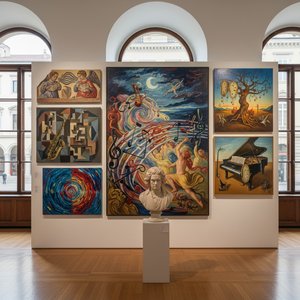
Harmonies on Canvas: Exploring the Visual Representation of Music in Art History
Explore the fascinating history of music's visual representation in art! From ancient symbolism to modern abstraction, discover how artists have captured sound and emotion on canvas. Expert insights & stunning examples.

The Enduring Legacy of Fine Art Prints: Technique, History & Aesthetic Impact
Explore the rich history & techniques of fine art prints. Discover investment potential, assess authenticity, and learn how to preserve your collection with expert guidance. Trusted insights for discerning collectors.


