

 Vista previa
 Compartir
 Compartir
 Ver detalles
 Guía
Guía

 Descargar
 Ver artículos similares
 Radiografía
 Presentación de diapositivas
 Estadísticas
Garden Scene
 Oil On Canvas
- WallArt
- Modernism of his day
 1907
1907- Early Modern
 36.0 x 49.0 cm
 Arnold Schönberg Center
 Leer más
Reproducción al óleo hecha a mano
Óleo sobre lienzo pintado a mano en el tamaño y marco de su elección, realizado por encargo por nuestros artistas. ( Cambiar a formato impreso Ver versión en imagen digital)




P118B €10

P118H €10

P118W €10

P438Z €10

P508JH €12

P508YH €12

P805H €10

P805Z €10

P919BZ €10

P919G €10

P919XJ €10

P959ZH €10

P968JZ €12

W106C €8

W218G €10

W218JH €8

W218Y €10

W307PJ €10

W316G €10

W316PJ €8

W316Y €10

W398PJ €8

W4111J €10

W500HY €15

W500JH €15

W692G €12

W849H €8

W940BG €15

W953PJ €8




Elija entre nuestros tamaños predefinidos que respetan las proporciones originales de la obra.

Escriba el ancho y el alto que necesite para adaptarse a su marco o a su pared. Al ser una obra pintada a mano, para un tamaño con una forma distinta, el artista puede pintar un poco más alrededor de la imagen o recortar un poco; usted elige. Le enviaremos una maqueta digital para su aprobación antes de comenzar la pintura. La imagen que se muestra en esta página no refleja el resultado real; solo la maqueta lo hace.
Tras realizar el pedido, el equipo de OriginalUniqueArt.com enviará un correo electrónico al cliente para solicitar instrucciones y proporcionarle una vista previa del boceto.
Envío a todo el mundo () en 3-4 semanas en lugar de las 5 semanas estándar. (22 octubre). Sin comprometer la calidad.

Envío exprés gratuito a todo el mundo

Lienzo de lino de alta calidad

Seguro de envío completo

Garantía de reembolso de impuestos aduaneros

Garantía de fidelidad cromática exacta

Política de devolución de 100 días (solo por defectos)

Garantía de devolución del 100% del dinero

Oferta por volumen
 La opción de vidrio solo está disponible en tamaños inferiores a 110 cm.

Garden Scene
Técnica de reproducción
Tamaño de la reproducción
-


Precio total
€ 263
A Moment of Spontaneous Harmony: Exploring Arnold Schönberg’s ‘Garden Scene’
Arnold Schönberg's “Garden Scene,” painted in 1907, is more than just a depiction of an outdoor gathering; it’s a visceral expression of the artist’s revolutionary approach to color and form. Created during a pivotal moment in artistic history – a time when established conventions were being aggressively challenged – this work embodies Schönberg's commitment to spontaneity and his willingness to embrace unconventional materials, reflecting the burgeoning spirit of Modernism. Measuring 36 x 49 cm, the painting immediately captivates with its vibrant palette and seemingly effortless composition. The scene unfolds with a group of figures enjoying themselves beneath a lush green canopy, seated around tables laden with simple yet elegant dining ware. This isn’t a meticulously rendered landscape; rather, it's an impression, a fleeting moment captured through a deliberate disregard for traditional artistic constraints.
Technique and Materiality: A Radical Experiment
What truly distinguishes “Garden Scene” is Schönberg’s audacious technique. He abandoned the conventional practice of priming surfaces – a cornerstone of academic painting – opting instead to utilize plywood and board directly, exposing the raw texture of the support. This decision, repeated in over 50 distinct combinations across his œuvre, speaks volumes about his desire for immediacy and an unvarnished truthfulness in his work. The visible grain of the wood, coupled with the layering of pigments, creates a dynamic surface that shifts with the light, adding depth and complexity to the scene. Schönberg’s preference for a fluid approach is evident in the loose brushwork and the blending of colors, suggesting a process driven by intuition rather than precise calculation. This rejection of traditional methods aligns him squarely within the modernist movement's pursuit of new forms of expression.
Historical Context: Vienna at the Dawn of Modernism
To fully appreciate “Garden Scene,” it’s essential to understand its historical context. Schönberg was working in Vienna, a city that was a hotbed of artistic innovation at the turn of the 20th century. The late 1890s and early 1900s witnessed a dramatic shift away from representational art, with artists like Schönberg, Gustav Klimt, and Egon Schiele pushing boundaries in color theory, composition, and subject matter. Schönberg’s exploration of atonality in his musical compositions – a radical departure from traditional harmony – mirrored his artistic experimentation, reflecting a broader cultural upheaval. The painting's creation coincides with the premiere of his String Quartet No. 2 (1907-1908), further solidifying his position as a leading figure in this revolutionary movement.
Symbolism and Emotional Impact
While seemingly simple, “Garden Scene” resonates with subtle symbolic layers. The figures gathered around the tables represent community, leisure, and perhaps even contemplation – themes frequently explored in Impressionist and Post-Impressionist art. The vibrant green of the canopy evokes a sense of tranquility and renewal, while the varied textures and colors contribute to an overall feeling of warmth and conviviality. Schönberg’s deliberate use of unprimed surfaces adds a layer of vulnerability and honesty to the work, inviting viewers to connect with it on a deeply emotional level. This piece is not merely a representation of a garden; it's a testament to the power of artistic freedom and the pursuit of authentic expression.
Preguntas y respuestas
¿Cuál es el lugar de "Garden Scene" de Arnold Schoenberg en la historia del arte?
"Garden Scene" de Arnold Schoenberg pertenece al movimiento Modernism of his day, dentro del periodo Early Modern. Juntos le otorgan a la obra su lugar en la historia del arte.
¿Hacia qué tono se inclina "Garden Scene"?
Un tono Green to Violet Spectrum recorre "Garden Scene" de Arnold Schoenberg.
¿Qué tan intensos son los colores en "Garden Scene" de Arnold Schoenberg?
La intensidad cromática de "Garden Scene" es Balanced. La intensidad describe la fuerza con la que se perciben los colores.
Biografía del artista
Early Life and Musical Beginnings
Arnold Schoenberg, born September 13, 1874, in Vienna, Austria, embarked on a musical journey shaped by humble origins—his father operated a shoe shop. Despite this modest upbringing, Schoenberg possessed an innate passion for music that propelled him to largely self-educate himself within the realm of composition and theory. His formative years witnessed a synthesis of Brahmsian and Wagnerian styles, as evidenced in his early works like “Verklärte Nacht” (1899), establishing him as a prominent figure within the second Viennese School alongside Alban Berg and Anton Webern. This school championed innovation and challenged established musical conventions.Notable Compositions and Musical Innovations
Schoenberg’s compositional output solidified his reputation as one of the most influential figures in 20th-century classical music. Pieces such as “String Quartet No. 2” (1907–1908) and “Erwartung” (1909) exemplify his pioneering exploration of atonality—a radical departure from tonal harmony—marking a pivotal moment in musical history. Furthermore, "Pierrot Lunaire" (1912), with its groundbreaking use of Sprechstimme (speech-song), pushed the boundaries of vocal expression and cemented Schoenberg's position as a visionary composer.The Viennese School and Serialism
Schoenberg’s influence extended far beyond his immediate contemporaries, shaping the aesthetic sensibilities of subsequent generations of composers. He spearheaded the development of serialism—a systematic method of composition based on mathematical sequences—which revolutionized musical thinking and provided a framework for exploring new sonic possibilities. This approach fundamentally altered how music was conceived and produced during the interwar period.Emigration to America and Later Artistic Pursuits
Facing increasing persecution from Nazi authorities in 1933, Schoenberg reluctantly resigned from the Prussian Academy of Arts, labeling his music as “degenerate.” He sought refuge in the United States, accepting a professorship at UCLA (1936–1944), where facilities bear his name—a testament to his enduring legacy. During this period, he continued to experiment with film music and revisited tonal composition, culminating in "Chamber Symphony No. 2" (1939). Notably, “Ode to Napoleon” (1942) served as a satirical critique of fascist ideology, inspired by Byron’s poetry.Legacy and Recognition
Post-war Vienna honored Schoenberg with citizenship, though he succumbed to illness shortly thereafter. His String Trio (1946), reflecting his frail condition, stands as a poignant reminder of his artistic dedication. Recognizing the profound impact of the Holocaust, Schoenberg commemorated its victims in “Survivor from Warsaw” (1947). Finally, the Israel Conservatory and Academy of Music elected him honorary president in 1951—a fitting culmination to a remarkable life devoted to musical innovation and intellectual rigor. His contributions continue to inspire musicians and scholars alike, ensuring his place as an icon of modern classical music.
Arnold Schoenberg
1874 - 1951 , Austria
Datos clave
- Artistic Movement Or Style: Técnica dodecafónica; Expresionismo
- Artists Or Movements Influenced By This Artist:
- Anton Webern
- Alban Berg
- Artists Who Influenced This Artist:
- Johannes Brahms
- Richard Wagner
- Date Of Birth: 13 septiembre 1874
- Date Of Death: 1951
- Full Name: Arnold Schoenberg
- Nationality: Austríaco-americano
- Notable Artworks:
- Suite, op. 29
- Música Teclística
- Cuarteto de cuerda nº 2
- Place Of Birth: Vienna, Austria
Artículos relacionados
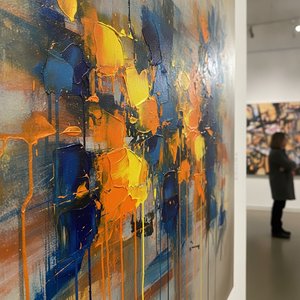
Beyond the Lines: Mastering the High-Impact World of Contemporary Abstraction
Master the high-impact world of contemporary abstraction. Discover how bold colors, textures, and modern movements like Abstract Expressionism can transform your space with premium, high-energy art curated for the design-conscious professional.

Abstracción Geométrica: 10 Obras Maestras que Transformaron el Arte Moderno | OriginalUniqueArt
Descubre las 10 obras maestras de la abstracción geométrica que revolucionaron el arte moderno. Explora a Mondrian, Malevich y Kandinsky en OriginalUniqueArt.com. Reproducciones de alta calidad para tu hogar.

Kandinsky: Las 25 Obras Maestras del Pionero de la Abstracción | OriginalUniqueArt
Descubre las 25 obras maestras de Wassily Kandinsky, pionero del arte abstracto. Explora su expresionismo, composiciones únicas y la historia detrás de cada cuadro. Reproducciones de alta calidad para decorar tu hogar con arte moderno en OriginalUniqueArt.com.
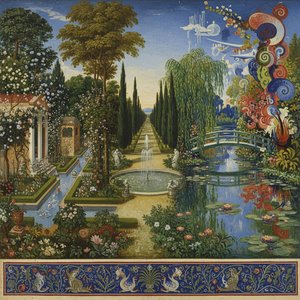
Cultivating Paradise: A Historical & Artistic Exploration of Gardens in Painting
Explore the rich history of gardens in painting! Discover masterpieces from Renaissance to Impressionism & beyond. Learn about symbolism, artists like Monet & Klimt, and find your perfect artwork at OriginalUniqueArt.

Expresionismo Abstracto: 10 Obras Maestras que Transformaron el Arte |
Descubre las 10 obras maestras del Expresionismo Abstracto: Pollock, Rothko y más. Explora la historia, técnica y significado de estos lienzos icónicos. Reproducciones de arte exclusivas en .


