
 Enviar
 Compartir
 Detalles
 Guía
Guía

 Descargar
 Similares
 Presentación de diapositivas
 Preguntas y respuestas
 Estadísticas
Erwartung, op. 17

- 36.0 x 28.0 cm


 Ver más
Giclée / Impresión de arte
Impresiones giclée o en lienzo de calidad de museo con producción rápida y opciones de acabado flexibles. ( Comprar pintura hecha a mano Cambiar a imagen digital)




































Elija entre nuestros tamaños predefinidos que respetan las proporciones originales de la obra.

Introduzca el ancho y el alto que necesite para adaptarse a su marco o pared. Una impresión solo puede recortarse, nunca hacerse más grande que la imagen original, por lo que un tamaño con una forma distinta perderá parte de la obra. Le enviaremos una maqueta digital para su aprobación antes de realizar cualquier impresión. La imagen que se muestra en esta página no refleja el recorte real; solo la maqueta lo hace.
Envío a todo el mundo () en 2 semanas en lugar de las 4/5 semanas estándar. (8 noviembre)

Envío exprés gratuito a todo el mundo

Lienzo de lino de alta calidad

Seguro de envío total

Garantía de reembolso de aranceles aduaneros

Garantía de fidelidad cromática exacta

Política de devolución de 100 días (solo por defectos)

Garantía de devolución del 100% del dinero

Descuento por cantidad
 La opción de vidrio solo está disponible en tamaños inferiores a 110 cm.

Erwartung, op. 17
Giclée / Impresión de arte
Dimensiones de la reproducción
-


Precio total final
€ 72
A Fragment of Anxiety: Schoenberg's "Erwartung" – A Window into Musical Angst
This meticulously crafted hand-painted reproduction offers an unparalleled glimpse into the genesis of Arnold Schoenberg’s groundbreaking monodrama, “Erwartung” (Expectation), composed in 1909. More than just a musical score, it is a tangible embodiment of intense creative struggle and a profound exploration of human emotion – a testament to Schoenberg's revolutionary approach to composition. The image captures the very document upon which this pivotal work was born, revealing the raw, almost frantic energy that fueled its creation.
- The Score as Canvas: The reproduction faithfully replicates the original score, a chaotic yet meticulously organized collection of notes, symbols, and handwritten annotations. Schoenberg’s characteristic use of short scores – a technique designed to capture fleeting moments of heightened emotion – is strikingly evident.
- A Moment Frozen in Time: The inclusion of two clocks within the image adds another layer of significance. These aren't merely decorative elements; they represent the relentless passage of time, a key thematic concern within “Erwartung,” where suspense and anticipation build to unbearable tension.
- Technical Detail: Notice the varying levels of detail – fully notated pitches and rhythms alongside fragmented dynamics and phrasing, reflecting Schoenberg’s initial approach. This reveals the composer's iterative process, constantly refining his vision as he wrestled with translating psychological states into musical form.
The Birth of Atonality: Contextualizing "Erwartung"
"Erwartung," created in Steinakirchen (Lower Austria), marked a radical departure from traditional tonal music. Schoenberg, alongside Alban Berg and Anton Webern, spearheaded the development of atonality – a system where no single note held inherent harmonic significance. This wasn't simply about discarding established rules; it was an attempt to represent the subjective experience of emotion with unprecedented directness. The monodrama’s narrative, centered around a woman’s increasingly paranoid and unsettling wait for a lover, perfectly mirrored this new musical landscape.
Schoenberg himself articulated his intent brilliantly: “I have written something for the theatre: a monodrama. By that I mean a piece in which only one person appears…” This focus on singular experience, amplified by the dramatic tension of the score, is central to understanding "Erwartung’s" enduring power.
Symbolism and Emotional Resonance
The black-and-white aesthetic of the original photograph lends itself powerfully to the drama unfolding within the score. The stark contrast emphasizes the fragmented nature of the musical ideas and the unsettling atmosphere of anticipation. The handwritten annotations, often corrections or fleeting thoughts, contribute to a sense of vulnerability and intellectual struggle – mirroring the protagonist’s descent into paranoia.
The image isn't just a representation of music; it is an invitation to experience the raw emotional core of Schoenberg’s masterpiece. It speaks to themes of anxiety, isolation, and the fragility of human perception—themes that continue to resonate with audiences today.
Specifications
Title: Erwartung, op. 17 Description: As detailed in the artwork information. Size: 36 x 28 cm Date: 1909 Artist: Arnold Schoenberg Birth Year: 1874 Death Year: 1951Preguntas y respuestas
¿Qué edad tenía Arnold Schoenberg cuando se creó "Erwartung, op. 17"?
Arnold Schoenberg tenía 35 años cuando creó "Erwartung, op. 17" en 1909. La edad se calcula a partir del año de nacimiento del artista, 1874.
¿A qué época pertenece "Erwartung, op. 17"?
"Erwartung, op. 17" de Arnold Schoenberg pertenece al periodo 19th Century, una clasificación que sitúa la obra dentro de la historia del arte.
¿Cuál es el color predominante en "Erwartung, op. 17" de Arnold Schoenberg?
El Putty (#e8cda1) es el color predominante de "Erwartung, op. 17" de Arnold Schoenberg.
Biografía del artista
Early Life and Musical Beginnings
Arnold Schoenberg, born September 13, 1874, in Vienna, Austria, embarked on a musical journey shaped by humble origins—his father operated a shoe shop. Despite this modest upbringing, Schoenberg possessed an innate passion for music that propelled him to largely self-educate himself within the realm of composition and theory. His formative years witnessed a synthesis of Brahmsian and Wagnerian styles, as evidenced in his early works like “Verklärte Nacht” (1899), establishing him as a prominent figure within the second Viennese School alongside Alban Berg and Anton Webern. This school championed innovation and challenged established musical conventions.Notable Compositions and Musical Innovations
Schoenberg’s compositional output solidified his reputation as one of the most influential figures in 20th-century classical music. Pieces such as “String Quartet No. 2” (1907–1908) and “Erwartung” (1909) exemplify his pioneering exploration of atonality—a radical departure from tonal harmony—marking a pivotal moment in musical history. Furthermore, "Pierrot Lunaire" (1912), with its groundbreaking use of Sprechstimme (speech-song), pushed the boundaries of vocal expression and cemented Schoenberg's position as a visionary composer.The Viennese School and Serialism
Schoenberg’s influence extended far beyond his immediate contemporaries, shaping the aesthetic sensibilities of subsequent generations of composers. He spearheaded the development of serialism—a systematic method of composition based on mathematical sequences—which revolutionized musical thinking and provided a framework for exploring new sonic possibilities. This approach fundamentally altered how music was conceived and produced during the interwar period.Emigration to America and Later Artistic Pursuits
Facing increasing persecution from Nazi authorities in 1933, Schoenberg reluctantly resigned from the Prussian Academy of Arts, labeling his music as “degenerate.” He sought refuge in the United States, accepting a professorship at UCLA (1936–1944), where facilities bear his name—a testament to his enduring legacy. During this period, he continued to experiment with film music and revisited tonal composition, culminating in "Chamber Symphony No. 2" (1939). Notably, “Ode to Napoleon” (1942) served as a satirical critique of fascist ideology, inspired by Byron’s poetry.Legacy and Recognition
Post-war Vienna honored Schoenberg with citizenship, though he succumbed to illness shortly thereafter. His String Trio (1946), reflecting his frail condition, stands as a poignant reminder of his artistic dedication. Recognizing the profound impact of the Holocaust, Schoenberg commemorated its victims in “Survivor from Warsaw” (1947). Finally, the Israel Conservatory and Academy of Music elected him honorary president in 1951—a fitting culmination to a remarkable life devoted to musical innovation and intellectual rigor. His contributions continue to inspire musicians and scholars alike, ensuring his place as an icon of modern classical music.
Arnold Schoenberg
1874 - 1951 , Austria
Datos clave
- Artistic Movement Or Style: Técnica dodecafónica; Expresionismo
- Artists Or Movements Influenced By This Artist:
- Anton Webern
- Alban Berg
- Artists Who Influenced This Artist:
- Johannes Brahms
- Richard Wagner
- Date Of Birth: 13 septiembre 1874
- Date Of Death: 1951
- Full Name: Arnold Schoenberg
- Nationality: Austríaco-americano
- Notable Artworks:
- Suite, op. 29
- Música Teclística
- Cuarteto de cuerda nº 2
- Place Of Birth: Vienna, Austria
Artículos relacionados
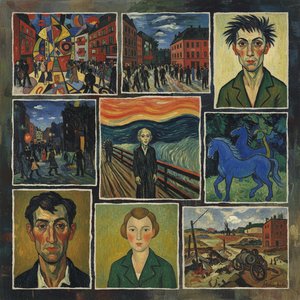
Expresionismo Pictórico: 10 Obras Maestras que Definieron un Movimiento Revolucionario | OriginalUniqueArt
Descubre las 10 obras maestras del expresionismo que revolucionaron el arte moderno. Explora la historia de Munch, Kirchner, Kandinsky y más. Reproducciones de alta calidad para decorar tu hogar con emoción y estilo en OriginalUniqueArt.com.
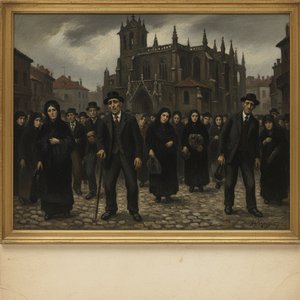
José Gutiérrez Solana: A Chronicle of Spanish Society Through Expressionist Vision
Explore the captivating world of José Gutiérrez Solana, a pivotal Spanish Expressionist painter. Discover his haunting depictions of early 20th-century Spain, influenced by Goya & El Greco. Learn about his key works and lasting legacy.
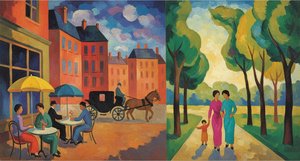
August Macke: Expressionist Visions of Harmony & Modern Life
Explore the vibrant Expressionist paintings of August Macke (1887-1914). Discover his key role in Der Blaue Reiter, Fauvist influences, and captivating depictions of modern life. A comprehensive guide for art enthusiasts & collectors.

The Visceral Self: Exploring Emotion & Identity in Expressionist Portraiture
Explore the powerful world of Expressionist portraiture with OriginalUniqueArt. Discover how artists captured raw emotion & identity through bold color and distortion. Expert insights for collectors.
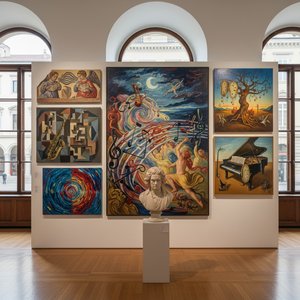
Harmonies on Canvas: Exploring the Visual Representation of Music in Art History
Explore the fascinating history of music's visual representation in art! From ancient symbolism to modern abstraction, discover how artists have captured sound and emotion on canvas. Expert insights & stunning examples.


