

 Vista previa
 Compartir
 Compartir
 Ver detalles
 Guía
Guía

 Descargar
 Ver artículos similares
 Radiografía
 Presentación de diapositivas
 Estadísticas
Spring Evening
 Oil On Panel
- Symbolist Painting
 1879
1879 67.0 x 129.0 cm
 Museo de las Artes de Budapest
 Leer más
Giclée / Impresión de arte
Impresiones giclée o en lienzo de calidad de museo con producción rápida y opciones de acabado flexibles. ( Encargar reproducción pintada a mano Ver versión en imagen digital)




P118B €10

P118H €10

P118W €10

P438Z €10

P508JH €12

P508YH €12

P805H €10

P805Z €10

P919BZ €10

P919G €10

P919XJ €10

P959ZH €10

P968JZ €12

W106C €8

W218G €10

W218JH €8

W218Y €10

W307PJ €10

W316G €10

W316PJ €8

W316Y €10

W398PJ €8

W4111J €10

W500HY €15

W500JH €15

W692G €12

W849H €8

W940BG €15

W953PJ €8




Elija entre nuestros tamaños predefinidos que respetan las proporciones originales de la obra.

Introduzca el ancho y el alto que necesite para adaptarse a su marco o pared. Una impresión solo puede recortarse, nunca hacerse más grande que la imagen original, por lo que un tamaño con una forma distinta perderá parte de la obra. Le enviaremos una maqueta digital para su aprobación antes de realizar cualquier impresión. La imagen que se muestra en esta página no refleja el recorte real; solo la maqueta lo hace.
Envío a todo el mundo () en 2 semanas en lugar de las 4/5 semanas estándar. (16 octubre)

Envío exprés gratuito a todo el mundo

Lienzo de lino de alta calidad

Seguro de envío completo

Garantía de reembolso de impuestos aduaneros

Garantía de fidelidad cromática exacta

Política de devolución de 100 días (solo por defectos)

Garantía de devolución del 100% del dinero

Oferta por volumen
 La opción de vidrio solo está disponible en tamaños inferiores a 110 cm.

Spring Evening
Giclée / Impresión de arte
Tamaño de la reproducción
-


Precio total
€ 70
The Ethereal Embrace of Spring Evening
Arnold Böcklin’s “Spring Evening,” painted in 1879, isn't merely a depiction of a woodland scene; it’s an immersion into a realm of melancholic beauty and profound symbolism. Created during his time in Florence – a city that profoundly shaped his artistic vision – the painting captures a fleeting moment of enchantment, steeped in the atmosphere of late Romanticism and foreshadowing the rise of Symbolism. The canvas breathes with a quiet intensity, dominated by muted greens, blues, and browns, creating an almost dreamlike quality that immediately draws the viewer into its hushed world.
At the heart of the composition stands a woman, her posture suggesting both contemplation and vulnerability. Her hand gently resting on her head is a gesture simultaneously of yielding and quiet strength – she’s not passively observing but actively engaged with the scene unfolding before her. Beside her sits a man, seemingly lost in thought as he peruses a book, his presence offering a grounding element to the ethereal atmosphere. A bear, rendered with surprising tenderness, interacts playfully with both figures, blurring the lines between human and animal, nature and civilization. This carefully orchestrated tableau speaks of harmony, connection, and the delicate balance of the natural world.
A Symphony of Symbolism
Böcklin’s work is deeply rooted in mythology and folklore, drawing heavily on ancient Greek and Roman traditions. The central figure, often interpreted as Pan – the god of nature, shepherds, and wild music – plays his pipes, summoning a chorus of unseen nymphs from the surrounding forest. These dryads, with their flowing hair and graceful movements, represent the spirit of the woods, embodying both beauty and danger. The bear itself is a potent symbol, frequently associated with strength, wisdom, and primal instincts—a reminder of humanity’s connection to the earth.
The painting's muted palette contributes significantly to its symbolic weight. The cool blues and greens evoke a sense of melancholy and introspection, while the browns ground the scene in the tangible reality of the forest floor. The lighting is soft and diffused, creating an atmosphere of twilight—a liminal space between day and night, representing transition, mystery, and perhaps even mortality. Böcklin masterfully uses color not to simply depict a landscape but to convey complex emotions and ideas.
Technique and Artistic Influences
“Spring Evening” exemplifies Böcklin’s distinctive artistic style, characterized by meticulous detail, rich textures, and an almost obsessive attention to the natural world. He employed a technique of layering thin glazes of oil paint, building up color gradually to achieve remarkable depth and luminosity. The brushwork is subtle yet expressive, conveying both the smoothness of the forest floor and the intricate details of the foliage.
Böcklin’s artistic journey was profoundly influenced by his time in Düsseldorf, where he studied under Schirmer and became associated with the Düsseldorf School of Painting. However, it was in Florence that he truly developed his unique Symbolist vision, drawing inspiration from the city's rich cultural heritage and its connection to antiquity. The painting also reflects the influence of Romanticism, particularly the emphasis on emotion, imagination, and the sublime beauty of nature—themes central to the movement.
A Timeless Resonance
“Spring Evening” continues to resonate with viewers today because it taps into universal themes of longing, connection, and the search for meaning. Its evocative atmosphere and symbolic richness invite contemplation and offer a glimpse into the artist’s deeply personal vision. The painting's enduring appeal lies in its ability to transport us to another time and place—a world where myth and reality intertwine, and where the beauty of nature is inextricably linked to the mysteries of the human soul.
Preguntas y respuestas
¿Se encuentra "Spring Evening" de Arnold Böcklin entre las obras más codiciadas del Symbolist Painting?
"Spring Evening" de Arnold Böcklin se clasifica como Recognized y pertenece al movimiento Symbolist Painting.
¿Dónde puedo comprar una lámina de "Spring Evening" de Arnold Böcklin?
"Spring Evening" está disponible como una impresión de bellas artes sobre lienzo de algodón o papel de lienzo de archivo. Los pedidos se realizan en su página Impresión de bellas artes, en el tamaño de su elección.
¿Quién es el artista detrás de "Spring Evening"?
El artista detrás de "Spring Evening" es Arnold Böcklin. La obra está catalogada bajo el nombre de Arnold Böcklin.
Biografía del artista
Primeros años y formación
Arnold Böcklin, pintor simbolista suizo, nació el 16 de octubre de 1827 en Basilea, Suiza. Su padre, Christian Frederick Böcklin, descendía de una antigua familia de Schaffhausen y se dedicaba al comercio de seda. La madre de Arnold, Ursula Lippe, era nativa de la misma ciudad. Estudió en la Academia de Düsseldorf bajo Schirmer, convirtiéndose en amigo de Anselm Feuerbach. Böcklin está asociado con la Escuela de Düsseldorf de pintura.Carrera artística y simbolismo
El viaje artístico de Böcklin lo llevó a varias ciudades, incluyendo París, donde trabajó en el Louvre, y Roma, donde fue influenciado por sus vistas. Su obra a menudo presentaba figuras alegóricas y mitológicas en entornos que involucraban arquitectura clásica, explorando temas de la muerte y la mortalidad.- Great Park, una de sus primeras obras, mostró la antigua mitología.
- Ninfa y Sátiro (1858) y Safo (1859) fueron obras notables de este período.
- El retrato de Böcklin de sí mismo, con la muerte tocando un violín (1872), ejemplificó su estilo único.
Evolución artística e influencias
La obra de Böcklin evolucionó hacia un simbolismo más profundo y evocador. Se inspiró en la literatura clásica, la mitología griega y romana, y el paisaje suizo. Su interés por temas como la muerte, la melancolía y la naturaleza se reflejó en sus pinturas con una atmósfera onírica y misteriosa. Böcklin fue influenciado por artistas como Peter Cornelius y Philipp Veit, así como por las ideas del movimiento prerrafaelita.Logros principales e impacto
Böcklin es mejor conocido por sus cinco versiones de La Isla de los Muertos (1880-1886), que evocaban el cementerio inglés en Florencia, donde estaba enterrada su hija. Esta obra maestra se convirtió en un símbolo del simbolismo tardorromántico y ha inspirado a numerosos artistas y compositores. Su trabajo influyó en artistas más jóvenes como Hans Thoma e inspiró a varios compositores de la época romántica tardía. Clement Greenberg describió su obra como "una de las expresiones más consumadas" de su tiempo.Legado e importancia histórica
El estilo de Böcklin se superpone con el de los prerrafaelitas, enfatizando el mundo de los sueños y el misticismo. Su capacidad para crear imágenes evocadoras y simbólicas lo convirtió en una figura clave del movimiento simbolista. Su obra sigue siendo admirada por su belleza melancólica, su profundidad psicológica y su impacto duradero en el arte occidental.Museos y colecciones
La obra de Böcklin se puede encontrar en varios museos, incluyendo:- Öffentliche Kunstsammlung (Basilea, Suiza)
- Kunstmuseum Basel (Suiza)
- Museum Kunsthaus Zürich (Zúrich, Suiza)
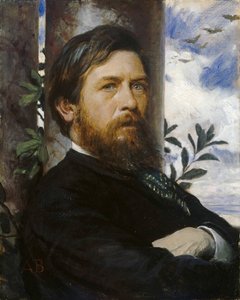
Arnold Böcklin
1827 - 1901 , Suiza
Datos clave
- Artistas Que Influyeron: ['Anselm Feuerbach']
- Fallecimiento: 16 de enero de 1901
- Fecha De Nacimiento: 16 de octubre de 1827
- Influenciado A Artistas: ['Hans Thoma']
- Lugar De Nacimiento: Basilea, Suiza
- Movimiento Artístico: Simbolismo
- Nacionalidad: Suizo
- Nombre Completo: Arnold Böcklin
- Obras Notables:
- Isla de la Muerte
- La Guerra
- Ninfas y sátiros
Artículos relacionados

Evocations of Place: A Historical Journey Through Landscape Art
Explore the rich history of landscape art with OriginalUniqueArt. Discover renowned artists, movements like Impressionism & tonalism, and expert guidance for collecting timeless pieces. Find your perfect serene escape today!

John Constable: Las 25 Obras Maestras del Paisaje Inglés | OriginalUniqueArt
Descubre las 25 obras maestras de John Constable, el pintor romántico inglés que capturó la belleza del paisaje. Explora su técnica, historia y significado en OriginalUniqueArt.com. Reproducciones de arte de alta calidad para tu hogar.

Paisajes Románticos: 10 Obras Maestras que Definieron un Movimiento Artístico
Descubre los 10 paisajes románticos más influyentes de artistas como Caspar David Friedrich y Turner. Explora la belleza, el simbolismo y las técnicas del movimiento romántico. Reproducciones de arte exclusivas en OriginalUniqueArt.com.

Evocations of Place: A Historical Journey Through Landscape Art
Explore the rich history of landscape art with OriginalUniqueArt. Discover renowned artists, movements like Impressionism & Romanticism, and expert guidance for collecting timeless pieces. Find your perfect serene escape today!

Nature’s Sanctuary: Curating Enchanting Forest Artworks to Transform Your Home into a Serene Woodland Retreat
Transform your home into a serene woodland retreat with enchanting forest artworks. Discover museum-quality oil reproductions and custom landscape commissions designed to bring the peaceful beauty of nature indoors.


