Ver en contexto
 Enviar
 Compartir
 Detalles

 Descargar
 Similares
 Radiografía
 Presentación de diapositivas
 Stats
StatsSelf Portrait
 Acrylic On Canvas
- WallArt
- Neoclassical Painting
 1774
1774 562.0 x 735.0 cm
 Galería de Arte Walker
 Ver más
Reproducción al óleo hecha a mano
Óleo sobre lienzo pintado a mano en el tamaño y marco de su elección, realizado por encargo por nuestros artistas. ( Switch to Print Switch to Digital Image)




P118B $10

P118H $10

P118W $10

P438Z $10

P508JH $12

P508YH $12

P805H $10

P805Z $10

P919BZ $10

P919G $10

P919XJ $10

P959ZH $10

P968JZ $12

W106C $8

W218G $10

W218JH $8

W218Y $10

W307PJ $10

W316G $10

W316PJ $8

W316Y $10

W398PJ $8

W4111J $10

W500HY $15

W500JH $15

W692G $12

W849H $8

W940BG $15

W953PJ $8




Elija entre nuestros tamaños predefinidos que respetan las proporciones originales de la obra.

Puede ingresar sus propias dimensiones para adaptarse a un marco o espacio específico. Si el tamaño seleccionado no coincide con las proporciones de la imagen original, recortaremos la obra o extenderemos la pintura con elementos adicionales pintados a mano. Se le enviará una maqueta digital para su aprobación antes de comenzar la producción.
Tenga en cuenta que la vista previa en pantalla no refleja el recorte o la extensión reales. Solo la maqueta mostrará con precisión la composición final.
Si bien existen tamaños personalizados, recomendamos seleccionar una dimensión de la lista predefinida para preservar las proporciones originales.
Tras realizar el pedido, el equipo de OriginalUniqueArt.com enviará un correo electrónico al cliente para solicitar instrucciones y proporcionarle una vista previa del boceto.
Envío a todo el mundo () en 3-4 semanas en lugar de las 5 semanas estándar. (8 septiembre). Sin comprometer la calidad.

Envío exprés gratuito a todo el mundo

Lienzo de lino de alta calidad

Seguro de envío total

Garantía de reembolso de impuestos aduaneros

Garantía de fidelidad cromática exacta

Política de devolución de 100 días (solo por defectos)

Garantía de devolución del 100% del dinero

Descuento por cantidad
 La opción de vidrio solo está disponible en tamaños inferiores a 110 cm.

Self Portrait
Técnica de reproducción
Dimensiones de la reproducción
-


Precio total final
$ 300
The Enigmatic Gaze: Unpacking Anton Raphael Mengs’ “Self Portrait”
Anton Raphael Mengs' "Self Portrait," painted in 1774, isn’t merely a likeness; it’s a carefully constructed tableau of intellectual ambition and introspective melancholy. Captured with the precision characteristic of the Neoclassical movement, this painting offers a rare glimpse into the mind of an artist grappling with his burgeoning fame and the weighty expectations placed upon him. The image immediately draws the eye to the subject's face – a man in his mid-forties, rendered with a remarkable sensitivity that belies the formality of the attire. His mouth is slightly open, a subtle gesture hinting at contemplation or perhaps even a quiet sadness; it’s an expression that invites prolonged observation and fuels speculation about the thoughts swirling within him.
The composition itself speaks volumes. Mengs sits three-quarters to his right, a pose favored by portrait painters of the era, suggesting both dignity and engagement with the viewer. The rich brown coat, meticulously detailed, anchors him in a world of established artistic circles, while the scarf draped loosely around his neck adds a touch of understated elegance. Yet, it’s the lighting – masterful chiaroscuro reminiscent of Rembrandt – that truly elevates the piece. Dark shadows pool beneath his eyes and across his shoulders, creating a sense of depth and drawing attention to the delicate lines of his face. The light catches the texture of his clothing and highlights the subtle nuances of his expression, transforming a simple portrait into a study in mood and atmosphere.
A Bridge Between Worlds: Mengs’ Artistic Genesis
Mengs' journey to this moment was profoundly shaped by his lineage and the intellectual currents of the Enlightenment. Born in 1728 in Ústí nad Labem, Bohemia – a region now part of the Czech Republic – he inherited a legacy of artistic talent from his father, Ismael Mengs, a Danish painter who found patronage at the Dresden court. This early exposure to the refined tastes and exacting standards of the German aristocracy instilled within young Anton a deep appreciation for classical ideals and meticulous technique. Crucially, in 1741, he was sent to Rome – a pivotal decision that irrevocably shaped his artistic development.
Immersed in the heart of the Roman art world, Mengs spent years studying the masterpieces of Raphael, Michelangelo, and other Renaissance giants. He meticulously copied their works, absorbing not just their technical skill but also their profound understanding of human anatomy, perspective, and composition. This immersion in classical antiquity would become the bedrock of his artistic style – a commitment to clarity, balance, and idealized beauty that defined Neoclassicism. The influence is immediately apparent in “Self Portrait,” where Mengs consciously adopts a pose reminiscent of ancient Roman portraiture, signaling his ambition to emulate the masters and establish himself as a leading figure in the revival of classical art.
Symbolism and Context: The Weight of Ambition
Beyond its technical brilliance, “Self Portrait” is laden with symbolic meaning. The open mouth, as previously noted, suggests introspection – perhaps a moment of self-doubt amidst the pressures of his career. The carefully chosen attire—the brown coat, the scarf—reflects his position within European artistic circles, signaling both his status and his adherence to established conventions. However, there’s also an underlying sense of weariness in Mengs' gaze, hinting at the sacrifices required to achieve success and the loneliness inherent in a life devoted to art.
Painted just three years before his untimely death at the age of 51, the portrait captures a man on the cusp of greatness but also burdened by mortality. Mengs was a celebrated artist throughout Europe, a key figure in the creation of Neoclassicism, yet he faced constant challenges – financial difficulties, professional rivalries, and the relentless demands of his patrons. “Self Portrait” offers a poignant glimpse into the inner life of an artist grappling with these complexities, reminding us that even the most accomplished figures are subject to human vulnerability and uncertainty.
A Timeless Reflection: Reproduction and Artistic Legacy
Reproductions of Mengs’ “Self Portrait” continue to resonate today, offering a window into the artistic sensibilities of the 18th century. The painting's masterful use of light and shadow, combined with its psychologically astute portrayal of the subject, ensures its enduring appeal. Whether displayed in a grand salon or a contemporary art space, this work serves as a powerful reminder of the transformative power of art – its ability to capture not just likeness but also essence, emotion, and the complexities of the human experience. Consider commissioning a hand-painted reproduction to bring this captivating piece into your own home, preserving Mengs’ legacy for generations to come.
Biografía del artista
Anton Raphael Mengs: Pionero de la Pintura Neoclásica
- Nacido: 22 de marzo de 1728, Ústí nad Labem (Aussig), Bohemia (actual República Checa)
- Fallecido: 29 de junio de 1779, Roma, Italia
Anton Raphael Mengs fue un pintor germano-bohemio que influyó significativamente en la transición de la pintura rococó al neoclasicismo. Activo principalmente en Roma, Madrid y Sajonia, su obra encarna una mezcla de grandeza barroca con ideales clásicos emergentes, estableciéndolo como una figura crucial en el arte del siglo XVIII.
Primeros Años y Formación: La Sombra de Ismael Mengs
El viaje artístico de Mengs comenzó bajo la tutela de su padre, Ismael Mengs, un pintor danés que se había establecido en Dresde. Ismael reconoció el talento de su hijo desde temprano y lo llevó a Roma en 1741. Esta experiencia formativa implicó copiar obras de Rafael para el Elector de Sajonia, moldeando profundamente las sensibilidades estéticas de Anton Raphael. La exposición a la maestría de Rafael le inculcó una profunda apreciación por la forma y composición clásicas, que se convertirían en señas de identidad de su propio estilo.
Carrera Artística: Frescos, Retratos e Ideales Clásicos
La carrera de Mengs floreció a través de varias cortes europeas. En 1749, fue nombrado primer pintor de Federico Augusto, Elector de Sajonia, un puesto que le brindó considerable patrocinio al tiempo que le permitía mantener su base en Roma. Su obra más celebrada es posiblemente la pintura mural de Parnaso en Villa Albani en Roma, que obtuvo un amplio reconocimiento y solidificó su reputación como artista líder. Otras comisiones importantes incluyeron un magnífico fresco sobre la cúpula de la Iglesia de Sant'Eusebio en Roma, demostrando su habilidad en la decoración monumental, y el techo del salón de banquetes del Palacio Real de Madrid, considerado uno de sus logros más destacados.
- Obras Notables: Parnaso (Villa Albani), frescos en Sant’Eusebio, techo del Salón de Banquetes (Palacio Real, Madrid), Johann Joachim Winckelmann (1717–1768)
Si bien influenciado por la tradición barroca romana, Mengs abrazó cada vez más los ideales de la antigüedad clásica. Esta transición fue significativamente impulsada por su estrecha colaboración con Johann Joachim Winckelmann, un destacado historiador del arte y teórico que defendió el resurgimiento de las estéticas griega y romana. Juntos, abogaron por un retorno a la simplicidad, la claridad y las formas idealizadas en el arte, sentando las bases para el movimiento neoclásico.
Aspectos Clave y Rivalidades
- Conversión y Rol en el Vaticano: Mengs se convirtió al catolicismo en 1754 y posteriormente se convirtió en director de la Escuela de Pintura del Vaticano, consolidando aún más su posición dentro de la élite artística.
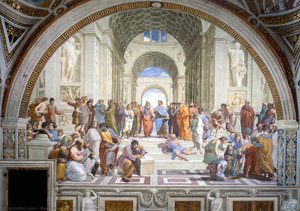
- La Escuela de Atenas: Pintó "La Escuela de Atenas" para el Duque de Northumberland (ahora en el Victoria and Albert Museum), una obra significativa que demuestra su dominio de los temas y la composición clásicos.
- Colaboración con Winckelmann: Su asociación con Winckelmann fue fundamental para dar forma a los principios artísticos neoclásicos.
- Rivalidad y Amistad: Mengs experimentó tanto rivalidades (particularmente con Pompeo Batoni) como amistades (con Giacomo Casanova), reflejando las complejas dinámicas de la escena artística romana durante su tiempo.
Legado y Significado Histórico
Anton Raphael Mengs falleció en Roma en 1779, dejando atrás una importante obra que unió la brecha entre los estilos barroco y neoclásico. Su énfasis en los ideales clásicos, combinado con su habilidad técnica, lo convirtió en una figura clave en el desarrollo del neoclasicismo. Es recordado no solo por sus impresionantes frescos y retratos, sino también por sus contribuciones intelectuales a la teoría del arte a través de su colaboración con Winckelmann. Su influencia se puede ver en generaciones posteriores de artistas que abrazaron la claridad, el orden y las formas idealizadas que caracterizaron la pintura neoclásica.

Anton Raphael Mengs
1728 - 1779 , República Checa
Datos clave
- Artistas Influenciados Por Este Artista: ['Pintura neoclásica']
- Artistas Que Influyeron: ['Rafael']
- Fecha De Muerte: 29 de junio de 1779
- Fecha De Nacimiento: 22 de marzo de 1728
- Lugar De Nacimiento: Ústí nad Labem, República Checa
- Movimiento Artístico: Neoclasicismo
- Nacionalidad: Germano-bohemio
- Nombre Completo: Anton Raphael Mengs
- Obras Notables:
- Parnaso (Villa Albani)
- Frescos en Sant’Eusebio
- Techo del Salón de banquetes
- Retrato de Winckelmann
Artículos relacionados
Decoding Van Gogh's Turmoil: OriginalUniqueArt’s Masterful Reproductions of Emotional Depth
Discover exquisite Van Gogh reproductions from OriginalUniqueArt – expert art specialists offering museum-quality prints & custom paintings. Trust our authentic process and elevate your collection today.

Rembrandt van Rijn: Las 25 Obras Maestras que Definen un Genio | Arte, Historia y Decoración
Descubre las 25 obras maestras de Rembrandt van Rijn, el genio del barroco holandés. Explora su historia, técnica y simbolismo en retratos icónicos como 'La Ronda Nocturna'. Encuentra reproducciones de arte exclusivas para decorar tu hogar con OriginalUniqueArt.com.
Reflecting the Self: A History of Portraiture & Psychological Insight
Explore the fascinating history of self-portraiture from Renaissance masters like Dürer & Rembrandt to modern interpretations. Discover the psychological insights and artistic techniques behind these iconic works. Expert analysis for art enthusiasts.
Los 10 Maestros del Postimpresionismo: Obras que Revolucionaron el Arte |
Descubre los 10 cuadros más influyentes del Postimpresionismo: Van Gogh, Monet, Cézanne y más. Explora la historia, técnica y significado de estas obras maestras. Reproducciones de arte en para decorar tu hogar con estilo.
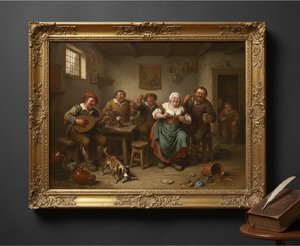
Adriaen van Ostade: A Master of Dutch Genre Painting & Social Commentary
Explore the life & work of Adriaen van Ostade, a leading Dutch Golden Age painter. Discover his realistic genre scenes, social commentary, and lasting influence on art history. Learn more at OriginalUniqueArt.