Mannerist · 1600
Skeleton (Andrés Vesalio, 1600)
Andrés Vesalio (1514–1564) creó Skeleton. Data de 1600. Pertenece al movimiento Mannerist. Está realizado en Engraving. Se conserva en Biblioteca de la Universidad de Vilnus, en Vilnius, Lituania.
- 1600
- Engraving
- Biblioteca de la Universidad de Vilnus, Vilnius

 Ver en contexto

 Óleo pintado a mano
 Enviar
 Compartir
 Ficha técnica


 Descargar
 Similares
 Radiografía
 Presentación de diapositivas
 Preguntas y respuestas

 Estadísticas
Skeleton en breve
- Título
- Skeleton
- Artista
- Andrés Vesalio (1514–1564)
- Lugar de nacimiento del artista
- Bruselas, Bélgica
- Fecha
- 1600
- Técnica
- Engraving
- Dónde verlo
- Biblioteca de la Universidad de Vilnus, Vilnius, Lituania
- Movimiento
- Mannerist
- Época
- Early Modern
- Tema
- mortality, death, anatomy, skeletal, renaissance, mannerism
¿Qué representa Skeleton?
Identification of the Artwork and Artist
We are looking at Skeleton, a work attributed to Andreas Vesalius. This piece is dated about 1600. It offers a quiet, structural view of the human form, captured through the precise hand of an artist who fundamentally changed how we perceive the internal architecture of the body.
Andreas Vesalius was born in Brussels, Belgium, in 1514. His life and his contributions to anatomical study remained central to his identity until his death in 1564. This specific engraving reflects a period of profound inquiry into the mechanics of life and mortality.
Visual Composition and Subject Matter
In this detailed black and white engraving, we find a skeleton seated upon a pedestal. The figure is captured in a moment of quiet contemplation, looking down at a human skull. The composition is complex, utilizing multiple overlapping planes to create a sense of depth and spatial arrangement. This arrangement directs the eye through a series of structural layers, emphasizing the stillness of the scene.
The style is distinctly Mannerist, characterized by a focus on stylized anatomy and expressive gestures. Through this lens, the subject matter addresses the inevitability of death and the human preoccupation with mortality. It is a meditation on the fragility of life, presented through the stark, structural reality of the bone. The interaction between the seated figure and the skull creates a silent dialogue regarding the fate of the human form.
Artistic Technique and Materials
The work is an engraving executed with a precision that reveals the artist's command over the medium. Using primarily ink and paper, the image is constructed through a series of sharp, meticulously rendered lines. These marks do more than define the edges of the form; they build the very substance of the subject. Through the disciplined application of hatching and cross-hatching, a palpable texture is achieved, simulating the hard, matte surface of bone and the subtle folds of fabric. This technical rigor allows for a sophisticated interplay of light and shadow.
The lighting appears to originate from above and slightly in front of the figure, casting shadows that provide a sense of weight and three-dimensionality. This light works in tandem with a linear perspective to establish a convincing sense of space within the composition. The result is a structural clarity that emphasizes the anatomical details through careful shading. The depth of the scene is achieved by layering these elements, creating a quiet, controlled environment for the subject.
Related Works by Andreas Vesalius
To understand the lineage of this piece, one might look toward the artist's other contributions to anatomical study. In 1543, an engraving titled Anatomy was produced, sharing a temporal connection to the era of the De humani corporis fabrica. This work, much like the one before us, captures the silent architecture of bone and muscle through meticulous line work.
There is also the Dissected human body, dated 1543, which is held within the Bibliothèque nationale de France in Paris. This engraving maps the structural reality of the human frame with a similar precision. Another notable piece is the Portrait of Vesalius from his De humani corporis fabrica, which offers a different perspective on the man behind these detailed observations.
- Dissected human body, 1543
- Anatomy, 1543
Current Location of the Artwork
This engraving is held within the Vilnius University Library, situated in Vilnius, Lithuania. It remains a significant part of a collection that is recognized as the oldest and one of the largest academic libraries in Lithuania. The institution has a long history, having been founded in 1570 by the Jesuits.
The library functions as a sanctuary for many historical documents and engravings. Within its walls, this work exists alongside a vast array of manuscripts and incunabula. It is part of a specialized repository that preserves the intellectual history of the region through its extensive holdings.
¿En qué museo se encuentra Skeleton?
Biblioteca de la Universidad de Vilnus
Vilnius, Lituania
Un Santuario de Tinta y Piedra: El Alma de Vilna Adentrarse en la Biblioteca de la Universidad de Vilna es cruzar un umbral entre el presente efímero y el peso perdurable de los siglos. No es simplemente un repositorio de la palabra escrita, sino un monumento vivo que late con el corazón intelectual y artístico de Lituania. Al recorrer sus sagrados pasillos, se percibe una sensación palpable de estar envuelto por los fantasmas de eruditos del pasado: una atmósfera silenciosa y reverente donde el aroma del pergamino envejecido se encuentra con la grandeza de la ambición neoclásica.


Imágenes en alta resolución de Skeleton

Andrés Vesalio, Skeleton (1600), Biblioteca de la Universidad de Vilnus. Dominio público
Preguntas sobre Skeleton respondidas
¿Dónde se encuentra actualmente en exposición "Skeleton" de Andrés Vesalio?
Puede ver la obra original "Skeleton" en el Biblioteca de la Universidad de Vilnus, Vilnius, Lituania.
¿En qué año se creó "Skeleton"?
"Skeleton" de Andrés Vesalio fue creada en 1600.
¿Qué técnica se utilizó para "Skeleton" de Andrés Vesalio?
La técnica de "Skeleton" de Andrés Vesalio es Engraving. Las reproducciones pretenden recrear la apariencia de esta técnica.
¿Qué representa "Skeleton"?
Los temas presentes en "Skeleton" de Andrés Vesalio incluyen mortality, death, anatomy, skeletal, renaissance, mannerism, reflection, human form, los cuales resumen la temática de la obra.
¿Se puede reproducir libremente la imagen de "Skeleton" de Andrés Vesalio?
Información sobre los derechos de autor de "Skeleton" de Andrés Vesalio: la obra es en el dominio público: sus derechos de autor han expirado. Esto determina si las reproducciones de la imagen pueden realizarse libremente.
¿Quién es el artista detrás de "Skeleton"?
"Skeleton" fue creada por Andrés Vesalio. La información en esta página describe la obra original de Andrés Vesalio.
¿A qué estilo pertenece "Skeleton"?
"Skeleton" es una obra de Mannerist. El movimiento indica la tradición artística a la que pertenece la obra.
¿A qué etapa de la trayectoria de Andrés Vesalio pertenece "Skeleton"?
"Skeleton" pertenece al Mature Period de la trayectoria de Andrés Vesalio. Esta clasificación vincula la obra con el desarrollo del artista.
¿Qué edad tenía Andrés Vesalio cuando creó "Skeleton"?
Andrés Vesalio creó "Skeleton" a la edad de 86. El artista nació en 1514 y la obra data de 1600.
Sobre el artista, Andrés Vesalio

1514–1564, Bélgica
Andrés Vesalio
Andreas Vesalius: El Padre de la Anatomía Moderna Andreas Vesalius (1514 – 1564) se erige como una figura monumental en la historia de la ciencia y el arte, alterando irrevocablemente nuestra comprensión de la anatomía humana y estableciendo un nuevo paradigma para la ilustración médica. Nacido en Bruselas, Bélgica, los primeros años de Vesalius estuvieron marcados por una profunda curiosidad intelectual y una fascinación por la disección, actividades que acabarían definiendo su carrera revolucionaria. Su padre, Gerard Vesalius, fue un médico que inculcó en él la pasión por la observación y el estudio anatómico meticuloso, moldeando así la trayectoria de sus ambiciosas búsquedas académicas. Primeros años y educación: Trayectoria académica en Padua: De Humani Corporis Fabrica: Una revolución en la ilustración Influencia y legado La Universidad de Padua se convirtió en el hogar académico de Vesalius, donde destacó como estudiante de medicina bajo la tutela de Alessandro Vesalius (su tío), profundizando así su compromiso con la investigación anatómica.
Otras obras de Andrés Vesalio
 Anatomía1543
 Dissected human body1543
 Title page1543
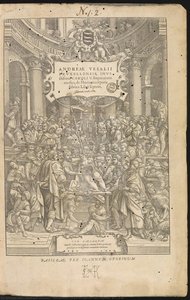 De humani corporis fabrica libri septem, N*.1.1(A)1555

Ensayos sobre Skeleton
 Pintores lituanos del siglo XXDescubra el legado de Čiurlionis y Lipchitz en el arte lituano del siglo XX. Explore obras maestras en OriginalUniqueArt.com.
 Pintores lituanos del siglo XIXExplora el legado de Isaac Levitan y otros maestros lituanos del siglo XIX. Descubre obras maestras en OriginalUniqueArt.com.
 The Architecture of Flesh: Mastering Anatomical Precision in Classical Figurative ArtMaster the science of classical figure painting through anatomical study and light. Explore the masters of form today.